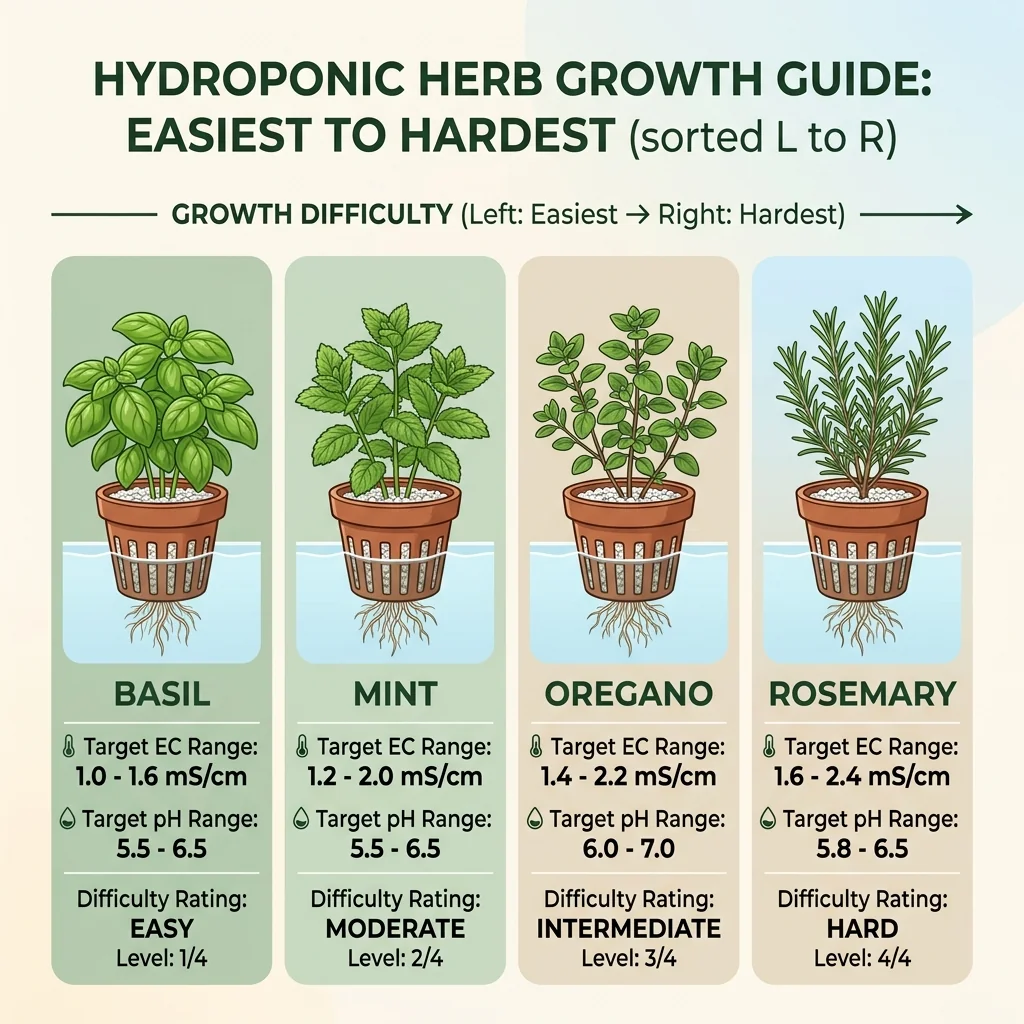
Best herbs for hydroponics
| Herb | Ease | EC / pH |
|---|---|---|
| Basil | Easy, fast | 1.0-1.6 / 5.5-6.5 |
| Mint | Very easy, vigorous | 1.0-1.6 / 5.5-6.5 |
| Chives | Easy | 1.0-1.4 / 5.5-6.5 |
| Parsley | Easy | 1.8-2.2 / 6.0-6.5 |
| Cilantro | Moderate (bolts in heat) | 1.0-1.6 / 5.5-6.5 |
| Rosemary / thyme | Harder, slower | Thyme ~1.2 (Korean trial), rosemary 2.0 / 6.0 (Jerash trial) |
Most soft, leafy herbs are excellent hydroponic crops, while woody Mediterranean herbs are possible but trickier. As a quick answer: the best herbs for hydroponics are basil, mint, chives, parsley, and cilantro, most of them happy at EC 1.0 to 1.6 and pH 5.5 to 6.5 — parsley is the exception at EC 1.8 to 2.2. If you are just starting, the countertop hydroponic herbs guide covers system choice.
The herbs that grow best
The easiest, most productive hydroponic herbs are the fast, leafy ones:
- Basil — fast, productive, and the classic hydroponic herb. See the dedicated hydroponic basil setup.
- Mint — vigorous to the point of taking over, which suits water culture.
- Chives — easy and compact, good for small systems.
- Parsley — steady and reliable once established.
- Cilantro — productive but bolts in heat, so keep it cool.
Herbs that are harder in hydroponics
Woody Mediterranean herbs such as rosemary, thyme, oregano, and sage can be grown hydroponically, but they prefer drier, airier roots than constant water culture provides. They grow more slowly and need more care to avoid rot, so they are better suited to experienced growers or to soil and containers. The few published EC figures are in growing rosemary, thyme and oregano hydroponically.
Shared chemistry
Most herbs share a broad target of EC 1.0 to 1.6 mS/cm and pH 5.5 to 6.5, with basil happiest at the upper end. Because their needs overlap, you can grow several soft herbs in one reservoir. Parsley is the exception: Oklahoma State University Extension’s EC and pH table gives it 1.8 to 2.2 mS/cm and pH 6.0 to 6.5, distinctly stronger than the rest of the bench, so a reservoir set for basil or mint runs parsley under target. The full crop-by-crop breakdown is in the hydroponic EC chart by crop, and the underlying principles are in hydroponic nutrient basics.
Light and harvesting
Give leafy herbs strong light for 14 to 16 hours and harvest little and often, pinching tips to keep them bushy. Frequent harvesting is what keeps hydroponic herbs productive rather than letting them stretch or bolt.
Treat that duration as a starting window, not a substitute for intensity. Map centre and edges at canopy height, maintain a dark period, and judge new growth. Harvest method also differs: pinch branching basil above a node, cut chives above the crown, and remove parsley’s outer stalks without damaging the centre.
Score crops before sharing a reservoir
| Trait | Easier combination | Warning |
|---|---|---|
| Temperature | Similar cool- or warm-season preference | Cilantro beside heat-loving basil |
| Canopy | Comparable mature height | Tall dill shading chives |
| Root mass | Similar growth rate | Vigorous mint blocking circulation |
| Crop cycle | Similar harvest window | Short crop beside slow parsley |
| Solution | Overlapping documented program | Forcing one crop to an extreme |
Start with fewer plants than the lid can hold and cover unused openings. A crop that repeatedly compromises the others deserves its own reservoir.
Run a four-week crop trial
Label cultivar and sowing date, then record germination, transplant, EC/pH trend, water temperature, light map, pruning, and usable harvest mass. This identifies what grows best in your system; “fast” without a measured period and output is only an impression.
Begin with one baseline crop. Add a second species only after the first completes a clean cycle. Countertop systems suit compact crops but impose height and root-access limits; DWC adds aeration but depends on power; passive Kratky depends on a correctly maintained air gap.
Sources and further reading
If you are growing hydroponic herbs, also read
These guides connect herb selection to the detailed basil setup, nutrient basics, and crop chemistry chart.
Common questions
Which herbs grow best hydroponically?
Basil, mint, chives, parsley, and cilantro are the easiest and most productive. They are fast, leafy, and tolerant, which suits water culture well.
Can you grow rosemary and thyme hydroponically?
Yes, but they are harder and slower than basil or mint. The trial figures and system choices are covered in the growing Mediterranean herbs hydroponically guide.
What EC and pH do hydroponic herbs need?
Most herbs do well at EC 1.0 to 1.6 mS/cm and pH 5.5 to 6.5, except parsley, which Oklahoma State University Extension puts at 1.8 to 2.2 mS/cm and pH 6.0 to 6.5. Basil likes the upper end, while lighter herbs are happy a little lower.
Can I grow different herbs in the same reservoir?
Yes, if they share similar EC and pH needs. Grouping soft, leafy herbs like basil and mint together works well, but parsley wants a distinctly stronger solution — Oklahoma State University Extension gives it EC 1.8 to 2.2 mS/cm against basil's 1.0 to 1.6 — so treat parsley as a stronger feeder rather than folding it into that group; keep very different crops on their own systems.
Related guides
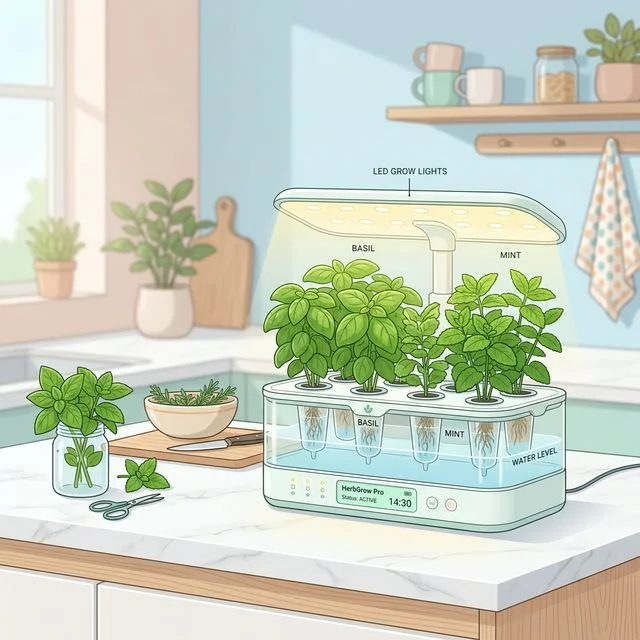
Countertop hydroponic herbs for beginners: what to buy and what to ignore
Countertop hydroponic systems can work very well for herbs, but only if you treat them as small growing systems rather than decorative appliances.
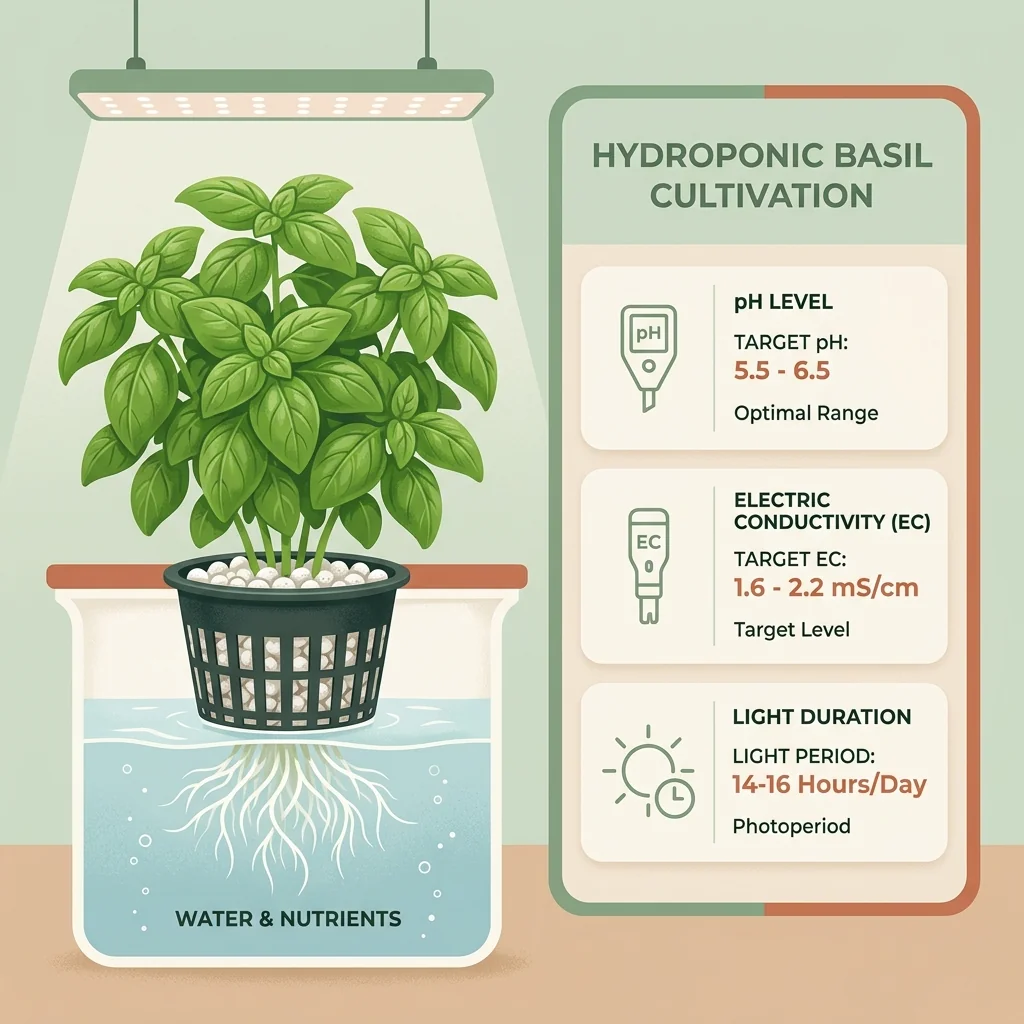
Hydroponic basil: EC 1.0-1.6, pH 5.5-6.5, 14-16 h of light
Basil is one of the fastest, most rewarding hydroponic crops once the water chemistry and light are right. Here are the exact EC, pH, and light targets to hit.
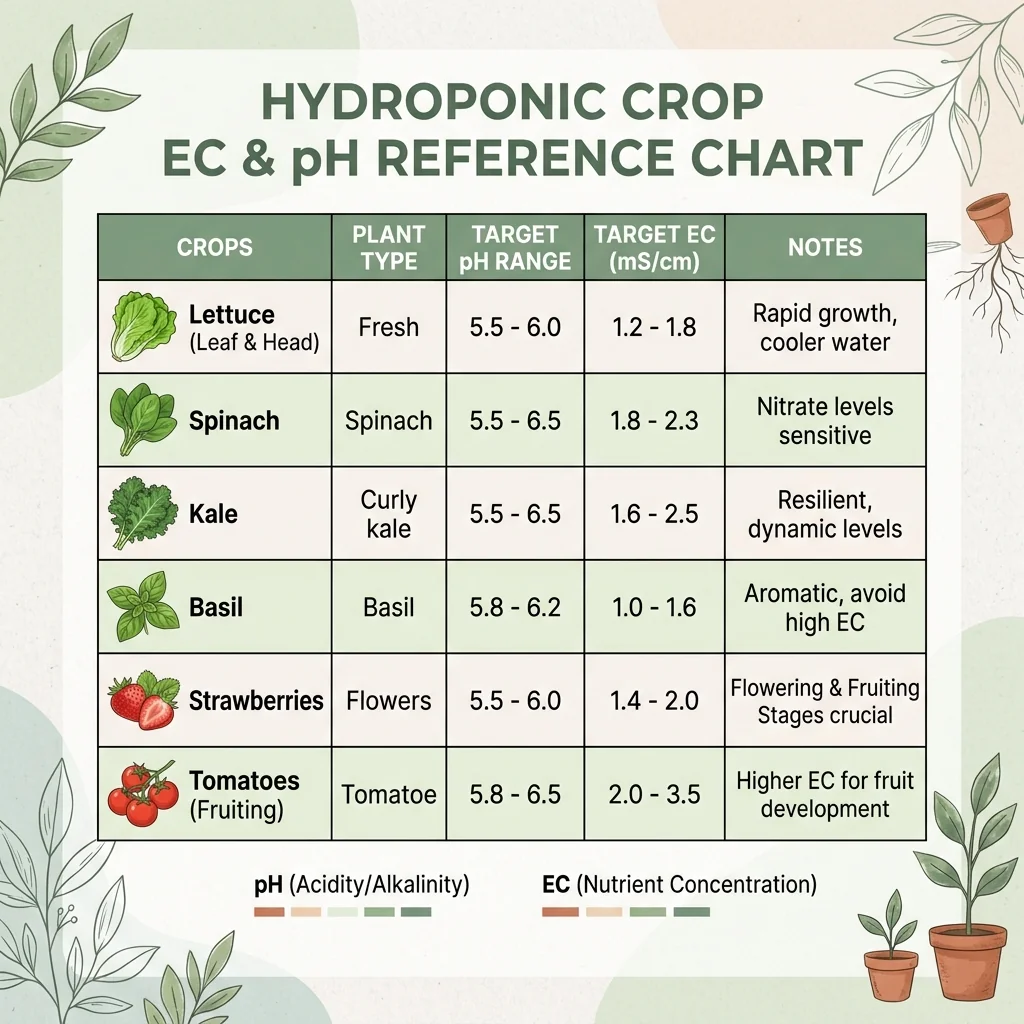
Hydroponic EC chart by crop (not just lettuce)
One reference chart for the EC and pH targets of common hydroponic crops, from leafy greens and herbs to fruiting plants, plus how to use the numbers safely.