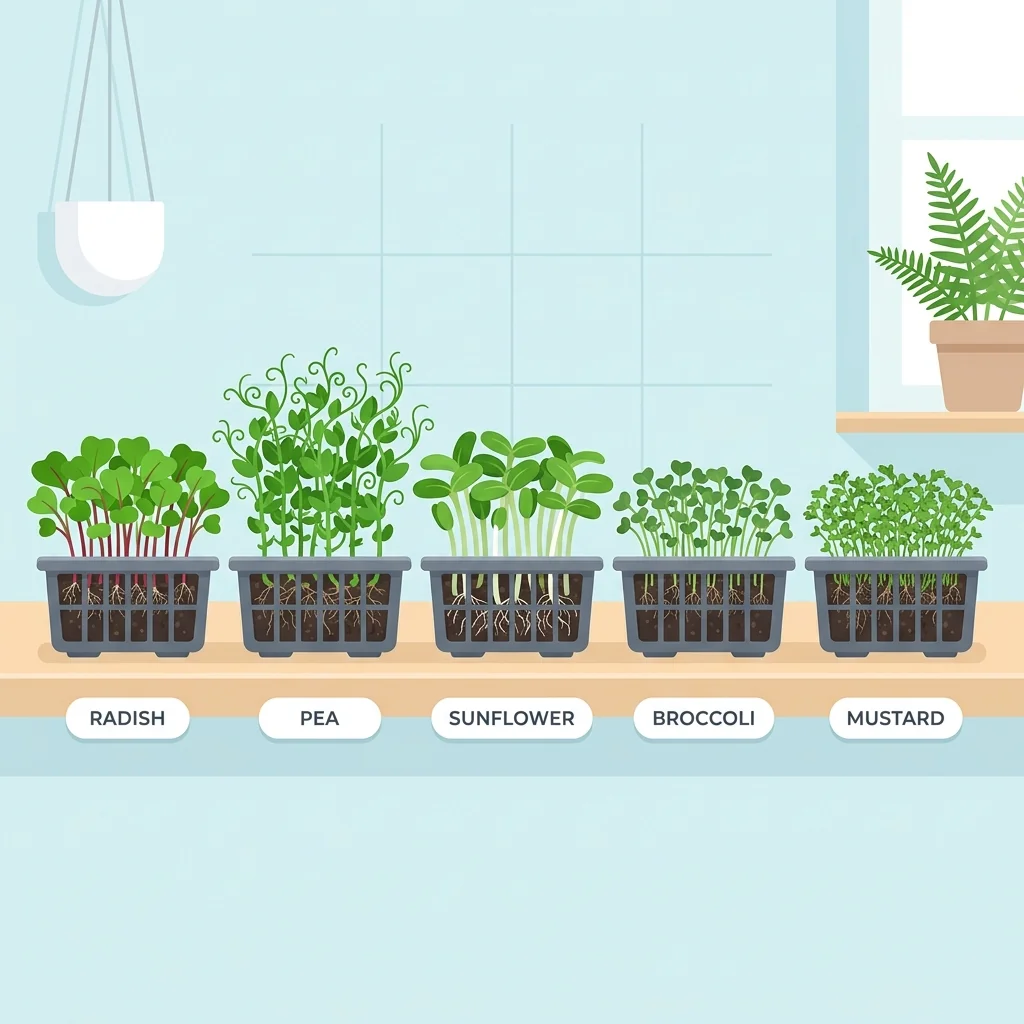
Best beginner microgreens
| Variety | Ready in | Why it is easy | Flavor |
|---|---|---|---|
| Radish | 7-12 days | Very fast, vigorous, no soak | Peppery |
| Pea shoots | 8-10 days | Big harvest, forgiving (soak first) | Sweet, fresh |
| Sunflower | 9-10 days | Large, satisfying (soak first) | Nutty, crunchy |
| Broccoli | 8-12 days | Reliable, mild, no soak | Mild, fresh |
| Mustard | 7-8 days | Fast, easy, no soak | Spicy |
The best first microgreens are the ones that come up fast and forgive mistakes. As a quick answer: start with radish, pea shoots, sunflower, broccoli, or mustard — all germinate quickly, grow vigorously, and tolerate the uneven watering and light that trip up beginners. Once you have grown a tray, the full method is in how to grow microgreens at home.
The five easiest varieties
- Radish — the classic beginner crop. Penn State Extension puts it in the fast brassica group at 7 to 8 days and Utah State gives 8 to 12, so it is ready in roughly a week either way, with a bright peppery bite. No soaking needed.
- Pea shoots — big, sweet, and satisfying, with the largest harvest by volume. Soak the seeds a few hours before sowing.
- Sunflower — nutty and crunchy, a favourite for salads. Soak first and keep airflow good, as the large seeds can mold if crowded and wet.
- Broccoli — mild, reliable, and nutritious. Small seeds, no soak, very forgiving.
- Mustard — fast and spicy, similar to radish in ease and speed.
Fast vs big
If you want the quickest reward, sow radish or mustard — you will be harvesting in roughly a week. If you want the biggest, most filling harvest, go for pea shoots or sunflower, which take a few days longer but produce a dense, substantial tray. Broccoli sits in the middle and is the most “set and forget” of the group.
What to skip at first
Seeds that turn gel-like when wet — chia, cress, and basil — are trickier to sow evenly and more prone to mold, because you cannot soak them and they hold a lot of surface moisture. They are worth trying once you are comfortable, but they make a frustrating first tray.
Soaking: only the big seeds
Small brassica seeds (radish, broccoli, mustard) need no preparation. The larger seeds (peas and sunflower) do better with a few hours’ soak before sowing, which speeds and evens up germination. Everything else follows the same simple routine, including the tidy soil-free option in growing microgreens without soil. Before your first tray, check what you need to grow microgreens for the short supply list and microgreens light requirements and a simple setup so the greens stay compact instead of stretching.
Use crop-specific soaking directions rather than “a few hours” as a universal rule. Utah State’s protocol, for example, lists six hours for pea and twelve for sunflower. Use potable water, a traceable seed lot sold for microgreen production, and discard soaking water safely.
Choose the first crop with a scorecard
Score seed cost per tray, germination percentage, presoak requirement, covered days, expected harvest window, seed-hull removal, flavour, and usable yield. Radish or broccoli avoids the large-seed soaking step. Pea and sunflower may produce more mass but use much more seed and add handling.
Do not start with a mixture unless every component has comparable germination and harvest timing. A fast radish can overgrow a slow basil before the mix is ready to cut.
Run a half-tray trial
Weigh seed instead of sowing until the surface “looks dense.” Record tray area, grams sown, germination, covered time, light schedule, water added, discarded area, harvest day, and usable mass. Divide harvest by seed grams and tray-days. This exposes an apparently easy crop that wastes expensive seed or repeatedly develops dead patches.
Apply a food-safety baseline
Use potable water, clean and sanitised food-contact equipment, clean hands, and a medium suitable for edible production. Keep pets, compost, soil splash, and dirty garden tools away. Discard a tray with decay, slime, off odour, or suspected contamination rather than tasting it as a test.
Sources and further reading
Growing your chosen variety
Learn the full method and a tidy soil-free option for whichever seeds you pick.
Common questions
What are the easiest microgreens to grow for beginners?
Radish, pea shoots, sunflower, broccoli, and mustard. They germinate quickly, grow vigorously, and forgive uneven watering and light, which makes them ideal first trays. Radish and mustard are the fastest, often ready in about a week.
What is the fastest microgreen to grow?
Radish is one of the fastest — Penn State Extension puts it in the fast brassica group at 7 to 8 days, and Utah State Extension gives 8 to 12, so it is ready in a week to ten days either way. Mustard follows a similar timeline in Penn State's fast brassica group.
Which microgreens should beginners avoid at first?
Seeds that form a slippery gel when wet, such as chia, cress, and basil, are harder to sow evenly and more prone to mold. They are worth trying later, but start with radish, pea, sunflower, or broccoli.
Do different microgreens need different care?
The basics are the same, but larger seeds like peas and sunflower benefit from soaking a few hours before sowing, and they need good airflow. Small brassica seeds (radish, broccoli, mustard) need no soaking and are the simplest of all.
Related guides
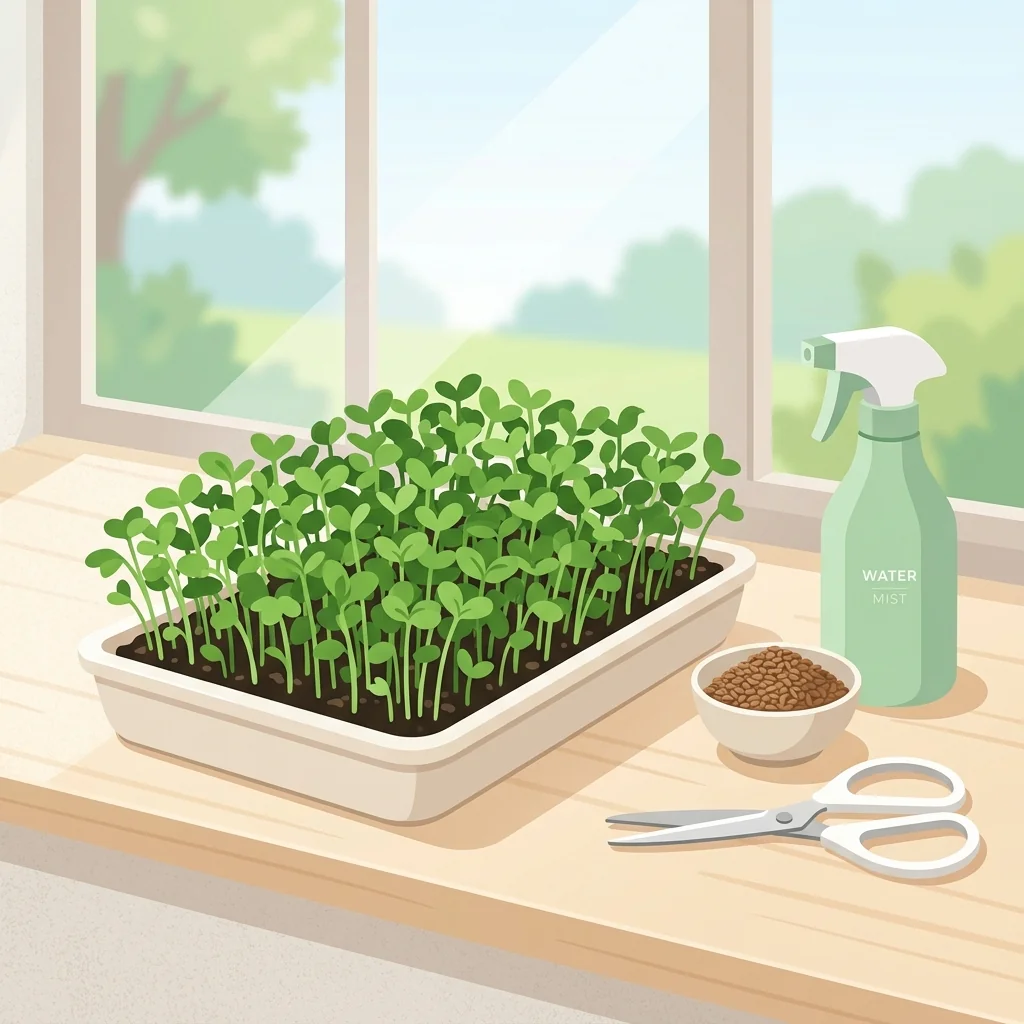
How to grow microgreens at home: a beginner's guide
Microgreens are the fastest crop you can grow indoors. This beginner guide walks through sowing, watering, light, and harvesting your first tray in about ten days.
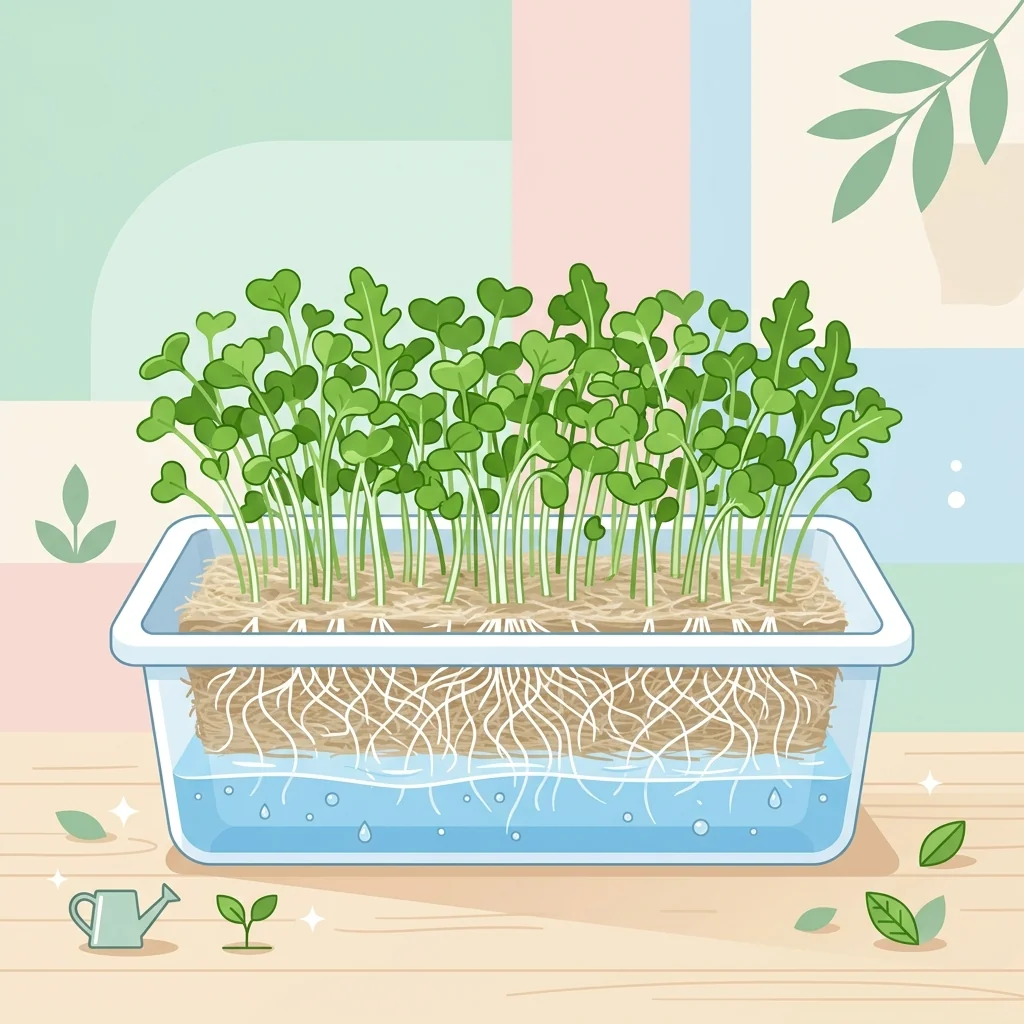
How to grow microgreens without soil (hydroponic)
No soil, no mess. Grow microgreens hydroponically on a grow mat or pad for clean, tidy trays indoors. Here is how the soil-free method works and where it shines.
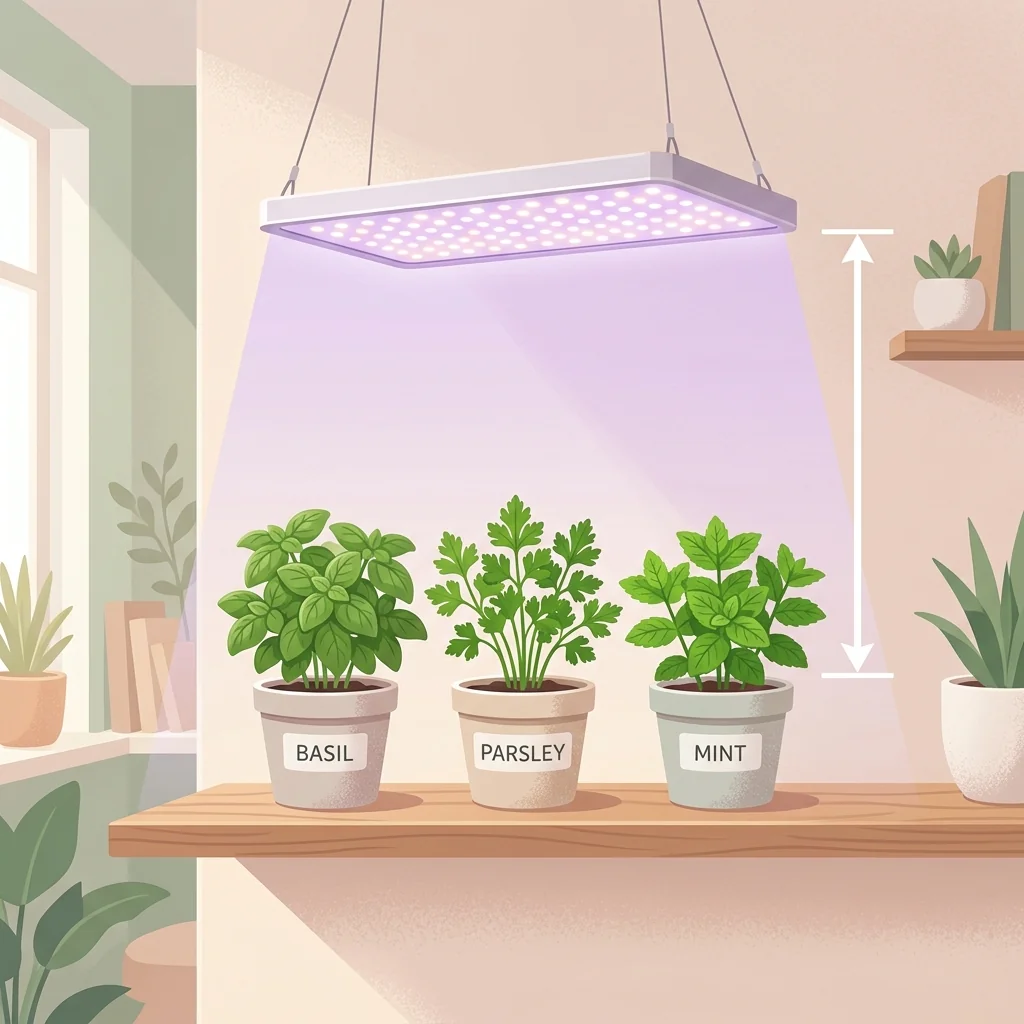
How to grow herbs indoors under a grow light
A grow light lets you grow herbs indoors anywhere, even with no sun. Here is the simple end-to-end setup: which light, how high, how long, and how to avoid leggy growth.