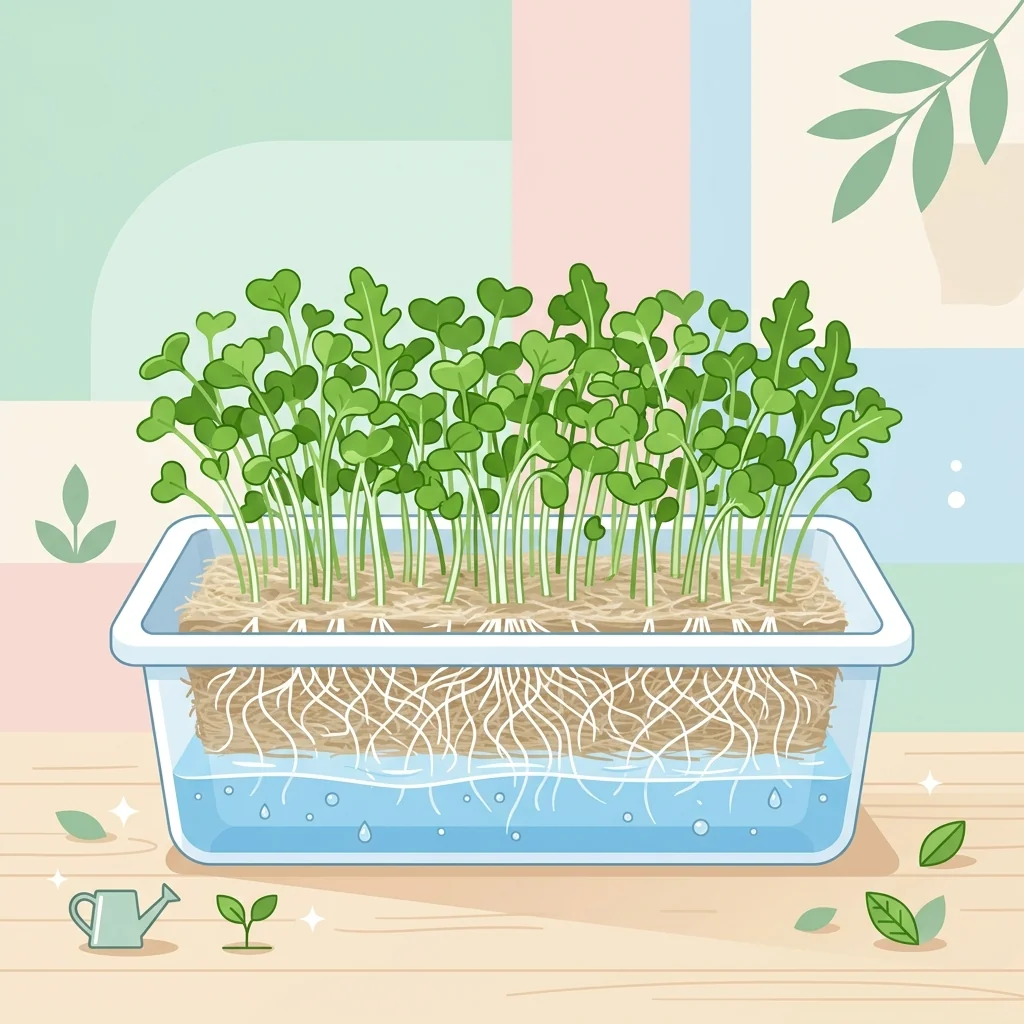
Soil vs soil-free microgreens
| Factor | Soil / mix | Soil-free pad |
|---|---|---|
| Cleanliness | Some mess, potting mix | Very clean, no spill |
| Harvest | May need rinsing grit | Grit-free, tidy cut |
| Yield | Slightly higher | Slightly lower |
| Watering room for error | More forgiving | Needs even moisture, no flooding |
You do not need soil to grow microgreens. As a quick answer: sow the seeds on a moist soil-free pad — hemp, felt, jute, coconut coir, or even paper towel — in a shallow tray, keep the pad evenly moist, and harvest in one to two weeks. Because microgreens are cut so young, the seed carries almost all the energy they need, so plain water on a pad is usually enough. This is a tidier, indoor-friendly take on the full microgreens method.
Why grow microgreens without soil
The soil-free method trades a little yield for a lot of convenience:
- No mess. No bags of potting mix, no soil to spill on the counter.
- Clean harvest. Cutting above a pad gives grit-free greens with no soil to rinse out.
- Easy reset. Lift the spent mat, compost it, and start again.
It is the method most people mean by “hydroponic microgreens,” and it borrows the same principle as passive hydroponics — the growing medium wicks water to the roots. If you are curious how passive water culture works more broadly, see the Kratky method for beginners.
How to do it
- Wet the pad. Lay a hemp or felt mat (or a few layers of paper towel) in a shallow tray and moisten it thoroughly, pouring off any standing water.
- Sow densely. Scatter seeds across the pad, as thickly as for the soil method. Large seeds like peas and sunflower do better soaked first.
- Cover to germinate. Keep the tray dark and humid for the first few days until the seeds sprout.
- Uncover under light and keep the pad moist — add water to the tray base so it wicks up, rather than soaking the greens from above.
- Harvest at the first true leaves, cutting just above the pad.
Do they need nutrients?
For most crops, no. Microgreens are harvested before they exhaust the seed’s reserves, so a pad kept moist with plain water grows a full tray. For slower or larger varieties you can use a very dilute nutrient solution, but it is optional — keep it weak, the same low-EC principle used for leafy crops elsewhere on the site.
Getting the moisture right
The one thing to watch is water. A pad that dries out stalls germination; a pad that sits flooded goes slimy and moldy. Aim for evenly damp, never waterlogged, water from below, and keep airflow in the room. That single habit is the difference between a clean tray and a moldy one — the same rule that governs the soil method in how to grow microgreens at home.
Which seeds to start with
The soil-free method suits the same forgiving varieties as any beginner tray — radish, broccoli, mustard, peas, and sunflower. See best microgreens for beginners to choose, and skip gel-forming seeds like chia and cress until you are comfortable, since they hold surface moisture and can mold on a pad.
Require a known food-crop medium
Do not assume any felt, cloth, or paper product is food-compatible. Require known composition, no unsuitable dyes or surface treatments, and a protocol for edible crops. A purpose-made mat or clean coir from a traceable supplier is easier to evaluate than household craft material.
Compare media with a controlled trial
Cut equal areas, use the same seed lot and mass, and apply measured water. Record germination, dry patches, pooling, root penetration, harvest day, usable mass, fibre contamination, and disposal. Soil-free is not automatically cleaner if a mat sheds fibres or stays saturated.
Control water by mass or observation
Pre-wet according to the medium protocol, drain surplus, and weigh the complete tray if practical. Rewater when recorded mass and mat appearance indicate need. Remove a tray from bottom water after moisture moves through; do not leave it standing indefinitely.
Use nutrients only through a recipe
Some short crops grow successfully with clear water. Penn State also describes low nitrogen inputs in a teaching system. Crop, seed reserve, mat, water, and harvest stage affect the result. Do not improvise “very dilute” nutrient without a measurable recipe and control tray.
Protect the edible canopy
Use potable water and cleaned, sanitised equipment. Keep the medium below the cut line. Discard trays with slime, off odour, decay, suspected contamination, or embedded foreign fibres. Post-harvest washing cannot make an unsafe tray safe.
Account for the disposal claim
“Compostable” depends on actual material and local conditions. Verify whether a mat contains synthetic binder and whether local facilities accept it. Record cost per successful tray and waste mass; a reusable tray plus coir may have a different footprint from a single-use imported mat.
Sources and further reading
Related methods and crops
Compare with the soil method, pick easy seeds, and see the passive hydroponic technique it borrows from.
Common questions
Can you grow microgreens without soil?
Yes. Microgreens grow well on a soil-free pad such as hemp, felt, jute, coconut coir mat, or even a few layers of paper towel in a shallow tray. You keep the pad moist and the seeds sprout and grow using their own stored energy.
Do soil-free microgreens need nutrients?
Usually not. Microgreens are harvested so young that the seed's own energy carries them to the first true leaves, so plain water on a pad is enough. A very dilute nutrient solution can help slower or larger crops, but it is optional.
Is it better to grow microgreens with or without soil?
Both work. Soil (or a fine mix) can give slightly larger yields and buffers watering mistakes. Soil-free pads are cleaner, tidier, and produce grit-free greens, which many indoor growers prefer. Choose based on mess tolerance and yield.
What can I use as a soil-free medium for microgreens?
Purpose-made hemp or felt grow mats are easiest, but jute mats, coconut coir mats, and even a few layers of paper towel or a thin cloth all work in a shallow tray. The key is a medium that holds even moisture without going slimy.
Related guides
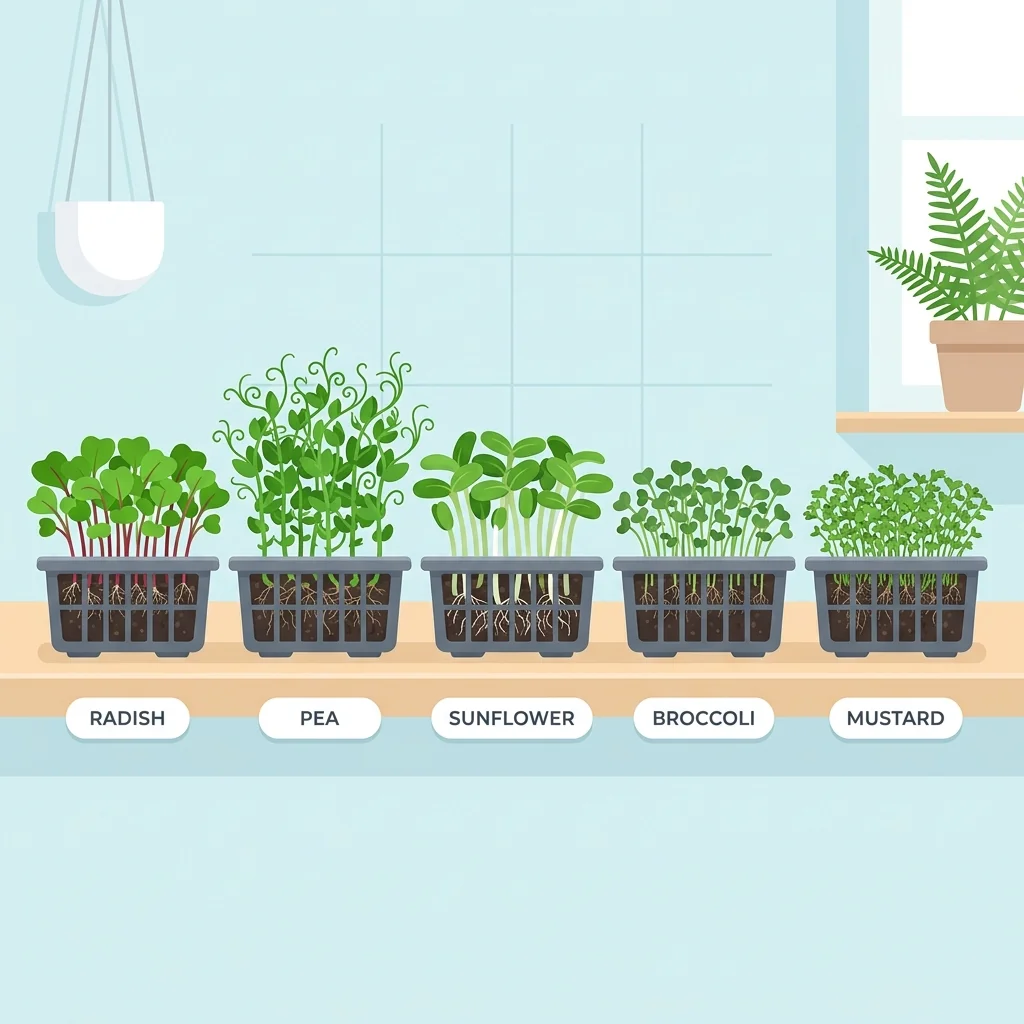
Best microgreens for beginners (fast and forgiving)
Start with microgreens that germinate fast and forgive mistakes. Radish, peas, sunflower, broccoli, and mustard are the easiest first trays, ready in about a week.
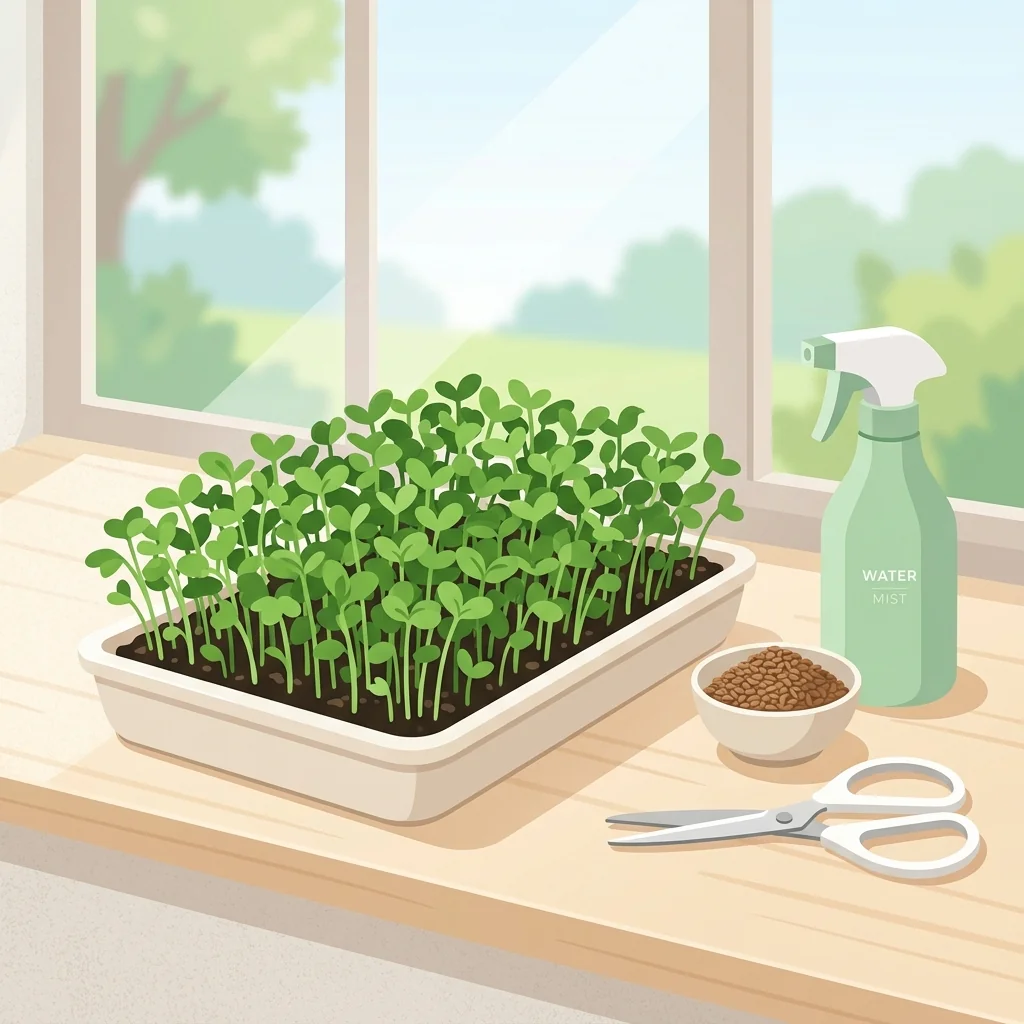
How to grow microgreens at home: a beginner's guide
Microgreens are the fastest crop you can grow indoors. This beginner guide walks through sowing, watering, light, and harvesting your first tray in about ten days.
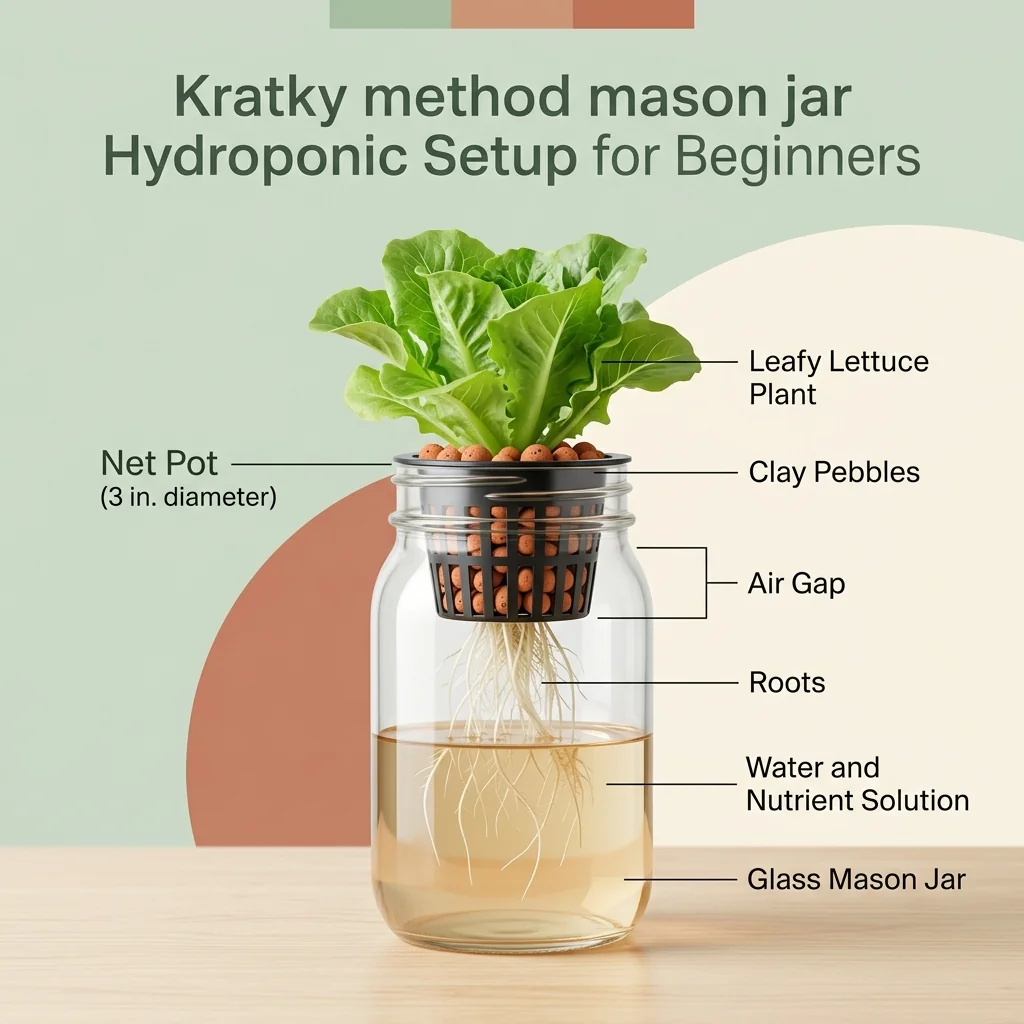
The Kratky method: passive hydroponics for beginners
The Kratky method is the simplest way into hydroponics: a container of nutrient solution, a net pot, and no pump or power. Here is how it works and its limits.