Microgreens light setup options
| Setup | Daily light | Result |
|---|---|---|
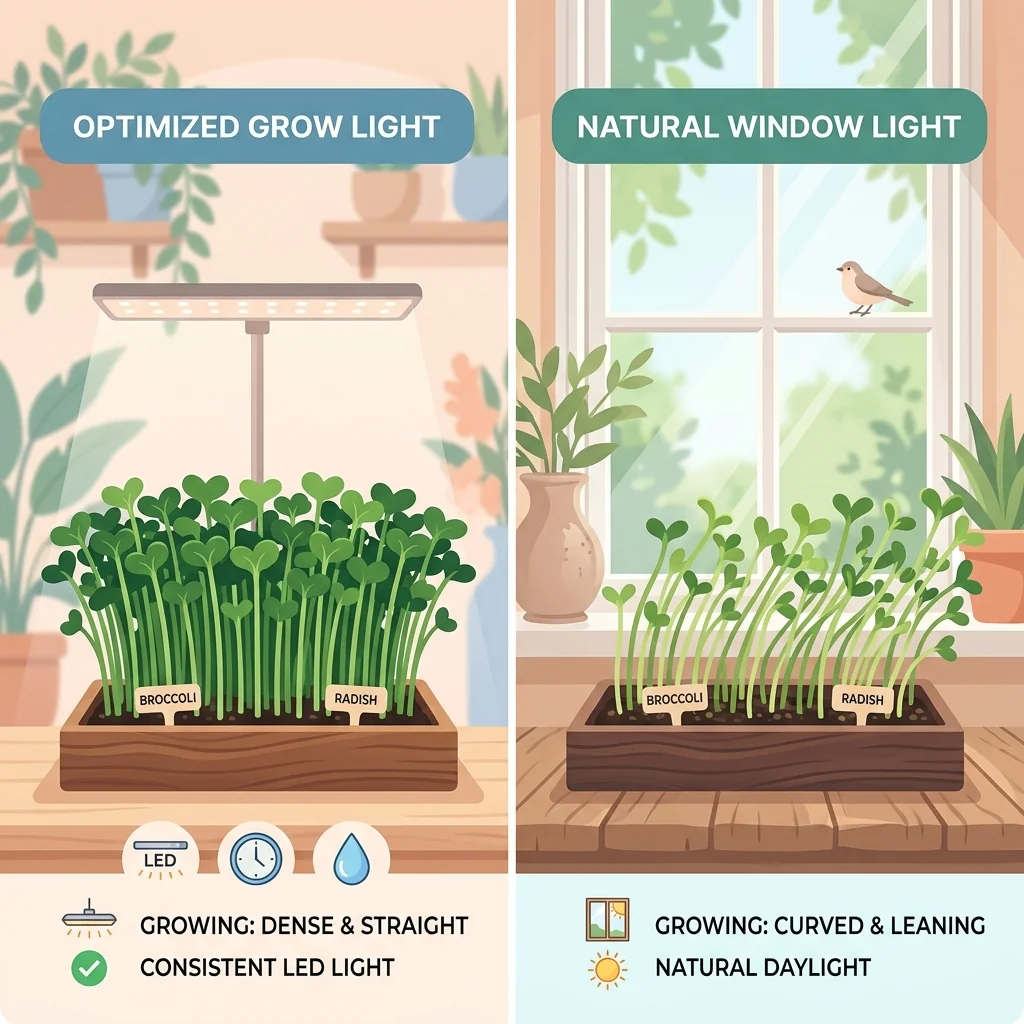
| Bright windowsill | Natural day, rotate tray | Good trays; some leaning, slower in winter |
| Small LED, 4-8 in above | 10-12 hours on a timer | Even, dense, year-round trays |
| Dim room, no light | Insufficient | Pale, floppy, falling over |
Microgreens have a two-phase relationship with light: dark to germinate, bright to grow. As a quick answer: after uncovering, give microgreens 6 to 12 hours of light a day — a bright windowsill works, and a small LED grow light 4 to 8 inches above the tray, 10 to 12 hours on a timer, works better. The full growing method is in how to grow microgreens at home.
The dark phase comes first
For the first few days after sowing, the tray stays covered and dark. This deliberately stretches the stems as the seedlings push up looking for light — that early height makes them easier to cut later. Do not add light during germination; it is not a mistake to fix.
After uncovering: light, and promptly
Once the sprouts lift the cover, move them into light the same day. This is the moment that decides the tray’s quality: with good light the stems stop stretching, the leaves open and turn deep green, and the tray grows dense and short. With weak light you get the classic failure — pale, lanky greens that fall over.
- Windowsill: a bright window grows perfectly good microgreens, especially fast crops like radish. Rotate the tray daily so it does not lean toward the glass, and expect slower trays in winter.
- Small LED: a modest full-spectrum LED a few inches above the tray, on a timer for 10 to 12 hours, gives even, repeatable results all year. It is the same principle as lighting herbs, covered in how to grow herbs indoors under a grow light — just closer, because microgreens stay short.
Distance: closer than you think
Mature herbs need a light 6 to 12 inches away; microgreens can take it at 4 to 8 inches because they are harvested before they ever grow tall. Closer light means shorter, sturdier stems. If a tray is stretching after uncovering, the fix is almost always closer or longer, not a different seed.
Do microgreens need less light than herbs?
Yes. Because you harvest at the first true leaves, microgreens never need to power weeks of leafy growth. Fast, forgiving crops — see best microgreens for beginners — will make a decent tray even in mediocre light, which is one more reason they are the easiest way to start growing indoors.
That comparison does not make every low-light setup adequate. Photoperiod and mounting distance vary by crop and fixture. Utah State publishes an 18-hour schedule for its protocol, while other systems use different durations; use the chosen crop protocol and delivered light rather than treating 6–12 hours or 4–8 inches as universal.
Map the tray instead of judging brightness
Record fixture model, actual watts, height, photoperiod, tray footprint, and readings at centre plus four corners. A phone lux app can compare relative uniformity under the same device and spectrum; a quantum sensor measures PPFD. Do not apply one lux-to-PPFD factor across different lamps.
If corners are weak, reduce footprint, reposition bars, or add a fixture. Rotating can average modest differences but does not repair a severe hotspot.
Separate light stress from water stress
Bleaching, curling, or rapid dry-down below the centre can indicate excessive local intensity or heat. Pale leaning edges suggest coverage. Collapse at the media line, slime, or off odour points toward moisture or disease rather than simply weak light.
Change height, hours, dimmer, or footprint one at a time. Photograph new growth and record usable harvest; already elongated stems will not become shorter.
Measure energy per successful tray
Calculate kWh = actual watts ÷ 1,000 × hours × days, including fans. Divide cost by trays with acceptable harvest, not trays started. That compares a long low-power schedule with a shorter high-intensity one using outcome and energy together.
Sources and further reading
If you are lighting microgreens, also read
These guides cover the full growing method and the grow-light basics the setup borrows from.
Common questions
How much light do microgreens need?
After germination, about 6 to 12 hours of good light a day. Microgreens are less light-hungry than mature herbs because they are harvested young, but weak light still makes them pale, tall, and floppy.
Can you grow microgreens on a windowsill without a grow light?
Yes. A bright window grows good microgreens, especially fast crops like radish. Expect some leaning toward the glass (rotate the tray daily) and slower, lankier trays in winter. A small LED removes both problems.
How far should a grow light be from microgreens?
Close — roughly 4 to 8 inches above the tray for a small LED. Microgreens are short and harvested young, so the light can sit much nearer than it would over mature plants. If they stretch, move it closer or run it longer.
Why are my microgreens tall, pale, and falling over?
Not enough light after uncovering. Give them 10 to 12 hours under a closer, stronger light. Note that some initial height is normal, since the dark germination phase deliberately stretches the stems.
Related guides
Best microgreens for beginners (fast and forgiving)
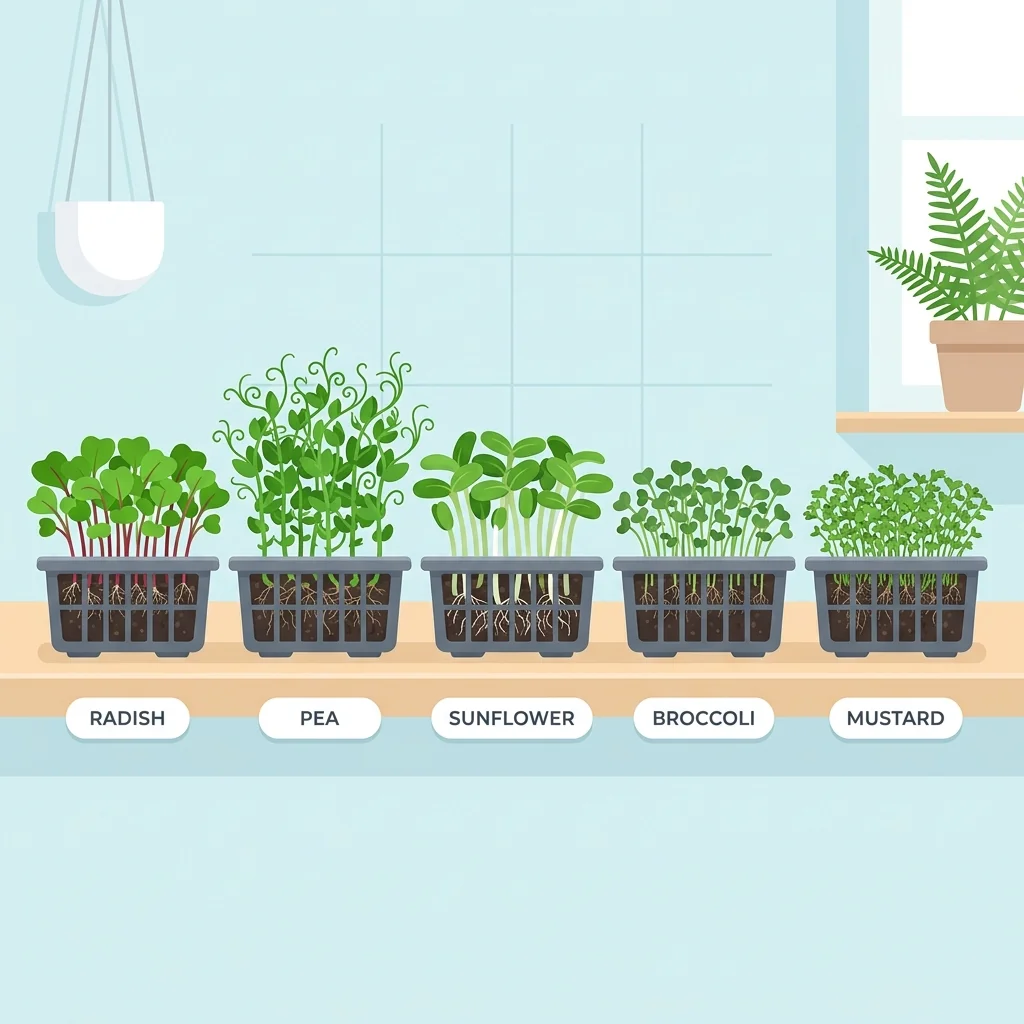
Start with microgreens that germinate fast and forgive mistakes. Radish, peas, sunflower, broccoli, and mustard are the easiest first trays, ready in about a week.
How to grow microgreens at home: a beginner's guide
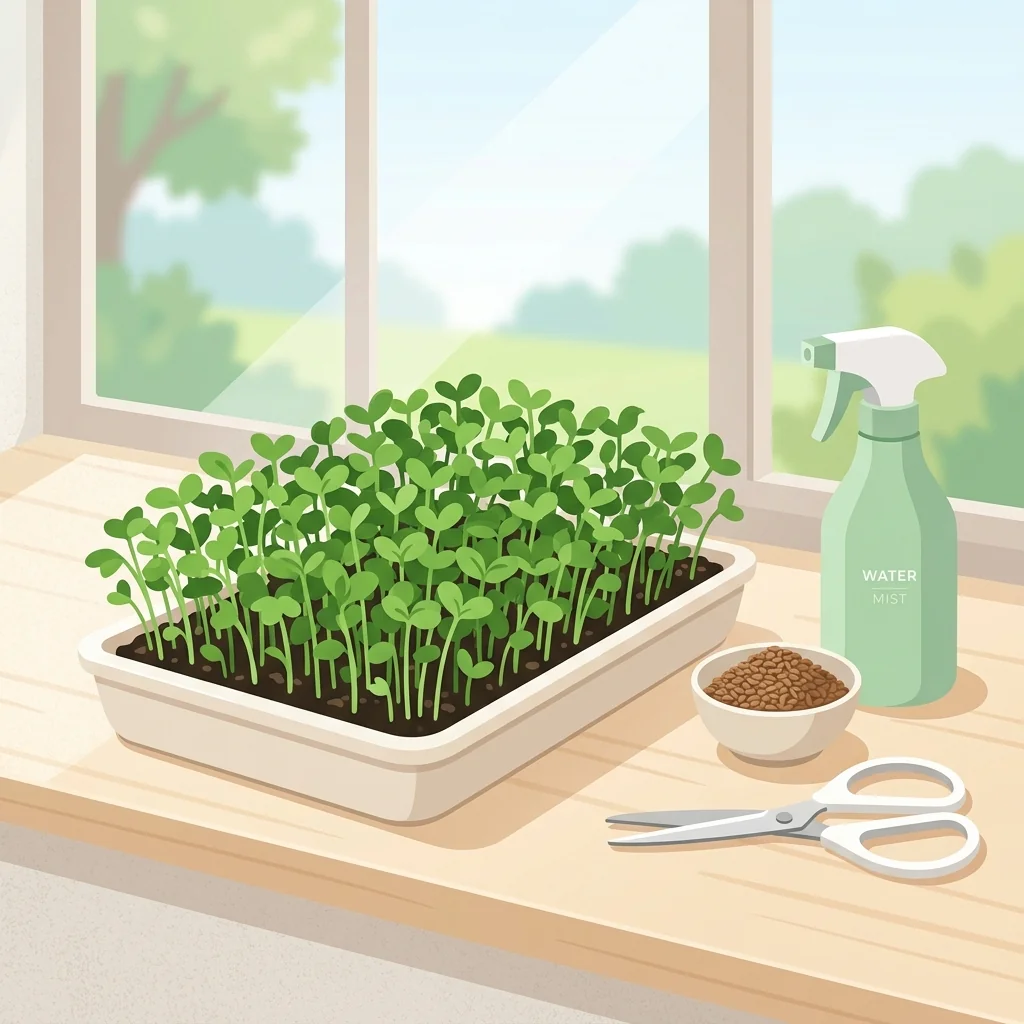
Microgreens are the fastest crop you can grow indoors. This beginner guide walks through sowing, watering, light, and harvesting your first tray in about ten days.
How to grow herbs indoors under a grow light
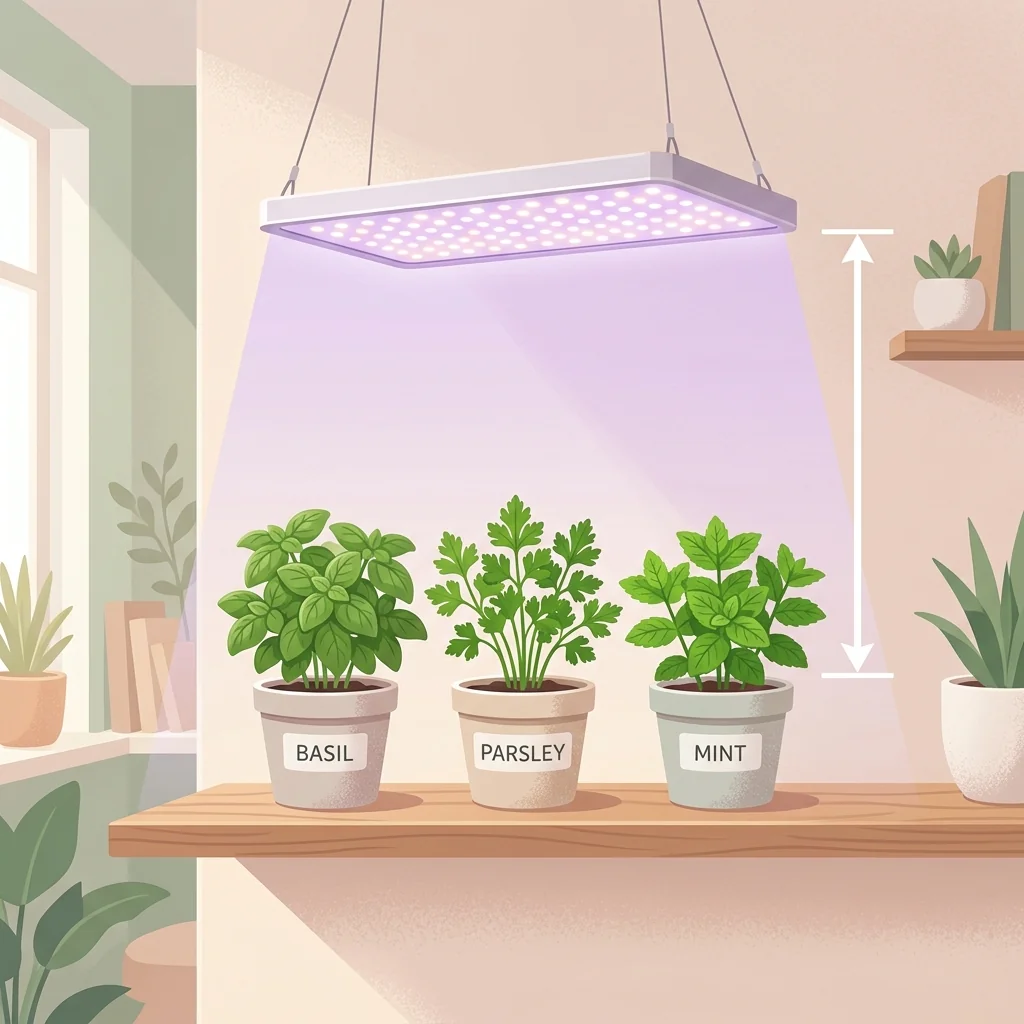
A grow light lets you grow herbs indoors anywhere, even with no sun. Here is the simple end-to-end setup: which light, how high, how long, and how to avoid leggy growth.