Is the Kratky method right for your crop?
| Crop type | Kratky fit | Why |
|---|---|---|
| Lettuce and leafy greens | Excellent | Finish fast, low oxygen demand |
| Leafy herbs (basil, mint) | Good | Work well in small jars |
| Spinach, kale | Good | Cool-season greens suit it |
| Tomatoes, peppers, cucumbers | Poor | Too large and long-season; need topping and more oxygen |
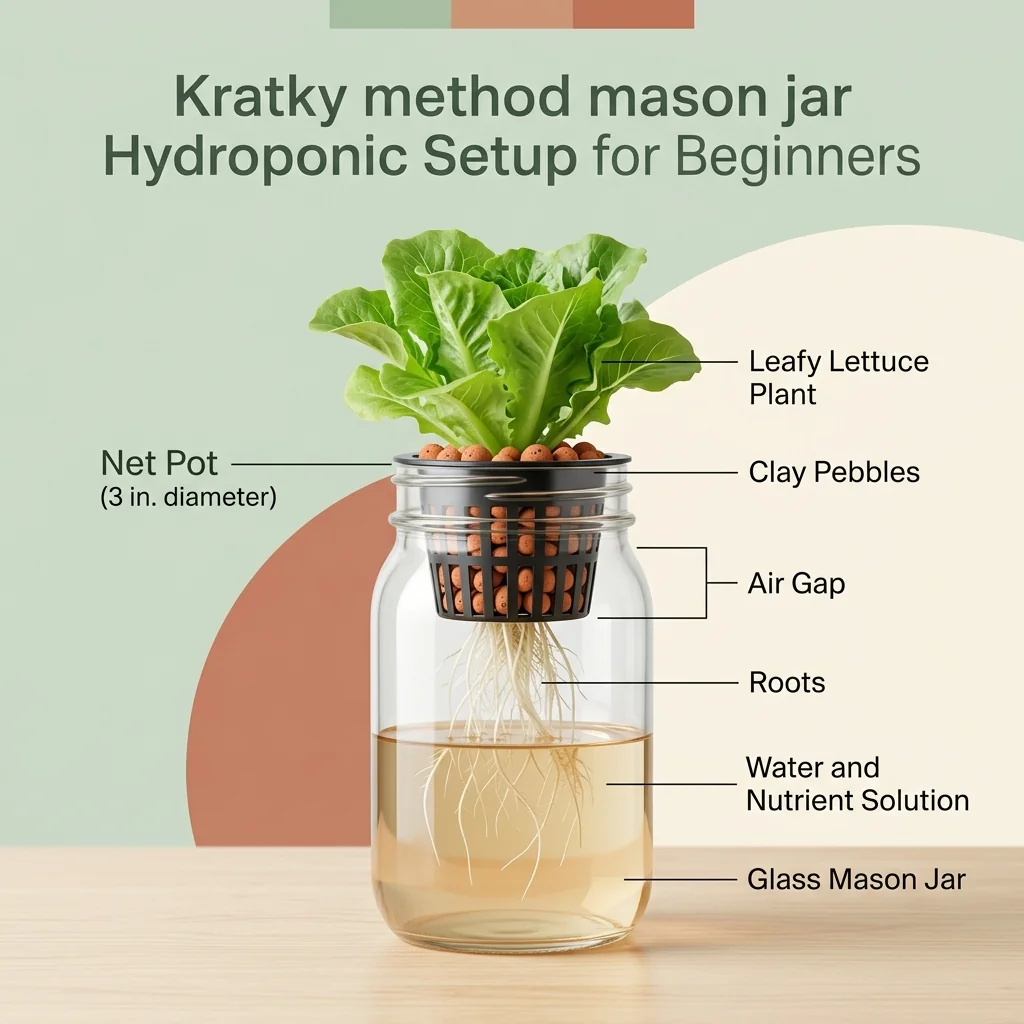
The Kratky method is the simplest possible way into hydroponics. As a quick answer: it is passive hydroponics with no pump, air stone, or electricity; a plant sits in a net pot above a sealed container of nutrient solution, and as it drinks, the falling water level leaves an air gap that keeps the roots oxygenated. It is perfect for lettuce, greens, and herbs. If you would rather buy a prebuilt kit than DIY a jar, compare options in Best hydroponic systems for beginners. If nutrients are new to you, start with hydroponic nutrient basics.
How the Kratky method works
You fill a container with nutrient solution, suspend a net pot so the bottom just touches the liquid, and plant a seedling in growing media. Two things happen as the plant grows:
- The roots grow down into the solution and drink it.
- The water level drops, leaving an air gap between the surface and the net pot.
That air gap is the clever part. The lower roots take up water and nutrients, while the upper roots sit in moist air and take up oxygen. No pump is needed because the plant creates its own oxygen zone.
What you need
- A container (a jar, tub, or bucket) ideally opaque to limit algae.
- A net pot and a lid or cover to hold it.
- Growing media (rockwool or clay pebbles) and a seedling.
- Nutrient solution mixed to the crop’s target, following how to mix hydroponic nutrients.
Best crops, and what to avoid
Kratky shines with crops that finish before the reservoir runs out: lettuce, leafy greens, and herbs. For those, mix the solution once (for example, the lettuce EC and pH targets) and largely leave it alone. It is not suited to large, long-season fruiting crops like tomatoes, which drink too much, need topping up, and demand more oxygen than a passive jar provides.
Limits to know
- No top-offs by design. Classic Kratky finishes as the solution is used; topping off too much removes the air gap and can drown roots.
- Algae and heat. Use an opaque container and keep it out of hot, bright spots on the reservoir itself.
- It does not scale easily. For more plants or longer crops, an active system is better; compare them in NFT vs DWC vs Kratky.
Size the reservoir for the complete crop
The classic method is designed around enough initial solution for a defined crop cycle. Estimate generously from the crop, temperature, light, and expected duration, then test with one plant. A tiny jar can run out before roots and canopy finish even when the chemistry was correct.
Mark initial volume, net-pot depth, and a minimum level. Do not allow lower roots to dry completely. If an emergency top-up is necessary, preserve the established aerial-root zone rather than refilling to the original line and submerging it.
Commission a jar without hiding the roots
- Use an opaque or fully light-blocked food-compatible reservoir.
- Measure usable volume and mix a complete crop-appropriate solution.
- Support the seedling so its plug is moist but the crown is not submerged.
- Cover every opening around the net cup.
- Label crop, cultivar, date, EC, pH, and starting level.
- Inspect roots, solution temperature, level, and new growth on a schedule.
Do not wrap a clear jar in material that traps heat or sheds fragments into solution. A removable opaque sleeve can allow occasional inspection without exposing roots continuously to light.
Know when passive is no longer simpler
Repeated top-ups, long crops, warm conditions, large root masses, or valuable plants may justify active aeration and a serviceable reservoir. Moving to DWC is not a failure of Kratky; it is matching system resilience to the crop.
Record a complete cycle
Track initial solution, any top-up, crop days, root/canopy observations, and usable harvest mass. Clean and inspect the reservoir after harvest. This provides evidence for the next reservoir size rather than copying a jar volume from a different climate.
Sources and further reading
If you are trying the Kratky method, also read
These guides connect passive hydroponics to nutrient mixing, system comparison, and the easiest crops.
Common questions
What is the Kratky method?
It is a passive form of hydroponics where a plant sits in a net pot above a sealed container of nutrient solution, with no pump or electricity. As the plant drinks, the water level falls and leaves an air gap that keeps the roots oxygenated.
Does the Kratky method need a pump?
No. That is the whole point. There is no pump, air stone, or power. The falling water level creates the air gap that supplies oxygen to the roots, which is why it is so beginner-friendly.
What can you grow with the Kratky method?
Lettuce, leafy greens, and herbs work best because they finish before the reservoir runs out. It is not suited to large or long-season fruiting crops like tomatoes that need topping up and more oxygen.
Do you top off a Kratky jar?
Classic Kratky is designed not to be topped off; the plant finishes around the time the solution is used up. If you do top off, add only a little and keep the air gap, or you can drown the roots.
Related guides
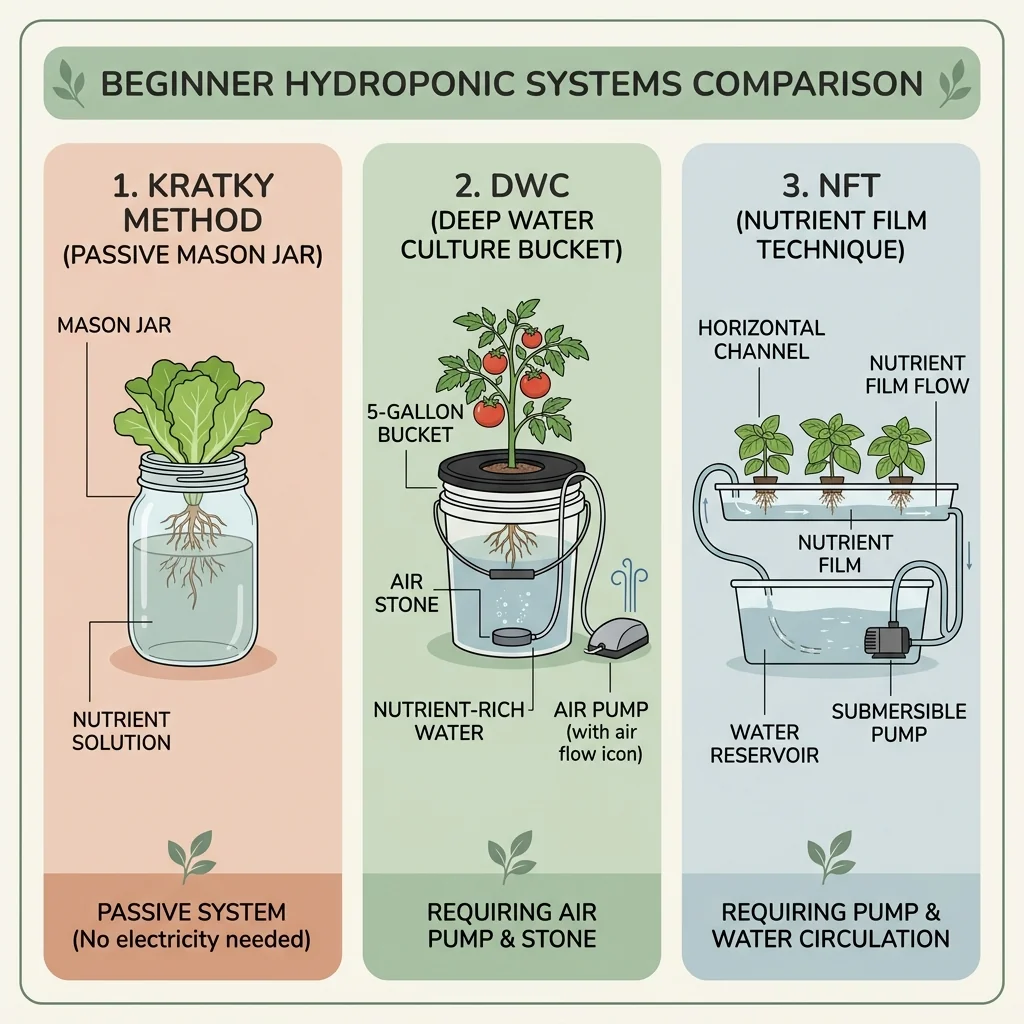
NFT vs DWC vs Kratky: which should a beginner pick?
Three systems dominate small-space hydroponics: Kratky, DWC, and NFT. This comparison shows how they differ and which one a beginner should actually start with.
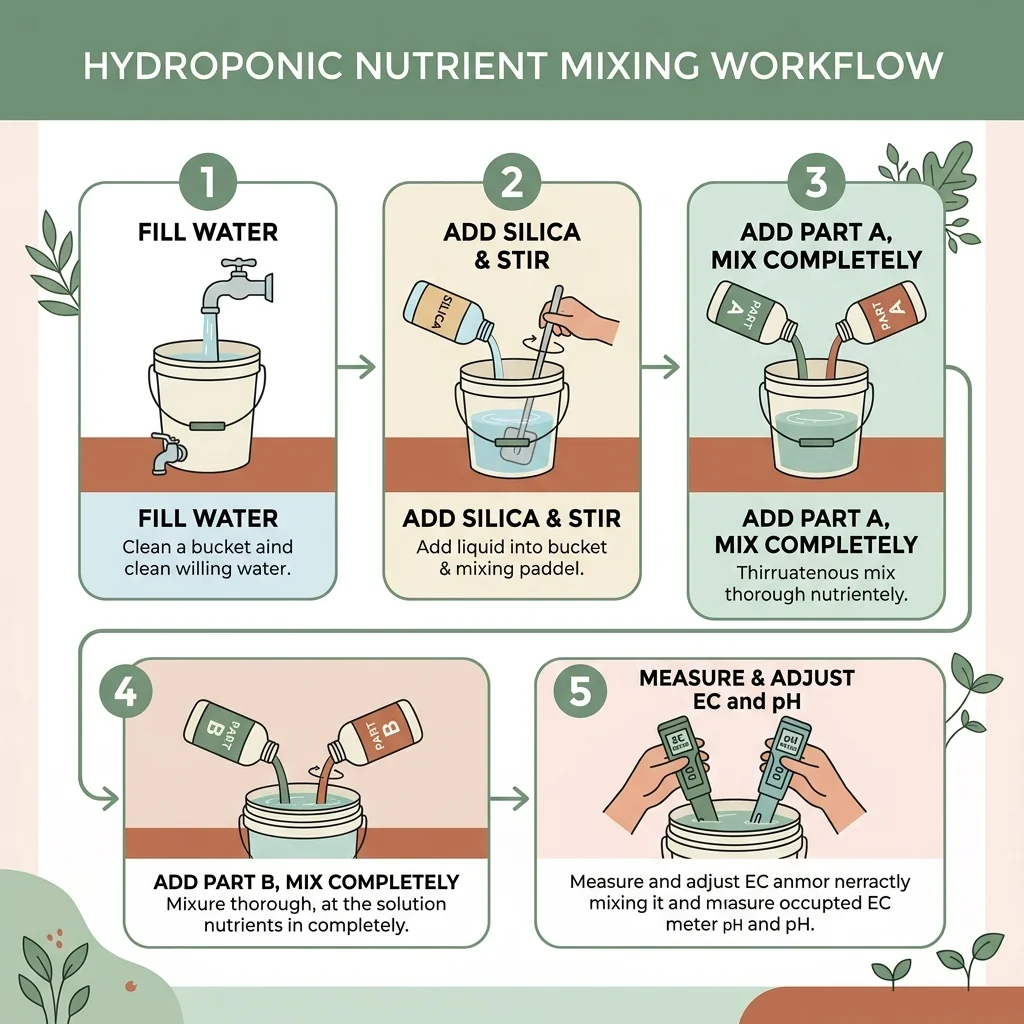
How to mix hydroponic nutrients: a beginner guide
Mixing hydroponic nutrients is simple once you know the order: water first, nutrients separately, measure EC, then adjust pH last. Here is the step-by-step.
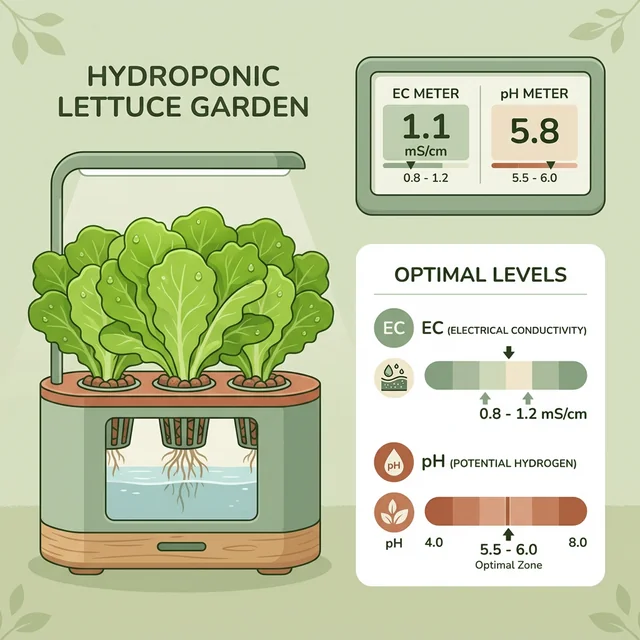
Hydroponic lettuce EC & pH chart: 0.8-1.2 and 5.5-6.0
Lettuce is the easiest crop to grow hydroponically, but it requires specific water chemistry. Use this beginner-friendly EC and pH guide to prevent tip burn and slow growth.