Troubleshoot the system before you change the inputs.
Symptoms
- Small green wedge-shaped insects that walk sideways or jump when you disturb the leaf.
- Leaves cup or curl, then yellow and brown from the edge inward, often on older leaves first.
- Stunted bean or potato plants with leaf tips that look scorched despite regular watering.
- Pale veins, twisted small leaves with purple veins, or hairy pale carrot roots instead of simple edge scorch.
Possible causes
- Potato leafhopper nymphs and adults feeding on the underside of leaves and injecting a toxin as they feed (hopperburn).
- Aster leafhoppers spreading aster yellows to carrots, lettuce and other plants in the aster family.
- Beet leafhoppers spreading curly top virus to beans, beets, tomatoes, peppers and squash.
- Drought or an ordinary end-of-season decline that merely looks similar, with no insects found.
Quick fixes
- Turn over leaves and shake the plant: count what you find before deciding anything.
- Cover beans and eggplant with a row cover, and weed around the pots.
- Remove plants with aster yellows or curly top virus.
- Read the label before putting any spray on a plant you will eat.
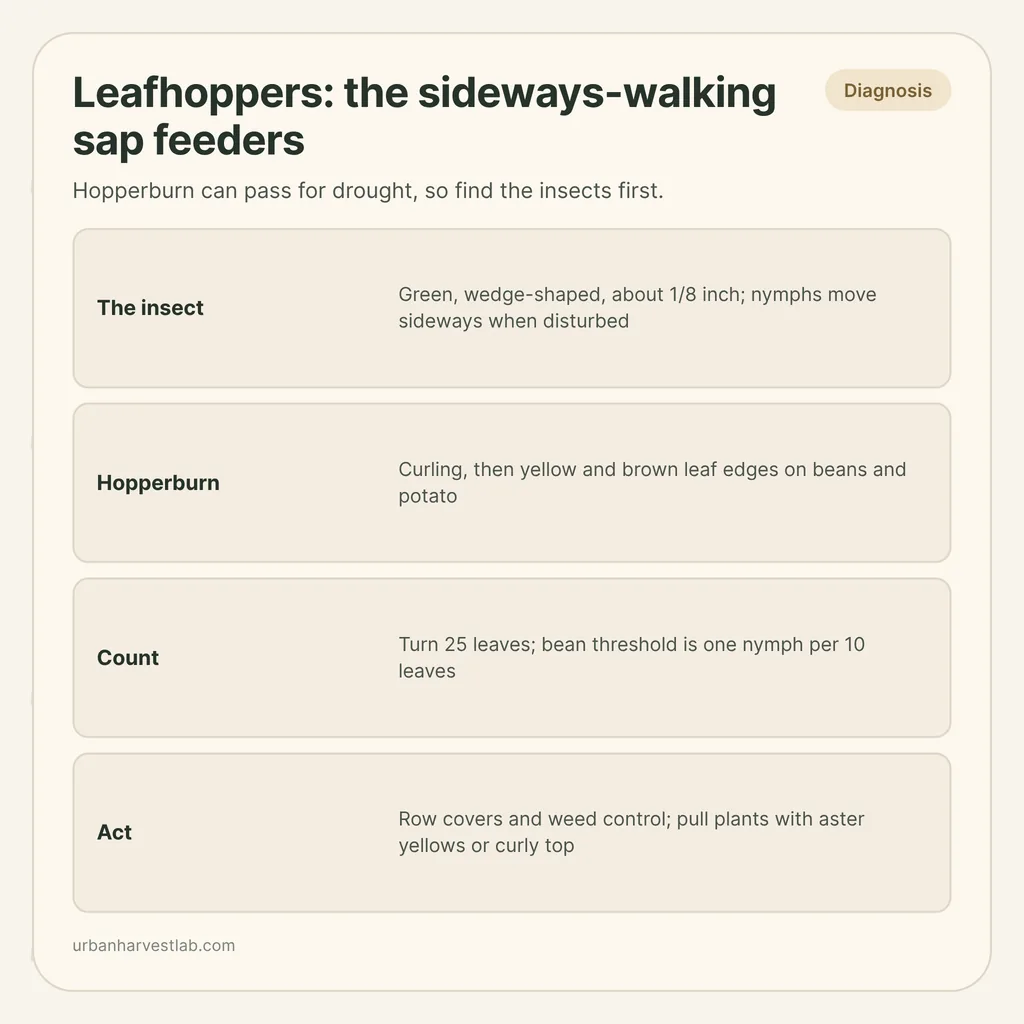
Small green insects that scuttle sideways when you lift a leaf, on plants whose leaf edges are curling and browning, are leafhoppers. The scorched edge is called hopperburn. Row covers and weed control are the home-garden tools, and the plants that carry a leafhopper-borne disease should be pulled.
How to recognise a leafhopper
Wisconsin Extension describes the potato leafhopper adult as a bright green, wedge-shaped insect about 1/8 inch long, widest at the head, tapering toward the wing tips. UConn Extension adds six white spots behind the eyes. Illinois Extension notes that adults jump and fly readily when disturbed.
The nymphs are the stage worth learning. They are smaller and paler, and Wisconsin Extension calls them wingless and flightless, tending to “move sideways very quickly when disturbed”. Illinois Extension says a nymph is more likely to walk to the other side of the stem or leaf than to jump. That sidestep is the quickest field mark, for nymphs and adults alike.
Check the undersides of leaves, and shake the plant: UConn Extension says nymphs sit under the leaf and adults can be flushed out of the foliage. For whiteflies, see whiteflies on balcony vegetables.
What hopperburn looks like
Both nymphs and adults pierce the leaf and inject saliva as they feed. Wisconsin Extension lists the first signs as pale leaf veins and a curling leaf. Continued feeding produces a triangular yellow or brown patch at the leaf tip or margin that spreads inward until the whole leaf dies.
| Crop | What extension sources describe |
|---|---|
| Bean | UConn Extension: damage starts with cupping or curling, then discolouration in the curled area and tissue death. Illinois Extension: bean seedlings can be seriously injured, and heavily injured beans are stunted. |
| Potato | UConn Extension: yellowing at the margins, curling, tissue death and leaf drop. Wisconsin Extension: severe leaf damage and early plant death are common. |
| Eggplant | Illinois and UConn Extension list it as a host. No crop-specific symptom is given on the pages consulted. |
Two points change how you read the plant. First, UConn Extension warns that hopperburn can look like leaf senescing or drought damage, so confirm the insects before you change the watering. Second, it can be quick: UConn gives 4-5 days from first symptoms to dead leaves, depending on infestation level and moisture stress. Wisconsin Extension says hot, dry weather speeds the injury and that yield can drop before symptoms are obvious.
Count before you act
For a small garden, Wisconsin Extension suggests turning over 25 leaves from the middle of the plant and counting nymphs and adults. Its snap bean action threshold is one nymph per 10 leaves, a commercial figure but a useful yardstick for how seriously to take what you find. Illinois Extension gives the same one-nymph-per-ten-leaves figure for beans. Wisconsin adds that healthy, vigorously growing plants withstand damage better than stressed ones, so keep watering and feeding steady.
Early summer is the moment to look. UConn Extension says potato leafhoppers arrive each year in June in Connecticut. Wisconsin Extension places arrivals in mid to late May and warns that crops near cut alfalfa see numbers jump. Local timing varies, so start scouting while beans are still seedlings, which Illinois Extension says can be seriously injured by leaf feeding.
What to do about them
Exclude them. Illinois and UConn Extension both name row covers for beans and eggplant, and Illinois adds that depending on the crop they may need to come off when flowering starts. Utah State Extension recommends floating row covers against beet leafhoppers too. If you are covering bean pots, you can browse floating row cover on Amazon; the sources give no brand or weight to prefer. Check the plants under the cover for insects when you put it on. See growing beans in containers for the crop itself.
Weed around the pots. Illinois Extension says weeds serve as alternative feeding sites. Utah State Extension notes that beet leafhoppers live on weeds until they dry up, then move to vegetables.
Do not count on predators. Wisconsin Extension says several predators, fungi and parasites attack the potato leafhopper, though none has been shown to control it.
Think hard before spraying. Illinois Extension says pesticides can be used but you must read and follow all label directions. Utah State says sprays aimed at leafhoppers are ineffective because of their wide host range, long-distance migration and rapid virus transmission. Wisconsin Extension’s chemical advice is written for commercial growers. For anything you will eat, choosing a pest treatment walks through what the label allows.
Choose less susceptible varieties where you can. UConn Extension names Katahdin, Elba and All Red potatoes as moderately resistant to leafhoppers and Russet Burbank as least susceptible to hopperburn. Wisconsin Extension found Blue Lake snap beans more susceptible than Tendercrop.
Diseases leafhoppers carry
Feeding scorch is the lesser problem when the insect is a disease vector.
Aster yellows is spread by the aster leafhopper. Colorado State Extension says the organism is carried by this insect, and that the disease affects lettuce, carrots, beets, onions and many flowers. Illinois Extension describes infected carrots as hairy-rooted, stunted and pale, and infected lettuce as yellow with stunted, twisted leaves. Colorado State says managing the insect is not usually feasible in a home garden. Remove infected plants and weeds promptly, as both Colorado State and Illinois advise.
Curly top virus is spread by the beet leafhopper. Utah State Extension lists beans, beets, squash, pepper, potato, spinach, Swiss chard and tomato among the hosts. Symptoms include small twisted leaves with purple veins, thickened crisp leaves, and yellowing and death of mature leaves. It has no cure, and symptoms may show before you see any insect. Utah State recommends removing infected plants, floating row covers, and shade for tomato and pepper plants. Curling tomato leaves have other causes too; tomato leaves curling sorts them. For virus symptoms on other crops, see mosaic virus on potted plants.
Sources
Sort out sap-feeding pests
Compare leafhoppers with whiteflies, and choose a treatment that is safe on food plants.
Common questions
What do leafhoppers look like?
Wisconsin and Illinois Extension describe the potato leafhopper adult as a bright green, wedge-shaped insect about 1/8 inch long. Nymphs are smaller, paler green to yellow, and have no wings. Both move sideways.
What is hopperburn?
It is the leaf damage caused by potato leafhopper feeding: curling, then yellowing and browning from the leaf edge, and in bad cases leaf drop. UConn Extension notes it can look like drought damage.
Do I need to spray for leafhoppers?
Not necessarily. Extension sources point gardeners to row covers, weed control and scouting. Utah State says sprays aimed at beet leafhoppers are ineffective. If you do use a product, the label on a food plant decides.
Are leafhoppers the same as whiteflies?
No. Leafhoppers are larger wedge-shaped insects that walk sideways and jump. Whiteflies are a different pest with their own page on this site.
Related guides
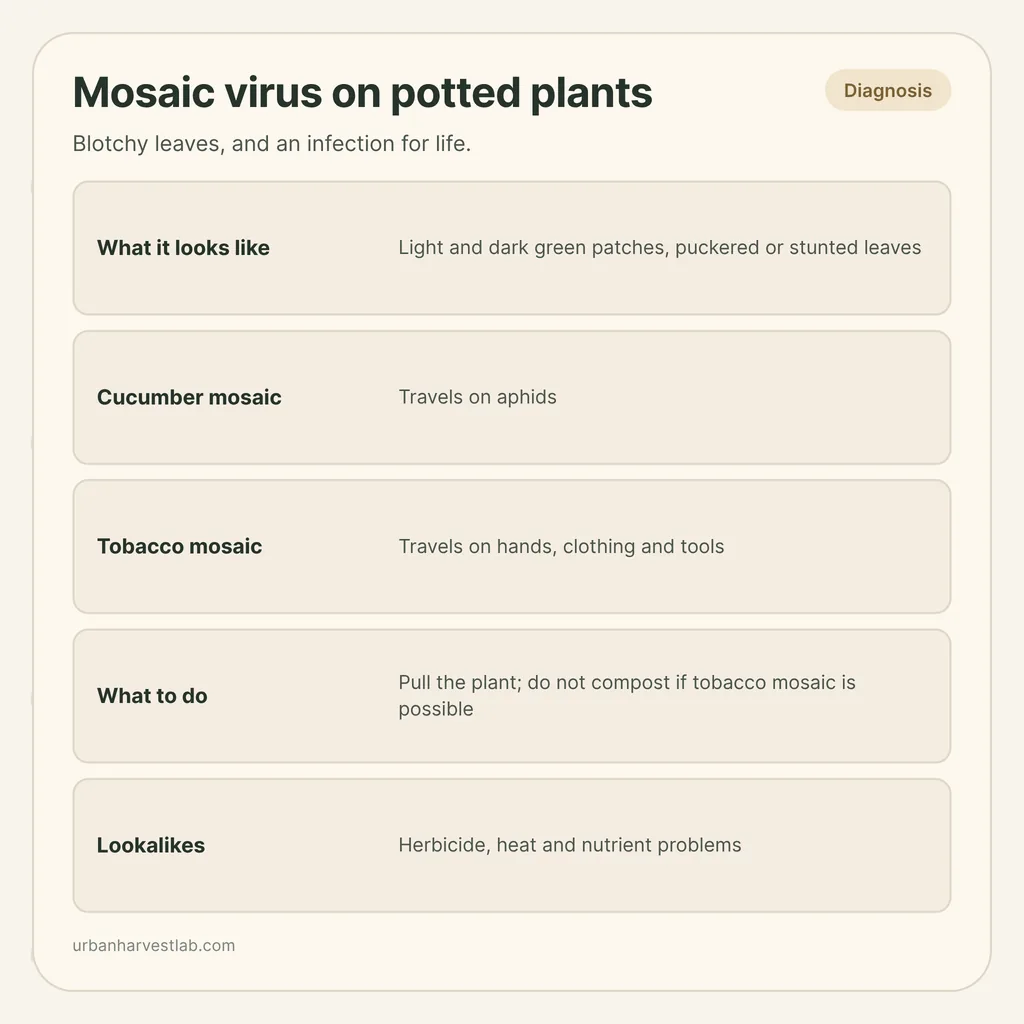
Mosaic virus on potted plants: how to spot it and what to do
Mosaic virus has no cure. Here is how to tell it from herbicide, heat and nutrient problems, how it travels between pots, and how to clean up afterwards.
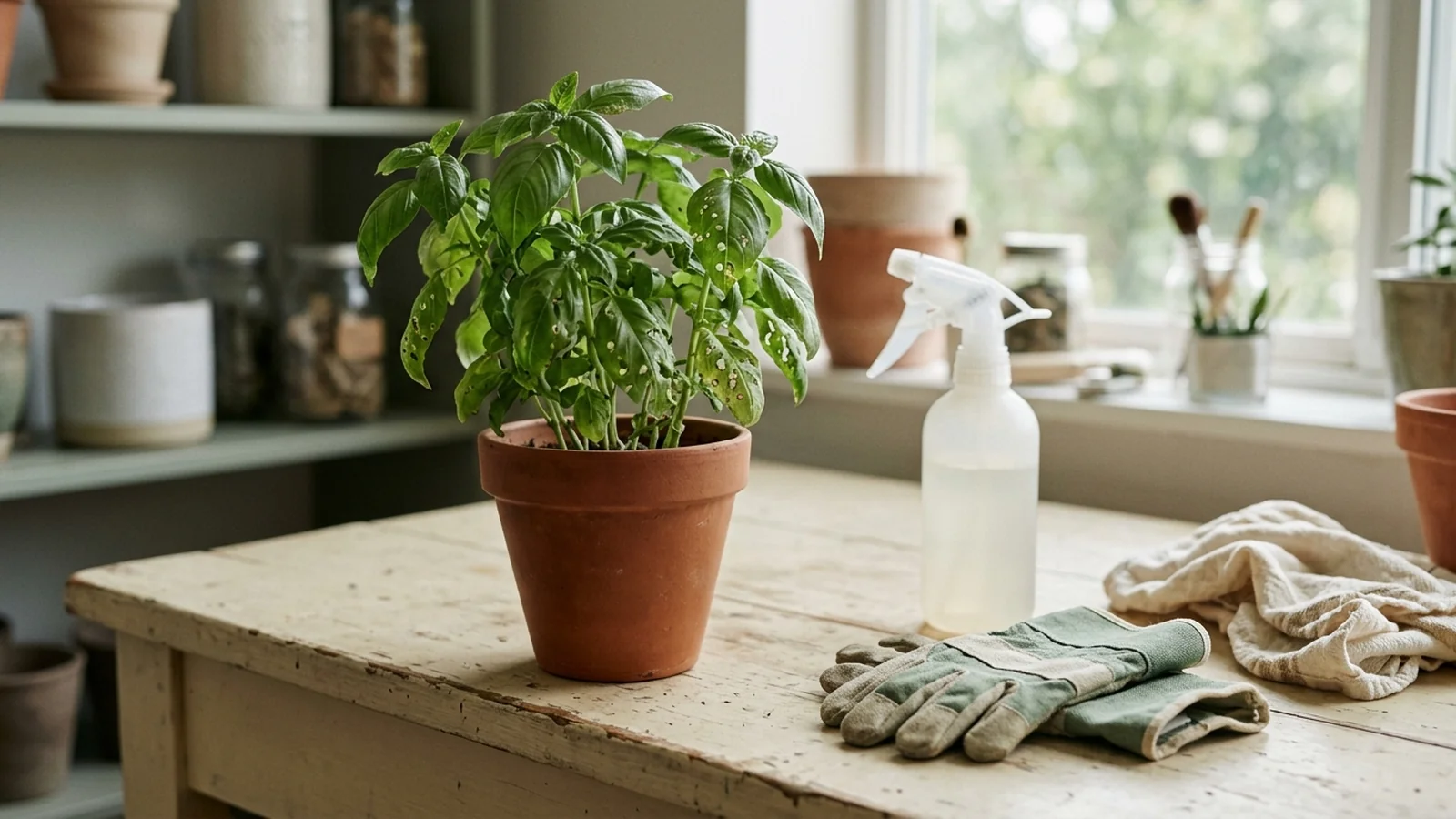
Choosing a pest treatment for plants you are going to eat
Once you know which pest you have, the next question is what you can treat it with without compromising the food. The answer is a ladder of methods, and the label on any product you buy sets the legal limits of the top rung.
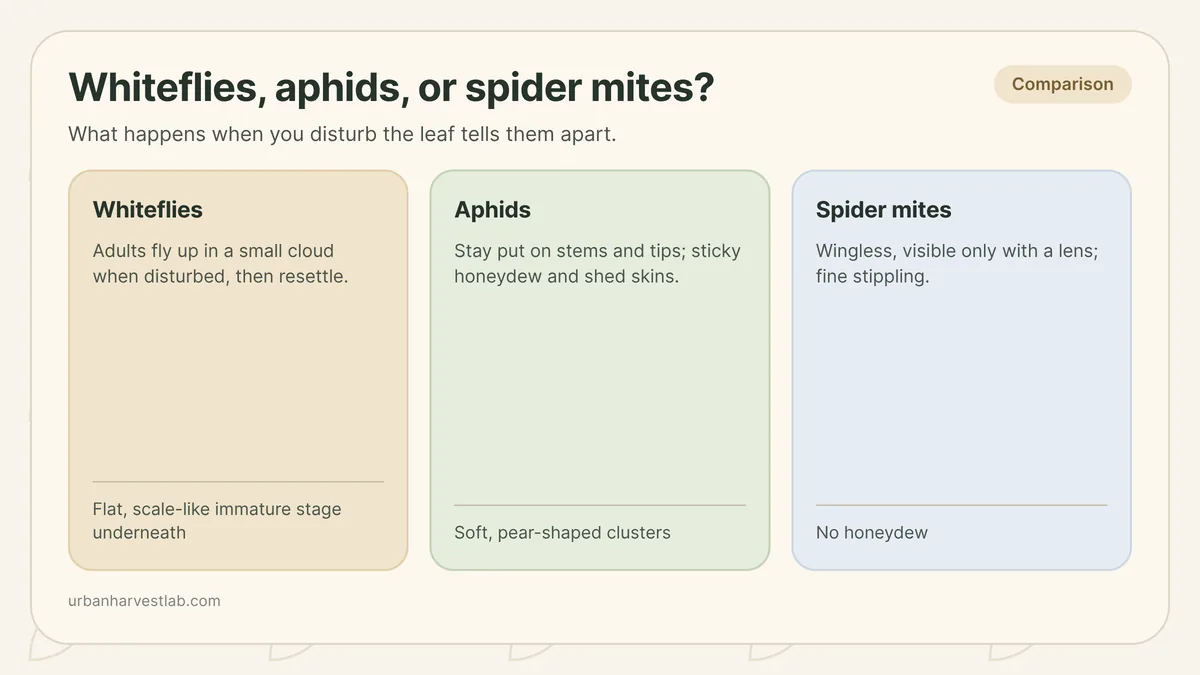
Whiteflies on balcony vegetables: identify them and bring the numbers down
Whiteflies on a balcony vegetable plant are easiest to confirm by disturbing the foliage and watching what flies up, then working the population down with sprays, traps, and repeat checks.