Troubleshoot the system before you change the inputs.
Symptoms
- White, cottony masses tucked into leaf axils, along stems, or wherever leaves touch.
- Sticky honeydew on leaves or nearby surfaces, sometimes with black sooty mold growing on it.
- Yellowing, curling, or stunted new growth on a heavily colonized herb.
- Ants patrolling the stems or the soil surface.
Possible causes
- A new plant carried a small colony in, hidden in a leaf axil or at the soil line.
- A few crawlers survived an earlier treatment and matured into a fresh colony.
- Overlapping generations mean eggs are still hatching while visible adults are being treated.
- Ants are protecting the colony from the insects that would otherwise prey on it.
Quick fixes
- Move the herb away from other plants before treating it.
- Dab visible masses with a cotton swab dipped in a diluted isopropyl alcohol solution, after testing it on one leaf first.
- Follow with a labeled insecticidal soap or horticultural oil, covering leaf undersides and stem joints where mealybugs hide.
- Recheck weekly for several weeks, since egg sacs keep hatching after the visible adults are gone.
Mealybugs compared with other honeydew pests
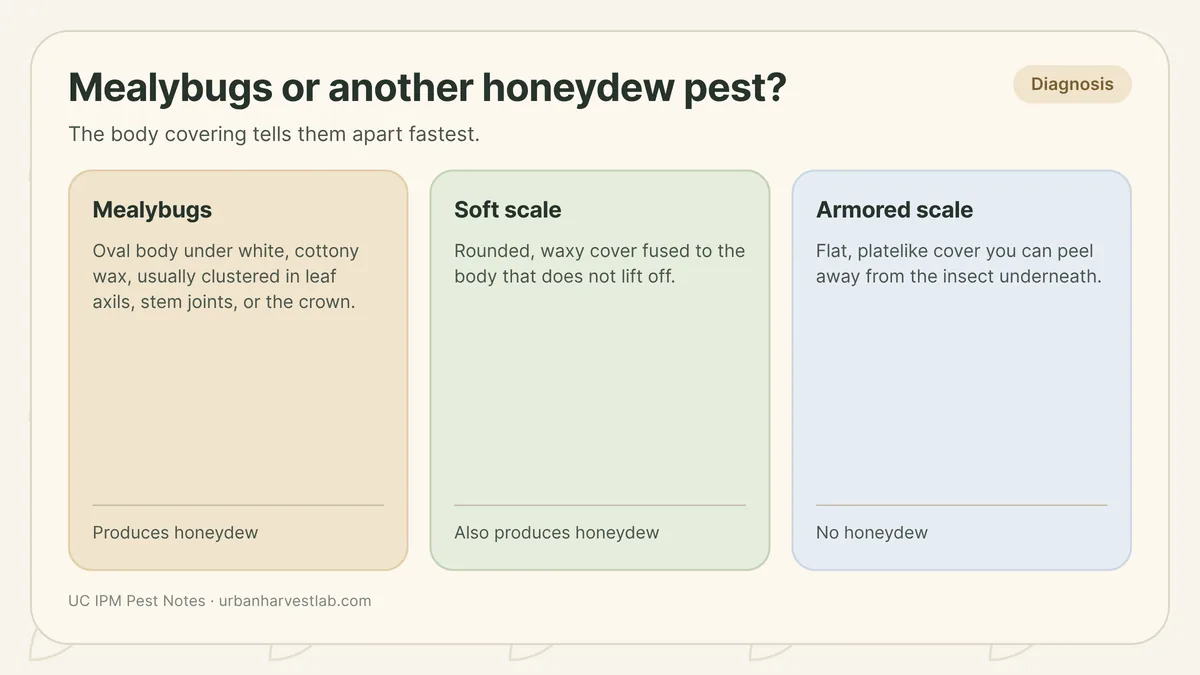
| Clue | Mealybugs | Soft scale | Armored scale |
|---|---|---|---|
| Body covering | Oval body under a white, waxy or cottony coating | Rounded cover fused to the body that does not lift off | Flat, platelike cover that can be peeled off the insect |
| Honeydew | Yes, with sticky residue and sooty mold | Yes | No, sticky leaves rule this one out |
| Typical hiding spot | Leaf axils, stem joints, and the crown of the plant | Along stems and leaf midribs | Stems and leaf undersides |
Mealybugs on herbs show up as small tufts of white cotton wedged into leaf axils, along stems, or wherever two leaves touch, not as a single insect crawling across a leaf. Left alone, they multiply through several overlapping generations, coat the plant in sticky honeydew, and reappear for weeks after one treatment looks like it worked. If the plant is also pale, wilting, or growing slowly for reasons that have nothing to do with insects, start with the broader diagnosis in common potted herb problems before working through mealybugs specifically.
Confirm it is mealybugs, not a lookalike
UC IPM describes the wingless adult female as an oval, segmented insect with a body covered in wax, which is what produces the cottony look. Clemson Cooperative Extension gives the size as an eighth to a quarter of an inch long. The young crawlers are a separate stage worth learning: they are yellow to orangish or pink, have not grown the waxy coating yet, and move around the plant far more than the adults do.
UC IPM is direct about the risk of a confident visual ID from a photo alone: mealybugs are easily confused with cottony cushion scale, woolly aphids, soft scales, and whiteflies, because all of them produce wax and honeydew. The clue that narrows it down is the cover itself. Soft scale grows a rounded cover fused to its body that does not lift off. Armored scale grows a flat, platelike cover you can peel away from the insect underneath, and armored scale does not produce honeydew at all, so sticky leaves rule armored scale out on their own. Mealybugs and soft scale both leave the sticky residue; the cottony wax and the mobile crawlers are what point specifically at mealybugs. The full side-by-side lives in the herb pest identification chart, and scale specifically is covered in scale insects on rosemary and other woody herbs.
Where they hide, and why a glance misses them
UC IPM lists the crown of the plant, branch crotches, stems near the soil line, and the pockets where two leaves press together as the usual hiding places, and notes that a few mealybug species feed on roots instead of foliage entirely. That is a different search pattern than checking the top of a leaf for stippling or a moving dot. Tip the pot, separate stems gently, and check the underside of every leaf junction rather than scanning the plant from a distance.
The life cycle that explains the comeback
The reason a single spray rarely finishes the job is reproductive output. UC IPM reports that adult females of most mealybug species lay 100 to 200 or more eggs in a cottony sac, laid over a 10- to 20-day period, with two to six generations produced in a year. The longtailed mealybug is the exception worth knowing: it bears live young directly instead of laying eggs in a sac, so a plant with no visible sac can still be actively reproducing. Either way, a colony that looks cleared after one pass is often just between generations.
Ants are a symptom, not a separate problem
Ants moving along the stems or soil are worth noting rather than treating on their own. UC IPM’s ant pest note states that indoor ants are attracted to the honeydew that soft scales, mealybugs, and aphids produce, and that outbreaks of these sap-feeding pests are more frequent where ants tend them for that honeydew, because the ants actively protect the colony from the insects that would otherwise prey on it. Clearing ants without addressing the mealybugs they are farming just removes one layer of the problem.
Treat what you can reach
Isolate the plant first, the way you would for aphids or spider mites, since the same crawlers that move between leaf axils on one plant will move onto a neighboring pot with the same ease. Clemson Cooperative Extension notes that houseplant pests most often arrive on newly purchased plants or on plants that have spent the summer outdoors, so isolating and inspecting a new arrival before it joins the rest of the collection is worth the habit; preventing pests on indoor herbs covers that routine in more depth.
For visible masses, UC IPM describes spot treatment with a 70 percent or weaker solution of isopropyl rubbing alcohol in water, applied with a cotton swab directly to each insect, after testing the solution on a small part of the plant one to two days beforehand to check for leaf damage. Beyond what a swab can reach, UC IPM lists insecticidal soaps, horticultural oils, and neem oil among the materials applied directly to mealybugs. The Colorado State University Extension explains why coverage matters more than concentration with insecticidal soap: it works strictly as a contact material with no residual effect, so it has to physically touch the insect, “usually means spraying undersides of leaves and other protected sites,” which is exactly where mealybugs sit. Dish soap is not a substitute; CSU Extension notes that household detergents “can injure plants, damage soil, and contaminate waterways,” and Clemson’s own instruction is to test any insecticidal soap or other product on a small part of the plant before treating it fully.
On repeat intervals, UC IPM gives alcohol or soap applications weekly until the infestation is gone, and a plain water spray at several-day intervals as a gentler physical option for a lighter colony. For any oil-based product, avoid spraying a drought-stressed plant or applying it once temperatures climb above 90°F, and leave two weeks between an oil application and any sulfur-based product on the same plant.
Neem oil is one option, and the label decides whether it applies to you
Neem oil is listed among the materials that work directly on mealybugs, but whether you can legally use a specific bottle on a specific herb depends on that bottle’s label, not on neem oil as an ingredient. The US EPA states that pesticide labels are legally enforceable directions, and the National Pesticide Information Center is equally direct: if the crop is not named on the label, the product cannot be applied to it. Preharvest intervals work the same way; NPIC notes that wait times “can differ between products” for the same crop, and that a zero-day interval is a real and common case rather than something to assume. The specifics of reading a neem label for an edible herb, including that azadirachtin mechanism and how it differs from a contact kill, are covered in neem oil on herbs: safe use.
What counts as working
Judge success on new growth, not on old leaves that are already curled or yellowed from earlier feeding; that damage does not reverse once the insects are gone. UC IPM’s own interval for repeat treatment is weekly, so a clean result means several consecutive weekly checks with no live insects and no fresh wax on newly expanded leaves. With two to six generations produced in a year, eggs laid before treatment can still be present and hatching, so a single clean inspection a few days after treatment mostly proves the swab reached the insects you could see, not that the colony is finished.
Common mistakes
- Treating only the leaf surface and skipping the crown, the stem joints, and where leaves overlap.
- Spraying once and returning the plant to the collection immediately.
- Reaching for a full-strength alcohol wipe or a dish-soap mixture instead of a tested, diluted solution.
- Clearing the ants and assuming the mealybugs are gone with them.
- Picking a product without checking that the herb is named on its label.
Sources
Rule out the other honeydew pests first
Mealybugs share hiding spots and symptoms with other sap feeders; these guides cover the lookalikes and the setup issues that make any pest worse.
Common questions
What are the white cottony spots on my herb?
They are almost certainly mealybugs. UC IPM describes the adult female as a wingless, oval insect with a body covered in white wax, usually clustered in leaf axils, along stems, or wherever two leaves touch. The young crawlers are yellow to orange or pink and have not grown the wax yet, so they are easy to miss until a colony builds up.
Does rubbing alcohol actually kill mealybugs?
Yes, on contact. UC IPM's method is a 70 percent or weaker isopropyl alcohol solution on a cotton swab, dabbed directly onto each insect, after testing it on a small part of the plant one to two days beforehand. It only works on insects the swab touches, so hidden crawlers in a leaf axil need a second pass.
Why do mealybugs keep coming back after I treat them?
Because one treatment rarely reaches every life stage. UC IPM reports that a single female can lay 100 to 200 or more eggs in a cottony sac over a 10- to 20-day period, with two to six generations a year, so eggs are often still hatching after the visible adults are gone. Weekly rechecks for several weeks catch the next wave before it becomes visible again.
Can I still harvest and eat an herb that had mealybugs?
Rinse the harvest well and discard leaves thickly coated in wax or honeydew. If you treated the plant with any product, check its label for the herb you grew and for the wait time before harvest, since that interval is set per product and per crop, and some labeled products allow harvest the same day.
Related guides
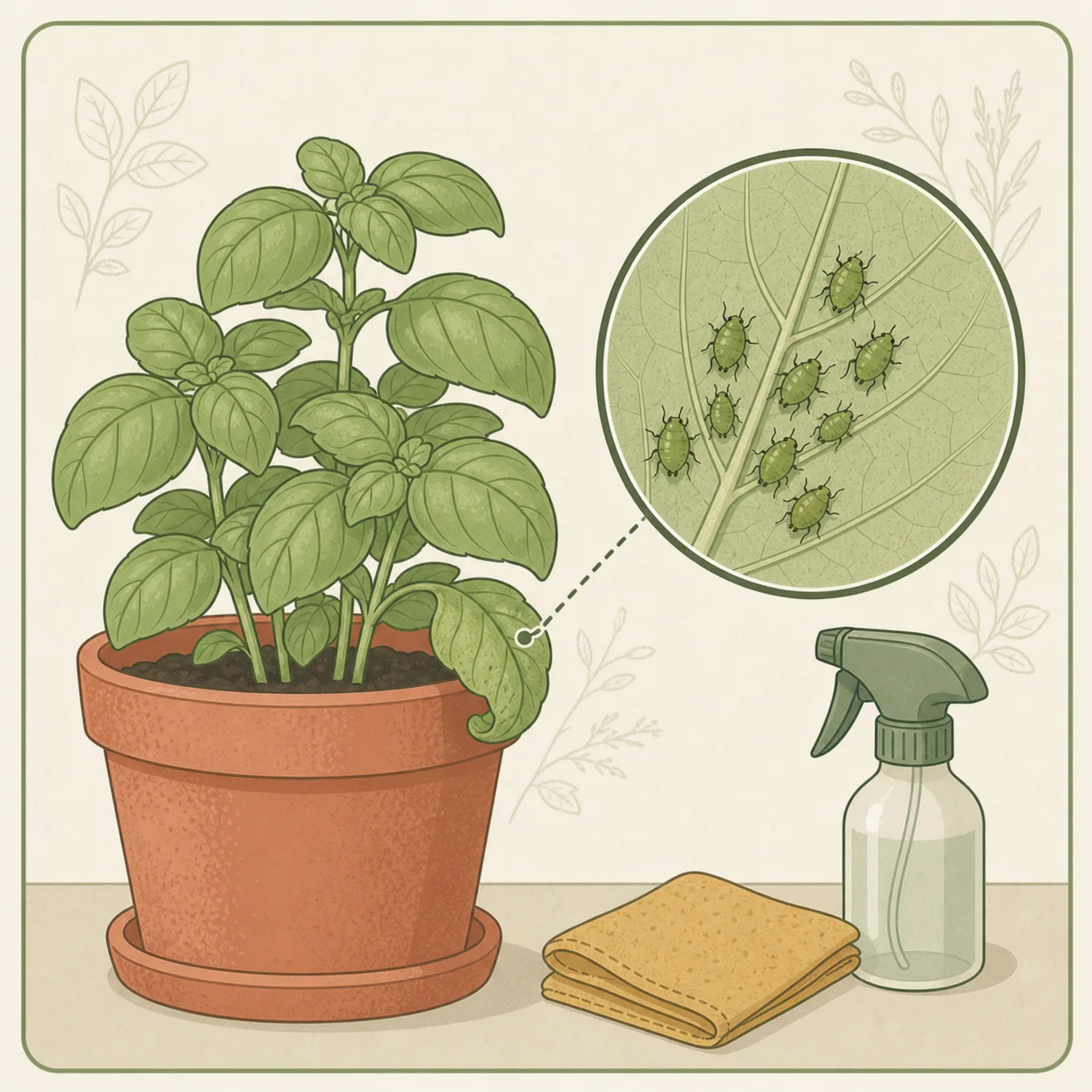
Aphids on indoor herbs: identify, isolate, and control them
Aphids are manageable when you find the colony, isolate the plant, remove most insects physically, and repeat inspections through the next generation.
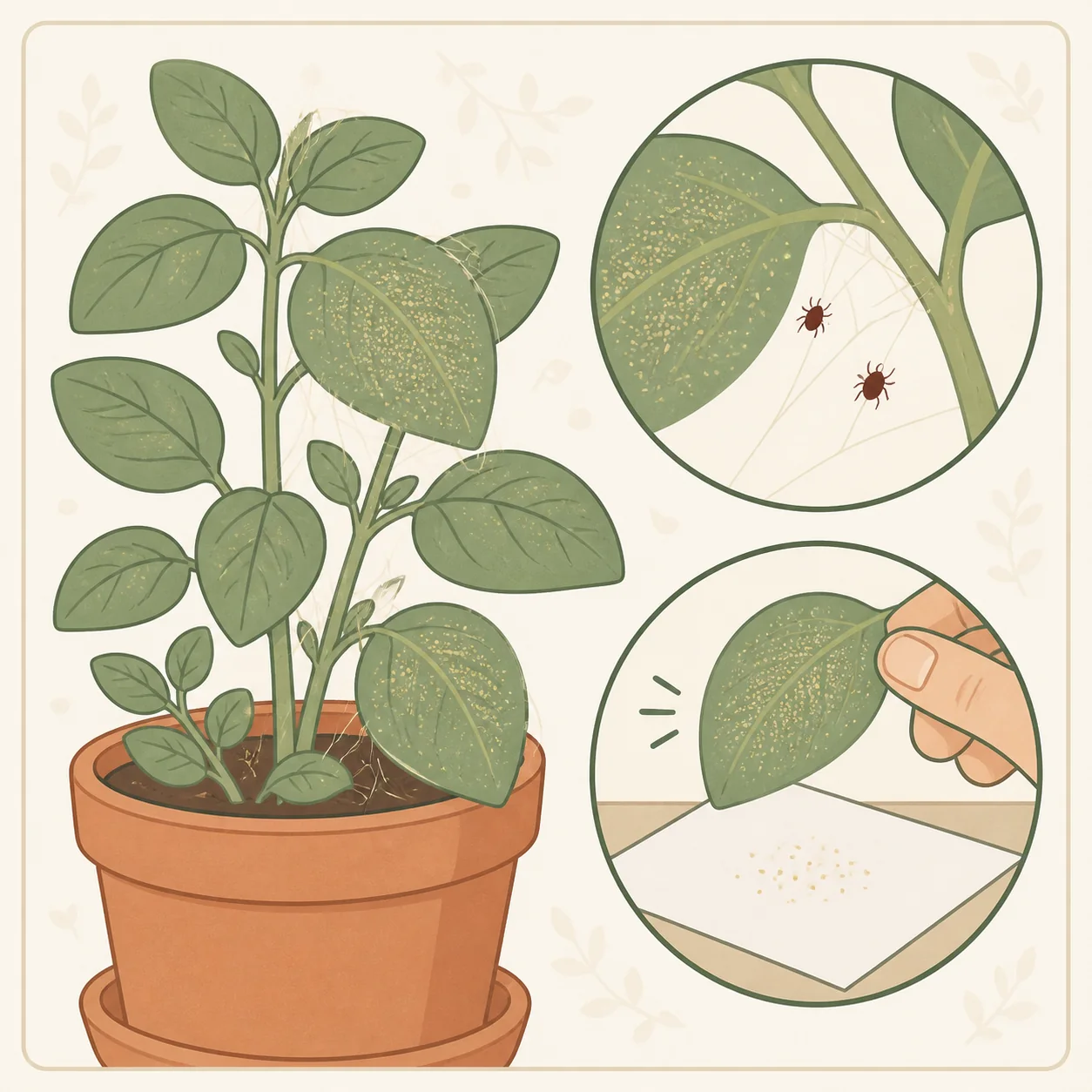
Spider mites on indoor herbs: signs, paper test, and control
Spider mites are easiest to control before webbing is obvious. Look for fine pale stippling and confirm moving specks over white paper.
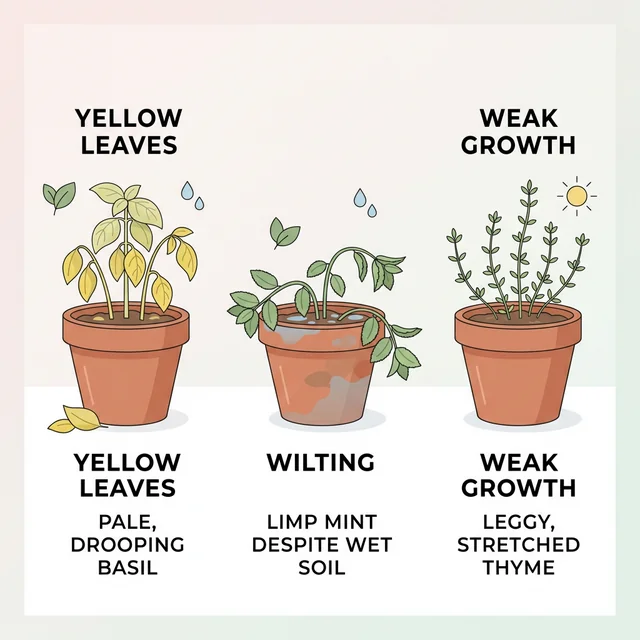
Common potted herb problems: yellow leaves, wilting, and weak growth
Common potted herb problems usually show up as yellow leaves, wilting, or weak growth, but the useful diagnosis starts with light, drainage, and root stress.