Troubleshoot the system before you change the inputs.
Symptoms
- Irregular holes with smooth edges appear in leaves and flowers that looked fine the evening before.
- A shiny, dried slime trail shows up on the leaf surface, the pot rim, or the saucer underneath by morning.
- Damage is worst on a pot that sits on damp pavement, near dense nearby plantings, or close to a wall.
Possible causes
- Slugs or snails are hiding under the pot, the saucer, or nearby debris during the day and climbing up to feed after dark.
- A damp, sheltered spot on a balcony or patio gives them a daytime hiding place within reach of the plant.
- A barrier or bait was applied once and not maintained, so it stopped working after a few waterings or a fresh flush of mulch.
Quick fixes
- Check under the pot, the saucer, and any nearby boards or pots after dark with a flashlight before assuming a different pest.
- Fit a copper band around the pot rim or dig a barrier into the soil surface rather than relying on a single treatment.
- Hand-pick after dark for several nights in a row, then drop to a weekly check once the population visibly declines.
Confirming slugs and snails specifically
| Clue | Slugs and snails |
|---|---|
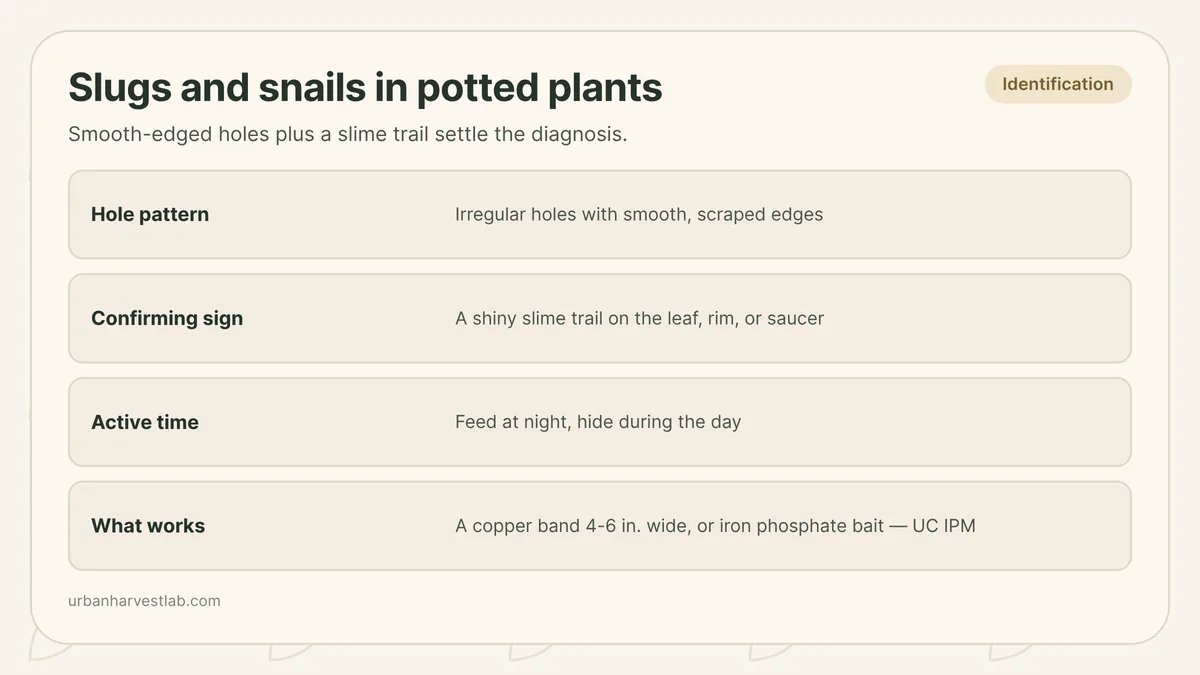
| Hole pattern | Irregular holes with smooth, scraped edges |
| Confirming sign | Shiny slime trail on the leaf, rim, or saucer |
| Active time | Feed at night, hide during the day |
| Worth knowing | Copper and bait are the sourced controls |
Smooth-edged holes in the leaves and a shiny trail on the pot by morning point to slugs or snails, and the barriers with real evidence behind them are a copper band around the container, iron phosphate bait, and hand-picking timed to when these pests are actually out. Treat the pot as part of the problem: in a container garden, the rim, the saucer, and the soil surface underneath are where slugs and snails spend the day before they climb up to feed.
If holes are only one of several things a potted herb is doing at once — pale color, wilting, slow regrowth — the common potted herb problems guide works through light, root stress, and container issues in a fixed order before narrowing in on a single pest. The rest of this covers what to do once you have already ruled those out and are looking at actual chewed leaves.
The slime trail is what settles it
For the full three-way comparison against earwigs and caterpillars, holes in herb leaves covers all three chewers side by side; what follows here confirms slugs and snails specifically once that comparison points that way.
Slugs and snails feed by scraping plant tissue with a rasp-like tongue, which UC IPM describes as leaving irregular holes with smooth edges in leaves and flowers. They feed at night and hide during the day, so the damage typically shows up between one evening and the next morning with no insect in sight. The confirming sign is the shiny slime trail they leave behind on the leaf, the pot rim, or the saucer.
Two other night feeders make similar-looking holes. Earwigs chew numerous irregular holes and can strip a seedling down to bare stems, and UC IPM’s own discriminator between the two is the slime trail: earwigs leave none. Caterpillars also chew irregular holes and some species fold or roll a leaf shut with silk, but again, no slime. If you find a reddish-brown insect with pincer-like appendages at the tail rather than a mollusk, you are dealing with an earwig, and it is worth knowing that earwigs also feed on aphids and insect eggs, so removing every one you see is not automatically the right call. When the picture is not obvious from a wet trail or a visible pest, herb pest identification chart walks through matching other feeding signs to the insect behind them.
Why container gardens make this worse
A potted herb on a balcony or patio gives slugs and snails exactly what they need during the day: a dark, humid gap under the pot, the saucer, or a stack of nearby containers. Because they hide during daylight and only feed at night, a grower who inspects a pot at noon and sees nothing concludes there is no problem, then finds a shredded leaf the next morning. The fix is to look at the right time and the right place — lift the pot itself, check the saucer, and check the soil surface after dark rather than checking the foliage at midday.
Container choices affect how easy that hiding place is to remove. UC IPM’s cultural-control advice is to eliminate daytime hiding places — boards, stones, debris, dense low foliage, stacked flowerpots — and reduce moisture around the plant; a pot raised slightly off the ground on feet, or moved a few inches from a wall or from dense nearby foliage, is the container-garden version of the same advice. The best containers for herbs guide covers drainage and material choices that also make a pot easier to inspect and keep dry around the base, which matters here as much as it does for root health.
Barriers that hold up: copper
Copper is the barrier UC IPM gives actual dimensions for. A band of copper 4 to 6 inches wide, buried an inch below the soil surface, is one form; a vertical copper screen at least 2 inches tall, with 1 to 2 inches of that sunk below the soil, is the other. Either version needs to stay unbroken and unbridged — a leaf touching the ground outside the barrier, a stem leaning against a wall, or mulch piled up against the pot all give slugs and snails a way across without touching the metal.
On a container, the practical version is a copper strip fitted around the outside of the pot itself, at or just above the rim, kept clear of any leaf or stem that could bridge it to the ground. Check the strip periodically; a build-up of dirt, algae, or a fallen leaf resting across it can quietly defeat the barrier without any obvious sign until the damage reappears.
Bait: iron phosphate over metaldehyde
Where a barrier is not practical on every pot, UC IPM describes bait as the other sourced option, and the two common active ingredients are not equally safe to use around a container garden. Iron phosphate products are described as safer for use around children, domestic animals, birds, fish, and other wildlife. Metaldehyde, by contrast, is particularly poisonous to dogs and cats, and the guidance is explicit about keeping metaldehyde bait off the plants themselves, which matters more on a container growing something you intend to eat.
Follow the label’s placement instructions for either product rather than scattering bait loosely across the growing mix, and keep bait away from where a pet or a curious child could reach it on a balcony or patio.
Traps and hand-picking, on the right schedule
Because slugs and snails hide during the day, the most direct control is checking for them when they are actually active. UC IPM’s guidance is to look daily at first, since a population that has built up needs frequent removal to bring down; once numbers have visibly declined, weekly hand-picking is generally enough to keep them there. Check under the pot itself, the saucer, and any boards, bricks, or other containers sitting nearby, since these are exactly the daytime hiding spots a balcony or patio tends to offer.
UC IPM also describes a beer trap: a container buried with its rim at soil level, with the bait refreshed every few days. It is an attractant that drowns slugs that fall in, not a barrier that keeps them off the plant, and it needs the same frequent maintenance as bait to keep working. Used alongside a copper barrier or bait station rather than as a stand-alone fix, it adds one more data point on how many slugs and snails are actually present.
Eggshells, coffee grounds, and diatomaceous earth
UC IPM’s snail and slug guidance names iron phosphate bait, metaldehyde bait, copper barriers, and a beer trap as its recommended methods, and it addresses three home remedies directly rather than staying silent on them. Crushed egg shells and coffee grounds “have not been shown to be effective deterrents,” per UC IPM. A barrier of dry diatomaceous earth, heaped in a band 1 inch high and 3 inches wide around the plant, can work — but UC IPM notes it loses its effectiveness once damp, which makes it difficult to maintain and not very useful in most garden situations. A watered container is exactly the damp setting that defeats it.
Common mistakes
- Checking a pot at midday and concluding there is no pest, when slugs and snails are hiding rather than absent.
- Fitting a copper strip that a leaf, stem, or nearby mulch bridges, which defeats the barrier without any visible sign.
- Using metaldehyde bait on a container growing an edible herb instead of the iron phosphate option.
- Treating every reddish-brown insect near the pot as the culprit without checking for a slime trail first.
- Setting a beer trap once and forgetting to refresh it, then assuming the method failed.
- Moving straight to bait or a spray before confirming which pest is actually responsible for the holes.
Sources
Identify the pest before you treat it
Holes and chewed leaves can come from more than one pest; use these guides to confirm which one is actually on your plant.
Common questions
What is the difference between slug damage and earwig damage on a potted herb?
Both feed at night and leave irregular holes, but only slugs and snails leave a shiny slime trail on the leaf, pot rim, or saucer. Earwigs are reddish-brown insects with pincer-like appendages at the tail and leave no slime behind, and they also eat aphids and insect eggs, so treating every earwig as a pest can remove a plant ally along with the problem.
Do copper barriers actually stop slugs and snails on a potted plant?
UC IPM describes a copper band 4 to 6 inches wide buried an inch into the soil, or a vertical copper screen at least 2 inches tall with 1 to 2 inches sunk below the surface, as an effective barrier. The copper has to stay clean and not be bridged by a leaf, mulch, or a nearby stem touching the pot, or slugs and snails can cross without contacting it.
Is iron phosphate bait safer than metaldehyde bait around a container garden?
By the safety profile UC IPM gives, yes. Iron phosphate products are described as safer for use around children, domestic animals, birds, fish, and other wildlife, while metaldehyde is particularly poisonous to dogs and cats and should be kept off the plants themselves, especially anything grown for food.
Do beer traps or eggshells stop slugs and snails on potted herbs?
UC IPM does describe a beer trap, buried so the rim sits at soil level and the bait refreshed every few days, but it works as an attractant that drowns slugs, not a barrier that keeps them off the plant. UC IPM states that crushed egg shells and coffee grounds have not been shown to be effective deterrents, and while it does describe a dry diatomaceous earth barrier, that barrier loses its effectiveness once damp, which makes it a poor fit for a watered container.
Related guides
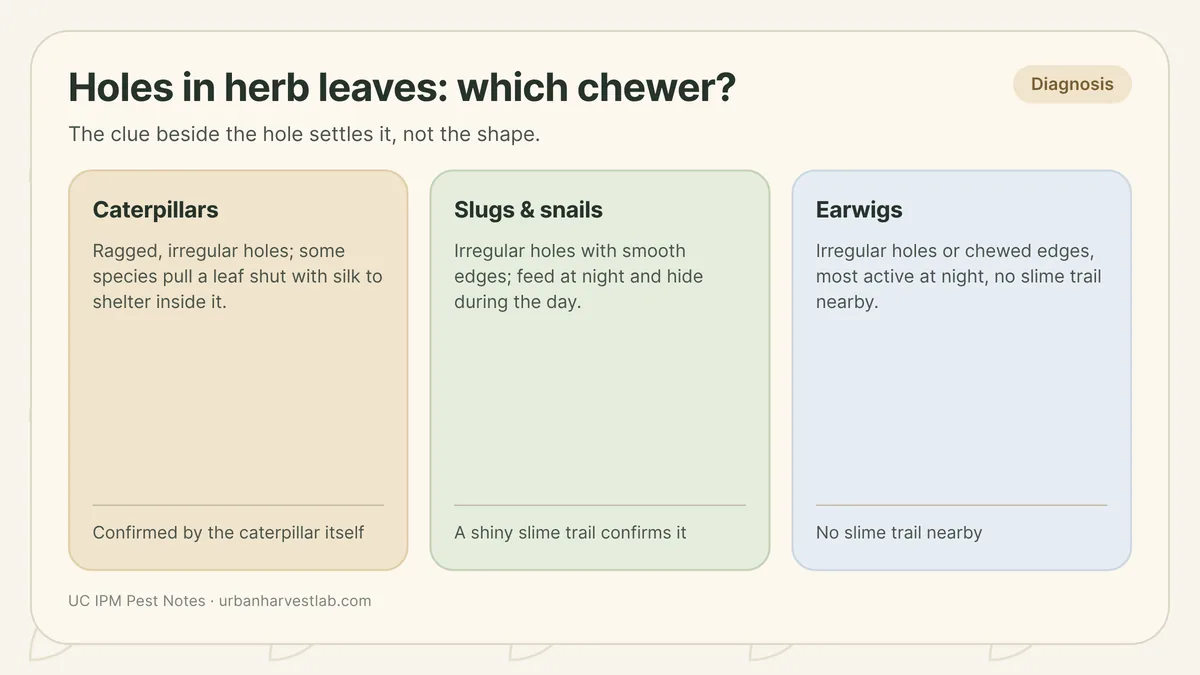
Holes in basil leaves: what's actually chewing them
Three insects punch actual holes through a herb leaf: caterpillars, slugs and snails, and earwigs. Each leaves its own clue, and the clue matters more than the shape of the hole.
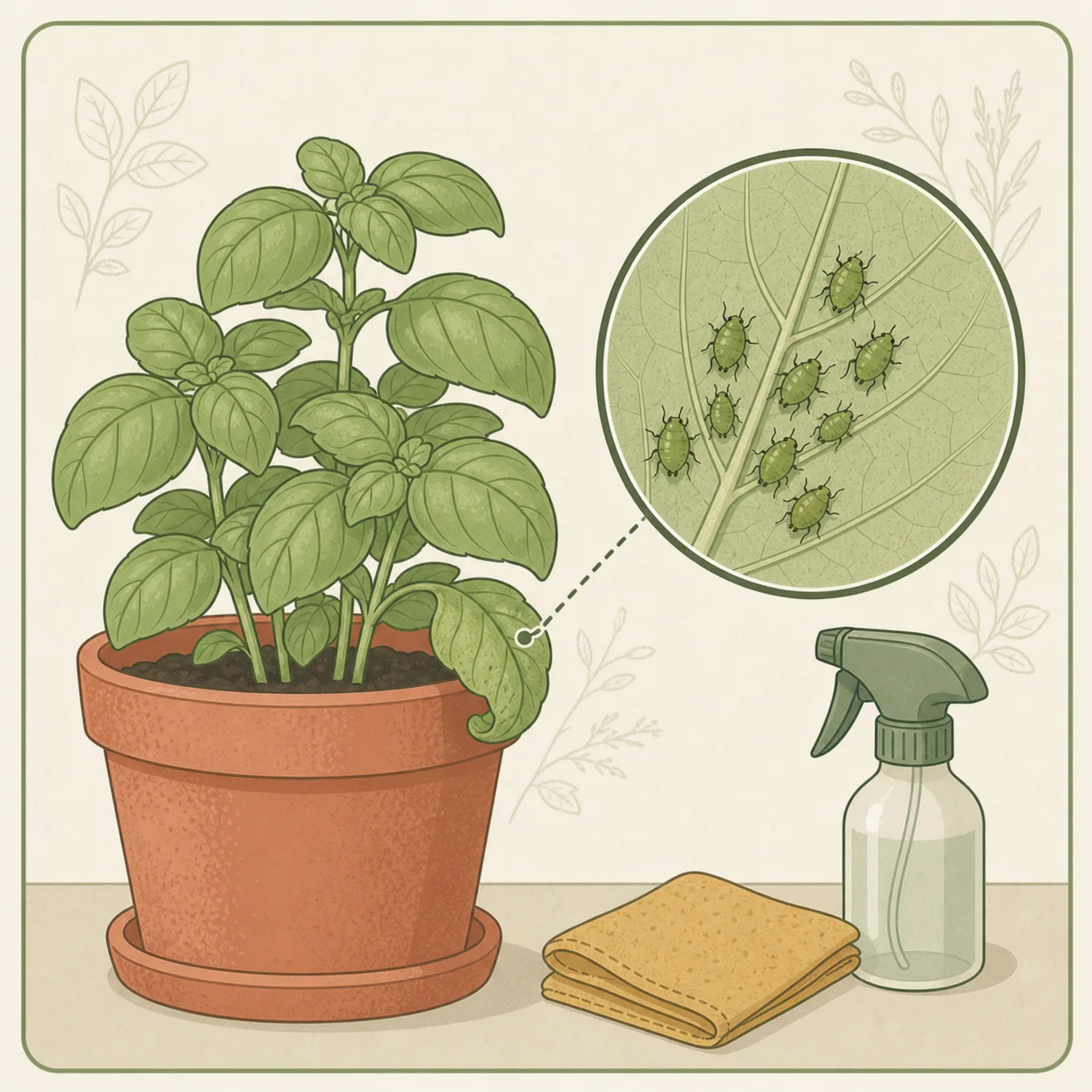
Aphids on indoor herbs: identify, isolate, and control them
Aphids are manageable when you find the colony, isolate the plant, remove most insects physically, and repeat inspections through the next generation.
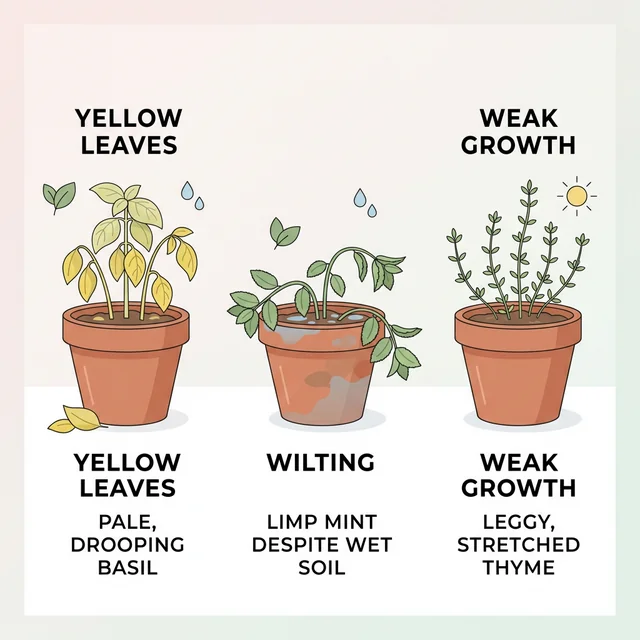
Common potted herb problems: yellow leaves, wilting, and weak growth
Common potted herb problems usually show up as yellow leaves, wilting, or weak growth, but the useful diagnosis starts with light, drainage, and root stress.