
Troubleshoot the system before you change the inputs.
Symptoms
- Crater-shaped holes in the soil, with seedlings or transplants flipped out and lying on the surface or rim.
- Soil scattered on the balcony floor around the pot, and roots exposed overnight.
- A shallow bowl scooped in dry, bare soil, sometimes with small plants uprooted beside it.
Possible causes
- A squirrel is digging in fresh soil, burying a nut, searching for food or following a smell.
- A bird is dust bathing in dry, bare soil.
- Recently planted seedlings, bulbs or loosely firmed soil make the pot easy to dig.
Quick fixes
- Lay wire mesh, a metal grid or a layer of larger rocks over the soil surface and weigh down the edges.
- For new seedlings, set a tent or a wire cage over the whole pot until the plants are established.
- If you use a pepper deterrent, reapply it after every rain or heavy watering.
Cover the soil. Squirrels and ground-scratching birds dig because the surface of a pot is loose, fresh and easy, so a lid of wire mesh, a metal grid, a tent or a layer of larger rocks stops it without hurting anything. Repellent sprays and flakes are a weaker second layer that wears off in the rain. If the damage looks like chewed leaves rather than craters, the cause is more likely one of the common potted herb problems than a digger.
Is it a squirrel, a bird, or something else
Look at the pattern before you pick a fix.
- A crater with a seedling flipped out beside it points to a squirrel. University of Maryland Extension says squirrels “do instinctively dig in fresh soil, sometimes burying nuts, but other times looking for food or following up an interesting smell.” Newly filled pots and just-planted seedlings give them all three.
- A shallow bowl scooped in dry, bare soil points to a bird. Washington State University Extension explains that birds roll around in dry, bare soil as part of their grooming to rid themselves of mites and lice, and that this uproots small plants and throws soil over their neighbours.
- Leaf holes, silver trails or a plant that simply collapsed is a different problem. Check slugs and snails and holes in herb leaves before you build a cage.
If you cannot tell which animal it was, start with a cover over the soil, since one that stops a squirrel also stops a bird.
Put a physical cover over the soil
This is the fix with the strongest backing, and it is the one that harms no animal.
Rocks, wire and sticks. University of Illinois Extension says squirrel damage comes from digging “particularly in landscape beds and containers,” and that it can be prevented by putting in larger rocks, pieces of chicken wire or sticks laid horizontally. The point is to make digging harder than it is worth.
Mesh over the soil. The University of Florida buries ½-inch hardware cloth just beneath the soil surface, parallel to it and above the bulbs, so shoots still grow through the mesh. University of Kentucky Extension also puts the cloth “just under the soil”, staked firmly and much larger than the area you are protecting, because squirrels go for the edges and tear it out. In a pot you can cut the mesh to the pot’s diameter, with a hole or a slit for each stem, and either bury it under a thin layer of mix, as UF and Kentucky describe, or lay it on top, as the Illinois chicken wire and the Maryland grid over a container do. Either way, anchor the rim: wire it to the pot, or weigh the edge down with stones or a brick.
A grid or a tent over young seedlings. A University of Maryland Extension grower covers containers with a metal grid or chicken wire, and another finds that picnic food tents resting over a container are enough to keep squirrels from digging up new lettuce seedlings. A mesh tent is easy to lift off for watering and harvest.
A roofed enclosure for heavy pressure. The same Maryland page is blunt about the limit: if you have serious squirrel, raccoon or bird problems, only a garden enclosure with a roof will help. A balcony does not solve it either. Maryland says a balcony keeps even groundhogs off, “though probably not squirrels and certainly not birds.”
Keep the cover on until the plants are established. A larger plant fills the pot, and Maryland’s grower notes that once basil plants are large enough the squirrels leave them alone.
Cover bare soil for birds
Since dust bathing is about dry, bare soil, Washington State University Extension recommends covering as much of the bare soil as possible. Its example is a thick layer of grass clippings or straw in a garden bed. In a pot, the same logic is why a mesh or rock cover works against birds too. A mulch layer is another option, but check the depth and material first in mulch for potted plants, since bed-scale layers are too deep for a container.
If you use netting, choose a mesh open enough that birds cannot get tangled. The University of Florida warns against extremely thin netting in which birds could be entrapped, and reminds readers that all migratory non-game birds are protected by law. A rigid wire or grid cover removes the entanglement risk altogether.
Repellents: a second layer, not the plan
Pepper. University of Illinois Extension says capsaicin sprays or flakes can deter squirrels but must be applied after rains or heavy irrigation. A University of Maryland Extension grower sprinkles cayenne liberally on the soil and repeats it after rain, and reports that it deters squirrels. On a balcony you water often, so expect to reapply often.
How to make any repellent last longer. The University of Florida says effectiveness depends on factors including the food available elsewhere, the abundance of wildlife nearby and how often you reapply. It adds that success is most likely when you combine repellents and start before damage begins. If you buy a product to spray on foliage, the University of Florida notes each repellent is labeled only for certain plant species, so read the label before using it on an edible plant.
Scare devices. Animals adapt. The University of Florida advises switching hazing tactics regularly so they do not become habituated, and lists devices that produce vibrations and ultrasonic noise makers among the repellent tactics it does not recommend because they are ineffective in most outdoor situations.
Scented plants. Maryland suggests that rosemary, thyme, onion relatives and hot peppers may be unattractive to animals. Treat that as a modest extra, not a barrier. It is no guarantee.
What not to bother with
Trapping and removing squirrels only invites the next one. University of Illinois Extension puts it plainly: it “only leaves the area welcoming for another squirrel.” Spend the effort on the pot instead.
Sources
- University of Illinois Extension, Home, Yard & Garden Newsletter: squirrel damage
- University of Maryland Extension: Dealing with pest issues in container vegetable gardening
- University of Florida IFAS: How to use deterrents to stop damage caused by nuisance wildlife in your yard
- University of Kentucky Extension: Vertebrate pest management
- Washington State University Extension: Vertebrate pest management
Other things that dig, chew and nibble
Damage in a pot is not always from a mammal or a bird. These pages cover the other usual suspects.
Common questions
How do I stop squirrels digging in my pots?
Cover the soil surface so there is nothing to dig. University of Illinois Extension lists larger rocks, pieces of chicken wire or sticks laid horizontally, and University of Maryland Extension describes a metal grid, chicken wire or a picnic food tent over a container of seedlings. Add a pepper-based deterrent only as a second layer, and reapply it after rain.
Does cayenne pepper keep squirrels out of pots?
A University of Maryland Extension grower sprinkles cayenne on the soil and repeats it after a rain, and reports that it deters squirrels. University of Illinois Extension notes capsaicin products must be applied after rains or heavy irrigation. Treat pepper as a short-lived second layer, not a permanent fix.
Why are birds digging in my potted plants?
Washington State University Extension describes birds rolling in dry, bare soil to groom away mites and lice, which uproots small plants. Covering as much bare soil as possible discourages it. That guidance is written for garden beds, and the same cover idea applies to a pot.
Is it safe to use bird netting over a pot?
Only with a mesh open enough that birds cannot get tangled. The University of Florida warns against extremely thin netting in which birds could be entrapped, and notes that migratory non-game birds are protected by law. A rigid wire cover avoids the problem.
Related guides
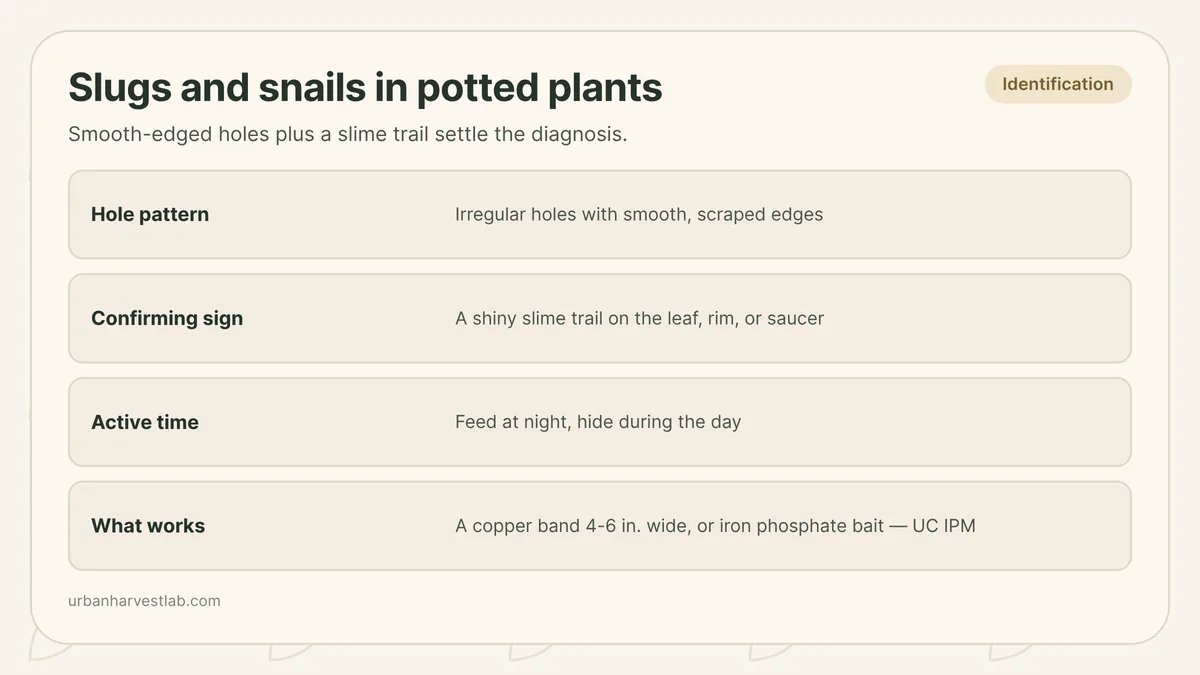
Slugs and snails in potted plants: barriers that actually work
Smooth-edged holes and a shiny trail on a potted herb point to slugs or snails. A copper barrier, iron phosphate bait, and checking after dark are the responses with evidence behind them.
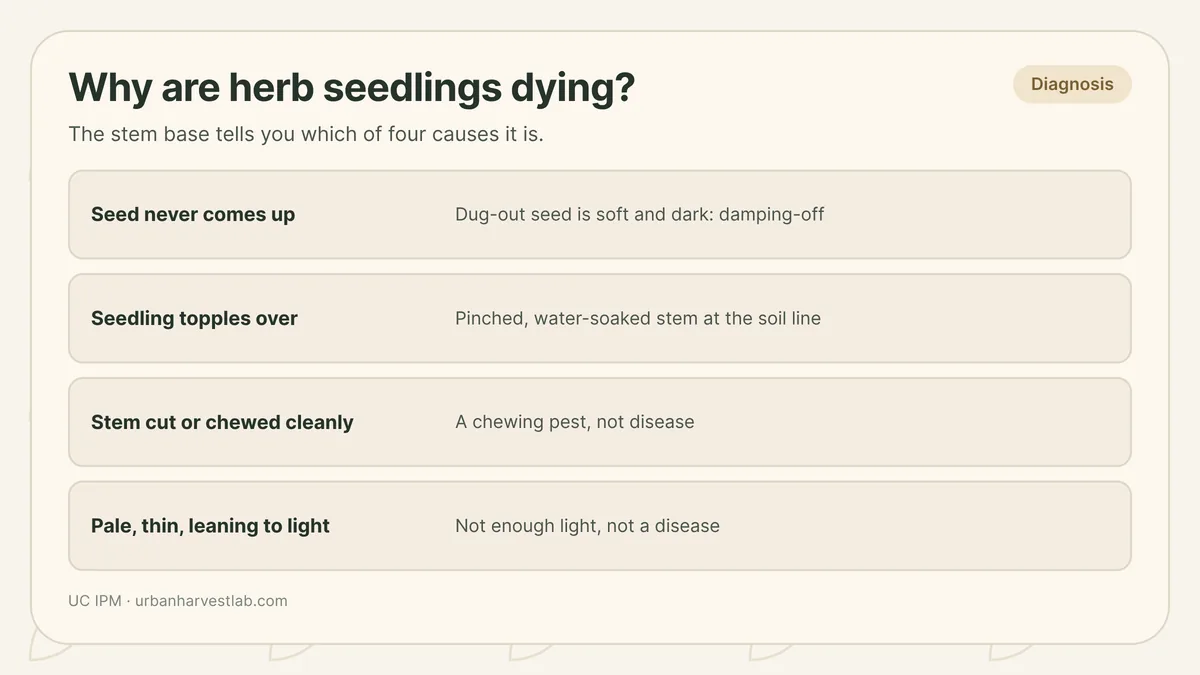
Why are my herb seedlings dying?
A tray of herb seedlings can fail three or four different ways, and they do not all look the same up close. The stem base and the seed itself tell you which one you have.
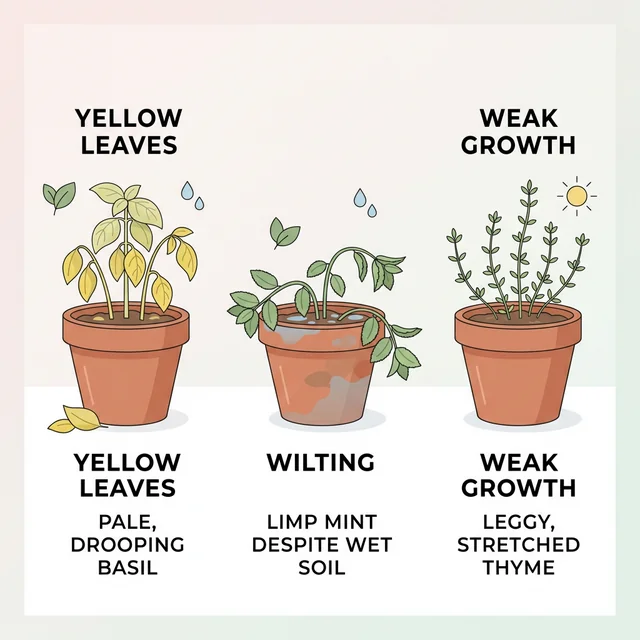
Common potted herb problems: yellow leaves, wilting, and weak growth
Common potted herb problems usually show up as yellow leaves, wilting, or weak growth, but the useful diagnosis starts with light, drainage, and root stress.