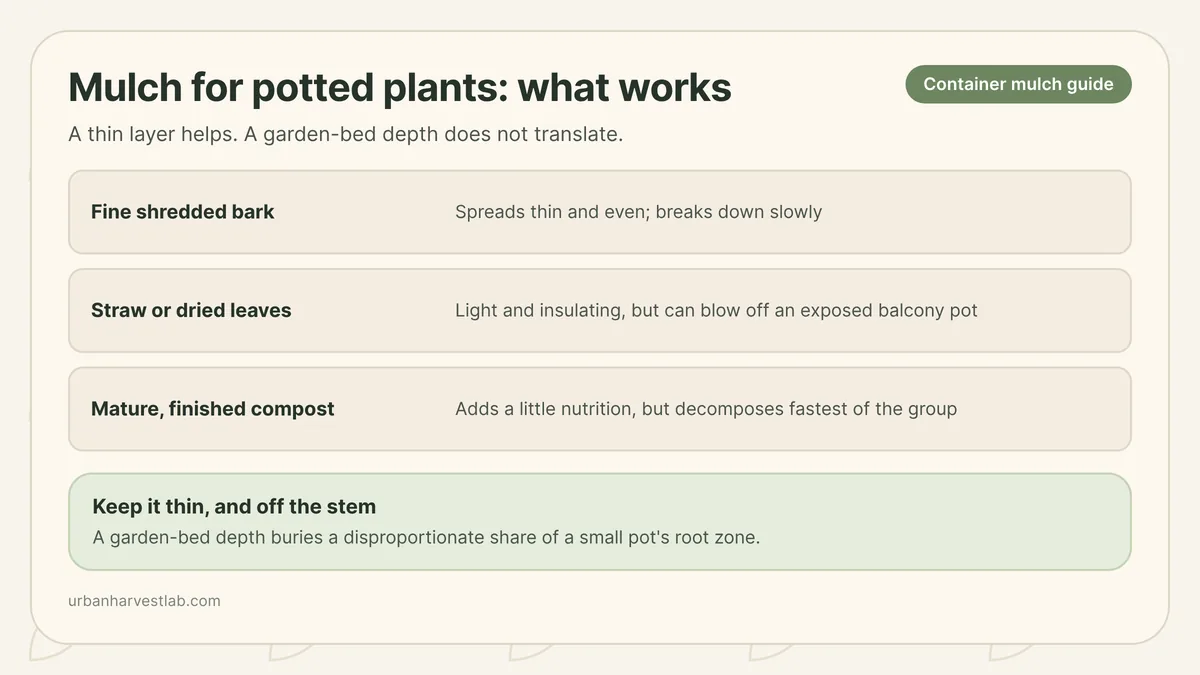
Mulch materials for containers
| Material | What it does well | Watch for |
|---|---|---|
| Fine shredded bark | Spreads thin and evenly; breaks down slowly | Coarse, unprocessed bark is hard to keep shallow |
| Straw or dried leaves | Light, insulating, cheap to refresh | Can blow off an exposed balcony pot |
| Mature, finished compost | Adds a little nutrition as it breaks down | Decomposes fastest of the group; needs topping up |
| Decorative gravel or pebbles | Stays put in wind; does not decompose | Chosen for staying put in wind, not for insulation; a different intervention from a bottom drainage layer |
A thin layer of mulch on top of the potting mix slows evaporation and softens the swing between a sun-baked afternoon and a cool night at the root zone. It does not fix a pot that is too small, a mix that has compacted, or minerals that concentrate in the soil as water leaves it — those need their own fixes, mulch or not.
A container behaves differently from open ground the moment anything is added on top of it, because the whole root volume sits within a few inches of that surface. Potting mix already behaves differently once it is confined to a pot compared with the same material spread across a garden bed, and mulch is one more variable layered onto an already small, already crowded volume. Garden-bed habits need translating before they apply to a pot, not copying.
What a surface layer is actually doing
Exposed potting mix loses water mostly from its top few centimeters, where sun and moving air pull moisture straight off the surface. A layer of organic material breaks that direct contact between the mix and the sun and wind above it, and it also shades the surface from direct radiant heat, so the swing between the hottest part of the afternoon and the coolest part of the night is smaller at root level than it would be on bare mix.
This matters more for a container than for a garden bed, because a pot’s whole soil volume is exposed on more sides than just the top — a dark pot wall absorbs heat directly and passes it into the mix against the root ball — pot material and color change that load, covered in glazed vs terracotta pots. Pot color, shading the container itself, and grouping pots together are the other levers for that heat load, and watering herbs through summer heat covers those alongside a watering schedule that adjusts for them; mulch is the one intervention that acts directly on the surface losing water.
Slowing evaporation does not stop minerals from concentrating in the mix. Dissolved salts from fertilizer and irrigation water are left behind as the water they were dissolved in evaporates or is taken up by the plant, concentrating at the surface and in the mix over time, according to Colorado State University Extension. Mulch can stretch the interval between waterings, but it does not remove the need to flush that buildup periodically — salt buildup in herb pots covers when a pot needs that flush, independent of whether the surface is mulched.
Materials that make sense in a small volume
A garden bed can absorb a coarse, chunky mulch because there is enough depth and area to spread it unevenly and still get the benefit. A pot cannot. The materials that work best in a small volume share one trait: they spread thin and even without leaving gaps or mounds.
- Fine shredded bark breaks down slowly and is easy to keep to a shallow, even layer. Coarse, unprocessed bark or wood chips are harder to spread thinly and easier to pile too deep by accident.
- Straw or dried leaves are light and insulating, and cheap to refresh through a season. On an exposed balcony, wind can lift a loose layer off the pot entirely, so a dry layer is light enough to lift off entirely, making an exposed balcony pot a poor spot for a loose organic layer regardless of how it is applied.
- Mature, finished compost as a thin topping adds a little nutrition as it breaks down, but it decomposes fastest of this group and needs topping up more often than bark or straw. If the question is how much compost to work into the mix itself, rather than layer on top of it, how much compost to add to potting mix covers that ratio separately — a mixed-in fraction and a surface topping are different applications of the same material.
- Decorative gravel or pebbles do not decompose and stay in place in wind, which suits an exposed pot, but they do not decompose and do not trap a layer of still air the way loose straw, leaves, or shredded bark do, so they are chosen for staying put in wind rather than for buffering. A gravel topping is also a different intervention from gravel at the bottom of a pot: the gravel-at-the-bottom idea for improving drainage does not work, because a capillary barrier forms between a fine layer and a coarse one underneath it — a mechanism specific to what sits below the mix, not what sits on top of it.
One material to leave off this list is fermented bokashi pre-compost. It still needs to finish breaking down before it functions like a soil amendment, and bokashi composting for apartments is explicit that spreading it on the surface or using it as mulch is the wrong step; it needs to be buried or worked into an active compost pile first.
How much to use, and why bed-scale figures do not transfer
Extension guidance on compost application gives specific depths for open ground: Colorado State University Extension lists roughly 1-2 inches for a one-time lawn application, 3-4 inches worked into a new garden bed, and about a quarter inch applied annually to an existing bed. Those figures describe square feet of open ground with inches of soil beneath them to absorb and incorporate the material. A container’s entire soil volume is a small fraction of that, so piling a bed-scale depth onto a pot would bury a disproportionate share of the root zone under material the roots cannot use, rather than adding a light surface layer above it. That is the summer job. Overwintering a potted perennial outdoors is a different one, at a different depth: University of Illinois Extension and Colorado State University Extension have the pot sunk into the ground and covered with 6 to 12 inches of straw, leaves, or shredded bark, the same figure sage pot size gives for that season.
Aim for a thin, even layer that covers the visible mix without mounding, well short of what a garden bed or lawn would receive, and refresh it as it settles or decomposes.
Keep it off the stem
Leave a small ring of bare mix around the base of the plant. Mulch piled directly against a stem holds moisture against tissue that is not built to sit wet, which invites rot at the point where the plant is most vulnerable. This applies to any of the organic materials above, and especially to a damp, dense material like compost that holds water longer than shredded bark or straw against the same spot.
What mulch does not solve
A mulched surface still sits on top of whatever the pot and mix underneath can or cannot do. It does not turn a pot that is too small for the plant into an adequate one, and it does not fix a mix that has compacted and stopped draining. A mulched pot can also hide a watering problem rather than solve it: the surface can look and feel moist under the layer while the root ball beneath it is already dry, so check by parting the mulch and pressing a finger into the actual mix rather than judging by the top of the layer alone.
During sustained heat, a mulched pot still benefits from shade, grouping, and a watering check rather than mulch alone; protecting container plants through a heat wave covers that fuller routine, with mulch as one part of it rather than the whole plan.
Refresh the layer as it thins, compacts, or breaks down rather than treating one application as permanent. Straw and dried leaves lose volume as they settle; fine bark and compost break down and darken over a season. A pot that gets repotted or has its mix refreshed is also a natural point to renew the mulch on top of it, rather than reusing a layer that has already gone flat.
Sources
- Colorado State University Extension — Choosing a Soil Amendment
- Colorado State University Extension, PlantTalk Colorado #1338 — Whitish Crust on Potting Mixes
- Washington State University Extension (Kitsap County) — Bokashi Composting
- UC ANR, Stanislaus County Master Gardeners — Adding gravel to your planting container does not improve drainage
Related container soil topics
Mulch is one layer on top of a container's soil system. These cover the mix underneath it and the heat it is meant to buffer.
Common questions
Should you mulch potted plants?
A thin layer of organic mulch on top of the potting mix can slow evaporation and buffer swings in root-zone temperature, which is useful for a container in full sun. It works alongside a suitable pot size and mix, not instead of them.
What is the best mulch for potted plants?
Fine shredded bark, straw, dried leaves, or a thin layer of mature compost all work in a small volume. Chunky, unprocessed material is harder to spread thinly and easier to pile too deep by accident.
How deep should mulch be in a pot?
A thin, even layer that covers the visible mix without mounding is the practical target for a growing season. Garden-bed and lawn application depths are stated for open ground, not a container's much smaller volume, so scale down rather than copying a bed figure. Overwintering a potted perennial outdoors is a separate job at a much greater depth, 6 to 12 inches of straw, leaves, or shredded bark, per University of Illinois Extension and Colorado State University Extension.
Can mulch touch the stem of a potted plant?
Keep a small clear ring of bare mix around the stem. Material piled against it traps moisture against tissue that was not built to sit wet, which invites rot.
Related guides
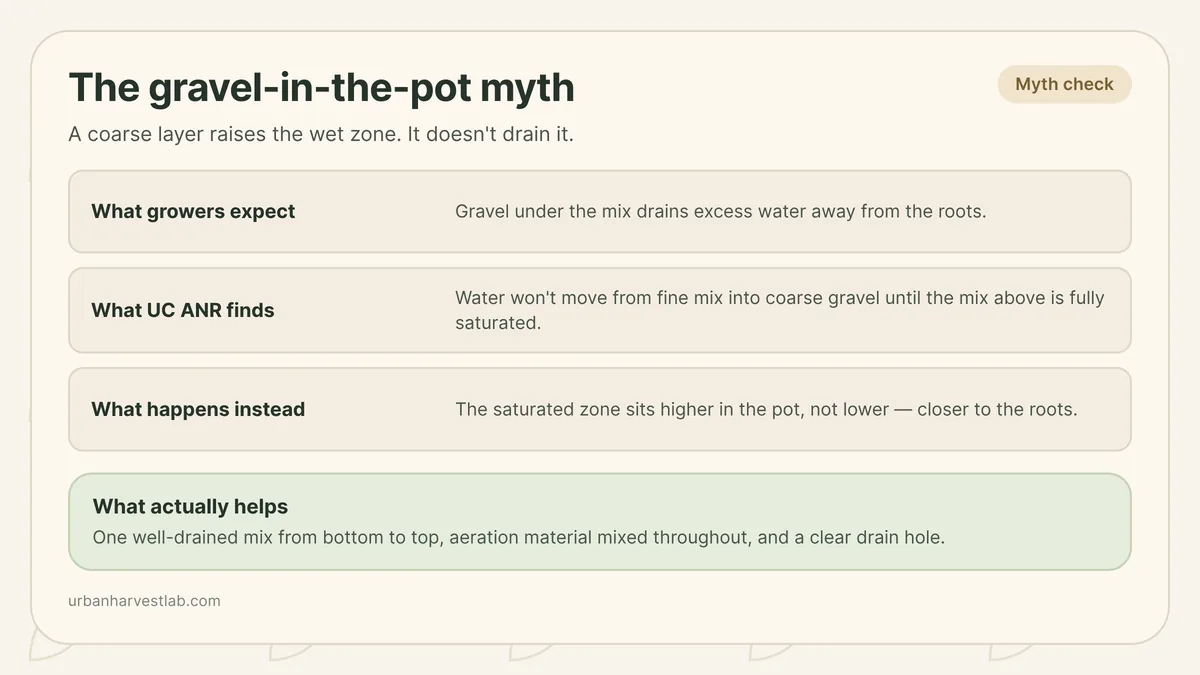
The gravel-in-the-pot myth: why it doesn't improve drainage
Putting gravel or rocks under potting mix feels like it should help drainage, but it creates a wetter zone right where roots grow, not a drier one.
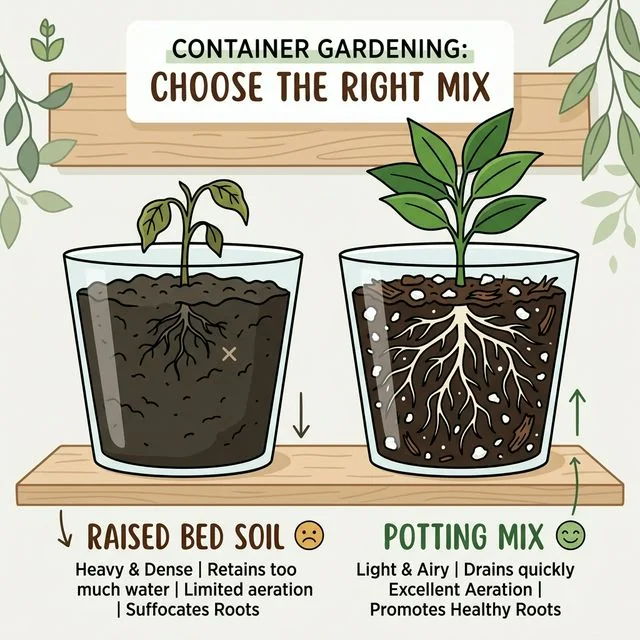
Potting mix vs raised bed soil for containers: what works in pots
Most container problems start with the wrong medium, not the wrong fertilizer. This guide explains why pots usually need a lighter mix than raised beds.
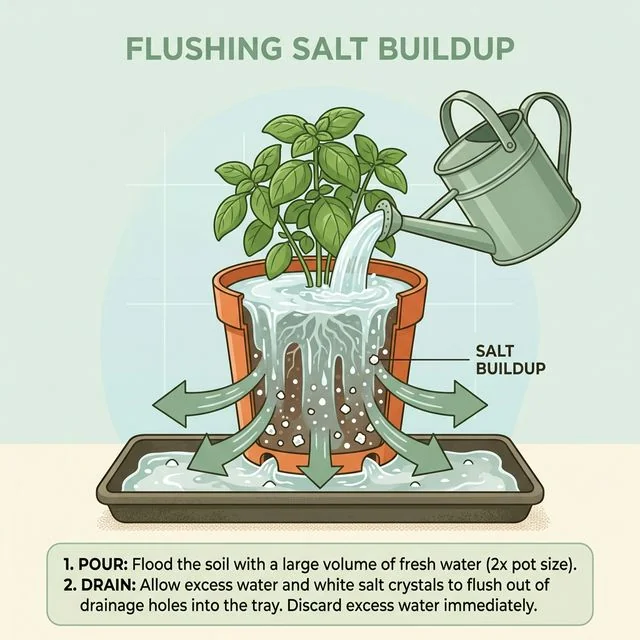
Salt buildup in herb pots: when to flush and when to repot
Every time you water your plants with liquid fertilizer, you are leaving heavy chemical salts behind. If you don't periodically wash them out, your herbs will suffer from chemical burn and nutrient lockout.