Troubleshoot the system before you change the inputs.
Symptoms
- Leaves losing color or turning grey-green and dull while the soil underneath stays wet.
- Wilting that does not recover a few hours after you water the plant.
- Stems turning dark or soft near the base, or bark that looks water-soaked around the crown.
Possible causes
- The soil is staying wet between waterings, so the roots are sitting in water instead of drying out.
- A container or mix without fast drainage keeps the whole rootball wet for days at a time, the one condition thyme is least equipped to handle.
- Root rot has already set in and is limiting water and nutrient uptake no matter what you do to the top of the plant.
Quick fixes
- Stop watering and let the top few inches of mix dry thoroughly before you water again, as UC IPM advises for root-rot recovery.
- Check for drainage holes and repot into a fast-draining mix if the current one stays soggy for days.
- Cut back any blackened or mushy stems and treat this as a rescue attempt rather than a sure recovery.
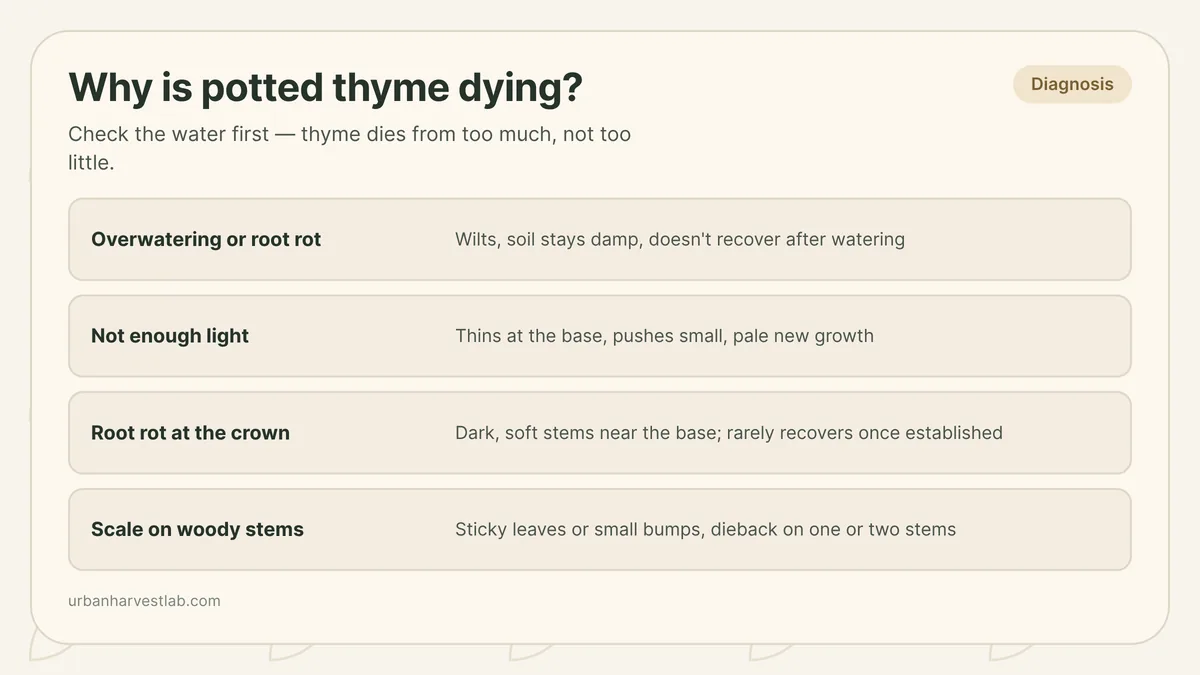
Potted thyme dies from too much water far more often than too little. Thyme is a Mediterranean herb that wants soil that dries out between waterings, and a pot or mix that stays damp rots the roots long before drought would ever kill it. Work through the common causes of potted herb decline in order: the root zone first, then light, then anything already rotted, then pests.
Check the root zone first
Before you touch the leaves, check what is happening underground, and lead with pot weight rather than the foliage: thyme is a poor wilter compared with basil. It dulls and thins rather than flopping, so by the time it visibly droops the root zone has usually been wrong for a while already. Clemson Cooperative Extension gives the test literally: push a finger into the mix up to the first knuckle, and if it is dry at the fingertip, the plant needs water. Clemson adds two more checks, by weight and by sound: a dry pot loses noticeable weight, and a dry clay pot sounds hollow when tapped, while a wet one sounds dull. Overwatered vs underwatered runs all of these tests together as one checklist, for a reading that does not depend on thyme’s particular reluctance to show it.
Once the plant is visibly struggling, how it responds to water is the confirmation. Clemson notes plainly that the symptoms of overwatering and underwatering look alike, and that “any injury to the root system decreases a plant’s ability to take up water, including root rot, which is caused by too much water.” UC IPM’s guidance on Phytophthora root and crown rot adds the specific pattern: affected plants “wilt and turn dull green, yellow, red, or purplish,” but critically, “plants don’t recover when irrigated.” A thyme plant that perks back up within a few hours of a normal watering was dry. One that stays wilted, or gets worse, was not dry to begin with, and pouring on more water only compounds the problem.
For the specifics of how often to water potted thyme and what “dry enough” looks like week to week, see how often to water thyme. A pot that cannot drain will keep undoing a good schedule regardless of how carefully you time it; the right size and drainage setup for a thyme pot is covered in what size pot thyme needs.
Rule out light before you blame the water
Thyme needs real sun. Clemson’s guidance for herbs generally is that “almost all herbs grow best in an area that is sunny for at least six hours each day,” and thyme specifically wants “very well drained soil that stays dry” in full sun, with taller thyme species tolerating heat and humidity better than low-growing types.
Indoors, light is usually the scarcer resource, not water. Clemson’s indoor-plant figures put a well-lit home at under 100 foot-candles against more than 10,000 outdoors, with about 100 foot-candles for 12 hours a day needed just for maintenance — a big gap for a plant that wants full sun outdoors. A thyme plant running short on light does not usually flop; it thins out at the base, gets noticeably woodier for its size, and pushes small, sparse, pale new growth toward whatever window light it can find, even on an otherwise correct watering routine. Feeding will not fix that thinning, since the plant is short on light, not nutrients. If the plant is losing density and going leggy under otherwise fine watering, move it to the brightest spot available before changing anything else.
When the roots have already rotted
If the root zone test points to wet soil and the plant does not recover after watering, you are probably past prevention and into rot. Below ground, Phytophthora root and crown rot shows as darkened areas in the bark around the crown and upper roots, with reddish-brown streaks in the inner bark and outer wood when you cut into a stem, according to UC IPM. Houseplant root rot more broadly, per Clemson, shows as stems girdled at or near soil level by a ring of brown or black tissue, with roots that have turned brown to black and gone soft; several different fungi can cause it, Phytophthora among them.
The saturation window is short, and thyme’s shape makes it easy to trigger by accident: a low, wide bowl planting spreads a shallow mat of surface roots across a large area of mix, so a single overfull saucer can keep most of that root mat sitting wet at once rather than just the bottom of a deep pot. UC IPM states that Phytophthora “can establish in as little as 4 to 8 hours” of soil staying saturated. The mechanism, from the Missouri Botanical Garden, is that roots sitting in waterlogged soil cannot get oxygen, and the longer the air is cut off, the greater the root damage; dying roots stop supplying water and nutrients to the plant and become an easy target for rot organisms.
The prognosis is not encouraging once rot reaches the crown. UC IPM is direct about it: “a plant with a substantial Phytophthora infection rarely recovers.” That is why the sensible move with a woody herb like thyme is to catch wet soil early rather than plan on rescuing an advanced case. If you are already there, cut back stems that are dark, soft, or mushy at the base until you reach firm, pale tissue, repot into a fast-draining mix, and follow UC IPM’s management line for Phytophthora: let the top few inches of mix dry thoroughly before the next watering. Some plants recover from a partial infection; a thyme plant that is rotted through the crown usually does not, and replacing it is often the faster path back to a working herb pot.
Insects worth checking on woody stems
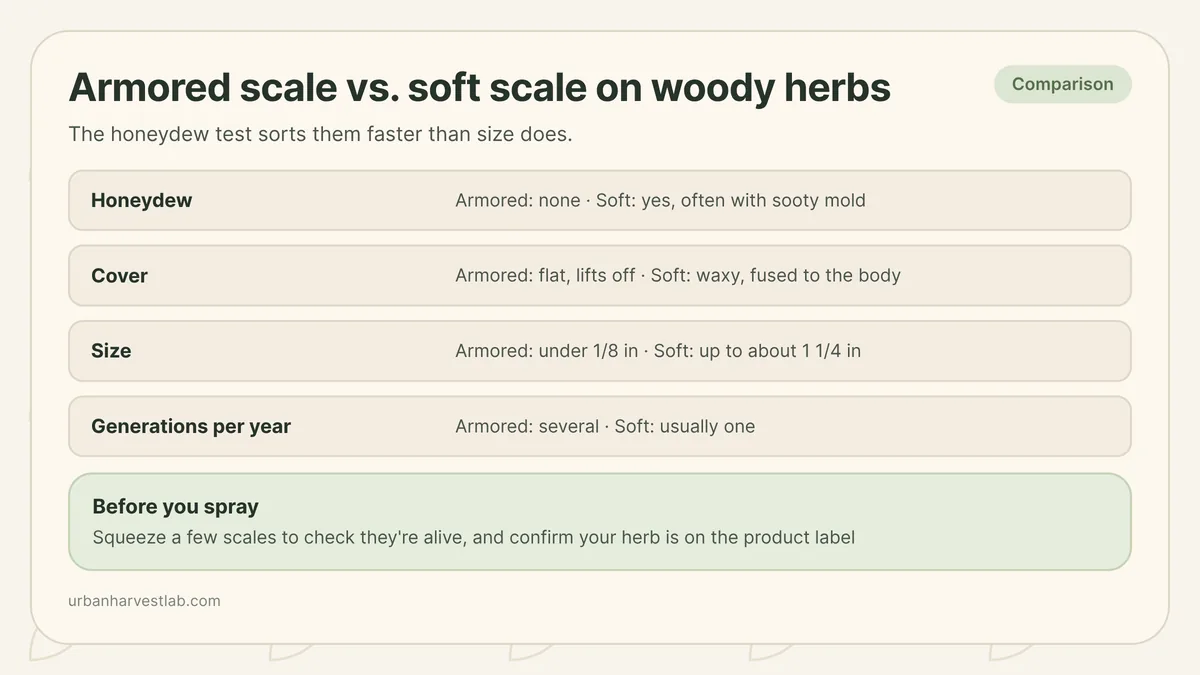
Water problems are the more common cause, but not the only one. Thyme is a woody herb, like rosemary and sage, and those plants can pick up scale insects that go unnoticed until the leaves turn sticky with the honeydew scale produces. Scale insects on rosemary and other woody herbs — a page that covers thyme too — describes dieback concentrated on one or two woody stems as a pattern worth checking the stems and leaf undersides for before assuming the whole plant is rotting from the root up.
Aphids and spider mites are less specific to thyme but can still weaken a stressed plant further, and both leave their own visible signs, colonies and honeydew for aphids, fine stippling and webbing for spider mites, rather than the wilting and dark stem tissue that mark a watering problem.
Common mistakes
- Watering a wilted thyme plant again without checking whether the soil is already wet.
- Assuming yellow or pale leaves mean the plant needs fertilizer before light and root-zone moisture have been checked.
- Leaving a pot without drainage holes, or letting one sit in a saucer of runoff water for hours.
- Treating one dying stem as proof the whole plant needs to be replaced without checking for a localized pest.
- Cutting back rotted stems but leaving the plant in the same soggy mix that caused the problem.
Sources
- Clemson Cooperative Extension HGIC: Indoor Plants – Watering
- Clemson Cooperative Extension HGIC: Houseplant Diseases & Disorders
- Clemson Cooperative Extension HGIC: Herbs
- Clemson Cooperative Extension HGIC: Indoor Plants – Cleaning, Fertilizing, Containers & Light Requirements
- UC IPM Pest Notes: Phytophthora Root and Crown Rot in the Garden
- Missouri Botanical Garden: Overwatering
Sort water, drainage, light, and pests in order
These guides cover the specific fixes once you know which cause fits your plant.
Common questions
Why is my potted thyme dying even though I water it regularly?
Regular watering is usually the problem rather than the fix. Thyme is a Mediterranean herb that wants to dry out almost completely between waterings, and a routine that keeps the mix damp encourages root rot long before the plant would ever run short on water.
How can I tell if thyme is overwatered or underwatered?
Check the root zone, not just the leaves — the pot weight and finger tests are more reliable for thyme than watching the foliage, since thyme dulls rather than flops when it is short on water. If the mix is still wet a few inches down and the pot feels heavy, that points to overwatering. If the mix is dry and the pot feels light, water it. A wilted plant that does not recover a few hours after watering usually has damaged roots rather than dry ones. Overwatered vs underwatered runs the full checklist of tests together.
Can thyme recover from root rot?
Sometimes, if you catch it early and the crown is still firm. Cut away blackened or mushy stems back to healthy tissue, repot into fresh, fast-draining mix, and let it dry out longer between waterings. A plant with extensive rot at the crown often does not recover.
Could a dying thyme plant be a pest problem instead of a watering problem?
It can be. Check stems and the undersides of leaves for scale insects or other pests before assuming watering is the cause. The scale insects guide describes dieback concentrated on one or two woody stems as a pattern worth checking for specifically.
Related guides
Scale insects on rosemary and other woody herbs
Scale on a woody herb often goes unnoticed until the leaves turn sticky or a stem starts to die back, and the right treatment depends on which kind of scale you have.
Common potted herb problems: yellow leaves, wilting, and weak growth
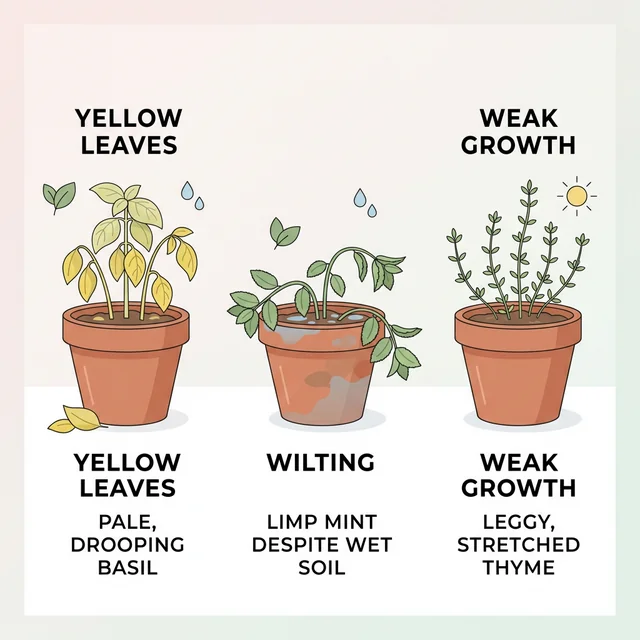
Common potted herb problems usually show up as yellow leaves, wilting, or weak growth, but the useful diagnosis starts with light, drainage, and root stress.
What size pot does thyme need? Wider, not deeper
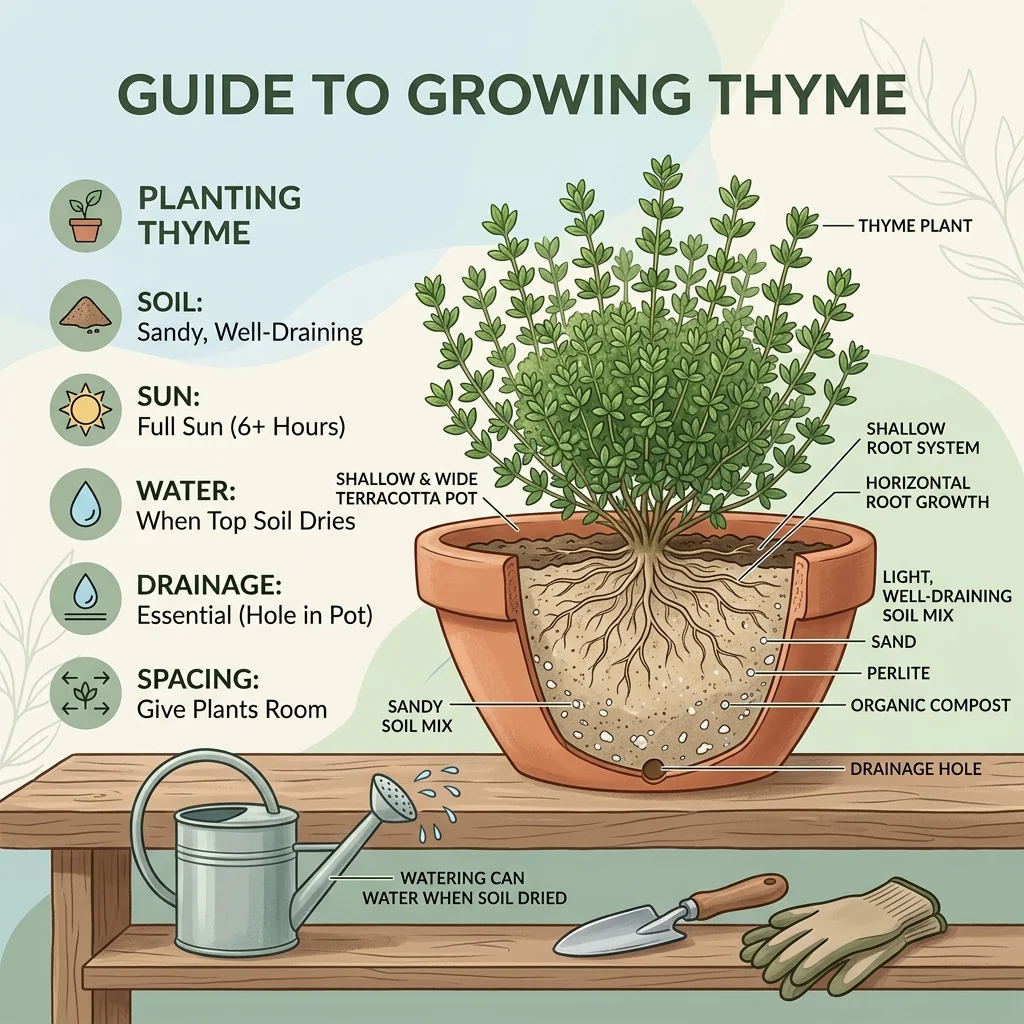
Thyme is the opposite of parsley: its roots spread sideways rather than down, so width and drainage matter more than depth. Here is the right container size.