
Troubleshoot the system before you change the inputs.
Symptoms
- Flowers yellow, shrivel and fall from the truss without a small green fruit forming behind them.
- The plant looks healthy and keeps growing, but a run of flowers produces no fruit.
- The drop started during a heat spell, a cold snap, or a stretch of dry or very humid weather.
Possible causes
- Daytime highs above about 85 °F or warm nights above 70-72 °F make pollen sticky and nonviable.
- Nights below 55 °F interfere with pollen and fruit set.
- Air that is very dry or very humid keeps pollen from sticking to the stigma or releasing properly.
- Drought stress, heavy nitrogen feeding, high salts, too little sun, or an early fruit load competing with later flowers.
Quick fixes
- Shade the pot in the hottest part of the afternoon and keep the mix evenly moist.
- Cover or move the plant on nights forecast below 55 °F.
- Stop high-nitrogen feeding and make sure the plant gets at least six hours of full sun.
- Wait out a short heat or cold spell; flowers that open after the weather settles can set fruit.
Tomato flowers that yellow and fall without setting fruit are almost always reacting to the weather or to stress on the plant, not to a disease. Check the temperature first: days above about 85 °F, nights above 70-75 °F, or nights below 55 °F are the thresholds extension services name most often. Alabama Extension adds that the condition is “unrelated to any nutritional disorder or disease or insect damage” when the plant is otherwise healthy. If the flowers open but the pollen simply does not move, the fix is a different one, covered in the guide to hand-pollinating balcony tomatoes.
Match your weather to the cause
| What the weather has been doing | Likely cause | What to do |
|---|---|---|
| Days above 85 °F, nights above 70-72 °F | Heat makes pollen sticky and unusable | Shade the pot in the afternoon, keep the mix evenly moist |
| Nights below 55 °F | Cold affects pollen and fruit set | Cover or move the plant on cold nights |
| Very dry air, or humidity above about 80% | Pollen dries out or will not release | Move out of hot dry wind; improve airflow in humid spells |
| Mild weather, but flowers still drop | Water stress, too much nitrogen, low light or fruit load | Work through the checks below |
Heat is the usual culprit
Alabama Extension states that when day temperatures exceed 85 °F and night temperatures exceed 72 °F, tomato flowers often abort. University of Missouri IPM draws the line slightly lower for nights: pollination suffers once days pass 85 °F or nights pass 70 °F. University of Maryland Extension describes the mechanism in a spell of 90 °F days and 70 °F nights: the pollen can become sticky and nonviable, so pollination cannot happen.
Warm nights count as much as hot days. Alabama Extension notes that for some varieties, night temperatures alone above 72 °F can harm flowering even when days stay under 85 °F. On a balcony, a south-facing wall or railing keeps radiating heat after sunset, so a pot there can run warmer overnight than the forecast suggests.
Duration matters too. Alabama Extension says the longer plants sit in high temperatures the more serious the effect, and short exposures of a week or less should not cause much of a problem. So a single hot weekend is not a reason to panic. Heirloom and heritage varieties tend to be more sensitive than modern ones, according to the same publication, and heat-set varieties were bred to keep setting fruit in hot summers.
What helps in the moment is cutting the heat load on the pot and the plant: afternoon shade and grouping pots are covered in the heatwave guide for container plants. Missouri IPM notes that shade cloth helps in heat but cannot lower night temperatures.
Cold nights do the opposite damage
Missouri IPM reports that nighttime temperatures below 55 °F also promote blossom drop, and that low temperatures affect pollen viability and the growth rate of the pollen tube. Iowa State Extension puts the cold boundary in the same place: blossom drop occurs when night temperatures are below 55 °F or above 75 °F.
This is the classic spring problem on a balcony, when plants go out early and the first truss opens during a cold week. Cover or bring in the pot on nights forecast near 55 °F; the steps are in the guide to emergency cold snap protection. Iowa State says hormone sprays may prevent some drop from cold but give inconsistent results, and they do not help with heat-driven drop.
Dry air, humid air and pollination
Pollen has to land on the stigma and stick. Missouri IPM gives an ideal relative humidity for tomato pollination of 40 to 70 percent. At lower humidity the pollen tends to dry and has trouble sticking; University of Maryland Extension also lists humidity above 80% during pollen shed as a reason pollination fails. A pot in a hot, dry wind tunnel between two walls can land on the dry side, and a sheltered, damp corner in a muggy week on the other.
If conditions sit inside that range and flowers still drop with no fruit, the flower may simply not be getting jostled; that is a technique question, and the hand-pollination guide takes it from there. University of Maryland Extension states a tomato flower must be pollinated within 50 hours of forming or it dies.
Stress that adds to the drop
Temperature gets the blame, but four other things push a marginal plant over the edge:
- Water stress. Alabama Extension says insufficient watering or drought stress can cause blossoms to abort. A tomato in a pot swings from wet to dry far faster than one in the ground, and a pot that is too small makes it worse; see the tomato pot size guide.
- Too much nitrogen. Alabama Extension warns that excess nitrogen produces leafy growth at the expense of flowers, and that high salt levels around the roots can cause drop too. A fruiting-stage feed that is lower in nitrogen is the usual adjustment.
- Too little sun. Alabama Extension recommends at least six hours of full sun every day.
- A heavy fruit load. Missouri IPM explains that fruit already set can outcompete later flowers for nutrients, giving poor set on the middle clusters, and that leaving every fruit to mature adds to the stress. Once the bottom fruit is harvested and that stress eases, Missouri IPM says upper clusters tend to set normally, temperature permitting.
Missouri IPM notes that Botrytis and heavy bacterial spot or speck can also reduce fruit set, though they are rarely the main cause; if young leaves are small, crumpled and yellow-edged, see tomato leaves curling for the virus that drops flowers.
What to do, in order
- Look at the highs and lows since the drop started, and the few days before it. If they fall in the ranges above, this is weather, and the plant needs shade, shelter or patience.
- Check the pot. If the mix is drying out between waterings, fix that before anything else.
- Check the feeding. A high-nitrogen fertilizer on a plant already in flower is a likely contributor.
- Count the hours of direct sun.
- If none of those fit, tap or vibrate the flowers as described in the pollination guide.
Flowers already lost are gone, but the plant is not. University of Maryland Extension notes that most tomato cultivars make up for the setback, and Alabama Extension says the plants produce flowers and set fruit once temperatures become more favorable. For a variety that drops flowers every summer, Alabama Extension suggests trying a heat-set variety next year.
Sources
- Alabama Cooperative Extension System — “Blossom Drop in Tomato” (ANR-2717)
- University of Missouri IPM — “Understanding Tomato Fruit Set”
- University of Maryland Extension — “Expect Poor Fruit Set in Tomatoes This Week”
- Iowa State University Extension — “Managing Tomato Diseases, Disorders, and Pests”
Keep a container tomato setting fruit
Pollination technique, heat protection and pot size are the three things balcony tomatoes most often need.
Common questions
At what temperature do tomato flowers fall off?
Extension figures differ a little. Alabama Extension gives day temperatures above 85 °F with nights above 72 °F, Missouri gives days above 85 °F or nights above 70 °F, and Iowa State gives nights below 55 °F or above 75 °F. All three put the cold limit at about 55 °F; Iowa State and Missouri specify night temperatures.
Will my tomato plant recover from blossom drop?
Usually. Alabama Extension says short exposures of a week or less should not cause much of a problem, and that once temperatures become more favorable the plant will produce flowers and set fruit. University of Maryland Extension notes that most tomato cultivars make up for the setback.
Do blossom set sprays fix it?
Only partly. Iowa State Extension says hormone sprays may prevent some blossom drop due to low temperatures but give inconsistent results, and they do not address drop caused by heat.
Can too much fertilizer make tomato flowers drop?
Yes. Alabama Extension says too much nitrogen causes excessive leafy growth that can lead to blossom drop or delayed flowering, and that high salt levels around the roots can cause drop as well.
Related guides
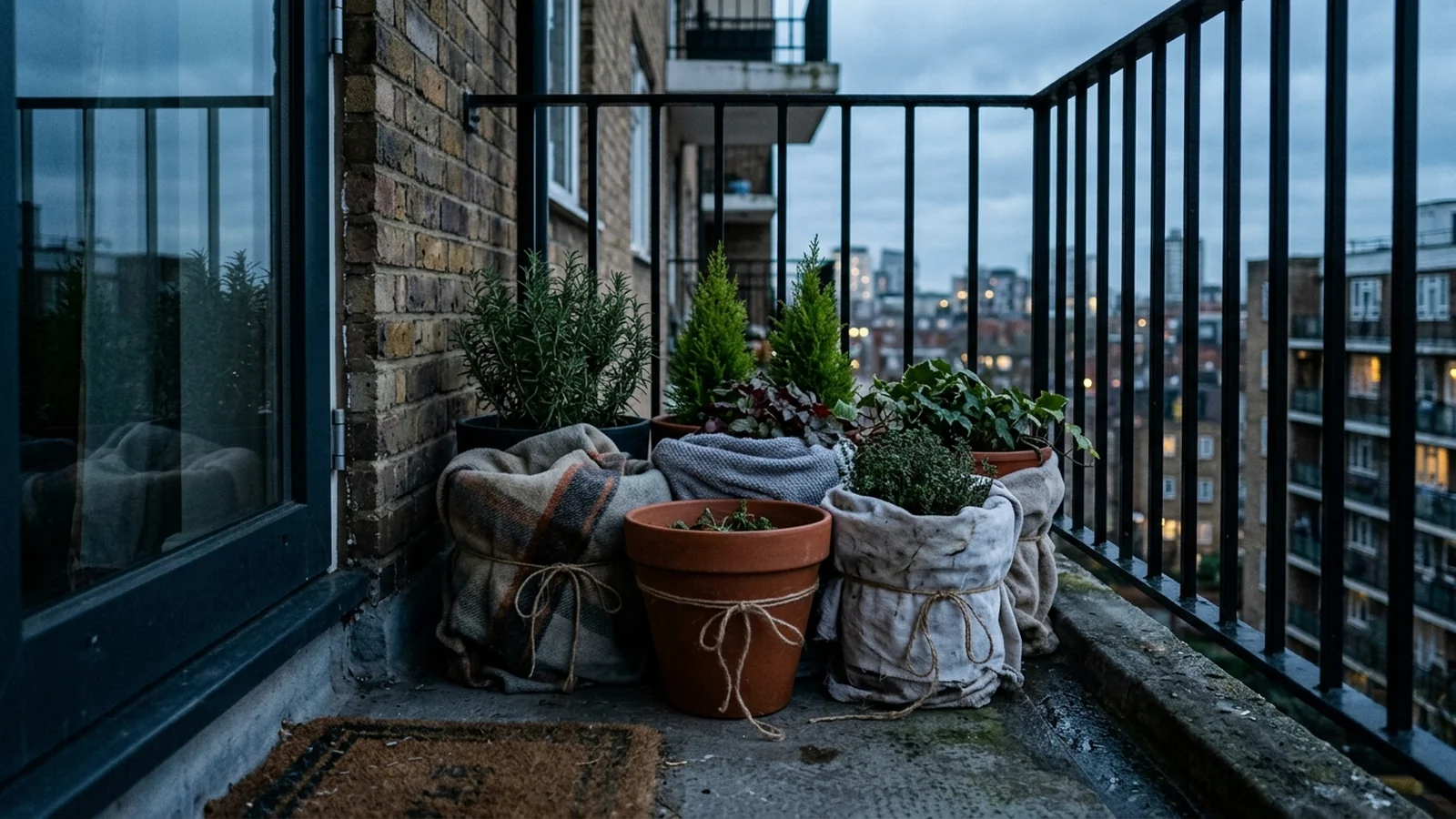
Emergency cold snap protection for balcony container plants
A frost or freeze warning lands differently when the only space you have is a balcony, a windowsill, and a flat with no garage to wheel anything into. Here is the version of this response that assumes that.
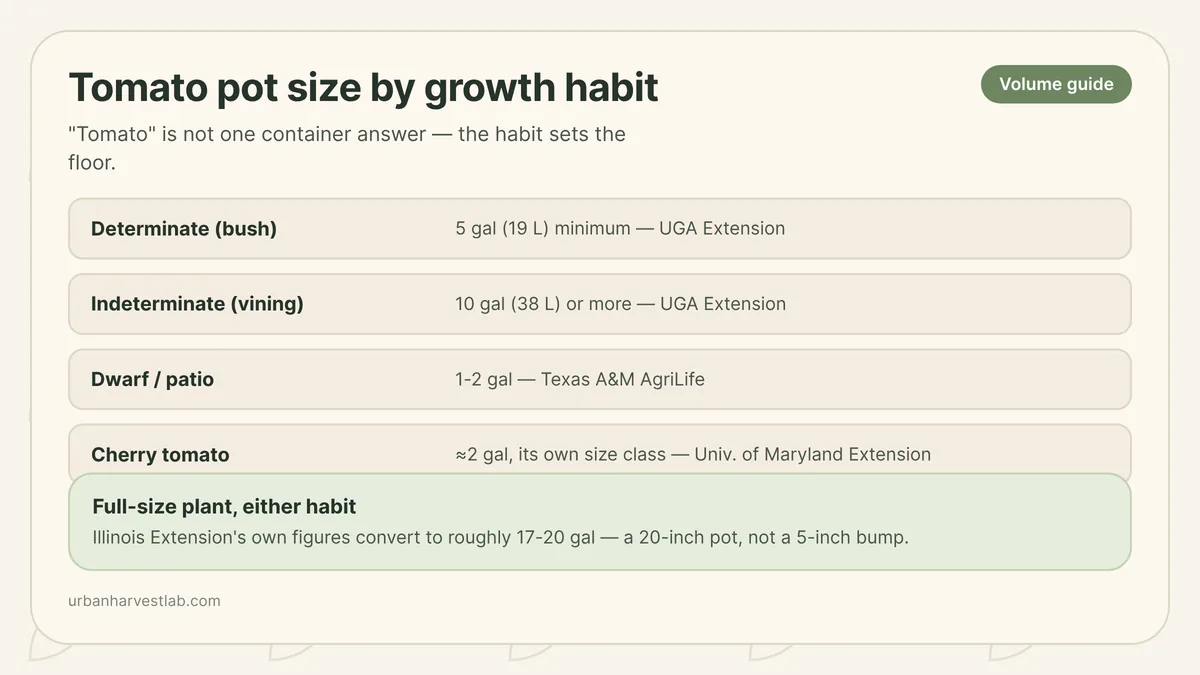
What size pot for tomatoes? Volume by growth habit
The right container for a tomato depends less on the fruit than on how the plant grows: determinate, indeterminate, or dwarf. Extension figures for the same word vary by more than three times.
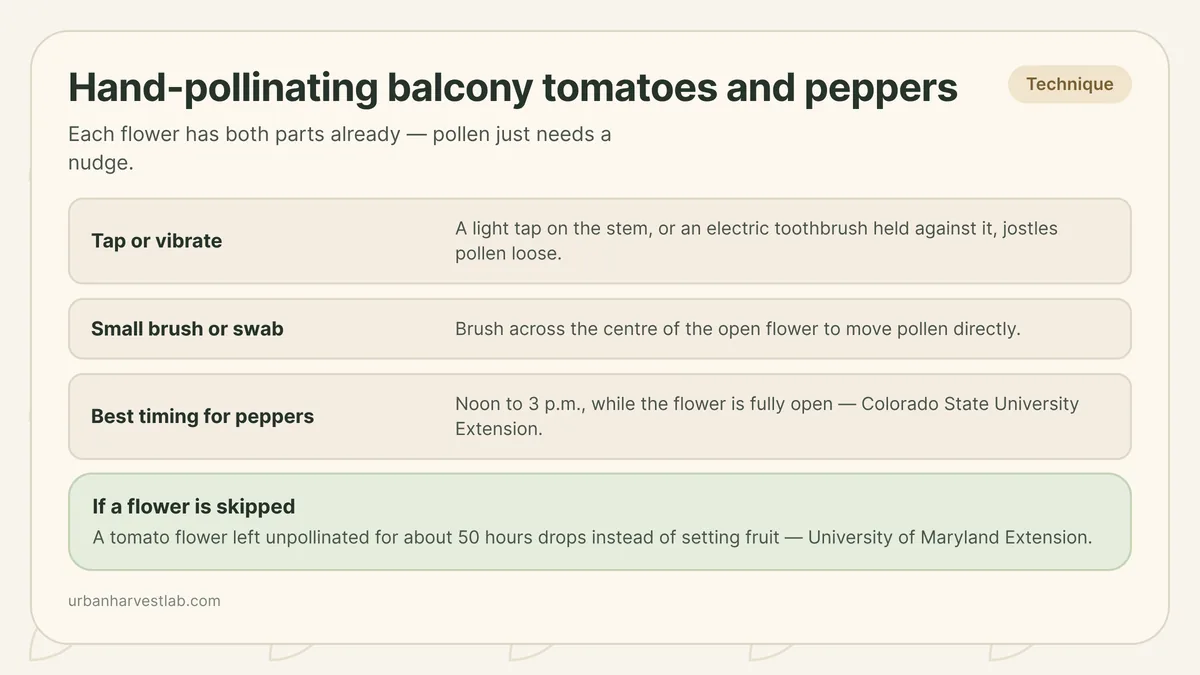
How to hand-pollinate tomatoes and peppers on a balcony
A tomato or pepper flower already carries both male and female parts, but nothing on a balcony reliably moves the pollen between them. This is the tap, brush, or vibrate technique that stands in for a bee.