Troubleshoot the system before you change the inputs.
Symptoms
- Leaves and stems have turned black, brown, or translucent and gone limp within a day of a cold night
- The plant wilted overnight and has not recovered a full day after temperatures rose back above freezing
- Top growth looks intact, but the plant has produced no new growth for two or more weeks after the cold snap
- The potting mix stayed frozen solid, or visibly pulled away from the sides of the pot, for more than a few hours
Possible causes
- A light frost only touched exposed leaf surfaces, which is usually cosmetic on established growth
- A hard freeze reached the root zone through the container wall, since a pot has none of the insulating soil mass a garden bed has around its roots
- Several cold nights in a row gave the roots no real recovery window between one freeze and the next
- The plant is a tender or tropical species outside its cold tolerance, and no amount of covering changes that fact once its root zone sat below freezing for an extended period
Quick fixes
- Bring anything that is still outside and still alive indoors now if the forecast has another cold night coming, rather than re-covering it in place again
- Do not prune away blackened tissue immediately — wait until temperatures are reliably above freezing to see how much of the plant actually regrows
- Water sparingly rather than on the old schedule while the plant recovers, and check for root rot if the mix stayed wet and cold for several days
- For a tender crop whose root zone was exposed to a hard freeze for hours, plan on replacing it rather than waiting for a recovery that a pot this cold rarely produces
A frost or freeze warning tonight is a different problem when the only space you have is a balcony, a windowsill, and a flat with no garage to wheel anything into. Most of what gets written about protecting plants from cold assumes you can move a pot into a garage, a shed, or a greenhouse. That advice is not wrong, it is just answering a different question than the one a renter with a fourth-floor balcony actually has. This is the version built around what a normal apartment gives you: a hallway, a windowless bathroom, an interior window, and whatever towels and boxes are already in the flat. If you have weeks of runway instead of hours, first and last frost dates for a balcony is the planning-ahead version of this same problem; what follows is for tonight.
Tonight’s priority order
- Bring in what you can carry. Anything that fits through a door goes first, before covering or grouping anything else.
- Group what has to stay outside. Push remaining pots close together against an interior wall, away from railings, corners, and any gap where cold air funnels through.
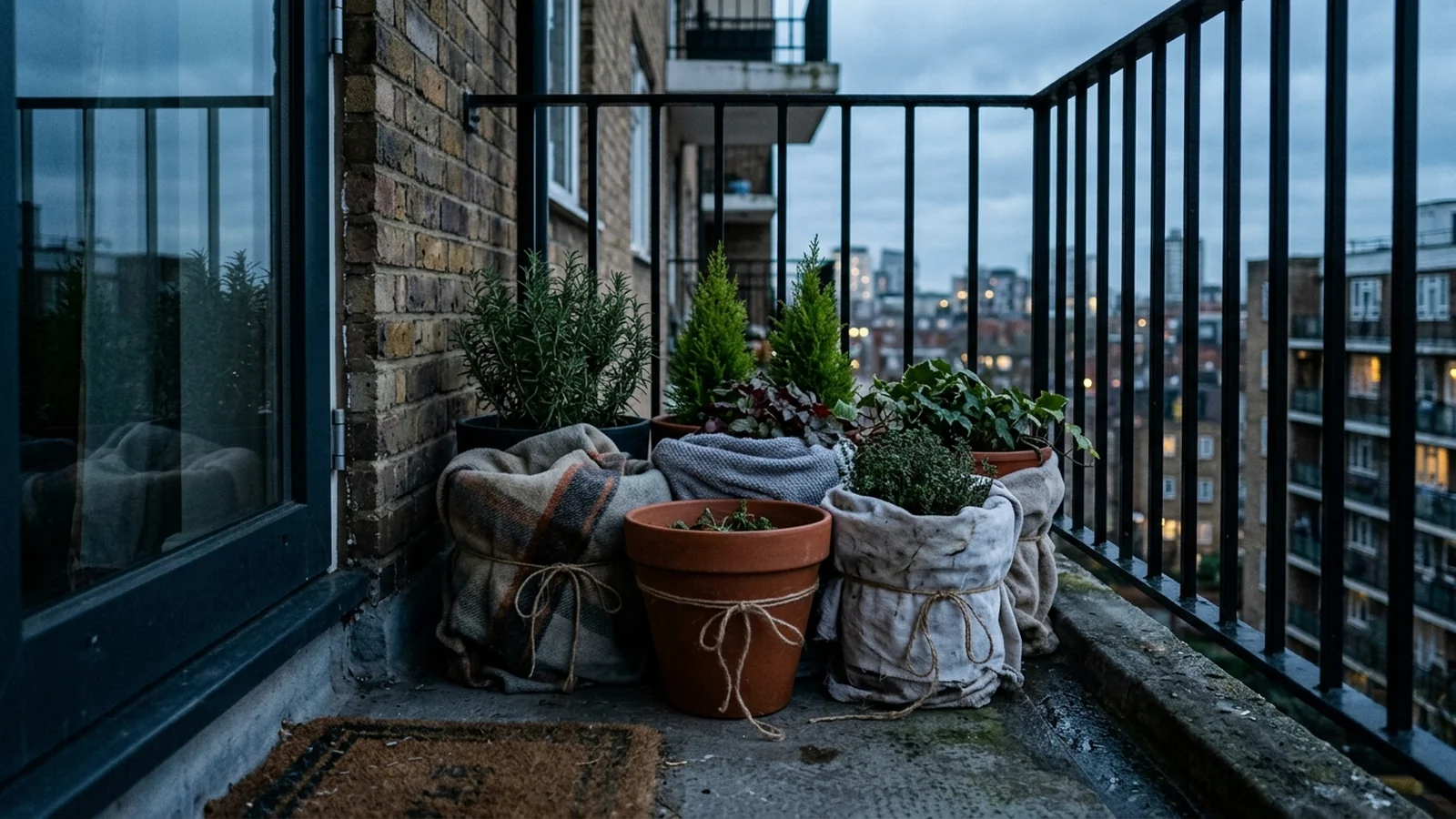
- Cover what’s grouped, and wrap the pot itself, not just the leaves. The root zone is the more urgent problem — see why below.
- Water the mix if there is time before nightfall, lightly, not to the point of sitting in water.
- Accept that some plants may not make it, especially anything tropical or tender that has spent hours with its roots below freezing. Covering it does not change what it can survive.
A light frost, a hard freeze, and a multi-night cold snap are three different problems
Treating every cold-weather alert as one identical “frost protocol” is where a lot of guidance, including most of the generic advice online, goes wrong. The response that fits depends on which of these you are actually facing.
A light frost forms when a plant’s own leaf surface reaches freezing even while the surrounding air stays a couple of degrees above it — the kind of night the US National Weather Service flags with a frost advisory for forecast lows around 33-36°F. Damage from a light frost is usually cosmetic: some leaf-edge browning on tender growth, rarely anything that reaches the roots or kills the plant outright.
A hard freeze is air and plant tissue actually dropping below 32°F, and it is the point where tissue can blacken, go translucent, and collapse. Iowa State University Extension puts real risk of damage above 28°F once sub-freezing conditions run 5 hours or more — even under a cover. A short dip to 30°F for an hour and a six-hour stretch at 30°F are not the same emergency, even though both trigger the same weather alert.
A cold snap that runs several nights in a row is a third category. Rutgers Cooperative Extension notes that an extended run of sub-freezing nights carries more root-damage risk than the same lows alternating with cool-but-not-freezing days, because the roots rarely get a real recovery window in between. A plan for one bad night is not automatically a plan for four of them — see further down for what changes.
Why a pot loses this fight faster than garden soil
A garden bed has a large surrounding mass of soil that buffers root temperature against a cold night; the ground simply does not swing as fast as the air above it. A container has none of that mass. Rutgers Cooperative Extension puts it plainly: in-ground plant material is largely buffered from cold by soil mass, while roots in a container are exposed to near-ambient air temperature once the pot has spent an extended period below freezing.
That has a practical consequence: the top of a plant can look fine the morning after a cold night while its roots have already taken damage, because the two are not exposed to the same conditions. A stem and its leaves sit in open air the same as they would outdoors; the roots sit inside a thin-walled pot with almost no insulation once the cold has soaked in. Root-kill thresholds for a given species are often a higher, less cold-tolerant number than the one gardeners associate with that plant’s foliage hardiness — the roots are usually the more vulnerable part. Practically, the smallest useful move for anything staying outside is protecting the pot itself, not just draping something over the foliage.
What actually works inside a normal flat
With no garage, shed, or greenhouse, the realistic indoor options are still real options — they are just smaller than what most frost guides assume:
- A windowless bathroom or interior hallway. Both stay a few degrees warmer than an exterior room overnight and keep a plant fully out of the cold, even for a short stay.
- A spot near, but not touching, an interior window if every enclosed room is already full. It is not as warm as a true interior space, but it is still indoors.
- An unheated but enclosed stairwell or entryway, where you have access to one, splits the difference between fully heated and fully exposed.
Prioritize what actually moves indoors by cold tolerance, not by convenience. Tender annuals and tropicals — basil, peppers, tomato seedlings, anything summer-only — go first, since they have the least room for error. Hardy perennial herbs like rosemary and thyme tolerate far more cold and are usually better candidates to leave grouped and covered outside if indoor space runs out; overwintering rosemary and thyme in pots covers how to manage that trade-off for the whole season rather than just one night.
Covering what stays outside, with what’s already in the house
For anything that cannot come in, the materials that matter are already in most flats:
- Old towels, blankets, or moving boxes, draped over the plant down to the ground and weighted at the edges, work as an improvised tent — the goal is trapping the heat radiating up from the ground or wall overnight, not just blocking wind.
- Bubble wrap, a towel, or even a spare blanket wrapped directly around the pot itself addresses the root-zone problem described above, which a cover draped only over the leaves does nothing for.
- Water the mix lightly before nightfall if there’s time. A moist potting mix holds and releases more heat overnight than a dry one, according to extension guidance on watering ahead of a freeze — the goal is evenly moist, not saturated, since a waterlogged mix brings its own problems.
- Take coverings off again once the air is reliably above freezing, generally by mid-morning. Left on too long, especially anything airtight like plastic, coverings trap moisture and heat once the sun is out and can do their own damage.
What not to do
None of this justifies reaching for an electrical fix. Do not run a space heater, a heat lamp, or any improvised heating device outdoors, and do not run extension cords across a wet, frosted balcony. Some extension sources do mention old-style incandescent string lights — the kind that get warm to the touch, not LEDs — as a low-heat option for garden beds. Even where that is offered as a legitimate technique, gardening safety writers warn just as clearly that combining hot bulbs with wet frost cloth and leaving them unattended overnight is a real fire risk. That combination — a balcony, wet fabric, a shared building, and no one watching it through the night — is exactly the setup those warnings are about, so it does not belong in this response.
If the cold snap runs several nights, not just one
A single emergency night and a multi-night cold snap call for different habits, not just a repeated version of the same one-night plan:
- Re-check coverings each evening rather than leaving one setup in place for several days. A cover that worked for one night can trap enough moisture over several days to encourage mold or rot, especially on anything left damp underneath it.
- Check the mix and root zone once temperatures recover, even on plants that look fine, since root damage from an extended cold stretch does not always show up in the leaves right away.
- Reconsider what stays outside at all past the first night or two. A grouped, covered setup is a reasonable bridge for one bad night; several nights in a row is closer to the season-long decision covered in overwintering pepper plants and growing herbs indoors for winter — both are about accepting that a plant is coming inside for the season, not just for tonight.
What a blanket cannot save
It is worth being honest about the limit here instead of promising more than a temporary cover can deliver. A tender tropical or a heat-loving annual whose root zone has already spent several hours below freezing is very often lost regardless of what was draped over it — a cover buys a few degrees of margin, it does not change a species’ basic cold tolerance, and it cannot undo hours of exposure that already happened before you read a forecast. If a plant like that has gone fully limp, blackened through the stem, and shows no sign of recovery a day or two after the cold passes, the realistic plan is replacing it once the season allows, not waiting on a comeback that a pot this exposed rarely produces. Hardier perennial herbs and vegetables have a real, better chance with the steps above; treating every plant on the balcony as equally salvageable is the same mistake as treating every cold night as one identical emergency.
Sources and further reading
Plan the rest of the cold season
Tonight's response buys time. These cover the season-long decisions — what to overwinter, what to move indoors for good, and how to plan ahead of the next cold snap instead of reacting to it.
Common questions
What should I do first if a frost or freeze warning comes tonight and I only have a balcony?
Bring in whatever you can carry into any enclosed indoor space — a hallway, a windowless bathroom, a spot near an interior window — before you do anything else. Only after that is settled should you group and cover what has to stay outside, since moving plants gets harder and riskier for them once the cold has already set in.
Is a light frost the same emergency as a hard freeze?
No. A light frost forms when leaf surfaces reach freezing even if the air stays slightly above it, and it is usually cosmetic on established plants. A hard freeze means the air and plant tissue drop below 32°F, and Iowa State University Extension notes real damage risk above 28°F once that lasts 5 hours or more, even under a cover. They call for different levels of urgency.
Why does a potted plant suffer more cold damage than the same plant growing in the ground?
A garden bed has a large mass of surrounding soil that buffers root temperature swings. A container has none of that: Rutgers Cooperative Extension notes that container roots are exposed to near-ambient air temperature once a pot has spent an extended period below freezing, which is why the same air temperature that leaves in-ground roots fine can injure or kill roots in a pot.
Can a blanket or towel really protect a plant, or is it just superstition?
It genuinely helps for a light frost and for the shoulder range of a freeze, mainly by trapping ground or wall heat around the plant overnight. It does much less for a hard freeze that runs for hours, and it does not change a tender or tropical plant's basic cold tolerance — a cover buys margin, it does not rewrite what a species can survive.
Is it safe to use string lights or a space heater to keep a balcony plant warm?
Do not run a space heater or any improvised heating device outdoors, and do not run electrical cords through wet, frosted conditions on a balcony. Some extension sources mention old-style incandescent string lights as a mild, contained heat source for a garden bed, but experts also warn that mixing hot bulbs with wet frost cloth and unattended overnight use is a real fire risk — not a setup that fits a balcony, a shared building, or a plant left alone overnight.
Related guides

How to protect container plants during a heatwave
Watering more is only one piece of getting containers through a heatwave. This is the wider plan: cutting the heat load, grouping and staging pots, and reviving one that has already dried out.
First and last frost dates for a balcony: start with your zone
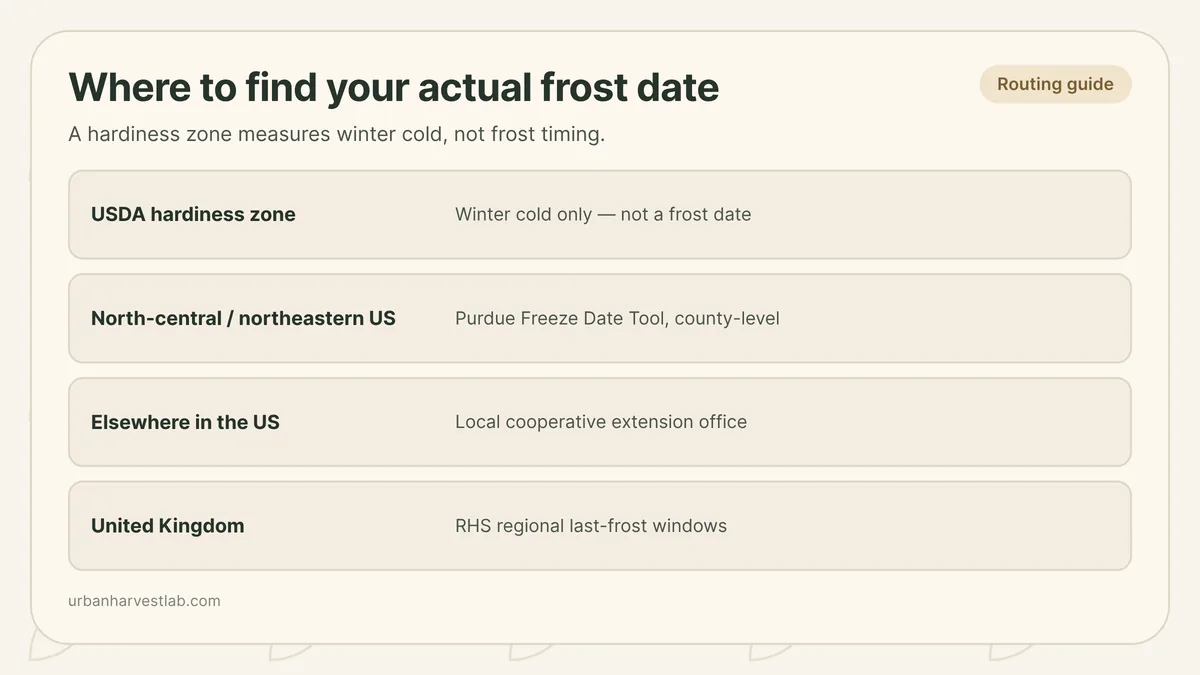
Your hardiness zone tells you how cold winter gets, not when frost starts or ends. Look up the zone's temperature band, then use the tools built to answer the date question directly.
Balcony vegetable garden calendar: what to do each season
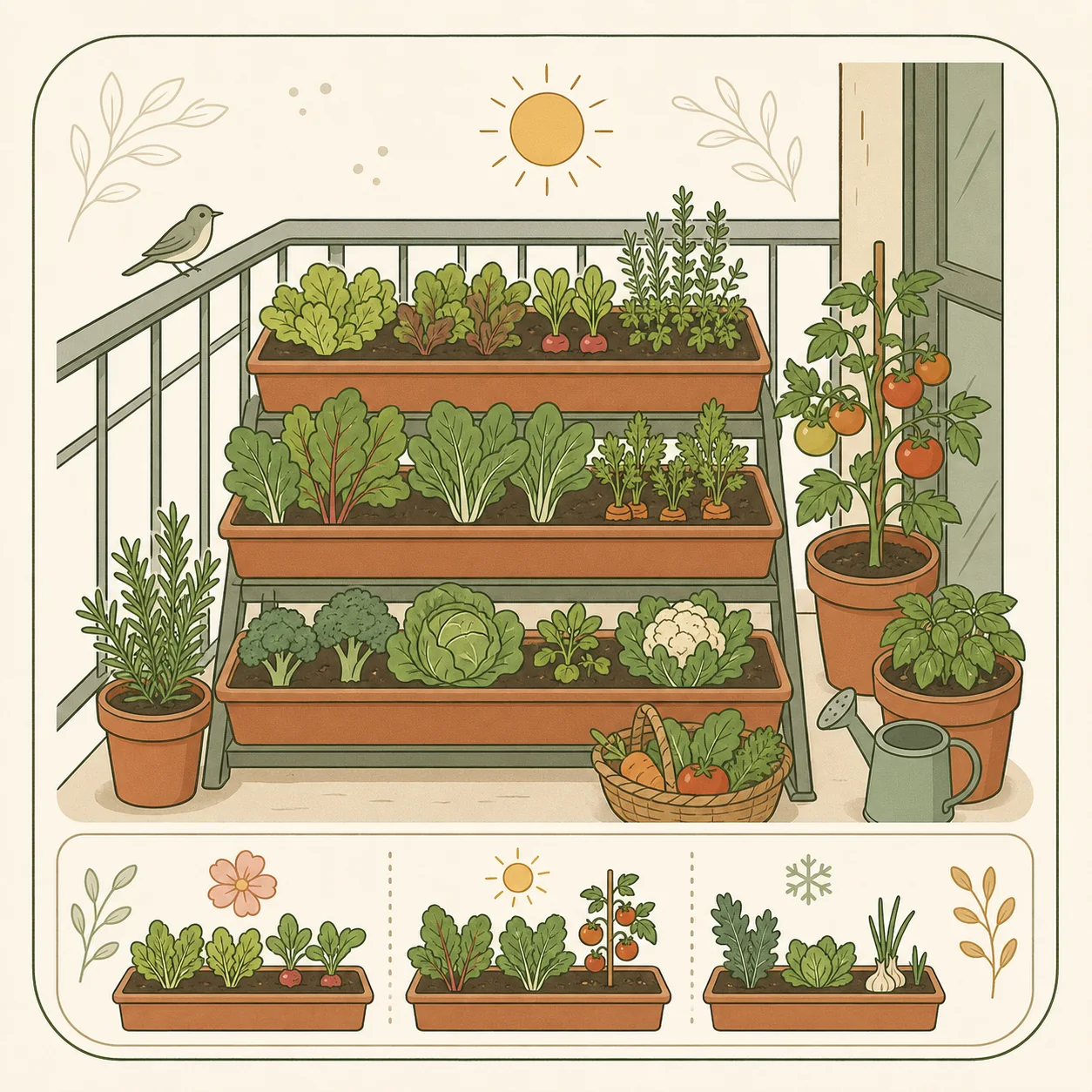
A useful balcony calendar is a set of seasonal decisions, not twelve fixed planting lists. Use temperature, light, and container conditions to decide what happens next.