
A heatwave response for container plants, in order
| Move | What it addresses | When to reach for it |
|---|---|---|
| Shade the pot and canopy | Direct heat load on leaves and the container wall | Before or at the first hot day, not after wilting starts |
| Group containers together | Exposed surface area, wind, local humidity | Ahead of a forecast heatwave |
| Move off pavement or a reflective wall | Radiant heat transferred into the pot from below or beside it | Any time a container sits on hard, sun-heated ground |
| Mulch the surface | Evaporation rate and root-zone temperature swings | Once, then topped up through summer |
| Check the mix before watering | Whether the plant actually needs water yet | Every day during a heatwave, not just once a week |
| Tub soak | A mix that has fully dried out and now repels water | Only once a pot is already badly dried out |
A heatwave plan for container plants is shade, grouping, and staging first, with watering adjusted to match — not a bigger watering number on its own. Watering more often is part of the response, but it is not the whole plan, and it is covered on its own in how often to water herbs in summer. This is the wider response: cutting the heat load a pot carries before reaching for the hose, grouping and staging containers so one hot week does not take out the whole balcony, and what to do with a pot that has already dried out completely.
Cut the heat load before you add water
A container loses water faster in a heatwave for reasons that have nothing to do with the soil: more direct sun, higher air temperature, and often more wind all push moisture out of the mix and off the leaf surface at once. Watering around that faster loss only ever catches up to it. Reducing the heat a pot actually absorbs works on the cause instead.
The simplest version is shade during the harshest part of the day. Afternoon sun is generally harder on a container than the same number of hours in the morning, because it arrives on top of a day’s worth of accumulated heat in the pot and the surrounding surface. A shade cloth panel, an umbrella, a piece of furniture, or simply moving the pot to the shadow of a wall for a few hours in the afternoon all do the same job: they cut how much direct heat load the plant and the container have to shed. None of this needs to be permanent — a temporary shade rigged for the hottest stretch of a heatwave and removed once temperatures drop back down is enough.
Group containers together
Pots standing alone expose their full surface — top, sides, and base — to sun, wind, and radiant heat individually. Pushing containers close together so their sides touch or nearly touch reduces the exposed surface each one faces on its own and creates a more sheltered pocket of air around the group than any single pot has by itself. It is a staging move, not a substitute for shade or a working root-zone check, but it is one of the easiest changes to make ahead of a forecast heatwave, since it costs nothing and takes minutes.
Grouping works best done in advance of the heat, not mid-crisis. Once a heatwave is already underway, moving heavy, sun-stressed containers becomes harder and riskier for the plants themselves.
Get pots off hot pavement and away from reflective walls
A container sitting directly on concrete, dark pavers, or asphalt takes on heat from below in addition to whatever the sun delivers from above — that surface can run considerably hotter than the surrounding air on a sunny day. Raising pots on simple risers, a wooden pallet, or even a couple of bricks breaks that direct contact and lets air move underneath instead. The same logic applies to a pot pushed up against a sun-facing masonry or glass wall, which radiates stored heat back onto the container for hours after direct sun has moved off it; a few inches of clearance, or a spot against a lighter or shaded surface, reduces that added load.
Mulch the surface
A thin layer of mulch on top of the potting mix slows evaporation and buffers some of the temperature swing the root zone otherwise takes on directly. During a heatwave specifically, that job shifts: mulch’s main value is no longer smoothing over an uneven watering habit, it is holding onto whatever moisture the last watering delivered long enough to reach the next check, on a day when a bare surface would give that moisture back to the air within hours. It is also its own small decision — which material, how deep, and how to keep it clear of the stem — all of which are covered in mulch for potted plants: what actually helps in a container.
Check the mix before you water — don’t guess by the calendar
During a heatwave, the temptation is to water on a fixed, more frequent schedule and assume that solves it. Iowa State University Extension’s actual test skips the calendar entirely: water the container once the potting mix is dry at a depth of 1 to 2 inches, checked by feel rather than by the day of the week. That test still applies during a heatwave — it just gets triggered more often, since Iowa State notes that frequency can swing from once or twice a week in cool weather up to once or twice a day for a small container in hot, windy conditions.
Clemson HGIC makes an important point here: the symptoms of overwatering and underwatering a container plant are genuinely similar, both showing up as poor root health and decline. That means a wilting or drooping plant during a heatwave is not proof it needs more water — it could just as easily be heat stress on a plant that already has enough moisture at the roots, or a mix that has been overwatered trying to compensate. The finger-depth check at the root zone is the reliable signal; the leaves alone are not. A small pot in full sun during a heatwave can dry out within a day or two, but exactly how fast depends on the pot’s size, its material, and how much wind it gets.
Emergency rescue: reviving a container that has already dried out
Sometimes a pot gets missed for a day during a heatwave and the mix dries out completely. The clearest sign is water running straight through the container and out the drainage holes within seconds of watering, instead of soaking in — a fully dried mix can pull away from the pot’s sides and start shedding water rather than absorbing it, which makes a normal watering pass nearly useless.
Iowa State University Extension’s fix for exactly this situation is to stand the whole container in a tub of water for 20 to 30 minutes, letting the mix rehydrate from the bottom and sides rather than trying to force water through the top. Once the mix feels evenly moist again by touch, lift the pot out, let it drain fully, and return it to its normal spot — ideally a shaded or grouped one until the heatwave passes.
A ten-minute heatwave check
Skip all of this and a heatwave shows up on the plants directly: leaf margins and tips scorch first, cilantro and parsley bolt early trying to finish their life cycle before the stress kills them, and growth on everything else stalls even when the roots technically have enough water. Once the heat arrives, the daily task shrinks to one thing — check the mix at the root zone, water only what actually needs it, and keep the tub-soak rescue in mind for anything that got missed. Pair this with the balcony herb garden or apartment vegetable garden setup you’re already running, since a layout built around sun, heat, and airflow from the start needs fewer emergency moves later.
Sources
Build the rest of the heatwave response
These cover the watering schedule itself, the mulch layer, and the wider container setup a heatwave stresses.
Common questions
How do you protect potted plants in a heatwave?
Cut the heat load before you add water: move pots out of direct afternoon sun or rig temporary shade, group containers together so they buffer each other, and get them off hot pavement or a reflective wall. Check the mix itself before watering rather than watering on a fixed schedule, and know the rescue soak for a pot that has already dried out.
Should you water container plants more often during a heatwave?
Usually yes: Iowa State University Extension puts container watering frequency anywhere from once or twice a week for a large pot in cool weather up to once or twice a day for a small container in hot, windy conditions — a heatwave pushes a small exposed pot toward the fast end. Check the mix at 1 to 2 inches rather than assuming the interval; the by-herb schedule is in how often to water herbs in summer.
What do you do if a potted plant has completely dried out?
Iowa State University Extension recommends standing the container in a tub of water for 20 to 30 minutes to remoisten the potting mix. This matters most for a mix that has pulled away from the pot sides and started repelling water rather than absorbing it.
Does grouping pots together help in a heatwave?
Grouping containers reduces the exposed pot surface each one faces on its own and creates a more sheltered local microclimate, which is a useful staging move alongside shade and a working root-zone check.
Related guides
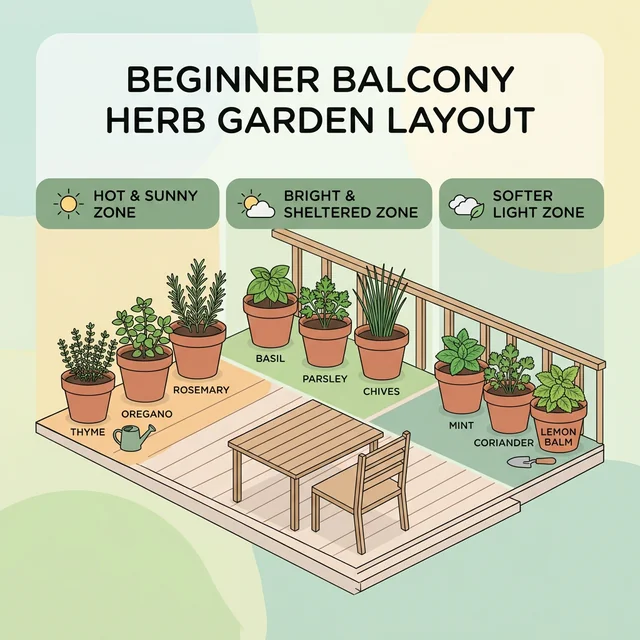
Balcony herb garden for beginners: easy step-by-step
A practical beginner guide to starting a balcony herb garden that stays simple to water, easy to read, and realistic to maintain.
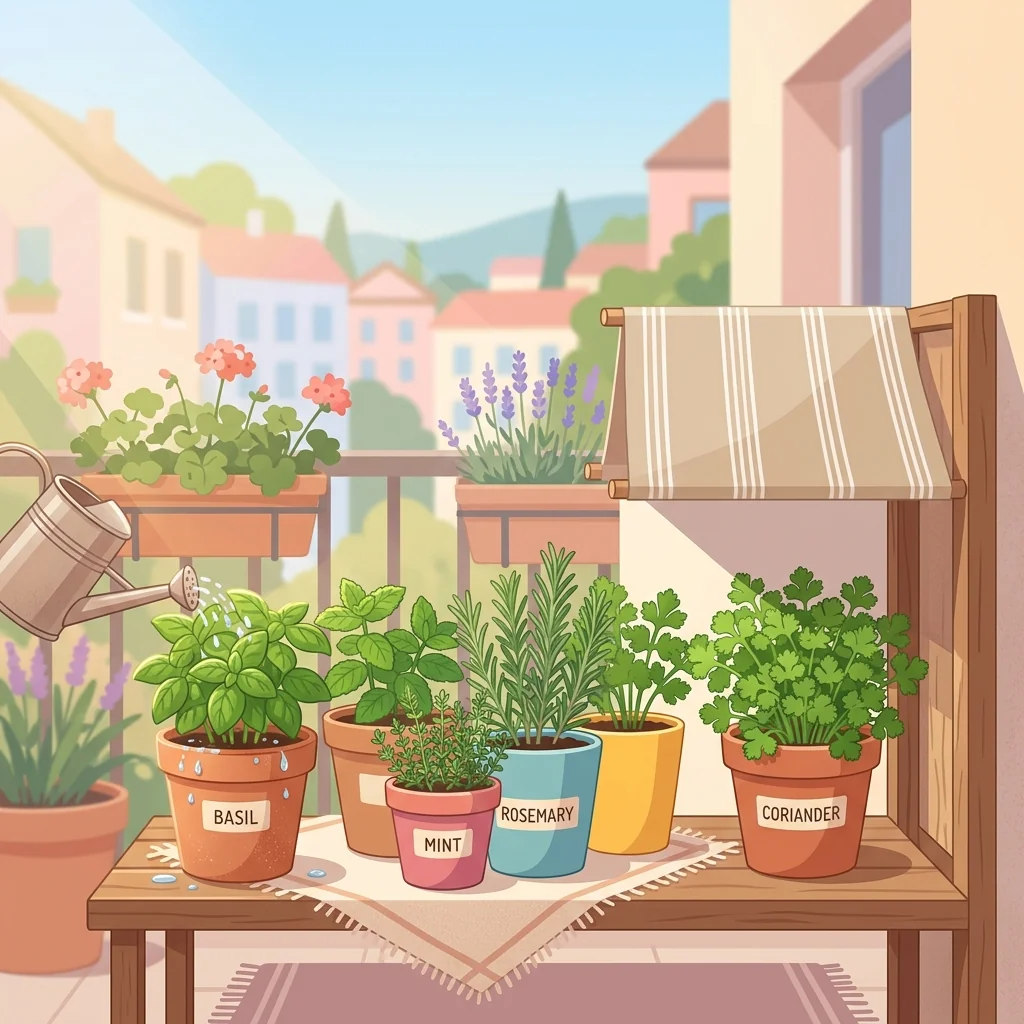
How often to water herbs in summer (heat-proof guide)
Summer heat can double how fast pots dry out. Here is how often to water each herb in hot weather, plus the shading and mulching tricks that keep pots alive in a heat wave.
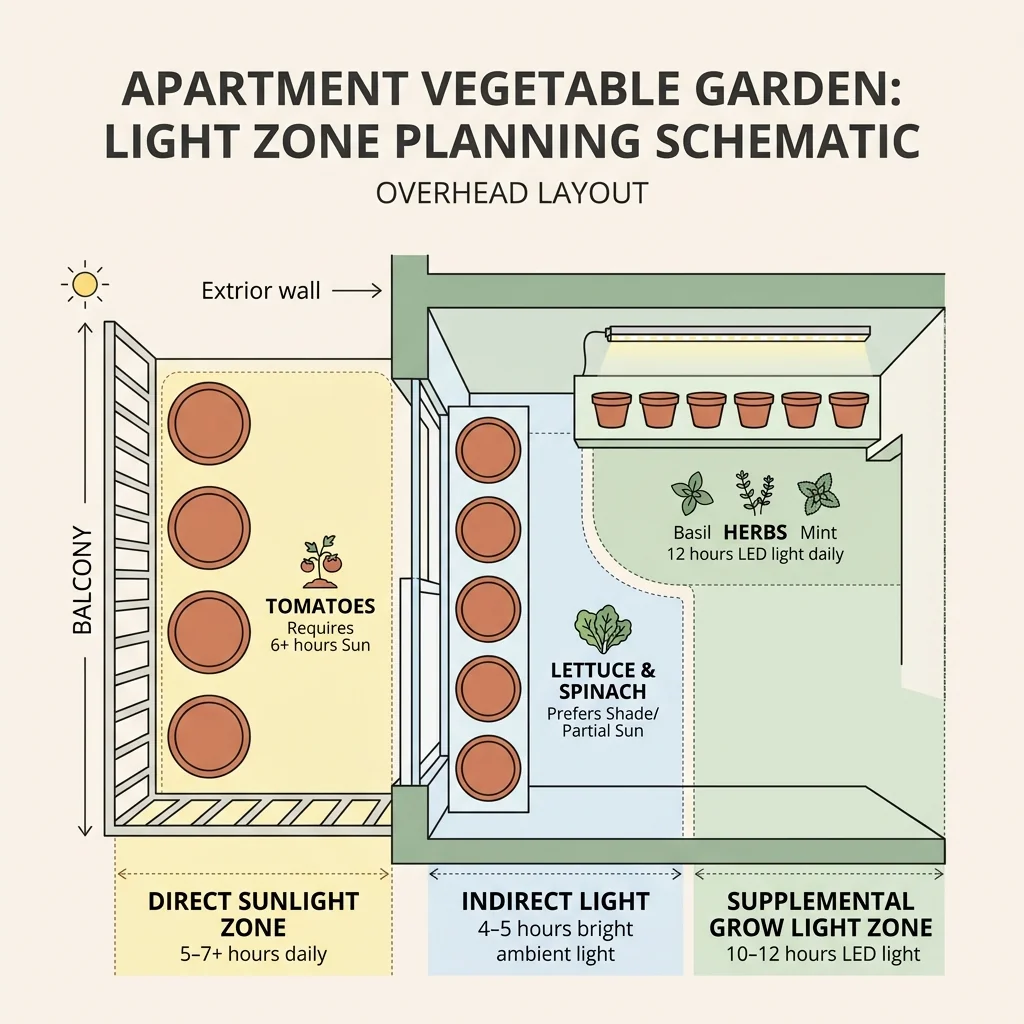
A beginner's apartment vegetable garden plan
Growing food in an apartment works when light, containers, crops, and routine are planned together. This is a simple, step-by-step plan to start from scratch.