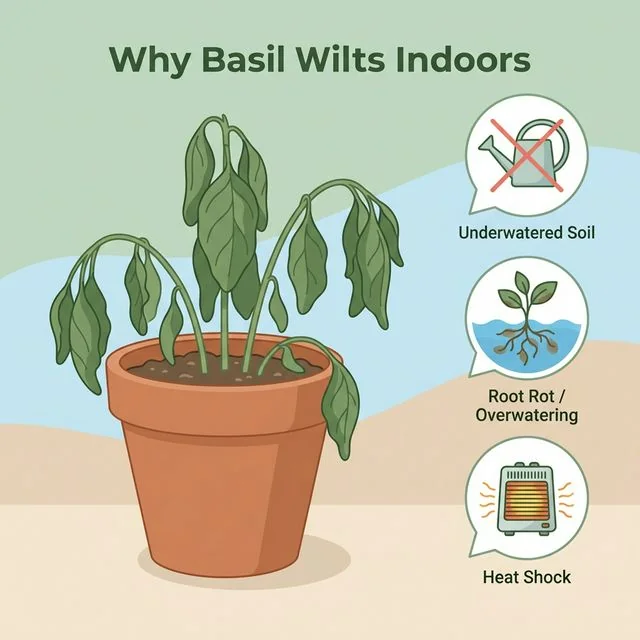
The Basil Wilting Diagnostic Checklist
| Symptom | Soil Condition | Primary Cause | The Fix |
|---|---|---|---|
| Dramatic, sudden total collapse of the plant | Bone dry, pot feels extremely light | Underwatering | Bottom-water the pot in a bowl for 30 minutes |
| Slow, sad wilting accompanied by yellowing lower leaves | Soggy, wet mud; pot feels very heavy | Overwatering / Root Rot | Stop watering; improve drainage immediately |
| Wilting only during the hottest part of the day | Appropriately damp | Heat Shock / Transpiration Stress | Provide light afternoon shade or move away from hot window |
| New growth is curled and distorted while wilting | Appropriately damp | Pest Infestation (Aphids/Spider Mites) | Check under leaves for tiny bugs; spray with neem oil |
Of all the herbs grown indoors, basil is famously the most dramatic. You can leave for work perfectly happy with a lush, green, thriving plant, only to return nine hours later to find a tragic, collapsed pile of limp foliage draped over the sides of the pot.
While terrifying to a beginner, this dramatic “fainting” is actually one of basil’s best features. It is loudly communicating its exact needs before sustained damage occurs.
If your basil is wilting, do not assume it is dead. Here is exactly how to diagnose the droop, read the soil, and bring the plant back to life.
Cause 1: Severe Dehydration (The Easy Fix)
Basil is a leafy, high-water plant. Its massive, soft leaves transpire (sweat) heavily when placed under a strong grow light or in a sunny windowsill. To pull off this rapid growth, it drinks a tremendous amount of water.
If the roots run out of water, the plant immediately loses “turgor pressure” (the internal water pressure that keeps the stems rigid). It collapses to reduce the surface area exposed to the sun, essentially trying to hide from the heat until it rains.
- The Diagnosis: The plant is entirely limp. Crucially, pick the pot up. If it feels as light as a feather, or if you stick your finger in the soil and it is bone dry two inches down, the plant is dehydrated. (See How Often Should You Water Potted Herbs? (Stop Guessing) for the finger test mechanics).
- The Fix: Do not just pour a cup of water over the top. Severely dried peat-based potting soil becomes hydrophobic (water-repellent) and the water will just run down the sides of the pot. Instead, “bottom water” the plant. Plop the entire pot into a bowl filled with three inches of lukewarm water, and let it soak it up through the bottom drainage holes for 30 minutes.
- The Result: Within four hours, the plant will drink the water, restore its turgor pressure, and stand perfectly upright as if nothing happened.
Cause 2: Root Suffocation (The Lethal Threat)
If your basil is wilting, but the soil isn’t dry, you have a much more dangerous problem on your hands.
If you stick your finger into the soil and it feels like cold, wet, soggy mud, your plant is drowning. When soil is completely waterlogged for days on end, all the oxygen is pushed out. Roots need oxygen to survive. Without it, they suffocate, die, and begin to rot. When the roots rot, they can no longer send water up to the leaves, and ironically, the plant wilts from dehydration while sitting in a puddle.
- The Diagnosis: The plant is wilting slowly over several days. The lowest leaves are likely turning yellow and dropping off. The pot feels incredibly heavy, and the soil is soaking wet. (This frequently ties into issues discussed in Common Problems With Potted Herbs: How to Diagnose Yellow Leaves, Wilting, and Weak Growth).
- The Engine Issue: You likely planted the basil in heavy outdoor garden dirt instead of a light indoor mix. Review Potting Mix vs. Raised Bed Soil for Herb Containers to understand why dense soil kills container plants.
- The Fix: Stop watering immediately. If the pot doesn’t have drainage holes, you must drill them or repot the plant immediately into a container that does. Place a fan near the plant to encourage evaporation and pray the root system hasn’t entirely rotted away.
Cause 3: Heat Shock and Transplant Shock
Sometimes, the soil moisture is absolutely perfect, but the plant still wilts. This is usually due to environmental shock.
Afternoon Heat Shock
If you place a tender indoor basil plant directly against a south-facing glass window in the middle of July, the radiant heat can easily surpass 100°F (37°C). The plant physically cannot pull water up from the roots fast enough to replace the water it is sweating out through its leaves. It wilts to protect itself.
- The Fix: If it only wilts during the three hottest hours of the day and recovers at night, move it six inches backward away from the glass.
Transplant Shock
If you recently bought a basil plant from the supermarket, ripped the root ball apart, and crammed it into a new pot, you severed hundreds of microscopic root hairs. The plant requires days to rebuild that root infrastructure. Until it does, it will wilt because it cannot drink efficiently.
- The Fix: Keep the soil consistently damp (not soggy), keep the plant out of intense, blasting direct sunlight for three days, and leave it alone while it heals.
By checking the weight of the pot before you panic, you can eliminate 90% of basil wilting mysteries in less than five seconds. Basil wants to live; you just have to give its roots the environment they need to do their job.
Diagnosing other issues? Read these
If your plant is yellowing or growing slowly alongside the wilting, check these comprehensive diagnostic guides.
Common questions
Should I cut the wilted leaves off my basil?
No, wait at least 24 hours after correcting the problem. Basil is incredibly resilient; seemingly dead leaves will often pump back full of water once the roots recover. Only cut them if they turn crispy and brown.
Can a pot be too big for basil, causing it to wilt?
Yes. A tiny seedling in a massive pot will suffer from root rot because the immense volume of wet soil never dries out, suffocating the small root system.
Why does my basil wilt in the afternoon but look fine in the morning?
This is a classic heat defense mechanism. If the afternoon sun is too intense, the plant temporarily wilts to protect its leaves from burning. It recovers overnight. Move it slightly out of direct afternoon sun.
Related guides
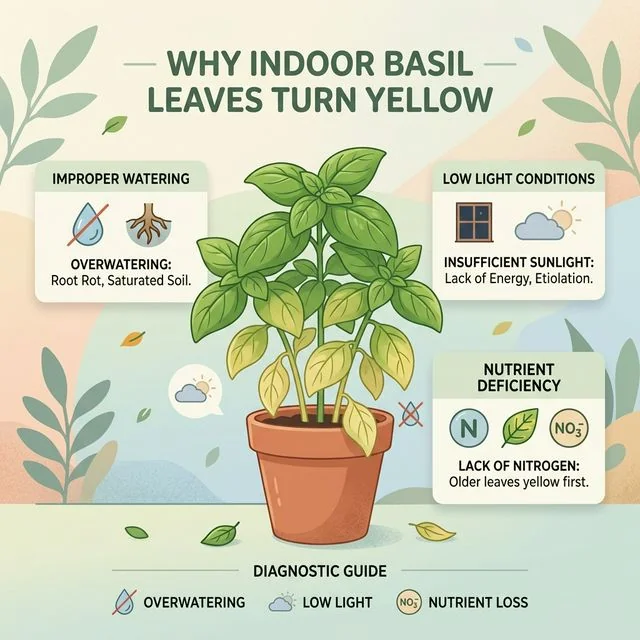
Why Are Basil Leaves Turning Yellow Indoors?
Yellow basil rarely has a single universal cause. The pattern of yellowing, the growing medium, and the recent care routine usually tell the story.
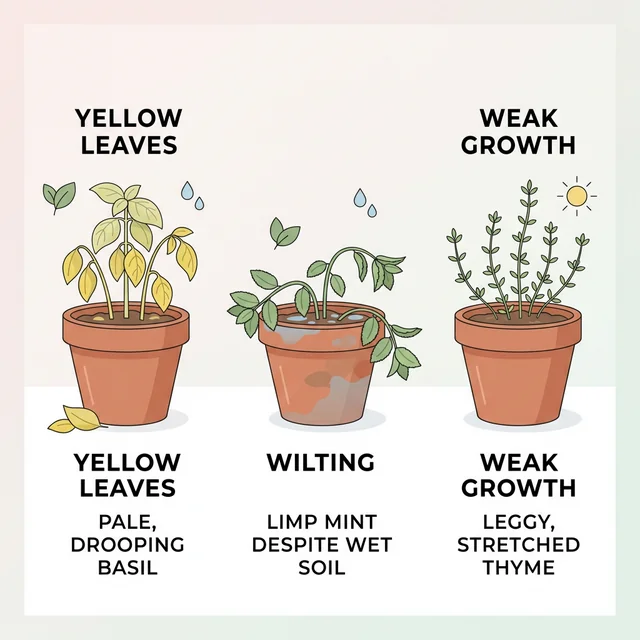
Common Problems With Potted Herbs: How to Diagnose Yellow Leaves, Wilting, and Weak Growth
Most potted herb problems are not isolated mysteries. Yellow leaves, wilting, and weak growth usually trace back to light, drainage, containers, or routine drift.
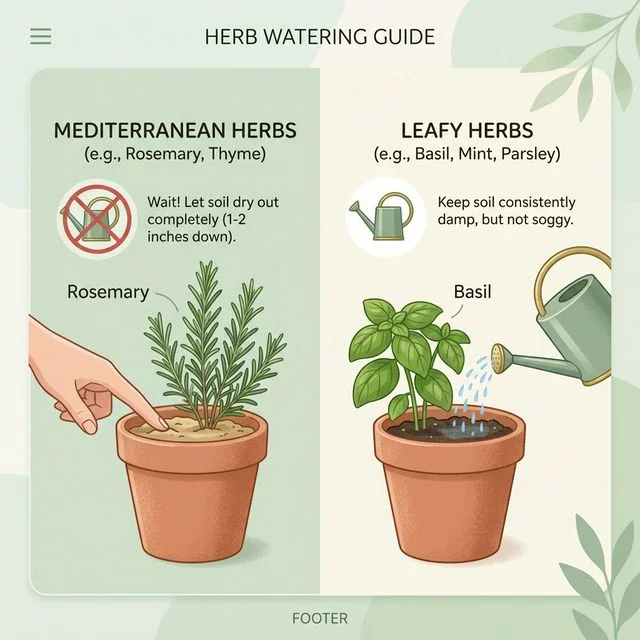
How Often Should You Water Potted Herbs? (Stop Guessing)
The most common way beginners kill potted herbs is by watering them on a strict calendar schedule. Throw away the calendar and learn the 'weight test' instead.