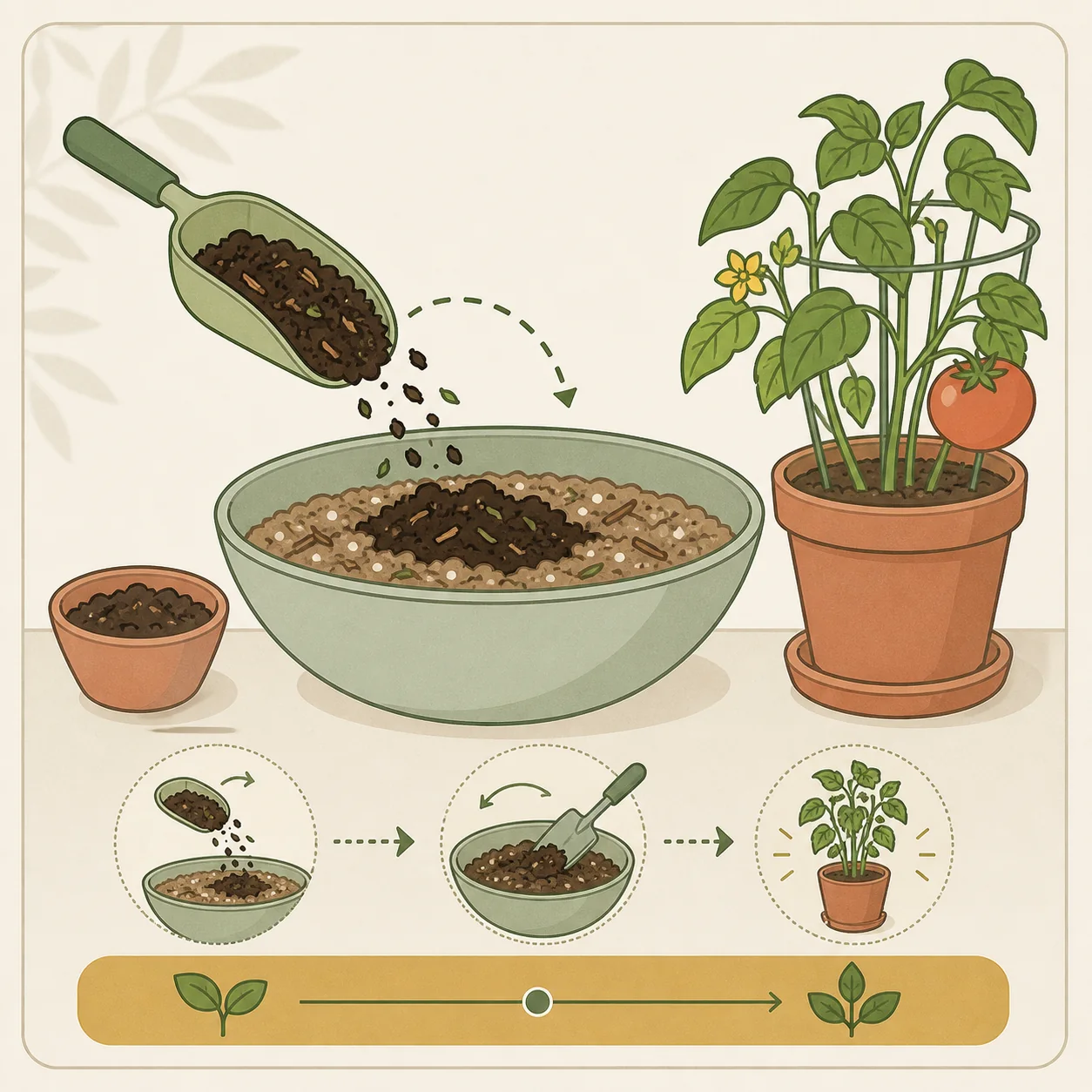
Practical compost starting ranges
| Scenario | Trial range by volume | Why |
|---|---|---|
| Seed-starting mix | 0–10% | Uniform texture and low salt risk matter most |
| Indoor herbs | 10–20% | Moderate fertility without slowing an already cool root zone |
| Outdoor greens and herbs | 15–25% | Useful moisture and nutrient buffer |
| Large outdoor vegetable pots | 20–33% | Long season, provided structure remains open |
For most home containers, 10–25% finished compost by volume is a sensible trial range. Large outdoor vegetable pots may work with 20–33% when the compost is mature and the rest of the mix has durable coarse structure. These are starting ranges, not safety guarantees.
If you are building the entire medium, begin with how to make potting mix for container vegetables. Compost answers only part of the problem. Roots also need air-filled pores, predictable drainage, and enough structural material to resist collapse.
Why one percentage cannot fit every compost
“Compost” describes a process and a broad class of material, not a uniform ingredient. Feedstock, screening, age, moisture, salt content, and storage all change its behavior. Fine municipal compost can fill pores very differently from a coarser screened yard-waste compost. Vermicompost can be nutrient-rich enough that a smaller fraction is appropriate.
The base mix changes the answer too. Adding 20% compost to a coarse bark-and-coir blend is different from adding it to a fine peat mix that already holds abundant water. Climate and pot size then alter how quickly the combination dries.
That is why a precise-sounding universal recipe can be less useful than a modest range plus a test.
Measure by volume, not by weight
Moist compost is much heavier than perlite or dry coir. Weight ratios therefore produce distorted mixes. Use the same bucket or scoop for every ingredient and measure loose, without compression.
For 20 liters of finished mix:
- 10% compost = 2 liters compost and 18 liters other components
- 20% compost = 4 liters compost and 16 liters other components
- 25% compost = 5 liters compost and 15 liters other components
- 33% compost = roughly 6.5 liters compost and 13.5 liters other components
Keep a written batch record. If the mix works, the record lets you repeat it; if it fails, you can adjust one component intelligently.
Choose a starting range by use
Seedlings: zero to ten percent
Seedlings are sensitive to salinity, disease, and uneven texture. A clean commercial seed-starting mix is the most predictable choice. If you add compost, use a small amount of mature, finely screened material and test germination before sowing valuable seed.
Indoor herbs: ten to twenty percent
Indoor containers often dry slowly because light and air movement are modest. A high compost fraction can make that worse. Start low, choose an appropriately sized pot, and observe the wet center rather than only the surface.
Outdoor greens and herbs: fifteen to twenty-five percent
Fast crops can benefit from the water and nutrient buffer while still needing open structure. This range is a practical place to test on a balcony, especially when the remaining medium includes coarse aeration material.
Large vegetable containers: twenty to thirty-three percent
Tomatoes, peppers, and similar long-season crops can use a larger reserve, but they also need oxygen and continuing nutrition. Do not assume a third compost eliminates fertilizer. Monitor growth and follow a crop-appropriate plan.
Evaluate compost before it enters the pot
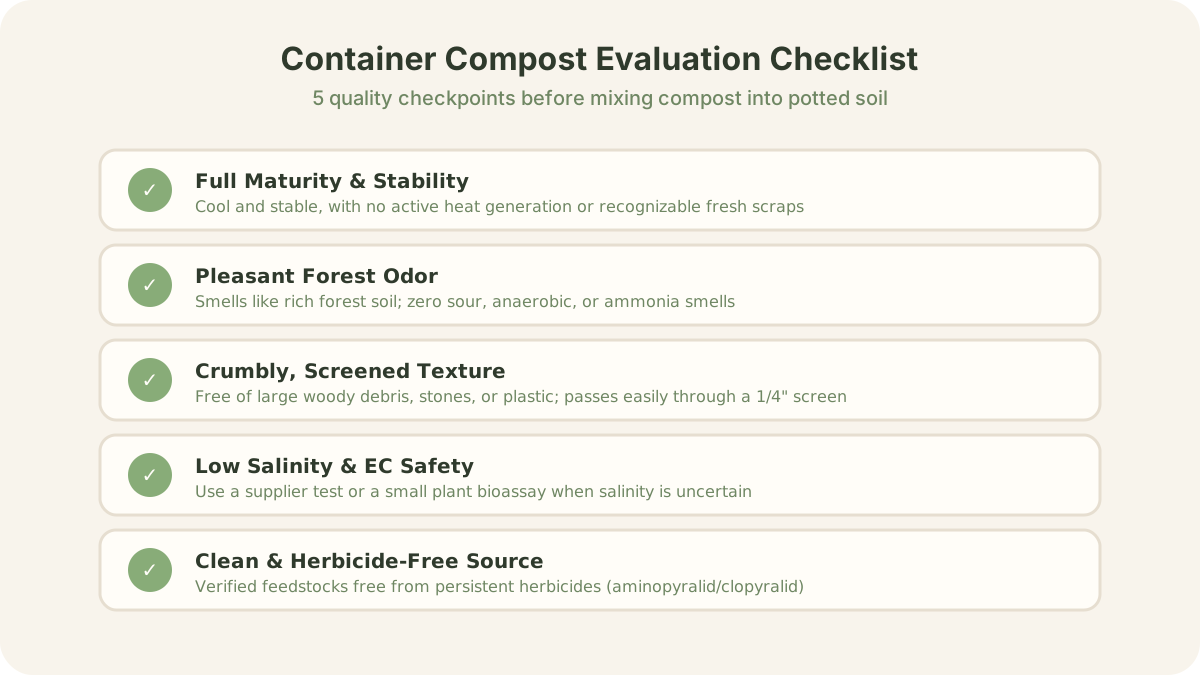
Finished compost should smell earthy rather than sour, ammonia-like, or rotten. It should be cool and reasonably uniform, without recognizable fresh food scraps. This sensory check cannot detect every contaminant or salt problem, but it can reject obviously unfinished material.
Know the source. Compost intended for horticultural use with transparent feedstocks is preferable to an unknown material for edible containers. Herbicide residues, excessive salts, plastics, and immature feedstock cannot be fixed by a clever ratio.
When uncertain, run a small bioassay. Fill several small pots with the planned mix and controls with known-good mix. Sow a fast, reliable seed such as radish or lettuce. Compare germination, root development, and leaf distortion over two to three weeks.
Test the finished mix, not compost alone
Moisten a small batch thoroughly and fill a real pot without packing. Water it, let it drain, then inspect the center after a day. The mix should be evenly moist without becoming paste-like.
Repeat watering over two weeks. Fresh mixtures can look open initially and then settle as fine compost migrates into pores. If the pot becomes heavy and slow to dry, reduce compost or increase coarse structure. If it dries almost immediately, first consider a larger pot, then adjust water-holding components modestly.
Compost and fertilizer are not interchangeable
Compost supplies nutrients unpredictably. The amount released depends on composition and biological activity. Fruiting crops in containers have sustained demand that a modest compost fraction may not meet.
Use plant performance and a conservative feeding schedule rather than adding more compost midseason. Top-dressing changes the surface but may not correct a depleted root zone evenly. The decision framework in do potted herbs need fertilizer? separates feeding from other causes of weak growth.
Watch for symptoms of excess too. Leaf-tip damage, surface crusts, and stalled growth can have several causes, but more fertilizer is the wrong reflex when salts are already accumulating. See signs of overfertilizing herbs before changing the dose.
Common mistakes
- Treating dark color as proof of quality.
- Measuring a wet ingredient by weight against dry ingredients.
- Using unfinished compost because it will “finish in the pot.”
- Assuming homemade compost is automatically low in salts.
- Increasing compost to repair a container with no drainage.
- Using one result across seedlings, herbs, and fruiting crops.
- Filling every container before testing one batch.
A cautious default workflow
Start with 20% mature compost in a general outdoor container mix, or 10–15% indoors. Make one or two trial pots. Water them normally for two weeks, then compare structure, drying time, smell, and plant response with a known mix.
If the trial stays open and plants grow cleanly, keep the ratio. If the center remains saturated, reduce the fine fraction. If plants show distortion or poor germination, stop using the compost until its maturity and source are understood.
Review the roots after harvest
When the container is emptied, note whether fine roots occupied the full volume, whether a sour or compact layer remained in the center, and how much the medium settled. Roots distributed through an open mix are stronger evidence than the original recipe alone. Record irrigation frequency at the beginning and end of the crop. If the mix collapsed rapidly, reduce fine compost or choose a more stable source next time; simply adding extra perlite to old degraded material may not restore its pore structure.
Sources and further reading
- Penn State Extension: Container Vegetable Gardening discusses soilless media and compost additions up to 50% while emphasizing drainage and crop fit.
- Penn State Extension: Potting Media and Plant Propagation covers compost-based media, variability, and simple plant bioassays.
Build a stable root zone
Use compost as one component of a tested potting mix, then match feeding and watering to the crop.
Common questions
Can I use 50 percent compost in potting mix?
Some extension guidance allows up to 50 percent finished compost in particular mixes, but that is an upper option, not a universal target. Test the actual compost because fine texture and salts can make a high percentage risky.
Can plants grow in pure compost?
Pure compost is too variable to recommend as a general container medium. It can be dense, saline, nutrient-imbalanced, or unstable and usually lacks the durable coarse structure of a potting mix.
How do I measure compost percentage?
Measure by loose volume with the same container for each ingredient. One bucket of compost plus three buckets of other material is 25 percent compost by volume.
Related guides
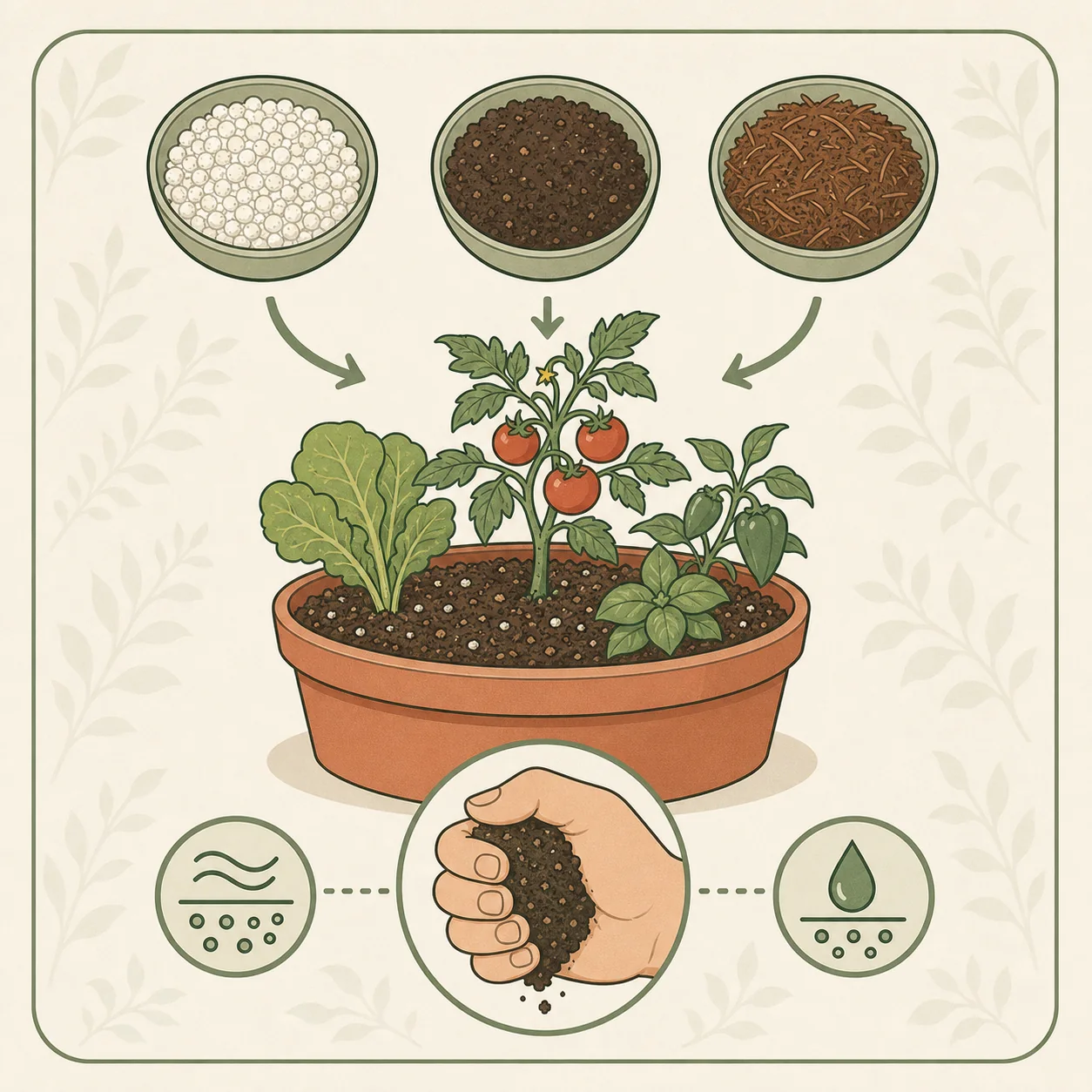
How to make potting mix for container vegetables
A useful potting mix recipe describes the job of each ingredient and gives you a way to correct the result. The goal is stable air and moisture, not a magic ratio.
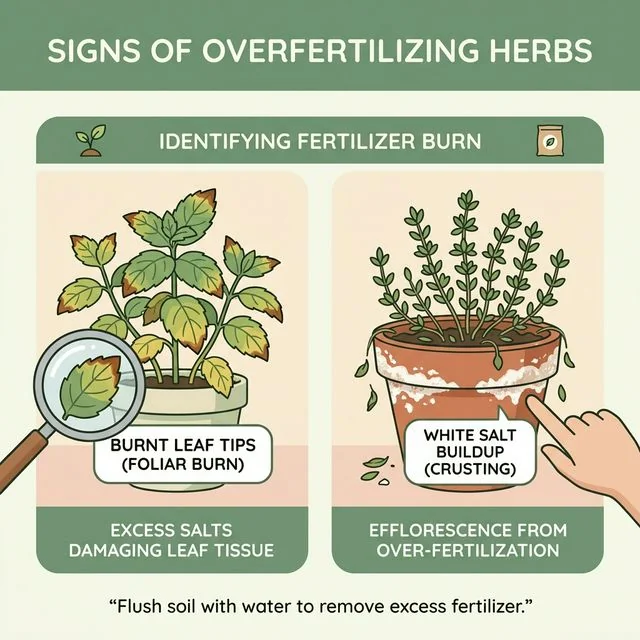
Signs you're overfertilizing herbs: yellow tips, salt buildup, and stalled growth
It is incredibly tempting to pour extra fertilizer on a slow-growing herb plant. But unlike humans, plants don't 'eat' fertilizer—they 'eat' sunlight. Forcing excess chemical salts into the soil will burn the roots and kill the plant.
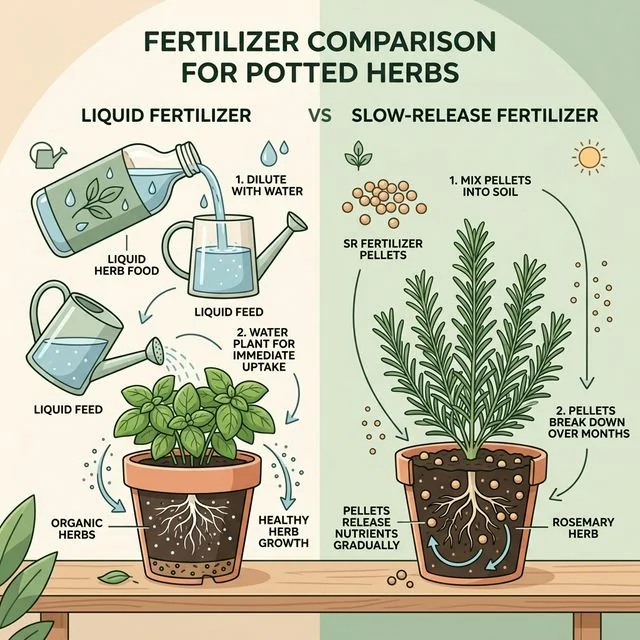
Do potted herbs need fertilizer? When to feed and avoid burn
Most potted herbs need fertilizer eventually, but timing matters. This guide explains when to feed, how often to do it, and how to avoid burning stressed roots.