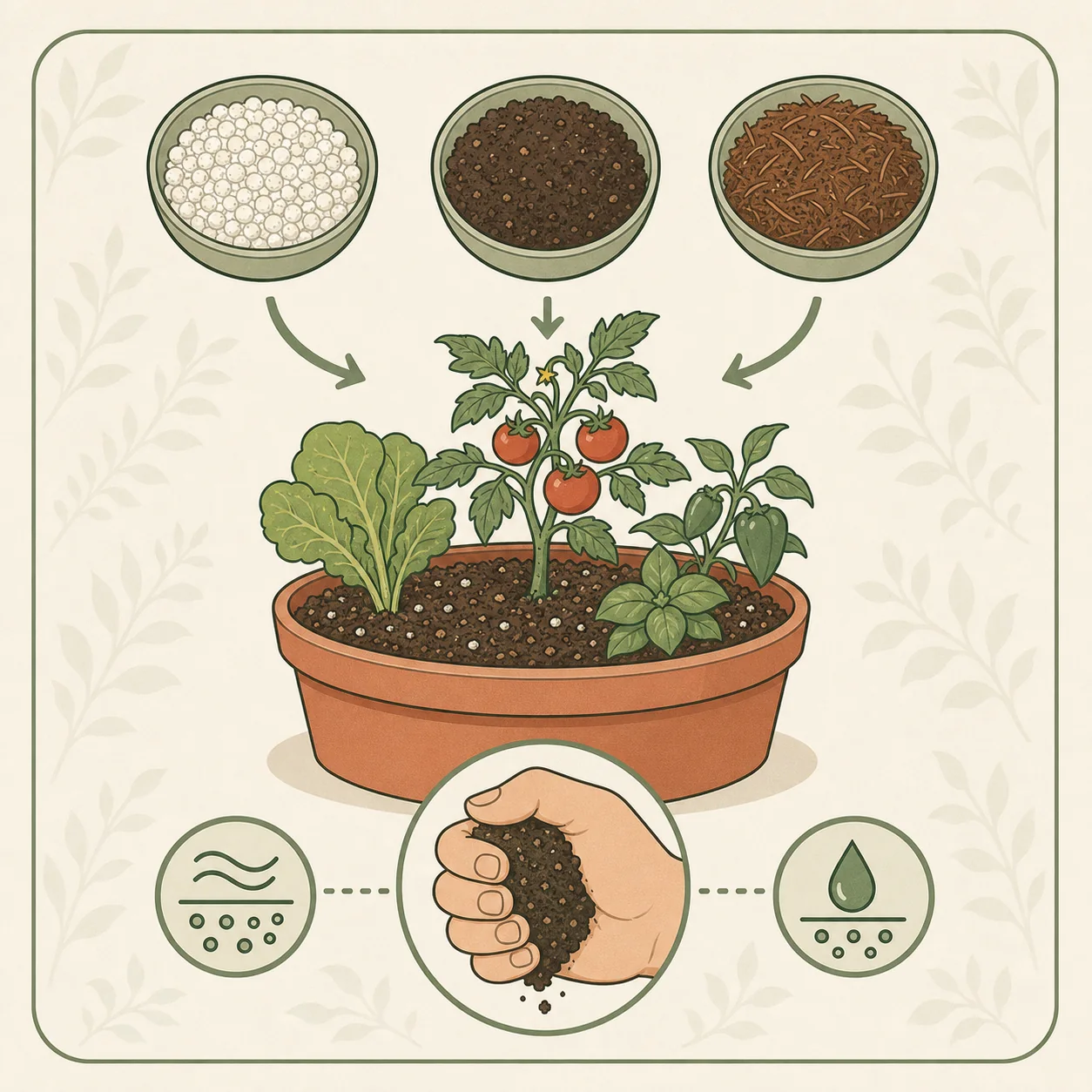
Functions in a container mix
| Component | Main job | Examples | Too much can cause |
|---|---|---|---|
| Moisture-holding base | Holds water while staying light | Coir, peat-based mix | Slow drying or shrinkage |
| Coarse structure | Maintains air-filled pores | Coarse perlite, pine bark | Fast drying and low water reserve |
| Nutrient-bearing fraction | Adds biology and some nutrition | Mature screened compost | Density, salts, inconsistent fertility |
Homemade potting mix is useful when you need a large volume, want to understand what is in the pot, or need to tune water retention for a difficult balcony. It is not automatically better than a good commercial mix. The advantage is control; the cost is that you must observe and adjust.
First understand why potting mix behaves differently from soil in containers. A container medium has to hold water, release excess water, preserve air around roots, anchor the plant, and carry nutrients inside a small volume. Those jobs conflict, so a successful mix is a balance rather than a single perfect material.
Start with functions, not brand names
A practical mix has three functional groups.
The base holds plant-available water. Coir and peat-based materials are common examples. Their particle size, age, and processing change behavior, so “one part coir” is not a complete specification.
The structural fraction creates larger pores that remain useful after repeated watering. Coarse perlite and appropriately sized composted bark are common. Fine perlite dust contributes far less structure than large particles.
The nutrient-bearing fraction is often mature, screened compost. It can add nutrients, buffering, water retention, and biological activity. It also varies more than the other ingredients. Compost should therefore be a controlled fraction, not a default replacement for the entire medium.
A starting recipe for a small trial
By loose volume, try:
- two parts pre-moistened coir or a plain peat-based base
- one part coarse perlite or similar aeration material
- one part mature, fine-screened compost
This is a trial formula, not a universal prescription. For seedlings, reduce rich compost and use a finer, clean medium. For a large outdoor tomato container in a hot, dry climate, you may need more moisture reserve. For herbs indoors in moderate light, faster drying may be safer.
Mix dry components outdoors or with respiratory protection appropriate to the product label; fine dust is irritating. Add water gradually until the mix is evenly damp, not muddy. Coir bricks must be fully hydrated and loosened before measuring.
Run three physical tests
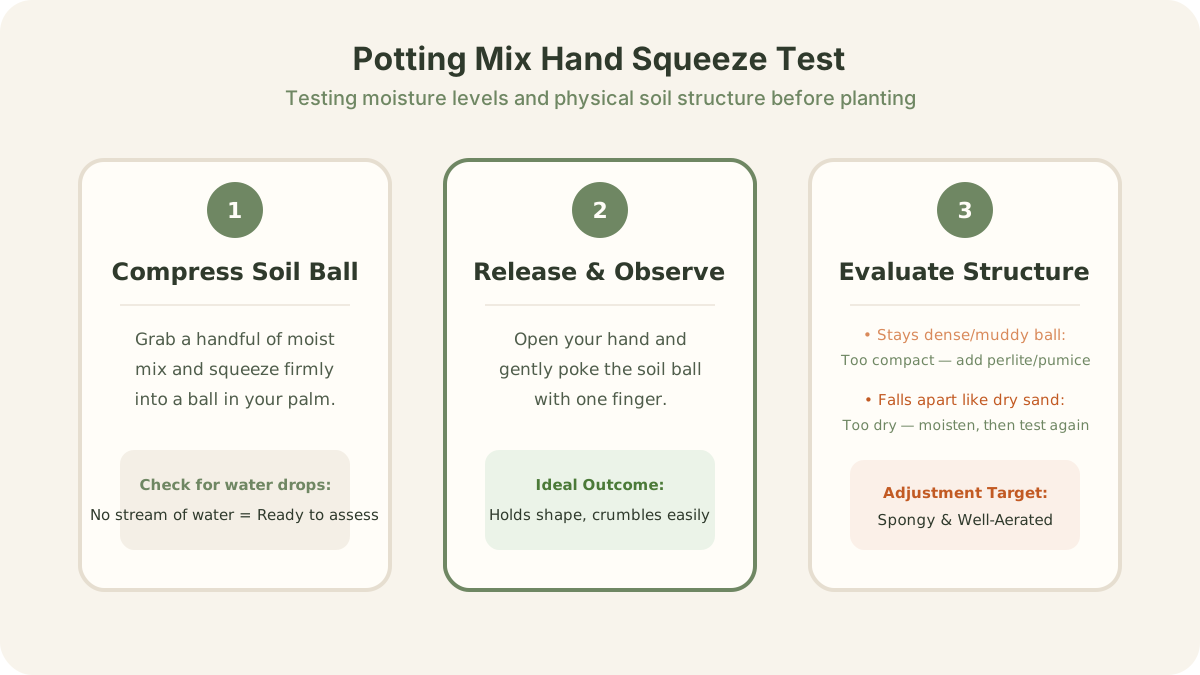
The squeeze test
Compress a handful of moist mix, then open your hand. A useful general-purpose mix holds together briefly but breaks apart with a light touch. If water streams out, it is too wet for the test. If the clump stays as a dense ball, add coarse structure and test again.
The pot test
Fill the actual container without pressing the mix down. Water slowly until drainage begins. Watch whether water infiltrates evenly or races down gaps along the wall. After drainage, lift the pot to learn its fully watered weight.
Check the center a day later. A surface that looks dry can hide a saturated core; this is why the real pot test matters more than judging loose mix in a bucket.
The collapse test
Keep a sample pot watered for two weeks before making a very large batch. If the surface drops dramatically or the mix becomes fine and muddy, its structure is not durable enough. Bark size, compost maturity, and fine particles are common reasons.
Adjust the mix to the crop and site
For a windy, hot balcony, increase moisture reserve modestly and use a larger container before trying water-retaining additives. Pot volume is a more reliable buffer than turning the mix into a sponge.
For a cool indoor site, prioritize aeration and avoid an oversized pot. The plant uses water slowly in weak light, so a mix that works outdoors may remain wet for too long inside.
For large fruiting vegetables, structural stability matters because the crop stays in the container for months. Coarse bark can help preserve pore space. The plant will also need a deliberate feeding plan; compost alone may not supply nutrients at the rate required.
For quick greens, use fresh, clean mix and avoid excessive fertility. A shorter crop cycle reduces the need for a heavy nutrient reserve.
Compost is not a complete fertilizer program
Compost nutrient content is variable and release depends on temperature, moisture, and microbial activity. Treat it as one part of the root environment. If a crop is actively producing for months, follow a measured feeding plan such as the framework in do potted herbs need fertilizer?.
Do not add lime or concentrated fertilizer automatically. Coir, peat, compost, irrigation water, and the crop all affect pH and nutrient needs. If the base mix already contains lime or fertilizer, adding more can create an avoidable excess.
Ingredients to approach carefully
- Straight garden soil: dense and unpredictable in pots.
- Very fine sand: can fill air spaces instead of improving drainage.
- Unfinished compost: may continue decomposing, heat, or tie up nutrients.
- Fresh manure: unsuitable for casual use in edible container mixes.
- Thick gravel layers: they take root volume without repairing the medium above.
- Unlabeled waste materials: uncertain contamination is not worth the saving for edible crops.
Scale the recipe without losing the ratio
Choose one bucket or scoop as a “part” and use the same tool for every ingredient. Record the batch, source, and date. Mixing on a tarp makes it easier to fold materials together without crushing them.
Make enough for the planned containers plus a small reserve, not an entire season before the trial succeeds. Store remaining dry components covered and keep finished moist mix from becoming anaerobic in a sealed container.
Common mistakes
The most common failure is copying a ratio while substituting ingredients of completely different particle size. Another is compressing the mix firmly into the pot. Watering will settle it naturally; forceful packing removes the pore space you intentionally built.
Do not diagnose every later yellow leaf as a recipe failure. Light, container size, watering, root temperature, and feeding interact. Change one major variable, observe new growth, and keep notes.
Keep a batch record
Label every trial with component sources as well as the ratio. Record the coarse fraction and grade, compost source, date mixed, pot size, crop, and time needed for the center to become ready for water. Take one photograph of the wet squeeze test and another after two weeks of settling. Those details reveal whether a later change came from the recipe, a different bag of material, or the environment. Without a batch record, a successful homemade mix is surprisingly hard to reproduce.
Retain a small labeled dry sample when storage space allows, so a later batch can be compared directly.
Sources and further reading
- Penn State Extension: Potting Media and Plant Propagation explains the water, nutrient, and aeration roles of common components.
- Penn State Extension: Container Vegetable Gardening recommends soilless mixes rather than straight garden soil and discusses compost as a component.
Match the mix to the whole container
Pot size, compost level, watering, and fertilizer determine whether a homemade mix remains useful through the season.
Common questions
What is a simple potting mix recipe for vegetables?
Start with two parts quality coir- or peat-based potting material, one part fine screened finished compost, and one part coarse aeration material. Test a small wet batch and adjust because ingredient grades vary.
Can I use garden soil in containers?
A small amount can appear in tested recipes, but straight garden soil commonly compacts, drains poorly, and may carry weed seeds or pathogens. A soilless container mix is more predictable.
Does perlite improve drainage?
Coarse perlite increases large pore space when it is distributed through the mix. It cannot compensate for a pot without drainage holes or for a mix dominated by fine, decomposed material.
Related guides
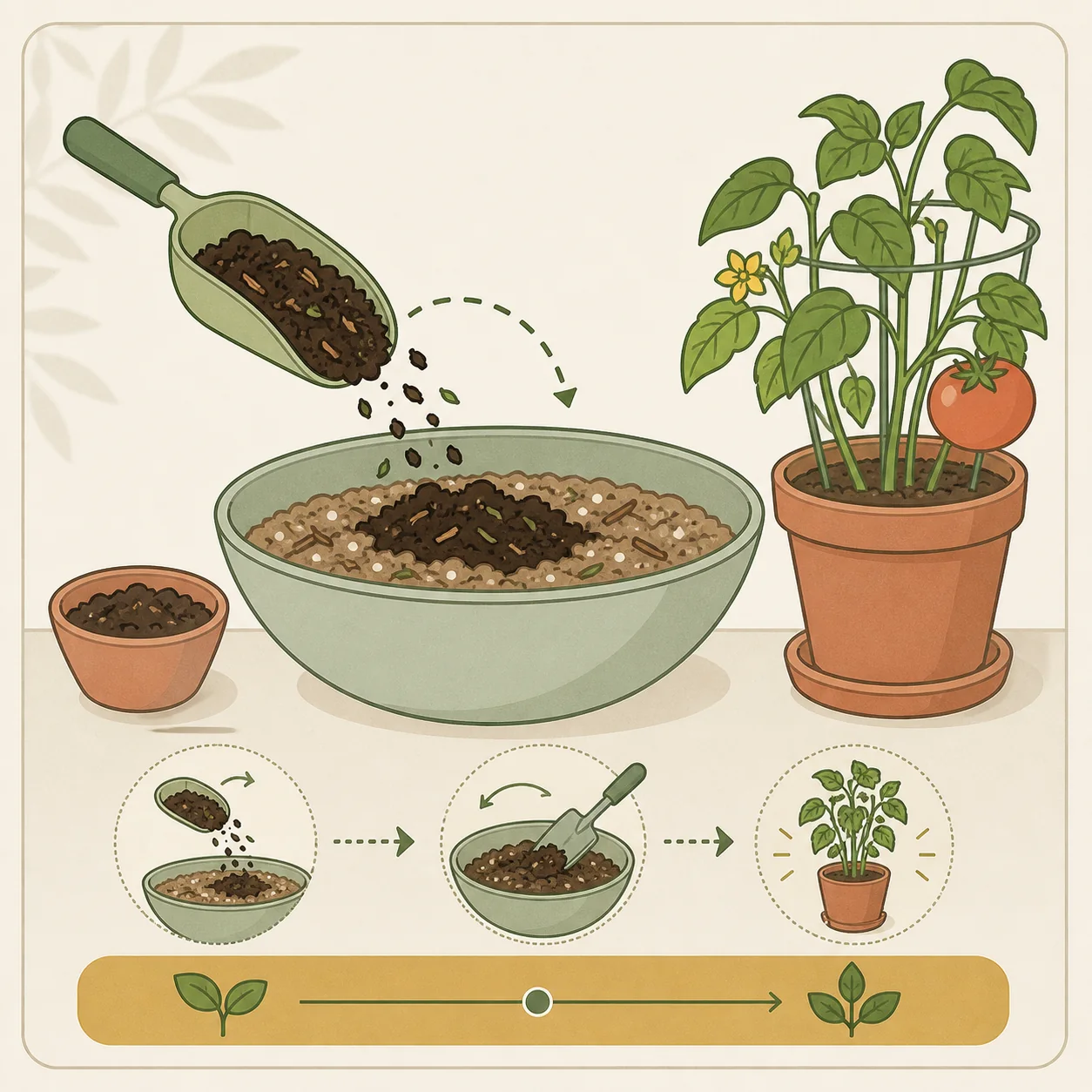
How much compost should you add to potting mix?
More compost is not automatically better. In a container, compost must share limited space with the coarse particles that preserve air around roots.
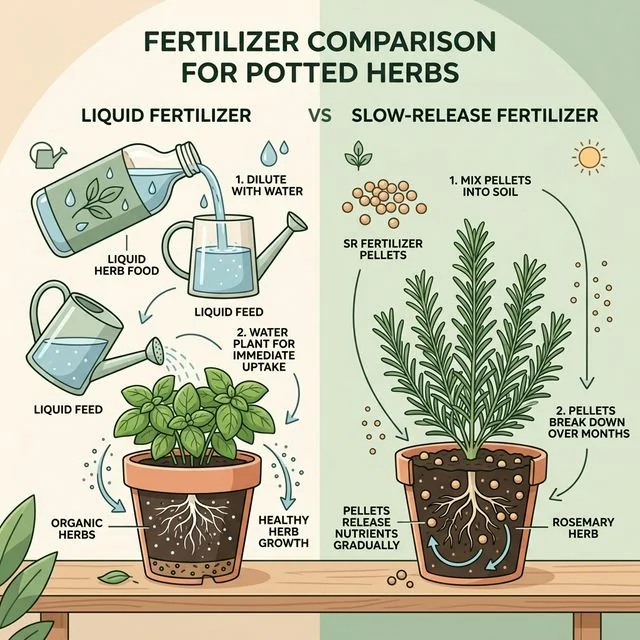
Do potted herbs need fertilizer? When to feed and avoid burn
Most potted herbs need fertilizer eventually, but timing matters. This guide explains when to feed, how often to do it, and how to avoid burning stressed roots.
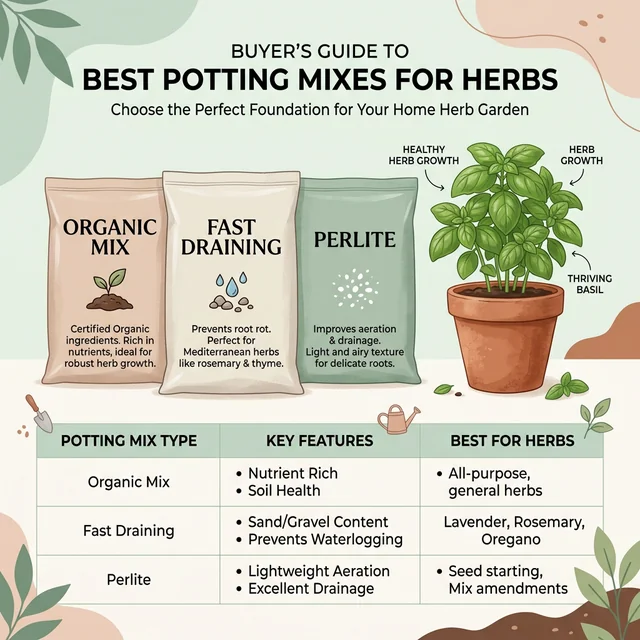
Best potting soil for potted herbs: how to pick the right mix
A practical buyer's guide to choosing potting mix for potted herbs, from richer blends for basil and parsley to faster-draining options for rosemary and thyme.