Is It Underwatering or Fertilizer Burn?
| Symptom | Underwatering | Fertilizer Burn (Toxicity) |
|---|---|---|
| Leaf Texture | Soft, drooping, limp feeling | Leaves are rigid and firm, but the edges are turning crispy and brown |
| Soil Condition | Bone dry, pot feels extremely light | Normal moisture, or coated in a white salty crust |
| Progression | Entire plant collapses and wilts rapidly | A slow burn starting rigidly at the very tips of the leaves |
| The Fix | Soak the pot in water for 30 minutes | Flush the pot heavily with water so the water completely drains out the bottom |
When a beginner sees an indoor basil plant looking slightly yellow or growing extremely slowly, their immediate instinct is to reach for the colorful bottle of liquid Miracle-Gro. The logic follows human biology: if something looks weak, it must be starving. Give it food.
Unfortunately, this fundamental misunderstanding of plant biology kills thousands of container herbs every year.
As we explained in Do Potted Herbs Need Fertilizer?, fertilizer is not food. Sunlight is food. Fertilizer is simply a collection of chemical salt building blocks (Nitrogen, Phosphorus, Potassium) that the plant requires to assemble physical structures once it has generated energy from the sun.
If your plant isn’t growing because it is sitting in a dark, cold room, pouring heavy chemical salts into the soil won’t force it to grow. The plant can’t use them. The salts sit in the soil, accumulating over time, until the soil becomes a highly toxic, acidic environment that chemically burns the roots alive.
If you suspect you’ve been entirely too generous on your feeding schedule, here is how to identify fertilizer burn.
Symptom 1: Crispy Brown Leaf Tips
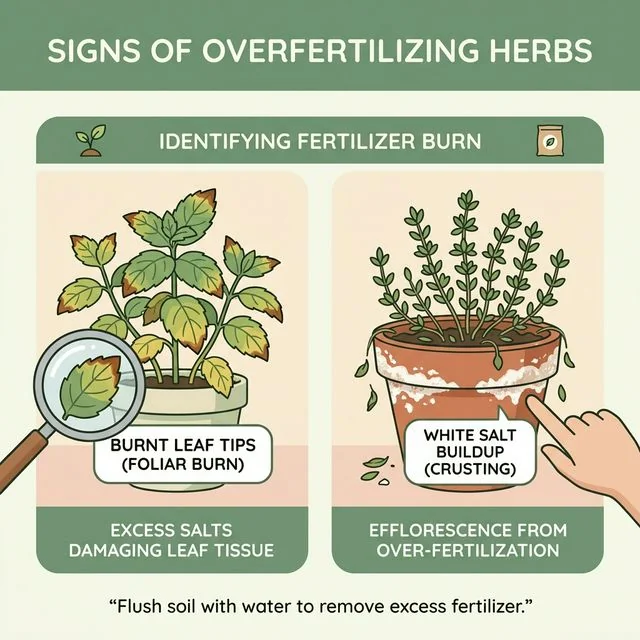
The absolute hallmark sign of nutrient toxicity is “tip burn.”
When the concentration of fertilizer salts in the soil becomes higher than the concentration of water inside the plant’s roots, a terrifying physical reaction occurs. Through reverse osmosis, the salty soil actually begins sucking moisture out of the plant’s roots.
The plant goes into localized dehydration. Because water travels from the center of the plant outward, the furthest extremities of the plant run out of liquid first. The very tips of the leaves dry up, turn brown, and become crispy, even though the rest of the leaf might remain dark green and the stem stays rigid.
(If the entire leaf is turning yellow and soft, you likely have an overwatering issue instead. Check Common Problems With Potted Herbs for a broader diagnostic list).
Symptom 2: The “Claw” (Nitrogen Toxicity)
Herbs are primarily grown for their leaves, meaning they require a lot of Nitrogen. However, an extreme excess of Nitrogen causes violent structural problems.
If you pump a plant full of Nitrogen while it doesn’t have the light to properly process it, the leaves will turn an unnatural, almost blackish, hyper-dark green. The rapid, forced cell division causes the tips of the leaves to violently hook downward, creating what growers call “The Claw.” The leaves look curled, rigid, and deeply unhappy.
Symptom 3: White Crust and Salt Buildup
Sometimes the symptoms aren’t on the plant; they are on the container holding the plant.
When you mix a liquid synthetic fertilizer into your watering can, you are pouring dissolved salts (nitrates, phosphates) into the dirt. When the pure water evaporates away over the week, the physical salt crystals are left behind in the soil profile.
If you are overfertilizing, you will begin to see a stark white, crusty mineral buildup.
- In Plastic Pots: The white crust will form a heavy ring around the drain holes or sit like snow on top of the soil.
- In Terracotta Pots: Because unglazed clay “breathes” water out through its sides (see Plastic vs. Terracotta Pots for Herbs), the evaporating water will leave the toxic salts permanently stained onto the outside of the pot, creating a heavy white ring.
The Immediate Fix: The “Flush”
If your plant exhibits tip burn, nitrogen clawing, or heavy salt crusts, you cannot just stop fertilizing and hope it gets better. The toxic salts are currently trapped inside the pot, continuing to burn the root system.
You must mechanically wash them out. This process is called Flushing.
Take the entire pot to the sink or shower. Pour a massive volume of pure, room-temperature water directly through the soil—we are talking three or four times the volume of the pot itself. Let the water pour heavily out of the bottom drainage holes, carrying the dissolved toxic salts down the drain.
Once the soil has been thoroughly washed, place the plant in a bright, warm spot to recover. Do not even think about adding fertilizer for another 6 weeks. The roots need time to heal in clean, pure soil before they are ready to handle supplements again.
Is it fertilizer burn or something else?
Yellow or dying leaves can be caused by many different variables. Compare your symptoms against these foundational diagnostic guides.
Common questions
Should I cut the burnt, brown tips off the leaves?
You can carefully trim the crispy brown tips off with sterilized scissors for aesthetic reasons, but do not cut the entire green leaf off. The plant still needs the green tissue to photosynthesize.
Can I overfertilize with organic compost or worm castings?
It is incredibly difficult. Organic fertilizers require microbes in the soil to slowly break them down into absorbable salts. Liquid synthetics, however, are instantly available to the roots and can burn them immediately.
If I overfertilized, when should I feed the plant again?
Stop fertilizing entirely for at least 4 to 6 weeks. Flush the soil heavily with plain water, and wait until you see vigorous, healthy new green growth before even considering re-applying a half-strength dose.
Related guides
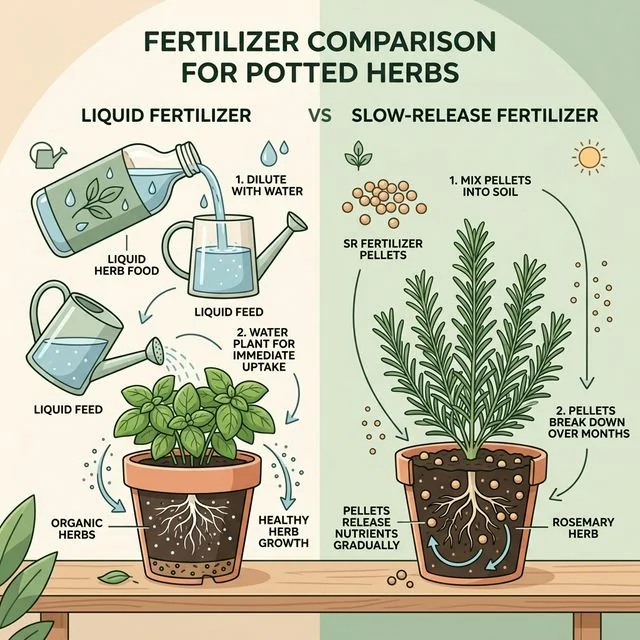
Do potted herbs need fertilizer? When to feed and avoid burn
Most potted herbs need fertilizer eventually, but timing matters. This guide explains when to feed, how often to do it, and how to avoid burning stressed roots.
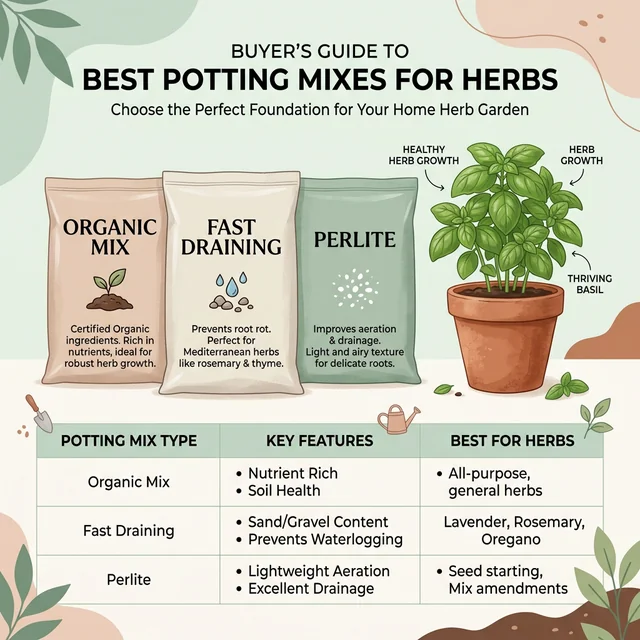
Best potting soil for potted herbs: how to pick the right mix
A practical buyer's guide to choosing potting mix for potted herbs, from richer blends for basil and parsley to faster-draining options for rosemary and thyme.
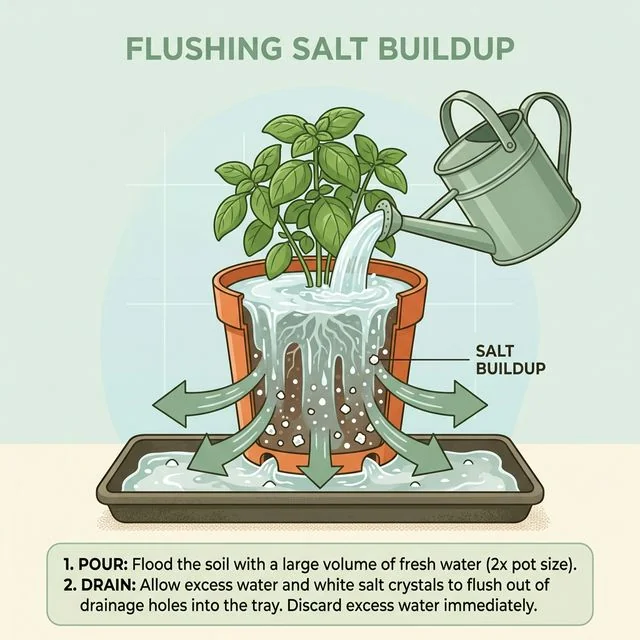
Salt buildup in herb pots: when to flush and when to repot
Every time you water your plants with liquid fertilizer, you are leaving heavy chemical salts behind. If you don't periodically wash them out, your herbs will suffer from chemical burn and nutrient lockout.