Troubleshoot the system before you change the inputs.
Symptoms
- Water pours out of the drainage holes seconds after you water
- Water beads on the surface or runs down the gap along the pot wall
- The pot still feels light after watering
- The plant wilts even though you just watered it
Possible causes
- The peat or coir in the mix dried out completely and now repels water
- The mix shrank and pulled away from the pot wall, so water channels down the side
Quick fixes
- Water slowly in two or three passes, letting each soak in
- Bottom-soak the pot in 2 to 3 inches of water for 15 to 30 minutes and repeat if the surface stays dry
- Press the mix back against the pot wall and water again before it dries out
- Repot into fresh mix that was moistened before use if the old mix will not rewet
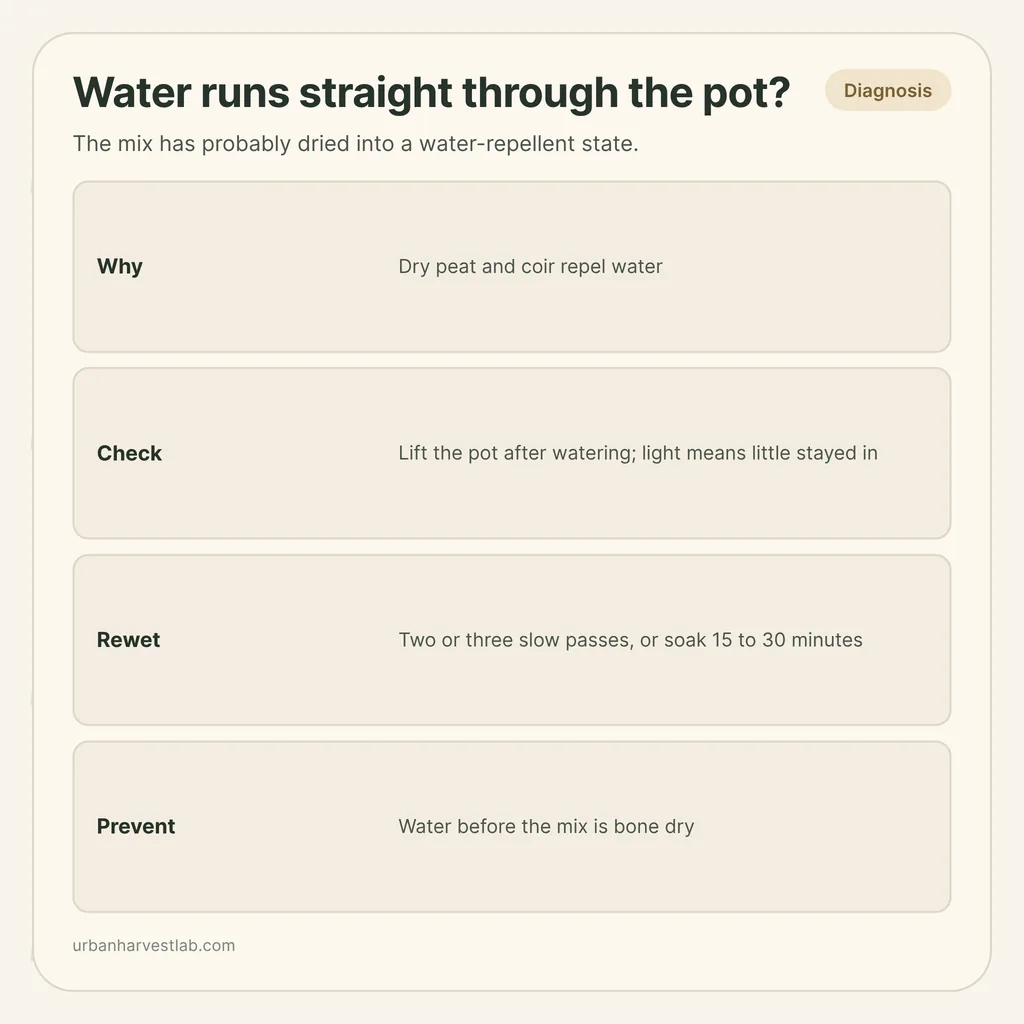
If water pours out of the drainage holes seconds after you water, and the pot still feels light, the mix has probably dried into a water-repellent state. Virginia Cooperative Extension says to rewet it slowly, in two or three passes, or to stand the pot in a few inches of water for 15 to 30 minutes.
Why water runs through instead of in
Peat and coir are the water-holding base of most bagged potting mixes, and both resist water once they dry out fully. Iowa State University Extension warns that peat and coir should not be allowed to dry out because they become hydrophobic, and that rewetting them can be a major challenge. Purdue Extension is blunter about peat: it is naturally hydrophobic when dry, which means it repels water.
Dryness also changes the shape of the mix. Purdue Extension describes shrinkage as the substrate pulling away from the sides of the container, which makes rewetting harder because irrigation water channels down the side of the pot instead of being absorbed. That gap is the visible sign: you pour, and water vanishes along the pot wall and out the bottom while the middle stays dry.
It is easy to read this as good drainage. Virginia Cooperative Extension says the opposite: drainage should not be judged by how much water drains out of the pot, and excessive, quick drainage usually means the mix did not hydrate sufficiently.
Confirm it before you fix it
Virginia Cooperative Extension gives three checks:
- Lift the pot after watering. If it feels light, little water stayed in the mix.
- Turn the pot out carefully with your hand flat over the surface. If the root ball looks wet in some areas and dry in others, water is taking shortcuts.
- Poke a finger into the middle. If it is dry there after watering, the water went around it.
If the pot instead stays heavy and the mix is soggy, you have the opposite problem, and telling overwatering from underwatering is the next step. A plant that wilts the day after you watered it can fall on either side; the lift test settles which.
How to rewet the mix
Start with the gentlest method that works.
Water slowly, in passes. Virginia Cooperative Extension says two or three slow applications of water will help hydrate dry potting soil. Pour a modest amount, wait for it to sink in, and repeat. One big pour just runs down the gap.
Bottom-soak it. Virginia Cooperative Extension describes a shallow basin with 2 to 3 inches of water under the pot, with the plant staying in for 15 to 30 minutes depending on how dry the mix is. It adds that hydrophobic soils may take longer, and that repeating the process may be necessary until the surface feels moist. Keep it to drainage-hole pots, since the method only works if water can enter from the bottom.
Set a limit. Virginia Cooperative Extension cautions against leaving a houseplant standing in water for more than 60 minutes, because root rot could occur. Take the pot out once the surface is damp, let it drain, and empty the saucer.
Work it by hand if it is stubborn. University of Maryland Extension advises working water into soilless media with your hands, wearing gloves, until it is thoroughly wetted. That is easier to do with a pot you can tip out, or with a bag of mix before you fill the container.
Afterwards, press the mix back toward the wall if a gap opened, then water once more so the settled mix is wet through. If the plant had wilted, Virginia Cooperative Extension treats a plant that has perked up as the sign the root zone has enough water.
Where wetting agents fit
Purdue Extension notes that wetting agents help rewet substrates when they dry out, and they come in liquid and granular forms. Iowa State University Extension adds that pre-mixed potting media often already have wetting agents added, and University of Maryland Extension says suppliers of organic soilless mixes omit chemical wetting agents. If your bag is labelled organic, do not assume it comes with one.
For a home pot, a slow soak should come first. University of Georgia Extension warns that a wetting agent applied at too high a rate can cause membrane permeability problems and toxicities that kill roots and leaves. If you choose a commercial wetting agent, use it exactly as its label directs, and check that the label allows use on edible plants before it goes near herbs or vegetables.
Stop it coming back
- Water before the mix is bone dry. Purdue Extension says high-peat substrates need water before excessive shrinkage occurs, so that water does not flow down between the wall and the substrate. Pots that dry out between waterings in hot weather need checking more often; how often to water potted herbs covers the rhythm.
- Water thoroughly each time. Virginia Cooperative Extension says container plants should be watered until the mix is wet all the way through and water drips from the bottom.
- Moisten new mix first. Iowa State University Extension says rewetting peat and coir is hard enough that it should be done days before mixing. Dampen a bagged mix in a bucket before you fill the pot.
- Check old mix at repotting. Mix that has dried out for a season often needs its peat or coir rehydrated before it earns another round; refreshing old potting soil walks through that. If the base itself keeps turning stubborn, coco coir vs peat moss compares how the two behave once dry.
Sources
- Properly Watering Container Houseplants (SPES-804), Virginia Cooperative Extension
- Evaluating Container Substrates and Their Components (HO-255-W), Purdue Extension
- Using Surfactants, Wetting Agents, and Adjuvants in the Greenhouse (B1319), University of Georgia Extension
- Potting Media: Components and Handling, Iowa State University Extension
- Growing Media (Potting Soil) for Containers, University of Maryland Extension
Potting mix and watering
Related pages on refreshing mix, choosing a base and telling dry from wet.
Common questions
Why does water run straight through my pot without soaking in?
Most often the mix has dried out completely. Virginia Cooperative Extension says dry peat- or bark-based mixes can become hydrophobic, and that excessive, quick drainage usually means the mix did not hydrate. Purdue Extension adds that a shrunken mix pulls away from the pot wall, so water channels down the gap.
How do I rehydrate dry potting soil?
Water slowly in two or three applications, or stand the pot in 2 to 3 inches of water for 15 to 30 minutes, as Virginia Cooperative Extension describes. A hydrophobic mix may take longer, so repeat until the surface feels moist, and do not leave the pot standing in water for more than 60 minutes.
Do I need a wetting agent for hydrophobic potting mix?
Not to get started. Slow watering and bottom soaking come first. Purdue Extension says wetting agents help rewet substrates, but University of Georgia Extension warns that too high a rate can kill roots and leaves, so follow the product label exactly if you use one.
How do I stop my potting mix going hydrophobic again?
Water before the mix dries completely, since Purdue Extension says high-peat mixes need water before excessive shrinkage occurs. Keep the mix pressed against the pot wall, and when repotting, moisten fresh peat or coir ahead of time rather than using it bone dry.
Related guides
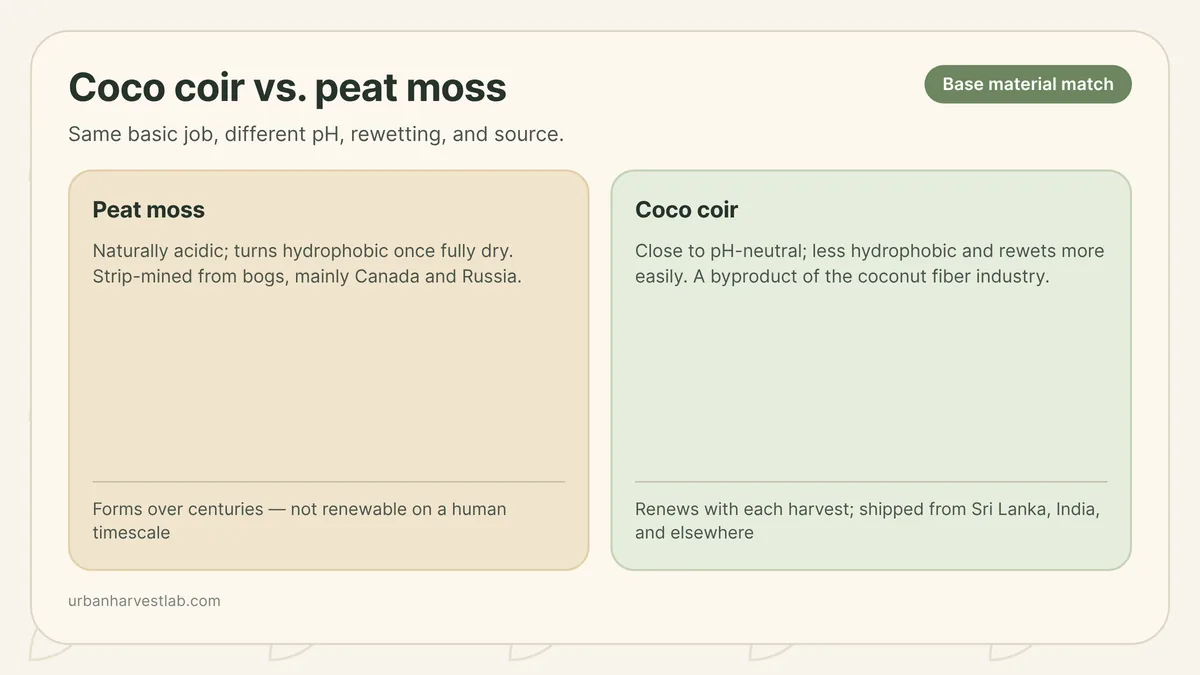
Coco coir vs peat moss: how the two potting bases really compare
Peat moss and coco coir do the same basic job in a potting mix, but they part ways on pH, on how they behave once they dry out, and on the environmental cost of getting the bag to your shelf.
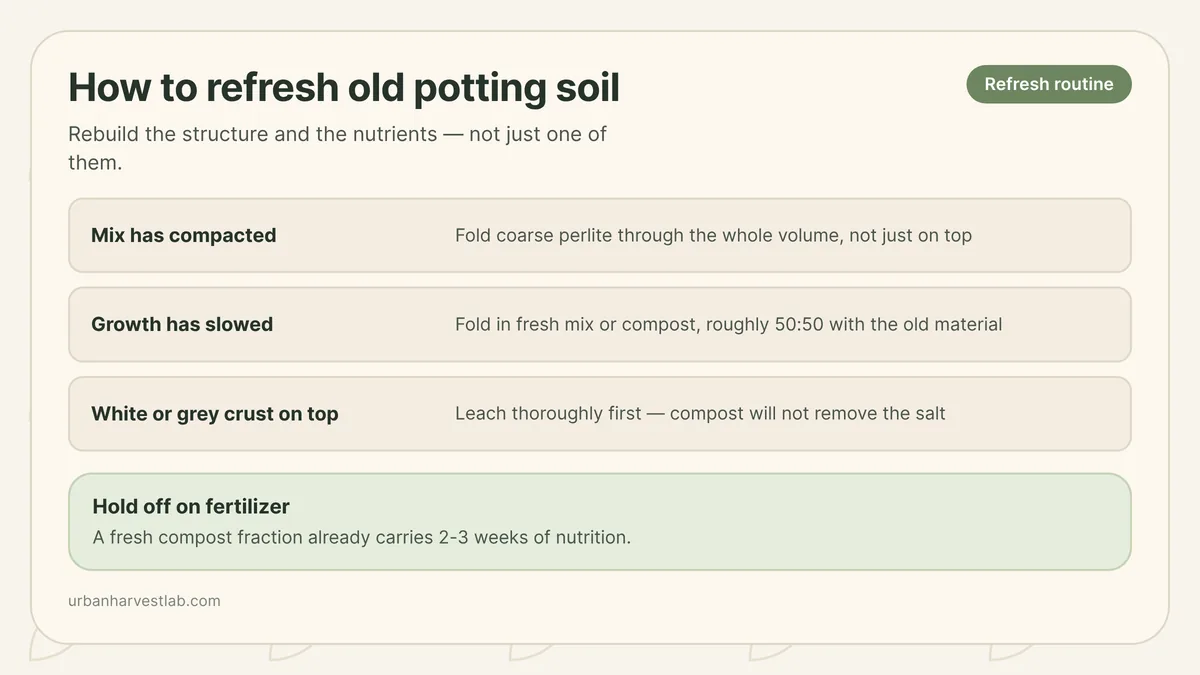
How to refresh old potting soil for another season
Old potting mix has usually lost two things at once: its air-filled structure and its nutrients. Fixing one without the other is why a refreshed pot still underperforms.
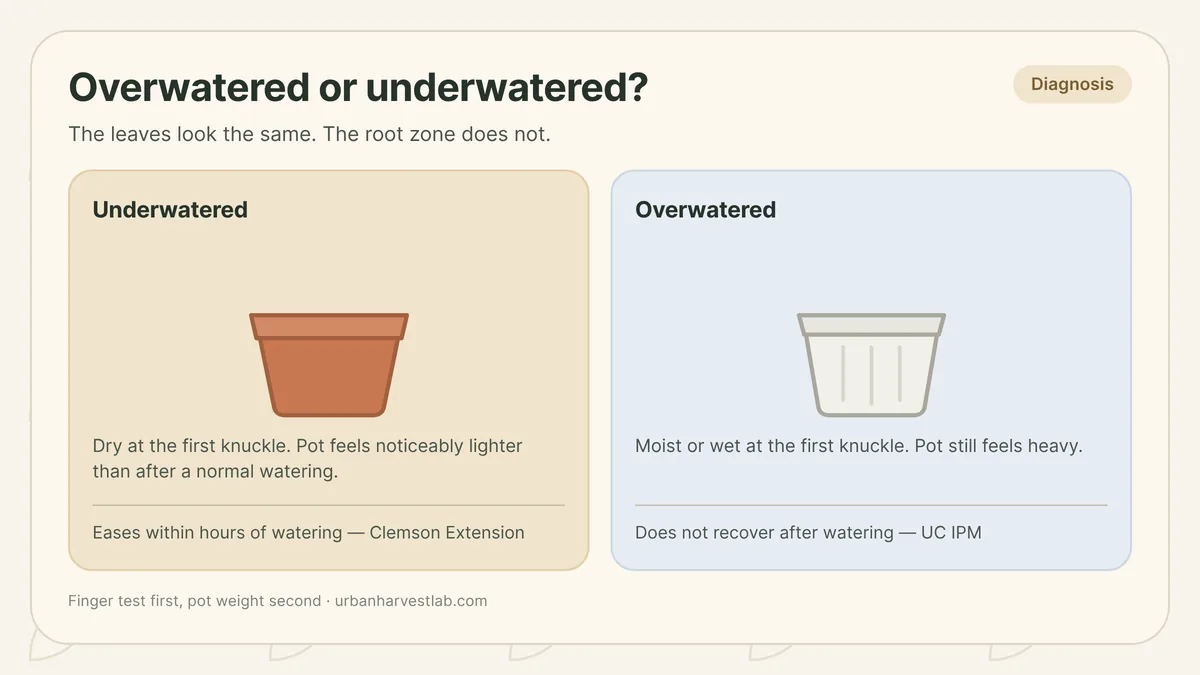
Overwatered vs underwatered: how to tell which one you have
Reading the root zone directly, with a finger test, pot weight, and how the plant responds to being watered, settles what the leaves alone cannot.