
Four container-friendly edible flowers
| Flower | Flavor | Size and light | Caution |
|---|---|---|---|
| Nasturtium (Tropaeolum majus) | Sweet and spicy, like watercress (Nebraska); spicy, peppery (NC State) | Mounded or trailing; sun or light shade; thrives in poor soil (Nebraska) | Seeds can stand in for capers (NC State); thrives in poor soil, so skip rich mix (Nebraska) |
| Calendula (Calendula officinalis) | Saffron-like (Nebraska); slightly bitter, tangy, peppery (NC State) | About 1 1/2 feet tall; full sun; blooms best in cool weather (Nebraska) | Do not confuse with Tagetes marigold |
| Johnny-jump-up (Viola tricolor) | Wintergreen (Nebraska) | 6-8 inches tall; sun or shade (Nebraska) | Contains saponins, may be toxic in large amounts (NC State) |
| Pansy (Viola x wittrockiana) | Mild, slightly sweet or grassy; whole flower wintergreen (NC State) | 6-12 inches; blooms fall, winter and spring (NC State) | Eat in small amounts, one species at a time |
The easiest edible flowers for pots are nasturtium, calendula, Johnny-jump-ups and pansies, plus the blooms of chives and borage. Both Nebraska Extension and NC State Extension say many edible flowers can be grown successfully in containers. What decides whether a flower belongs on your plate is not the pot, it is how sure you are of the plant and what has been sprayed on it.
Safety comes before the planting
Nebraska Extension is blunt: eat flowers only when you are positive they are edible. A flower served beside food is not proof, and a flower that looks like a safe one may not be. NC State Extension keeps a poisonous plant list for checking, and points out that ornamental sweet peas (Lathyrus odoratus) are poisonous even though the white flowers of edible garden peas are fine.
Where the plant came from matters just as much. Nebraska Extension says pesticides used on ornamentals have not been evaluated for safety on food crops, so it advises against eating flowers from florists, nurseries or garden centers. NC State Extension takes a slightly narrower line: bought plants should be specifically labeled as edible, or they may have been treated with ornamental pesticides. In practice, that means starting from seed packets or plants sold as edible, and treating a pretty bedding plant as decoration. Both services also rule out roadside flowers.
Then there is what you do once the plant is on your balcony:
- Use no pesticides, or only products labeled for edible crops (NC State Extension). Nebraska Extension suggests avoiding chemical control where possible and picking off harmful insects by hand.
- Mind spray drift. Nebraska Extension notes that many gardeners keep their edible flowers away from other ornamentals to avoid it, which on a shared balcony or rooftop means thinking about neighbours’ pots and building maintenance too.
- Skip untreated animal manure. NC State Extension advises avoiding flowers grown in soil fertilized with untreated animal manure within four months before harvest.
- Choose a safe vessel. The pot itself is a separate question, covered in food-safe containers for growing, and a busy street below is covered in balcony food safety near traffic.
Four flowers that suit a pot
Nasturtium. Nebraska Extension describes blossoms with a sweet, spicy flavor like watercress, and says the plant thrives in poor soil, in sun or light shade, and looks good in hanging baskets. Mounded forms suit a regular pot and trailing forms suit a basket or a railing planter. NC State Extension also lists the seeds as a caper substitute.
Calendula. Nebraska Extension gives a saffron-like flavor, full sun, and a height of about 1 1/2 feet, and says it flowers best in cool weather. That makes it a spring and fall pot plant on a hot balcony. NC State Extension notes that calendula and Johnny-jump-ups both reseed readily and that removing spent blossoms weekly prolongs the bloom period.
Johnny-jump-ups and pansies. Nebraska Extension gives Johnny-jump-ups a wintergreen flavor, a height of 6 to 8 inches, and says they work in sun or shade and look good in containers. NC State Extension lists pansies at 6 to 12 inches with a mild, slightly sweet or grassy petal and a wintergreen whole flower, blooming in fall, winter and spring. NC State also flags that Johnny-jump-ups contain saponins and may be toxic in large amounts, so treat them as a garnish.
Chives and borage. Chive blossoms have a mild onion flavor when the florets are separated, according to Nebraska Extension, while NC State advises not eating the whole flower head. Nebraska Extension gives borage a cucumber-like taste, a height of 2 to 3 feet in full sun, and says it self-sows, so give it a deep pot of its own. NC State says to use it sparingly because it may have a diuretic effect. Chives are a natural fit for the pots described in which herbs you can plant together.
One naming trap: marigold is not calendula. Nebraska Extension recommends signet marigolds (Tagetes signata) such as ‘Lemon Gem’ and ‘Tangerine Gem’, and NC State rates Tagetes as bitter and possibly harmful in large amounts. If the tag does not give the Latin name, do not eat it.
Growing them in containers
Most flowers need a well-drained soil according to Nebraska Extension, so use a pot with drainage holes and a standard potting mix rather than garden soil. Nebraska Extension adds that nasturtiums thrive in poor soil, so a rich mix is not needed for them. If you want to tuck a flower into a vegetable pot, companion planting in containers explains how to judge a pairing on water, light and root space rather than on pest-repellent claims.
To keep a pot flowering, remove spent blossoms weekly (NC State Extension). Nebraska Extension says calendula flowers best in cool weather, and NC State lists pansies as blooming in fall, winter and spring, so both suit a sowing timed for the cooler end of the season, the same logic as succession planting in containers.
Harvesting and eating
- Pick in the cool of the day, after the dew has dried (Nebraska Extension), and choose flowers that are fully open and not wilted.
- Taste one first. Nebraska Extension recommends a taste test before harvesting a lot of any flower, since flavor varies with growing conditions and cultivar.
- Wash gently just before use and check for insects (Nebraska Extension).
- Prepare the flower. NC State Extension says to remove everything except the petals, and to cut off the bitter white base from the petals of marigolds, dianthus and roses. Nebraska Extension says to leave the sepals on violas, Johnny-jump-ups and pansies but remove them from other flowers.
- Store briefly. Nebraska Extension says to pick short-stemmed flowers within 3 to 4 hours of using them and keep them in a plastic bag in the refrigerator in the meantime.
Introduce each species in small amounts, one at a time, according to Nebraska Extension. NC State Extension goes further and says that people with hay fever, asthma or allergies should not eat flowers, since many allergies are triggered by pollen.
Sources
Safe food from a small space
Pair flowers with the rest of a container garden, and check the pots and the air they sit in.
Common questions
What edible flowers can you grow in pots?
Nebraska Extension lists nasturtium, signet marigold, chives, calendula, borage, Johnny-jump-ups and anise hyssop, and says many edible flowers grow successfully in containers. NC State Extension adds pansies. Nasturtium, calendula and violas are the easiest to start with.
Can I eat flowers from a garden center plant?
The two extension services differ in wording. Nebraska Extension says not to eat flowers from florists, nurseries or garden centers. NC State Extension says such plants should be specifically labeled as edible, because otherwise they may carry ornamental pesticides that are unsafe on food. Without a label, leave them for decoration.
Are marigolds and calendula the same?
No. Calendula officinalis has a saffron-like flavor according to Nebraska Extension. Marigold (Tagetes) is a different plant; NC State Extension lists it as bitter and says it may be harmful in large amounts. Check the Latin name on the label before eating either.
Which part of an edible flower do you eat?
Mostly the petals. NC State Extension advises removing everything except the petals to avoid pollen, and cutting off the bitter white base of petals on flowers such as marigolds and dianthus. Nebraska Extension notes that pansies, violas and Johnny-jump-ups are the exception where the sepals can stay.
Related guides
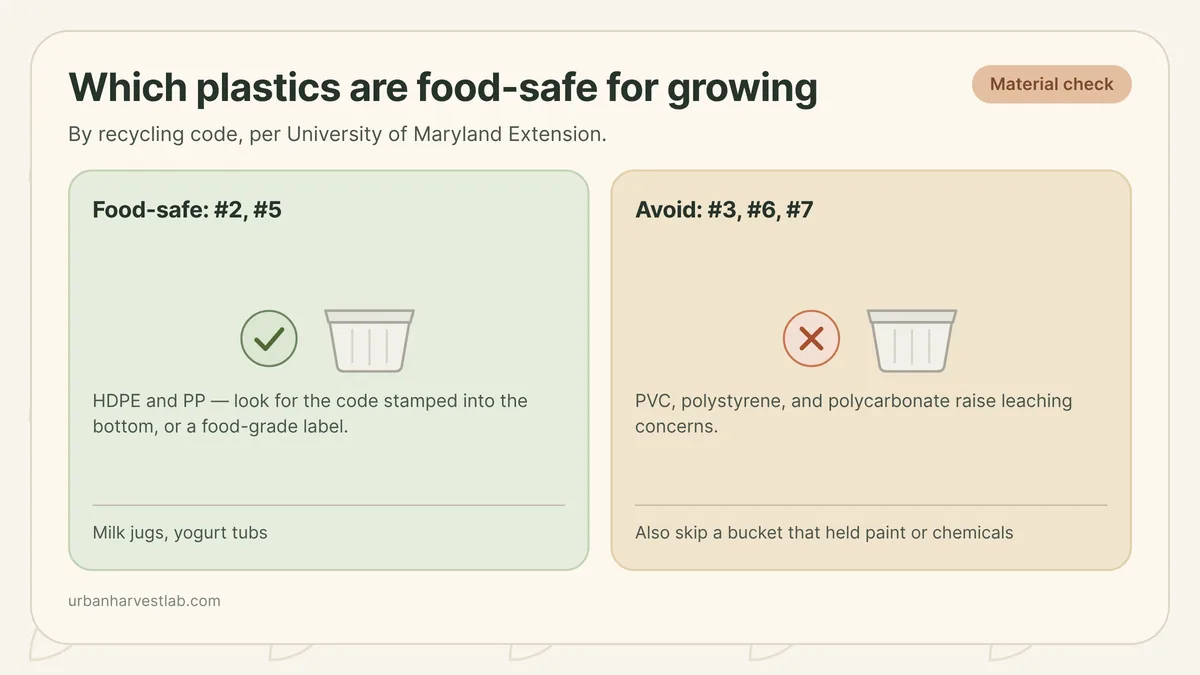
Food-safe containers for growing vegetables and herbs
A container's recycling code and its history both decide whether it's safe to grow food in -- and the two questions have different answers.
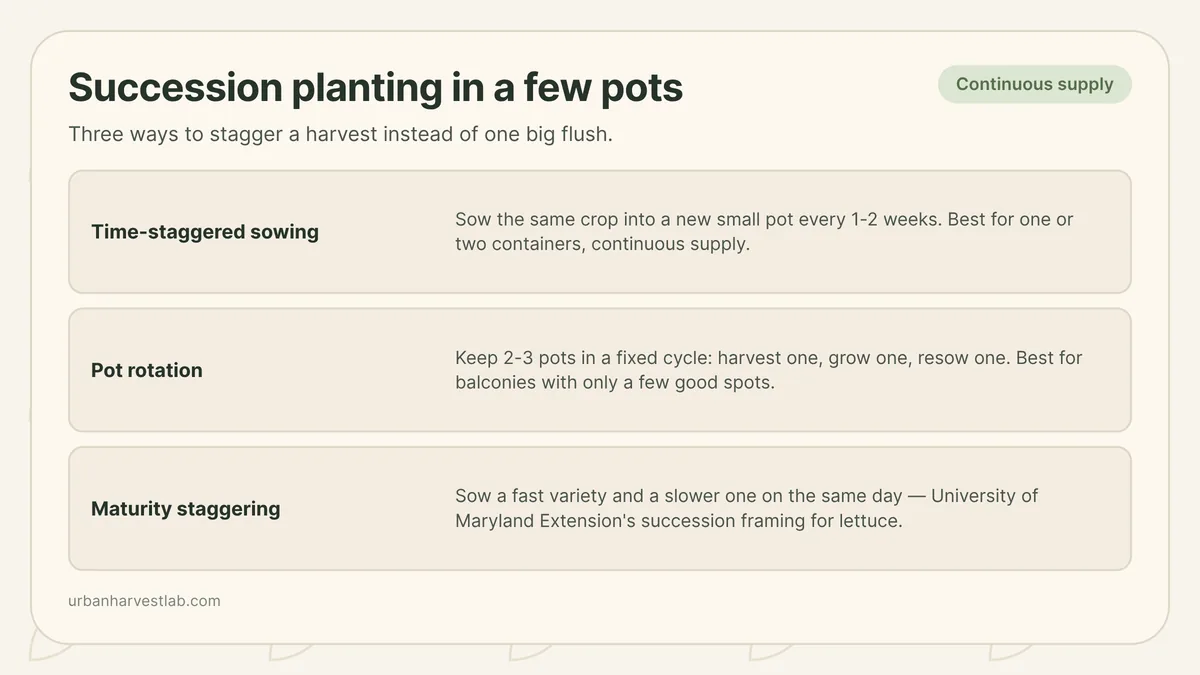
Succession planting in containers: how to stagger a harvest from a few pots
Succession planting in containers is a sowing rhythm: a few pots restarted on a schedule keep producing, where one large planting ripens together and then quits together.
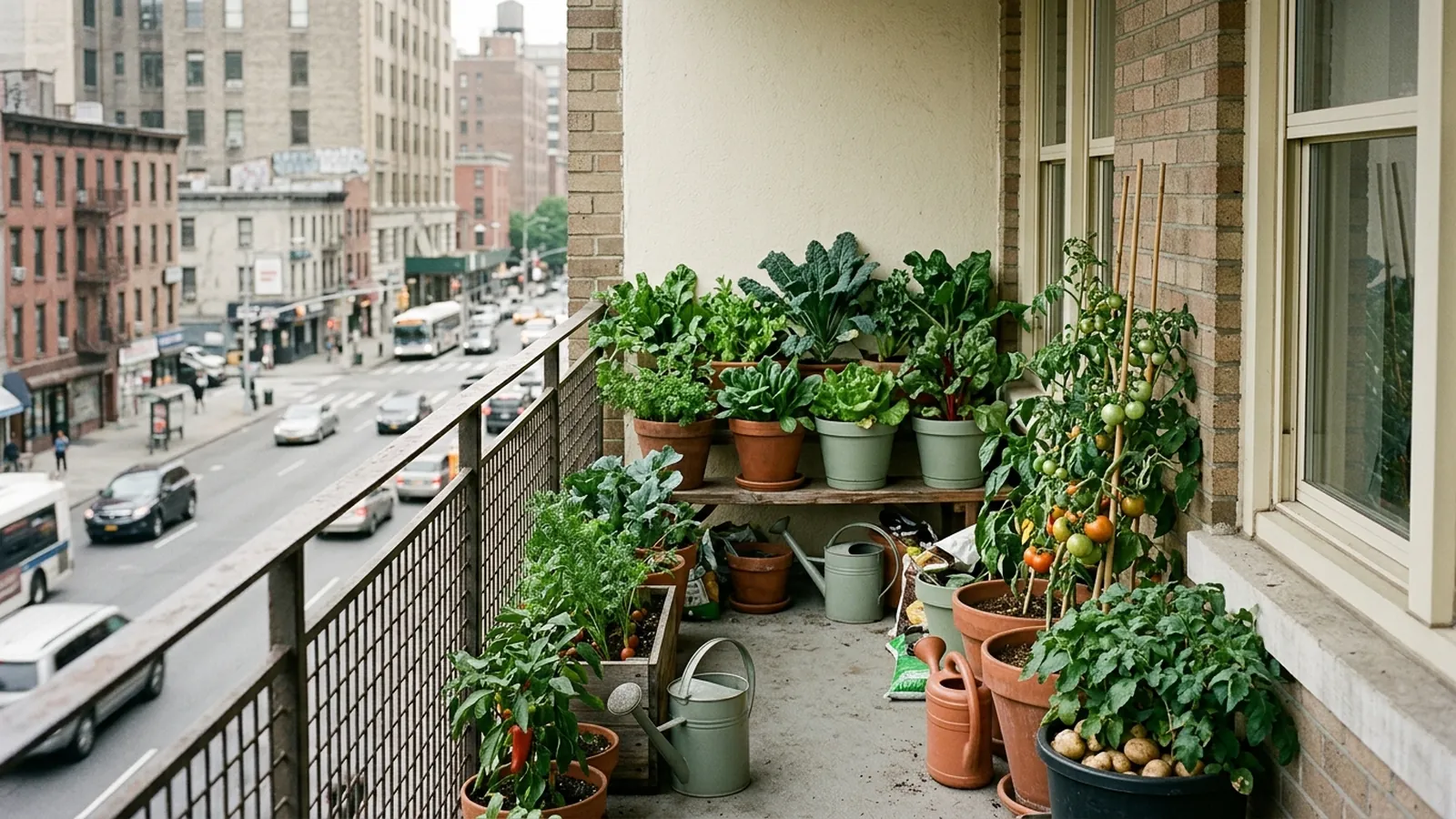
Balcony garden over a busy road: is the food safe to eat?
Almost every published answer to this question is about lead in urban ground soil. A balcony starts from a bag of potting mix, which moves the question from what roots take up to what settles on leaves — and flips the usual advice about which crops are the safe ones.