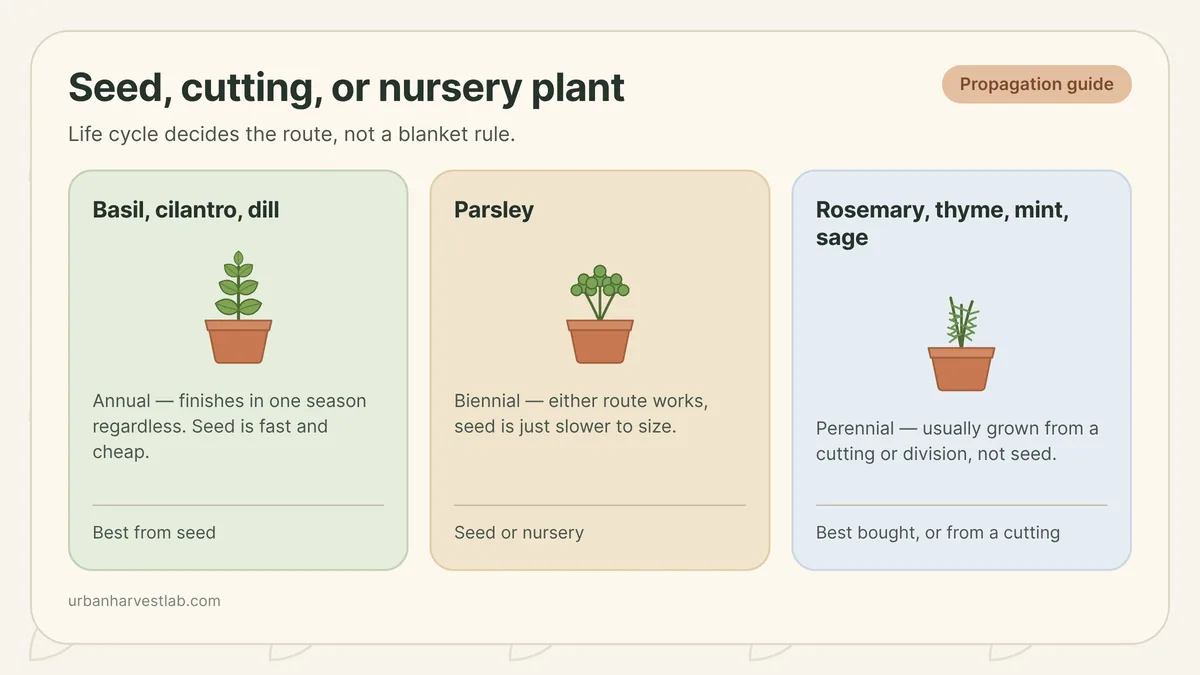
Herb-by-herb: seed, cutting, or nursery plant
| Herb | Life cycle | Usual propagation | Practical choice for most growers |
|---|---|---|---|
| Basil | Annual (Clemson) | Seed-propagated (UGA) | Seed — fast, cheap, and matches how it already grows |
| Cilantro, dill | Annual (Clemson) | Seed | Seed — both finish their life cycle in one season regardless |
| Parsley | Biennial (Clemson) | Seed | Seed or nursery — either works; seed is slower to a usable size |
| Chives, oregano, thyme | Herbaceous perennial (Clemson) | Cutting or division common | Nursery plant, or a cutting from an existing plant |
| Mint | Herbaceous perennial (Clemson) | Cutting or division (UGA) | Nursery plant or cutting — seed is not the usual route |
| Rosemary, sage | Perennial evergreen shrub (Clemson) | Cutting (UGA) | Nursery plant, or a cutting from an existing plant |
| Lavender | Perennial (Clemson) | Seed or cutting (UGA) | Cutting or nursery for speed; seed works but is slower |
For fast annual herbs — basil, cilantro, dill — starting from seed is usually the better deal in both cost and speed. For slow, woody perennials — rosemary, thyme, sage, lavender — buying an established plant, or taking a cutting from one, is usually the more reliable route. The line between them is not a blanket rule for every herb; it comes from how each herb actually lives and how nurseries themselves propagate it. For the wider small-space setup this decision feeds into, see small-space herb gardening: start here.
Why life cycle decides the answer more than habit
Clemson Cooperative Extension’s own herb table sorts common kitchen herbs into four categories: annual (basil, borage, cilantro, dill, marjoram), biennial (parsley), herbaceous perennial (catnip, chives, mint, oregano, thyme), and perennial evergreen shrub (rosemary and sage).
That classification matters more than it looks. An annual herb finishes its entire life cycle in one growing season no matter how it started, so starting it from seed costs you nothing in lifespan — a basil plant you seed in spring and a basil plant you buy in a six-pack both decline by fall regardless. A perennial herb, by contrast, is an investment you are hoping to keep for several years, and University of Georgia Extension’s own cultivation table shows that nurseries themselves often do not start these from seed at all: mint is listed as propagated “by cutting or division,” while basil is listed as seed-propagated. The propagation method a commercial grower actually uses is a strong hint at which route is realistic for a home garden too.
When seed is the cheaper, faster route
Basil, cilantro, and dill are the clearest case for seed. All three are classified as annual by Clemson, so a slower first few weeks from seed costs you nothing you would have kept anyway. Basil in particular has real numbers behind the timing: Penn State Extension gives the soil temperature to plant at “at least 60°F,” germination “around 70°F,” and warns that leaves discolor “below 40°F.” That is a narrow, specific window rather than a guess — sow after the soil has genuinely warmed, not by the calendar date alone.
A seed packet also produces many more plants than a single nursery pot holds, which is the part of the seed-versus-buy question that actually behaves like cost rather than time. If the goal is one basil plant on a windowsill, that difference barely matters. If the goal is a full tray for pesto, or enough dill for a season of pickling, seed is the only route that scales without buying a dozen individual pots.
When weeks of propagation are the real cost
Chives, mint, oregano, and thyme are herbaceous perennials under Clemson’s classification; rosemary and sage are perennial evergreen shrubs. All of them can, in principle, live in the same pot for years — which is exactly why the seed-starting math changes. University of Georgia Extension’s cultivation notes list cutting or division, not seed, as the propagation method actually used for herbs like mint, and lavender is listed as “seed or cutting” rather than seed alone. Rooting a cutting is not instant either: University of Georgia Extension gives “about three to six weeks” for a 3- to 5-inch cutting to root, and University of Illinois Extension’s figures for a comparable cutting put rooting at “three to four weeks” under bright indirect light, with the cutting moved outdoors only “once day temperatures are over 60°F.” Either way, that is weeks of indoor propagation before you have a plantable start at all — and it assumes you already have a parent plant to cut from. Regrowing herbs from cuttings covers that technique in full, including basil, mint, and rosemary.
Rosemary and sage are the sharpest example of why buying usually wins here. Rosemary and sage are usually propagated from cuttings rather than seed, and a nursery plant has already cleared the slow early stage a home grower would otherwise have to manage.
Reading a seed packet against your last frost date
Seed timing only works if it lines up with when it is actually safe to move a seedling outside, and that step is where a seed-started plant carries a cost a nursery plant does not. The RHS’s working figures for hardening off tender crops: night temperatures need to sit “above 7°C” generally and “above 10°C” for heat-loving crops including basil, with a last air frost defined as “near or below 0°C,” and hardening off itself taking “2 to 3 weeks.” A nursery plant bought once that window has opened skips the hardening-off period entirely, because a greenhouse-grown plant sold for outdoor use has typically already been through it. Working out your own timing against a seed packet’s instructions is exactly what the seed-starting calculator is built to help with.
What buying a plant actually buys you
Buying skips two things at once: the germination stage, where a seed can simply fail to come up, and the fragile seedling stage right after, when a plant is smallest and most exposed to cold, drying out, or a missed watering. That is not a reason to avoid seed for basil, cilantro, or dill — those herbs clear that stage quickly and cheaply. It is the reason buying makes more sense for a slow perennial: paying a little more up front for a rosemary or lavender plant that has already survived its first weeks is a smaller risk than spending the same weeks waiting to find out whether your own seedlings will.
Buying is also the practical choice any time you want one plant, want it this week, or are not planning to keep it long-term at all — the supermarket basil case is its own version of this trade: a plant bought for one purpose, with a short useful life built in by how it was grown. Keeping supermarket basil alive covers what to do once you have made that choice and want to stretch it past the first two weeks.
Where either route works fine
Parsley sits in the middle. Clemson classifies it as biennial, and it grows readily from seed, but a seed-started parsley plant takes longer to reach a useful size than a nursery six-pack does. Neither route is a mistake here — seed is cheaper if you want several plants, and a nursery start is faster if you want one plant working in a pot this weekend.
Quick decision
- Basil, cilantro, dill: start from seed. They finish their life cycle in one season regardless, and Penn State’s temperature figures make timing straightforward.
- Parsley: either route works; pick nursery for speed, seed for volume.
- Chives, mint, oregano, thyme, rosemary, sage, lavender: buy a plant, or take a cutting from one you already have, unless you are prepared for several weeks of propagation before the plant is usable.
- Whatever you start with, match your timing to when it is actually safe to move seedlings or new plants outside, not to the date on the packet alone.
Sources
Deciding what to start next
Once you know which route fits the herb, these guides cover the next step in practice.
Common questions
Is it cheaper to grow herbs from seed or buy plants?
One seed packet holds enough seed for dozens of plants, where the same money buys one or two nursery pots, so seed is the cheaper route per plant. The real cost of seed is your own time: germination, hardening off, and several weeks of growth before the plant is a useful size, none of which a nursery plant requires.
Which herbs are the best candidates to start from seed?
Basil, cilantro, and dill, which Clemson Cooperative Extension classifies as annual herbs that complete a full life cycle in a single season regardless of how they were started. Seed suits them because that is already how they grow, and Penn State Extension gives basil's trigger as soil temperature rather than a date: at least 60°F to sow, around 70°F for germination.
Which herbs are usually better bought as an established plant?
Rosemary, sage, thyme, oregano, and lavender. Clemson classifies these as perennial, and University of Georgia Extension's own propagation notes list cutting or division, not seed, as the common route for several of them. Buying a plant, or taking a cutting from an existing one, skips the weeks a seed-grown perennial needs before it reaches a useful size.
Can rosemary or lavender be grown from seed at all?
Lavender can. University of Georgia Extension lists seed or cutting as its propagation method. Rosemary is normally started from a cutting rather than seed — University of Georgia Extension gives about three to six weeks for a 3- to 5-inch cutting to root, which is why most home growers buy a plant or take a cutting from one.
Related guides
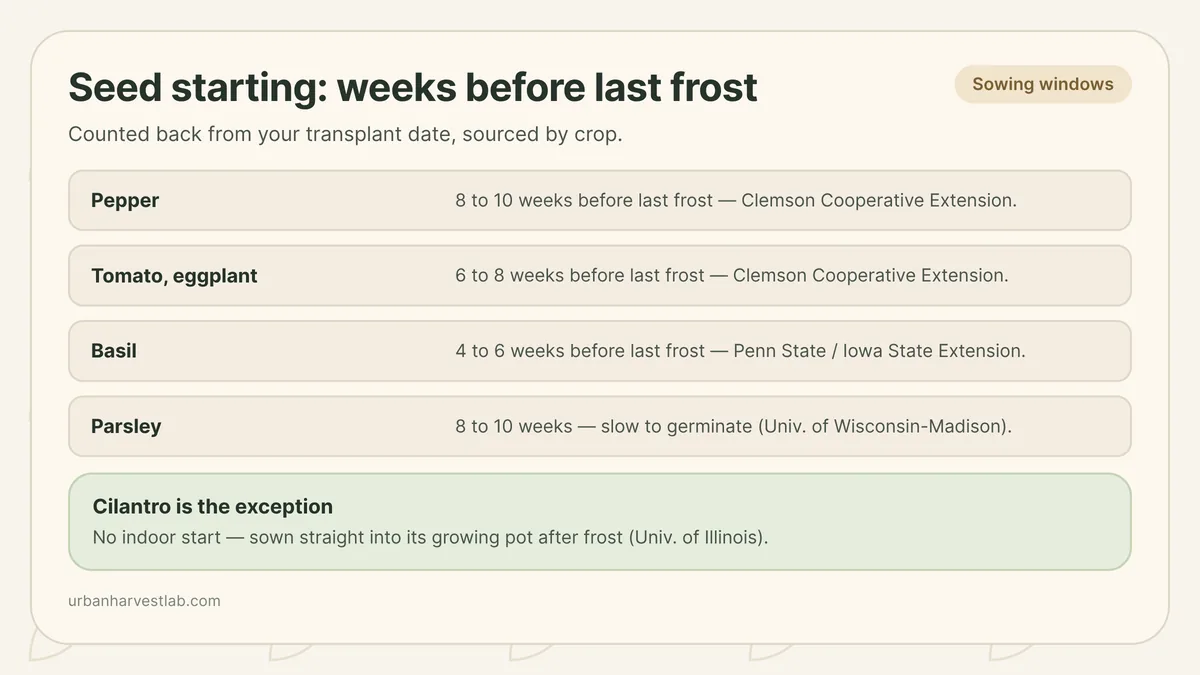
Seed starting calculator: sowing dates from your last frost date
A last frost date is only useful once you count backward from it. This works out that count crop by crop, instead of applying one week figure to everything in the seed drawer.
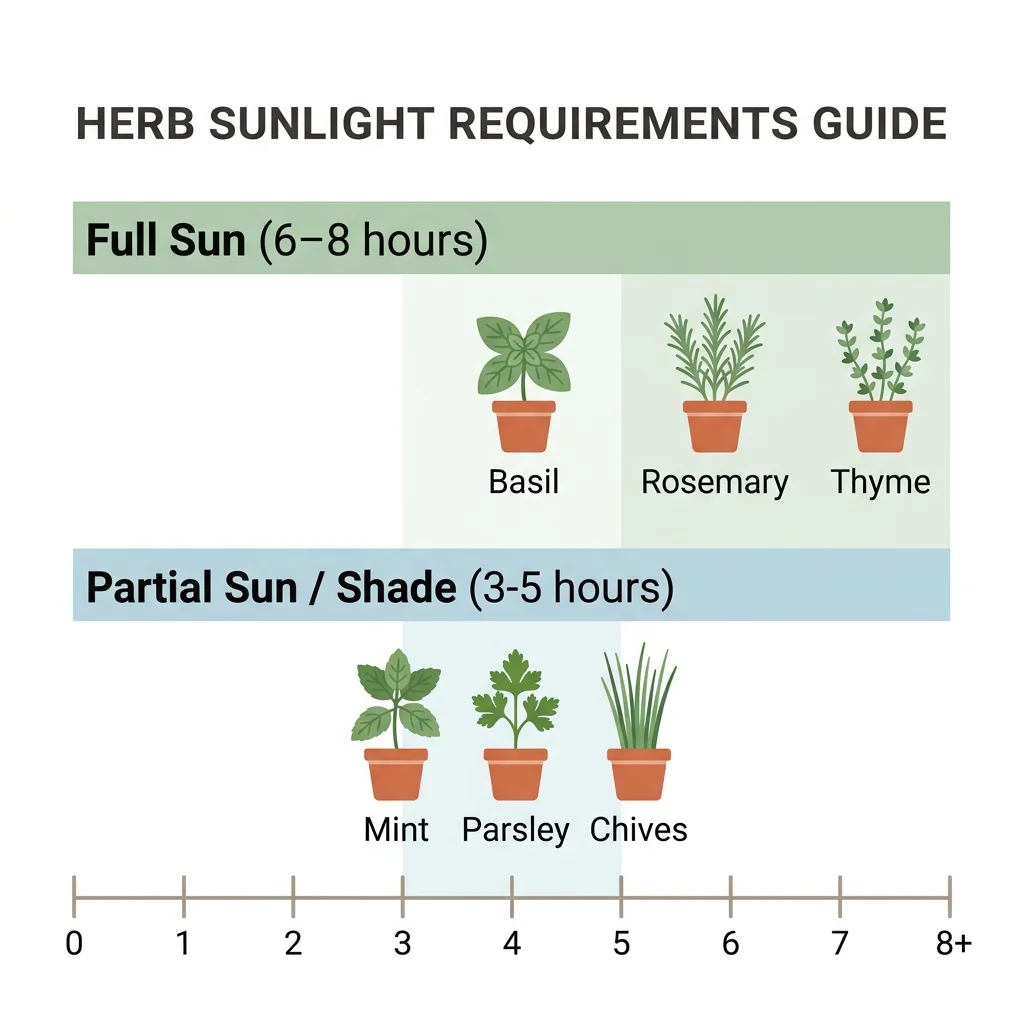
How much sun do herbs need? A by-herb sunlight chart
A simple sunlight chart for common herbs, split into full-sun, part-shade, and low-light tolerant, so you can match what you grow to the light your space actually gets.
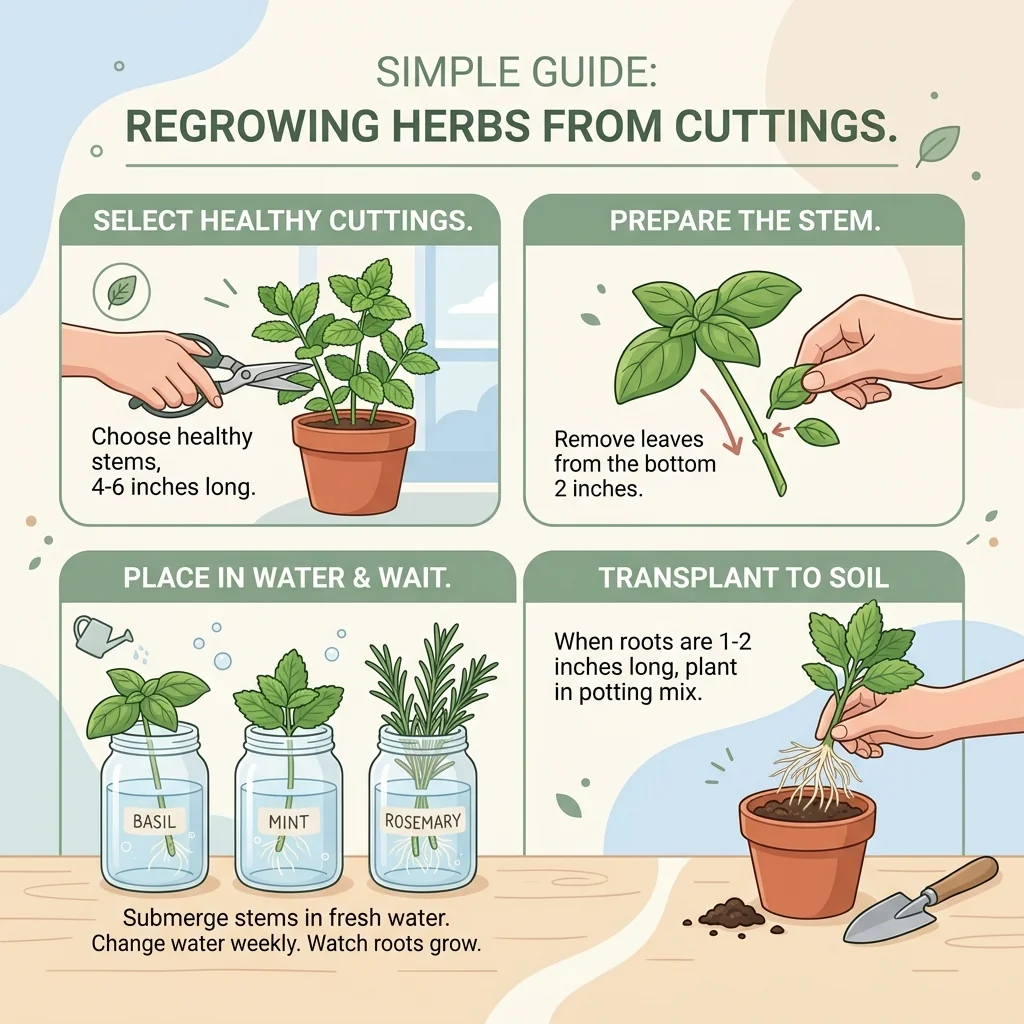
How to regrow herbs from cuttings (basil, mint, rosemary)
Many herbs root from a simple stem cutting in a glass of water. It is the cheapest way to turn one plant, or a supermarket bunch, into many.