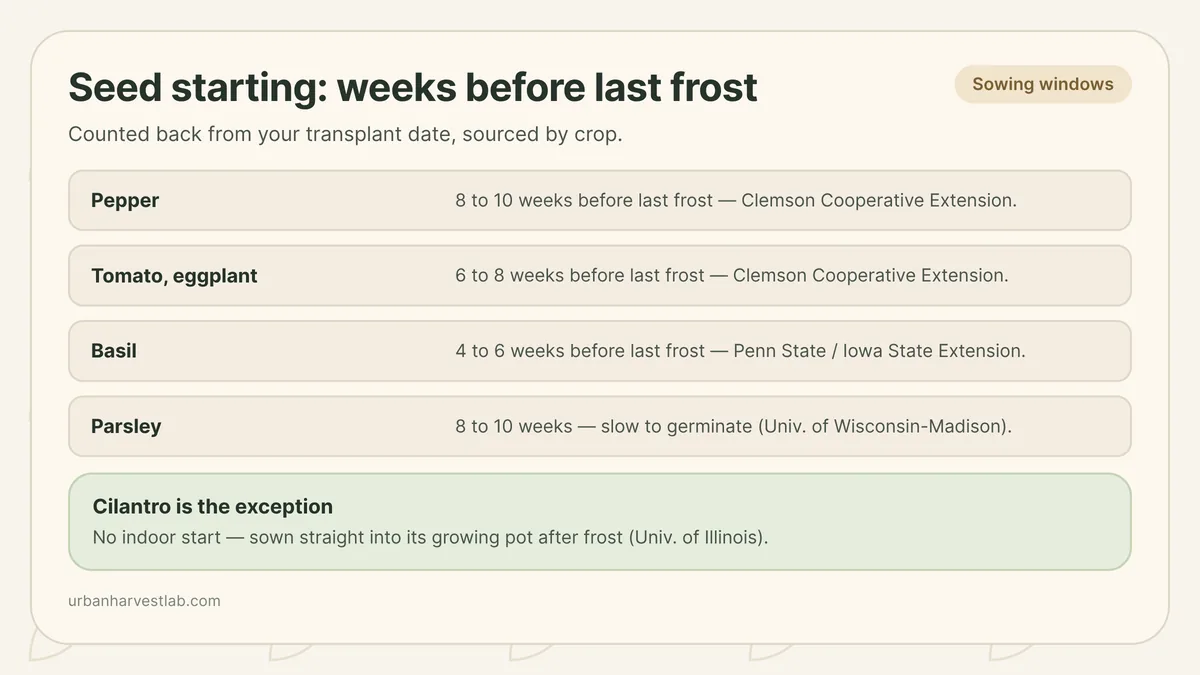
A last frost date only becomes a sowing date once you count backward from it by the right number of weeks, and that number changes by crop. Pepper needs roughly twice as much lead time indoors as a cucumber. Basil has two different published figures instead of one. Cilantro should skip the indoor tray entirely. If you do not yet have a working last frost date for your own spot, the first and last frost dates for a balcony guide is the place to get one — a USDA hardiness zone is not the same thing, and starting from the wrong number undoes everything below it.
Calculate your sowing dates
Live estimate
Enter your last frost date and pick a crop. The result is a sowing window counted backward from that date, not a promise about your particular spring — recheck it if your frost date changes.
Indoor sowing window
—
Choose a crop to begin
- Earliest transplant (last frost date)
- —
- Start hardening off
- —
- Weeks before frost used
- —
Enter your last frost date and choose a crop.
Working it out by hand takes the same two steps. Take the crop’s weeks-before-frost figure from the table further down and count that many weeks back from your last frost date for the earliest safe sowing day; count the shorter end of the range back for the latest one. For hardening off, start the process 2 to 3 weeks before the transplant date, per the RHS’s timing for moving tender plants outdoors.
Why the weeks-before-frost figure changes by crop
The seed-to-transplant time is not one number. Crops do not grow at the same rate before they are ready to go into a larger pot outdoors. Clemson Cooperative Extension states the range plainly in its own seed-starting guidance: squash seeds need only about three weeks to germinate, harden off, and reach transplant size, while a pepper can take eight weeks or more to get there. A calculator that used one figure for every crop would either start slow growers too late or hold fast growers indoors, leggy and rootbound, for weeks longer than they need.
Vegetables: Clemson’s seed-starting table
Clemson Cooperative Extension’s own table gives the approximate time from seeding to transplant size for several vegetable groups:
| Crop | Weeks from sowing to transplant size | Source |
|---|---|---|
| Pepper | 8 to 10 weeks | Clemson Cooperative Extension |
| Tomato | 6 to 8 weeks | Clemson Cooperative Extension |
| Eggplant | 6 to 8 weeks | Clemson Cooperative Extension |
| Lettuce | 5 to 7 weeks | Clemson Cooperative Extension |
| Cucumber, summer squash | 3 to 5 weeks | Clemson Cooperative Extension |
| Parsley | 8 to 10 weeks before last frost | University of Wisconsin-Madison Division of Extension |
| Basil | 4 to 6 weeks before last frost | Penn State Extension; Iowa State University Extension |
| Cilantro | Direct-sow after frost, no indoor start | University of Illinois Extension |
Clemson counts these back from the transplant date, not from the frost date itself — for pepper, tomato, eggplant, and cucurbits that transplant date can land a week or two after the frost date, so add that gap before counting backward from your own last frost date.
Tomato and eggplant share a figure in Clemson’s table, and pepper sits a couple of weeks ahead of both — plan on getting pepper seed into a tray first if you are starting several nightshades at once. Lettuce and the cucurbit group sit at the other end. They grow fast enough that starting them too early just means a rootbound, stressed seedling waiting on a windowsill for warm enough nights to arrive. If tomatoes and peppers are part of the plan, dwarf tomatoes in pots on a small balcony covers the container side once a transplant date is set, and best vegetables for small balconies covers cucumbers, squash, and the rest of the fast-growing group.
Basil: two extension services, two figures
Two extension services publish different starting dates for basil. Penn State Extension gives six weeks before the last spring frost; Iowa State University Extension gives four or five. Neither figure is wrong — they are two universities publishing slightly different windows for the same crop — so a four-to-six-week range covers both. Basil also has its own temperature bar for the move outdoors: Penn State Extension gives 60°F as the minimum soil temperature for transplanting, with germination happening around 70°F, so a basil seedling can be ready before the soil is.
Parsley: the slow starter
Parsley’s indoor start comes earlier than most herbs on this list because the seed itself is slow. The University of Wisconsin-Madison Division of Extension gives 8 to 10 weeks before the last spring frost, in line with parsley’s habit of taking longer than most kitchen herbs to break dormancy. Parsley is biennial and tolerates cool weather rather than warm. Its transplants can often go outside somewhat ahead of the last frost date itself, unlike a heat-loving crop such as basil or pepper.
Cilantro: skip the indoor tray
Cilantro does not take a weeks-before-frost figure at all. University of Illinois Extension describes it as easily grown from seed sown directly in the garden after the danger of frost has passed, and difficult to transplant because of its taproot. Starting cilantro indoors and moving it later works against the plant rather than for it — sow it straight into the pot or bed it will finish growing in, once your last frost date has passed.
Getting the transplant date right, not just the sowing date
The sowing date is only half the calculation. The other half is when a seedling actually goes outside, and that is not automatically the calendar day of the last frost for every crop. Warmth-loving crops are the group to be most careful with. The RHS gives night temperatures above 10°C (50°F) as the working bar for setting out tomatoes, peppers, basil, and cucurbits. In a cool spring that bar can land a week or two after the frost date itself, rather than on it. Lettuce and parsley sit at the other end — both tolerate cool weather, so a transplant does not need to wait for the same warmth that a pepper does.
Whatever the crop, a seedling raised entirely indoors needs a hardening-off period before it goes outside for good. Both the RHS and Clemson Cooperative Extension give 2 to 3 weeks for the process, and Clemson starts the clock when seedlings reach about three inches tall rather than on a fixed date — moving trays outdoors for a little longer each day, so the seedling’s leaf tissue and root system adjust gradually to direct sun, wind, and temperature swings it has not felt indoors. Skipping this step is a common way to lose a tray of otherwise healthy seedlings to transplant shock in the first few days outside.
The sowing date is not the whole job
A correct sowing date does not compensate for the wrong growing medium, not enough light, or a seed put in the wrong way. Penn State Extension gives basil a sowing depth of about ¼ inch, and the University of Wisconsin-Madison notes that parsley’s own germination is erratic enough that soaking the seed overnight before sowing helps it along — small details that a correct date alone does not fix. Seed-starting mix and potting mix are not interchangeable at this stage either — the difference in structure and drainage is enough to affect germination, which seed-starting mix versus potting mix covers in full. Light is the other half of a strong start: a windowsill alone under-lights most seedlings through late winter, and grow lights for seed starting covers the fixture and duration choices that keep a tray from stretching thin and leggy before it is ready to move outside. Once the early trays are started, the rest of a container season follows the same frost and temperature gates rather than fixed calendar months — the balcony vegetable garden calendar lays that sequence out from late-winter preparation through the autumn wind-down, and a beginner’s apartment vegetable garden plan is a reasonable place to start reading before the first seed goes into a tray.
Common mistakes with a seed-starting calendar
- Using one weeks-before-frost figure for every crop. Pepper and cucumber differ by five weeks or more in Clemson Cooperative Extension’s own table; a single number applied across the seed drawer starts some crops too late and others too early.
- Treating the last frost date as the transplant date for every crop. Warmth-loving crops such as pepper, basil, and cucurbits often do best waiting for night temperatures the RHS puts above 10°C, which can trail the frost date itself by a week or two.
- Starting cilantro indoors to transplant later. University of Illinois Extension is specific about the taproot issue; a tray started early does not make up for the setback of the move.
- Skipping the hardening-off window. A seedling that has spent its whole life indoors is not ready for direct sun and wind on day one outside, regardless of how correct the sowing date was.
- Setting a sowing date from a hardiness zone instead of a frost date. The two measure different things, and only one of them tells a tray of seedlings when to go in the ground.
Sources
- Clemson Cooperative Extension: Starting Seeds Indoors
- Penn State Extension: Basil, a Summer Favorite
- Iowa State University Extension: Growing Basil in the Home Garden
- University of Wisconsin-Madison Division of Extension: Parsley
- University of Illinois Extension: Cilantro
- RHS: When to Plant Out Tender Plants to Avoid Late Frosts
Finish the seed-starting setup
A sowing date only works with the right medium, light, and season plan around it.
Common questions
How many weeks before my last frost date should I start seeds indoors?
It depends on the crop. Clemson Cooperative Extension gives 8 to 10 weeks of growing time before pepper reaches transplant size, 6 to 8 weeks for tomato and eggplant, 5 to 7 weeks for lettuce, and 3 to 5 weeks for cucumbers and summer squash — counted back from the transplant date, which for these crops can land a week or two after your last frost date rather than on it. Basil sits at 4 to 6 weeks before the last frost date itself, between Penn State Extension and Iowa State Extension figures, and parsley needs 8 to 10 weeks before the last frost date according to the University of Wisconsin-Madison, because it germinates slowly.
Should I start cilantro seeds indoors?
No. University of Illinois Extension recommends sowing cilantro straight into the pot it will finish growing in, after the danger of frost has passed, because its taproot does not recover well from being disturbed.
What if I do not know my last frost date yet?
Look it up before working out a sowing date from it — a USDA hardiness zone number is not a frost date, and the first and last frost dates for a balcony guide walks through the tools that actually publish one for your area.
Do seedlings need to be hardened off before they go outside?
Yes, anything started indoors does. The RHS gives 2 to 3 weeks as the time hardening off takes, moving trays outside for a little longer each day so seedlings adjust to real sun, wind, and temperature swings before they are transplanted for good.
Related guides
Balcony vegetable garden calendar: what to do each season
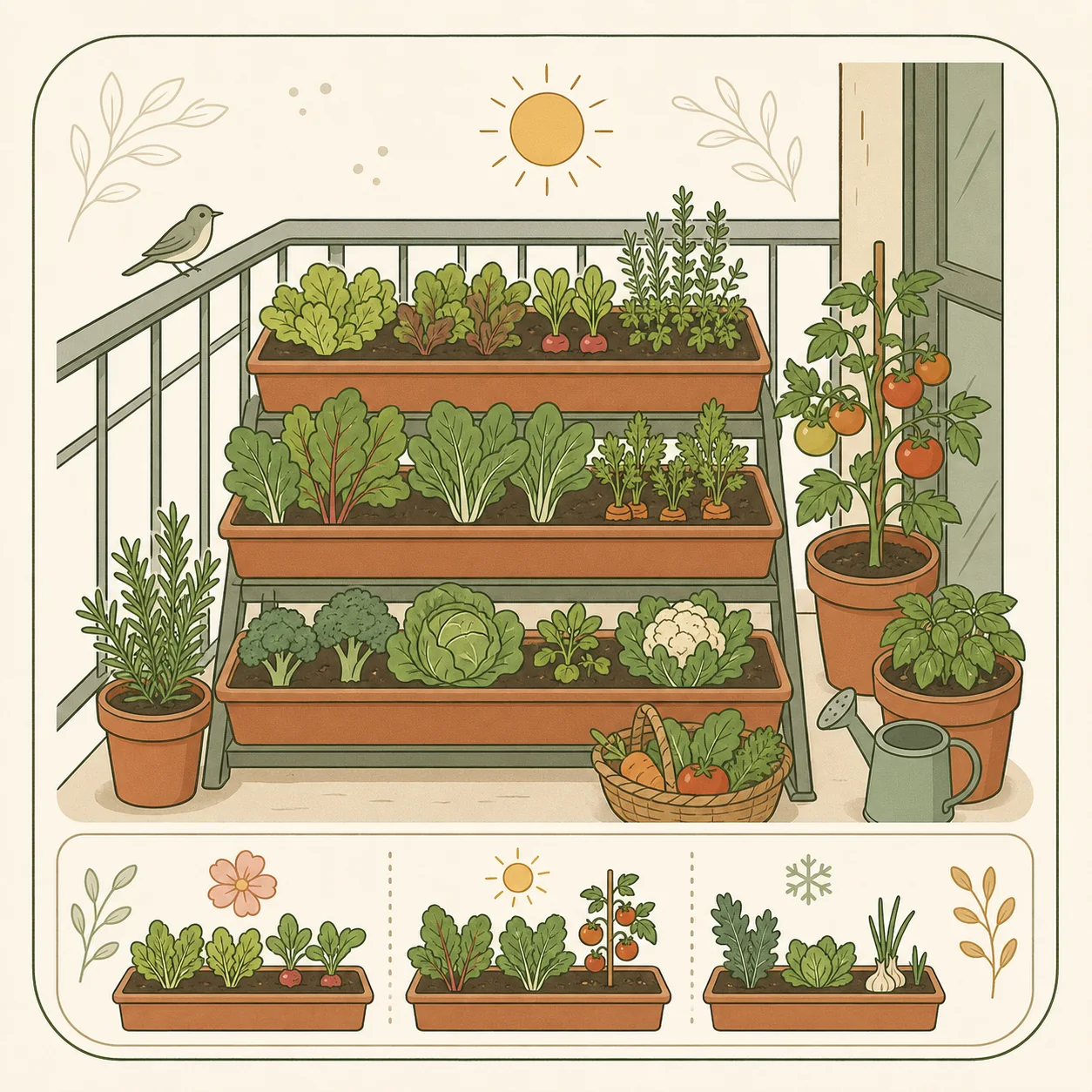
A useful balcony calendar is a set of seasonal decisions, not twelve fixed planting lists. Use temperature, light, and container conditions to decide what happens next.
How to grow dwarf tomatoes in pots on a small balcony
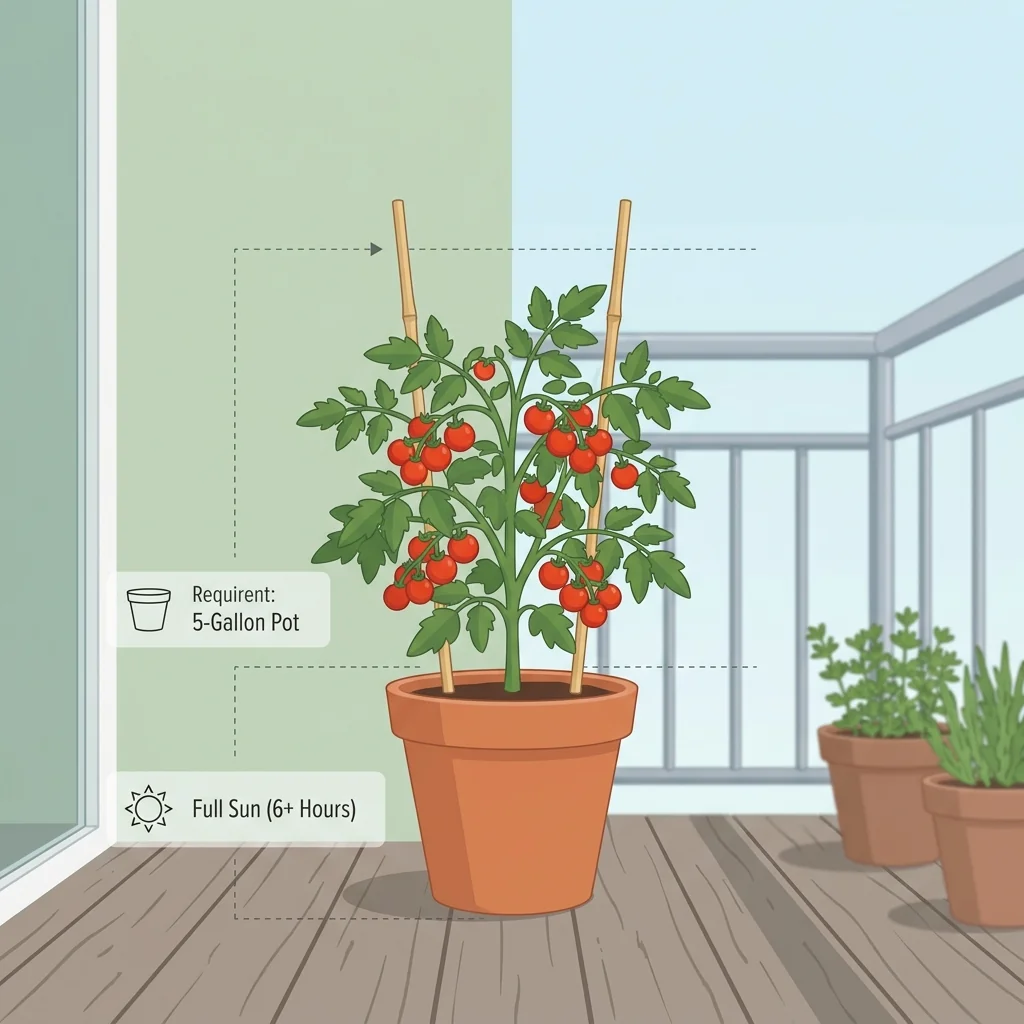
Traditional tomato plants grow into massive, untameable 8-foot jungle vines that require giant cages and take over your entire balcony. But with modern 'micro-dwarf' or patio tomato varieties, you can grow heavy yields of sweet cherry tomatoes on a plant that stays under 2 feet tall. Here is the dwarf tomato container blueprint.
A beginner's apartment vegetable garden plan
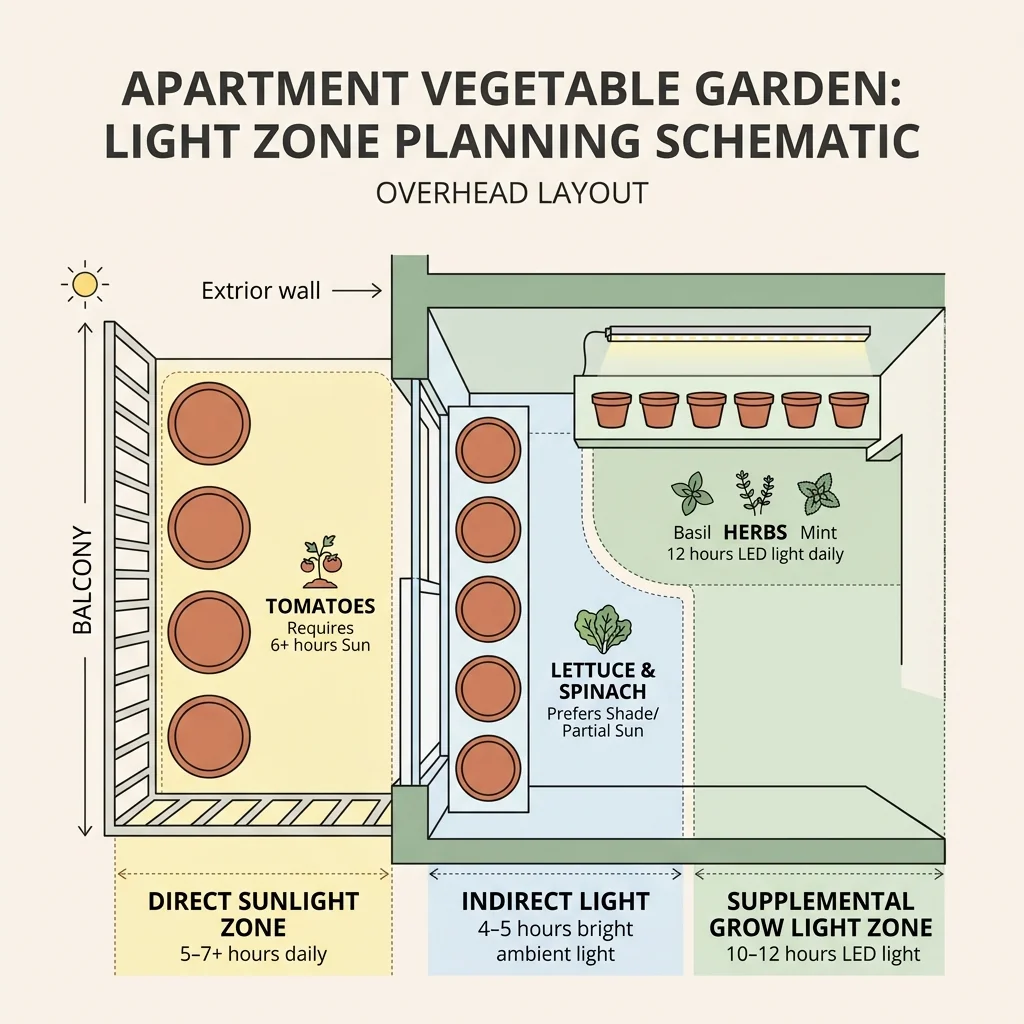
Growing food in an apartment works when light, containers, crops, and routine are planned together. This is a simple, step-by-step plan to start from scratch.