Comparing Vacation Watering Systems
| Method | Best Vacation Length | Complexity | Ideal For |
|---|---|---|---|
| The Cotton Wick System | 5 to 10 Days | Low (DIY bottle & rope) | Individual medium-sized pots (basil, mint). |
| Capillary Watering Mat | 4 to 7 Days | Medium (needs tray setup) | Clusters of small seedling pots or shallow root herbs. |
| Self-Watering Pots | 10 to 14 Days | Low (built-in reservoir) | Constant drinkers like chives, parsley, and lemon balm. |
| The Plastic Bag Greenhouse | 10 to 14 Days | Medium (bag enclosure) | Small, highly delicate moisture-loving tropical herbs. |
| Slow Drip Bottles | 3 to 5 Days | Low (inverted bottle) | Large outdoor balcony containers or raised planters. |
Going away on vacation is exciting, but for an urban gardener, it comes with a nagging sense of anxiety. You look at your beautiful windowsill herb garden, packed with lush basil, aromatic mint, and crisp parsley, and you worry: “Will they still be alive when I get back?”
Herbs grown in containers are uniquely vulnerable to drying out. Unlike plants in the ground, which can draw moisture from deep soil layers, potted plants are confined to a tiny volume of soil. As explained in our Potted Herb Watering Guide, a small pot of basil can transpire its entire water supply in just 48 hours on a warm summer day.
If you are planning a trip, you do not need to hire a plant sitter. With a few simple, passive capillary hacks, you can build a reliable self-watering system in minutes. Here are the five best foolproof ways to water your herbs while you are away.
The Direct Quick Answer
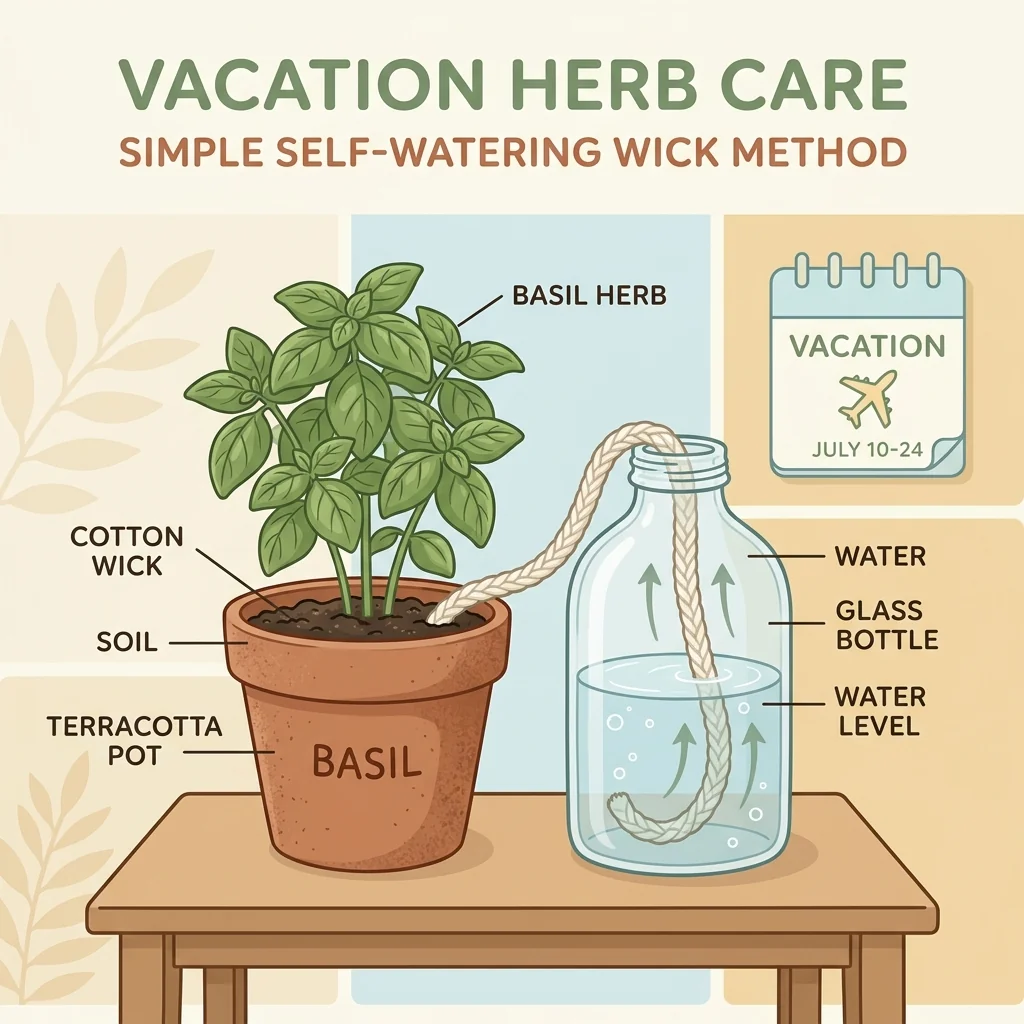
For vacations lasting 5 to 10 days, the Cotton Wick Method is the most reliable DIY solution.
Fill a large glass bottle or jar with water and place it next to your herb pot. Bury one end of a thick, natural cotton rope (or shoelace) deep into the plant’s soil, and submerge the other end completely to the bottom of the water jar.
Through capillary action, the cotton wick will slowly draw water from the jar into the soil as it dries, keeping the roots perfectly moist without waterlogging them.
5 Foolproof Vacation Watering Methods
Choose the method that matches your vacation length and the specific herbs you grow.
Method 1: The Cotton Wick (Best for 5–10 Days)
This is the gold standard of DIY plant-sitting. It relies on the natural physics of capillary action.
- The Setup: Locate a large container of water (a 1-gallon glass jug or a deep bowl). Group your pots around it.
- The Wick: Use a natural fiber cord (100% cotton rope, clothesline, or a thick cotton shoelace). Synthetic nylon will not work.
- How to Install: Push one end of the wet wick deep into the soil of your herb pot, close to the root zone. You can use a screwdriver to tuck it down about 3 inches. Drop the other end into the water jug, ensuring it reaches the very bottom.
- The Physics: As the plant drinks and transpires, the soil dries. This creates a capillary gradient that gently pulls water up through the rope and into the soil.
Method 2: The Capillary Mat (Best for 4–7 Days)
If you have a collection of small starter pots, watering them individually with wicks is tedious. A capillary mat waters them all at once from the bottom.
- The Setup: Lay a thick piece of capillary matting (or a thick, natural-fiber towel) across your kitchen counter next to the sink.
- The Reservoir: Let one end of the towel hang down into the sink basin, which you fill with water.
- Placement: Place your herb pots directly on top of the wet towel on the counter. Make sure the pots have drainage holes in the bottom. The towel will draw water from the sink and keep the bottom of the pots damp, allowing the roots to drink.
Method 3: Self-Watering Pots (Best for 10–14 Days)
If you travel frequently, investing in dedicated Self-Watering Pots is the ultimate long-term solution.
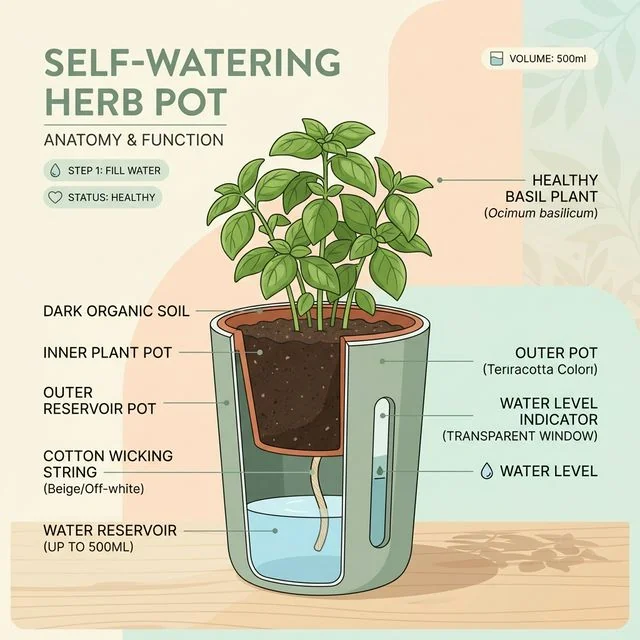
- How They Work: These containers feature a double-walled design. The bottom chamber holds a large water reservoir, while the upper chamber holds the soil. A nylon wick connects the two, delivering steady moisture directly to the root zone.
- The Benefit: These reservoirs are large enough to keep high-transpiration herbs like parsley and chives fully hydrated for up to two weeks without any risk of root rot. For specific models with reservoirs sized to cover a two-week trip, see Best self-watering pots for herbs.
Method 4: The Inverted Water Bottle (Best for 3–5 Days)
Ideal for larger balcony pots or small outdoor planters that lose water rapidly due to wind.
- The Setup: Take a clean plastic water bottle or soda bottle. Poke 2 to 3 tiny pinholes in the plastic cap using a hot needle.
- Installation: Water your herb pot thoroughly first. Fill the bottle with fresh water, screw the cap on, and quickly invert it, burying the neck of the bottle 3 inches deep in the damp soil.
- How it Works: The vacuum inside the bottle, combined with the dense damp soil, prevents the water from dumping out all at once. Instead, it slowly drips out over several days.
Method 5: The Plastic Bag Greenhouse (Best for 10–14 Days)
For small, highly delicate herbs in dry indoor apartments.
- The Setup: Water your plant thoroughly. Place 4 wooden stakes or chopsticks into the soil around the edges of the pot to act as tent poles.
- Enclosure: Pull a large, clear plastic trash bag up over the pot and the stakes, sealing it loosely at the top with a twist-tie. Ensure the plastic does not physically touch the leaves.
- How it Works: This creates a closed-loop mini-water cycle. Water evaporates from the soil and leaves, condenses on the inside of the plastic bag, and drips back down into the soil. Keep this out of direct sunlight, or it will act as an oven and bake your plants.
Crucial Vacation Prep Checklist
No matter which watering method you choose, perform this preparation routine 24 hours before you depart:
- Test the System early: Set up your wicks or drippers 3 days before you leave. This lets you confirm the water is flowing at the correct rate.
- Move Out of Direct Sun: Move your window plants 3 to 4 feet back from the glass. This reduces the heat load and evaporation rate, extending your water reservoir’s lifespan.
- Prune Your Canopy: As detailed in When to Prune Basil and Mint, prune back large canopies. Less leaf surface area means less transpiration and slower water consumption.
- Group Your Plants: Cluster all your pots close together. This creates a localized microclimate with higher relative humidity, reducing water loss through the leaves.
By setting up a passive cotton wick system and taking steps to lower your plants’ metabolic demands, you can travel with absolute peace of mind, knowing your herb garden will be vibrant, green, and ready for harvest when you return.
Diagnosing water stress and pot problems?
Overwatering or wrong container choice can kill your plants faster than a short drought. Check these guides to secure your setups.
Common questions
Can I just pour a massive amount of water into the pot saucer before I leave?
No. Leaving your herb pots sitting in stagnant water for days is a recipe for anaerobic root rot. The soil will become waterlogged, starvng the roots of oxygen. Use a slow, capillary-based wick system instead.
Should I close my blinds to keep the room cool while I am away?
Yes. Partially closing your blinds to filter direct sunlight is a great vacation strategy. It reduces ambient temperature and photosynthesis rates, lowering the plant's water demands by up to 50% without starving them of necessary ambient light.
How do I test my DIY wick system before leaving?
Always set up your vacation watering system 3 to 4 days *before* you actually walk out the door. This allows you to monitor the water consumption rate and adjust the wick thickness or bottle height to ensure perfect moisture delivery.
Related guides
How often to water potted herbs: a by-herb chart
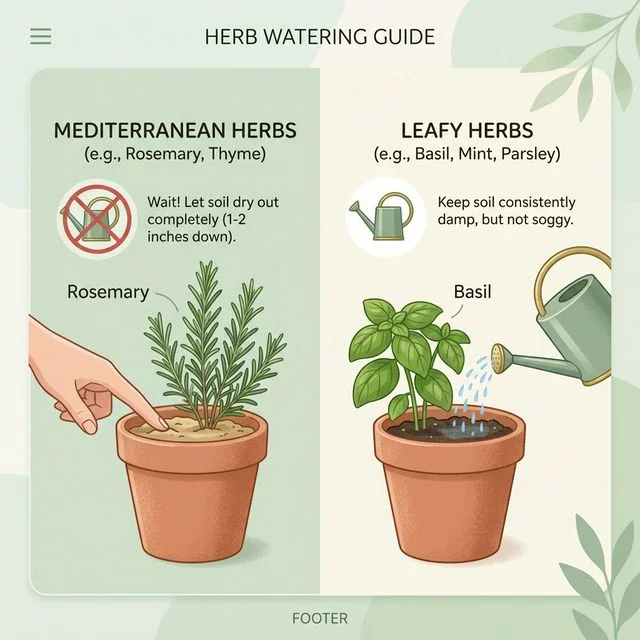
Most potted herbs should be checked often but watered only when the root zone is actually drying. Judge the pot instead of following a rigid calendar.
Plastic vs. terracotta pots for herbs: which makes care easier?
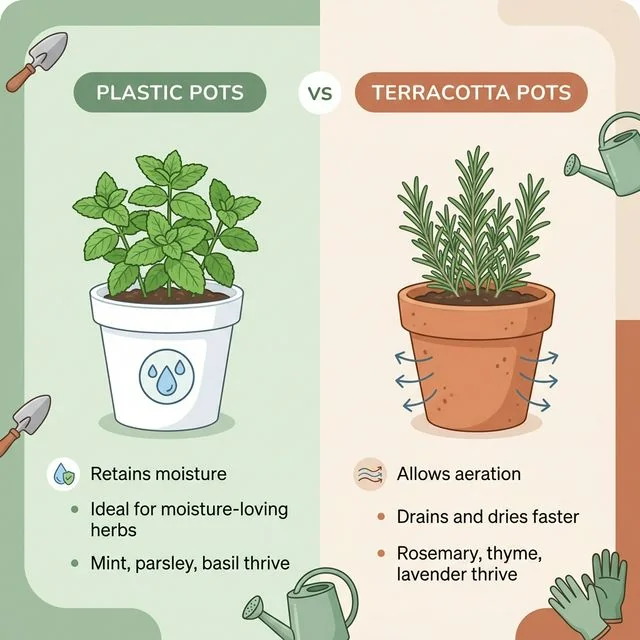
The material of your pot dictates how fast your soil dries out. If you put a thirsty mint plant in unglazed terracotta, you will be watering every single day. If you put rot-prone rosemary in a plastic pot, you must be extremely careful.
Self-watering pots for herbs: worth it or more trouble?
Self-watering pots sound like the holy grail for busy gardeners. While they are fantastic for moisture-loving herbs like mint, they can quickly turn into a swamp of rotting roots for drought-tolerant plants like rosemary.