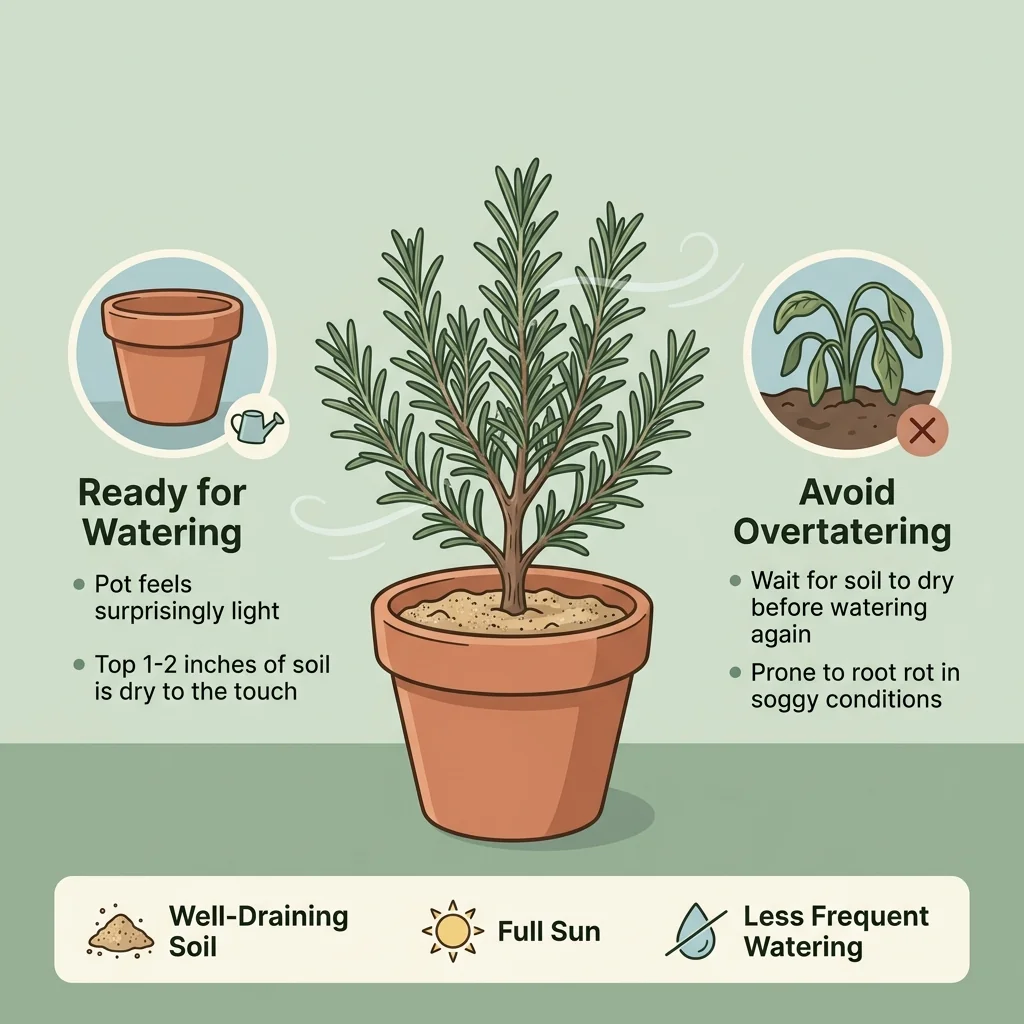
Watering rosemary by condition
| Condition | Rough frequency | Check first |
|---|---|---|
| Indoors, moderate light | Every 1-2 weeks | Soil dry a couple of inches down |
| Hot balcony or summer | Every 5-7 days | Dry, but never kept soggy |
| Cool or low light | Every 2-3 weeks | Very easy to overwater; wait |
Nobody underwaters a rosemary to death; they drown it slowly, with love, one unnecessary watering at a time. This is a plant from dry, rocky Mediterranean hillsides that treats a rainless fortnight as normal weather, so in a pot the right frequency is only when the soil has fully dried — usually every 1 to 2 weeks, deeply, and more often only in genuine heat. On the herb watering chart rosemary anchors the drought-tolerant end; the general soil-first method it exaggerates is in how often to water potted herbs.
The one rule: when in doubt, wait
Rosemary’s entire watering doctrine fits in a sentence: it forgives a missed watering far more easily than a soggy week. Before every watering, check deep — not the surface, which dries fast and means nothing, but a couple of inches down with a finger, plus the pot-weight test (a properly dry rosemary pot is startlingly light). Both dry? Water thoroughly until it runs from the holes, then leave it alone again. Either one still damp? Walk away. No herb rewards procrastination like rosemary.
The cruel trick: drowning looks like thirst
What actually kills potted rosemary is a perception trap. A rosemary with rotting, suffocating roots droops and browns — and looks exactly like a rosemary that needs water. The owner sees the droop, waters, the rot deepens, the plant looks thirstier, more water follows. Breaking the loop takes one habit: diagnose by soil, never by foliage.
- Soil dry + needles grey-green, brittle, crispy → genuine underwatering. Deep soak; it will usually recover.
- Soil damp + needles dull, browning from the base, stems soft or darkening → overwatering and likely root rot. Do not water. Let it dry hard, improve drainage, and hope.
Rot runs on a delay
A soggy spell rarely shows damage the same week. Rosemary can look fine for one or two weeks after the roots are compromised, then collapse “out of nowhere” — by which point the fatal watering is long forgotten and something else gets blamed. When a previously healthy rosemary declines suddenly, audit the last month of moisture and drainage, not the last few days.
Winter indoors: where most rosemary dies
Most potted rosemary dies in winter, not summer, and almost always the same way. Brought indoors to low light and cool rooms, the plant nearly stops growing and sips almost nothing — but the summer watering habit continues, and the roots sit wet for weeks. In winter, stretch the interval right out (three weeks is often fine), water only when it is dry well down, and park it in the brightest, coolest spot available. Pair that with the gritty mix and breathing terracotta covered in rosemary pot size and a rosemary will cruise through winters that kill its neighbours.
The easiest herb to leave behind
The flip side of all this austerity: rosemary is the best herb to own if you travel. A deep watering before a week away is more than enough, and even a fortnight rarely troubles an established plant — the vacation setups in how to water potted herbs while on vacation exist for the thirsty herbs, not this one. Thyme runs on the same dry-side rules with a shorter cycle; if you grow both, see how often to water thyme.
Rosemary care beyond the watering can
These guides connect rosemary's dry-side watering to its pot and drainage needs and the wider routine.
Common questions
How often should you water rosemary?
Water potted rosemary only when the soil has dried out, which is usually every 1 to 2 weeks and more often only in hot, dry weather. Rosemary is drought-tolerant and prefers the dry side.
Can you overwater rosemary?
Yes, and it is the leading cause of dead potted rosemary. It is Mediterranean and rots in wet soil, so always let the pot dry before watering and make sure it drains well.
How do I know when rosemary needs water?
Lift the pot or feel the soil. When the pot is light and the soil is dry a couple of inches down, water deeply until it drains, then wait.
Why is my rosemary turning brown or dropping needles?
It is often overwatering or poor drainage causing root problems, though a fully dried-out pot can also brown it. Check drainage first, then settle into a deep-but-infrequent watering rhythm.
My rosemary is drooping, should I water it more?
Check the soil first, because overwatered and underwatered rosemary both droop. If the soil is dry and the needles are crispy, water deeply. If the soil is still damp and the browning starts from the base with soft stems, it is overwatered, do not add water, let it dry and improve drainage.
How often should I water rosemary indoors in winter?
Much less than in summer. Indoors in low light and cool temperatures rosemary barely grows and uses little water, so most winter deaths are from overwatering. Water only when it is dry a good way down, and give it the brightest, coolest spot you have.
Related guides
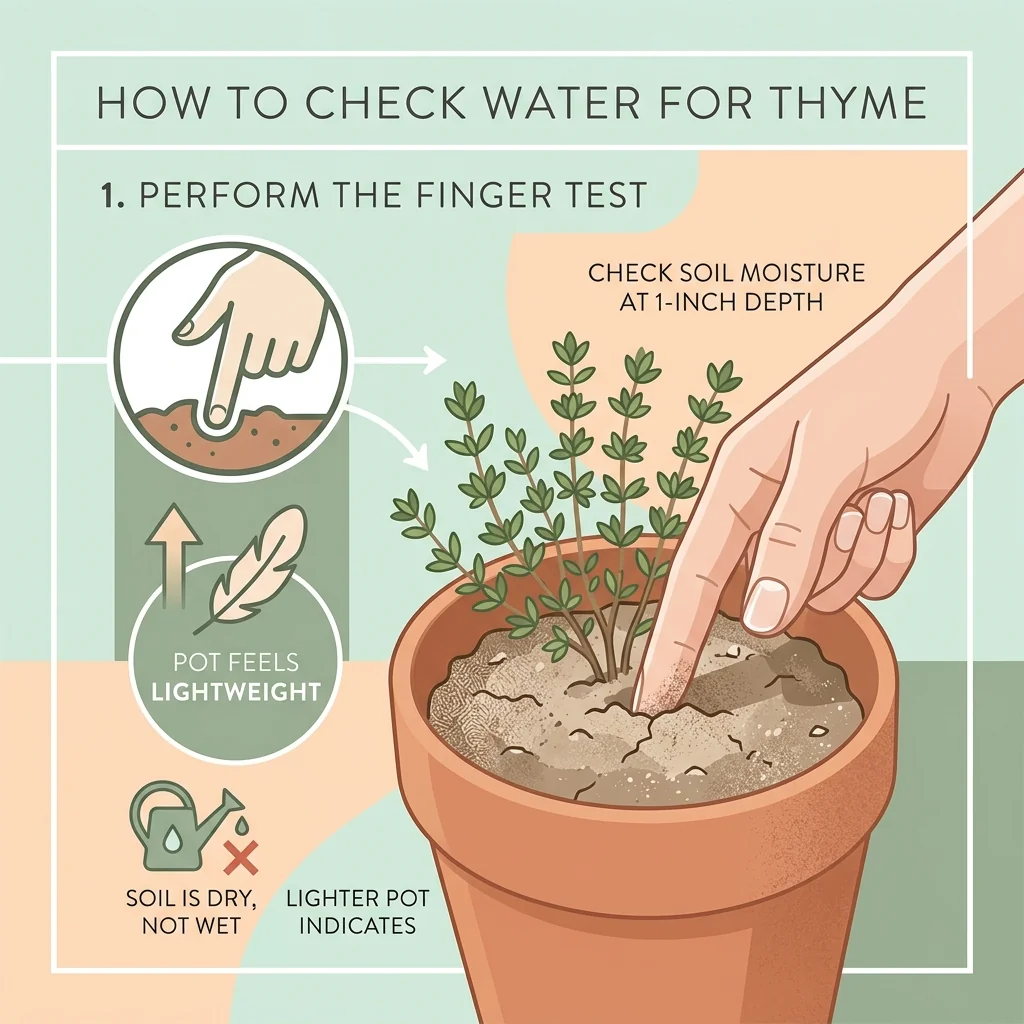
How often should you water thyme? Let it dry out
Thyme is a Mediterranean herb that hates wet feet. Water it only when the pot feels light and the soil is dry, and it will reward you for the neglect.
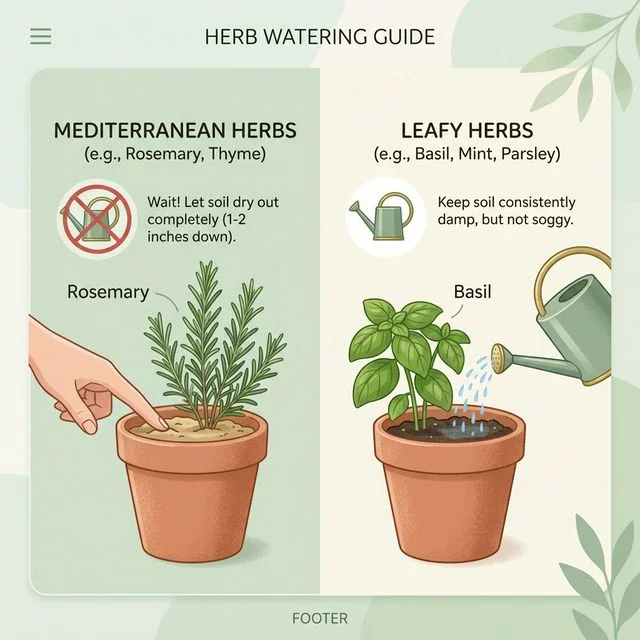
How often to water potted herbs: a by-herb chart
Most potted herbs should be checked often but watered only when the root zone is actually drying. Judge the pot instead of following a rigid calendar.
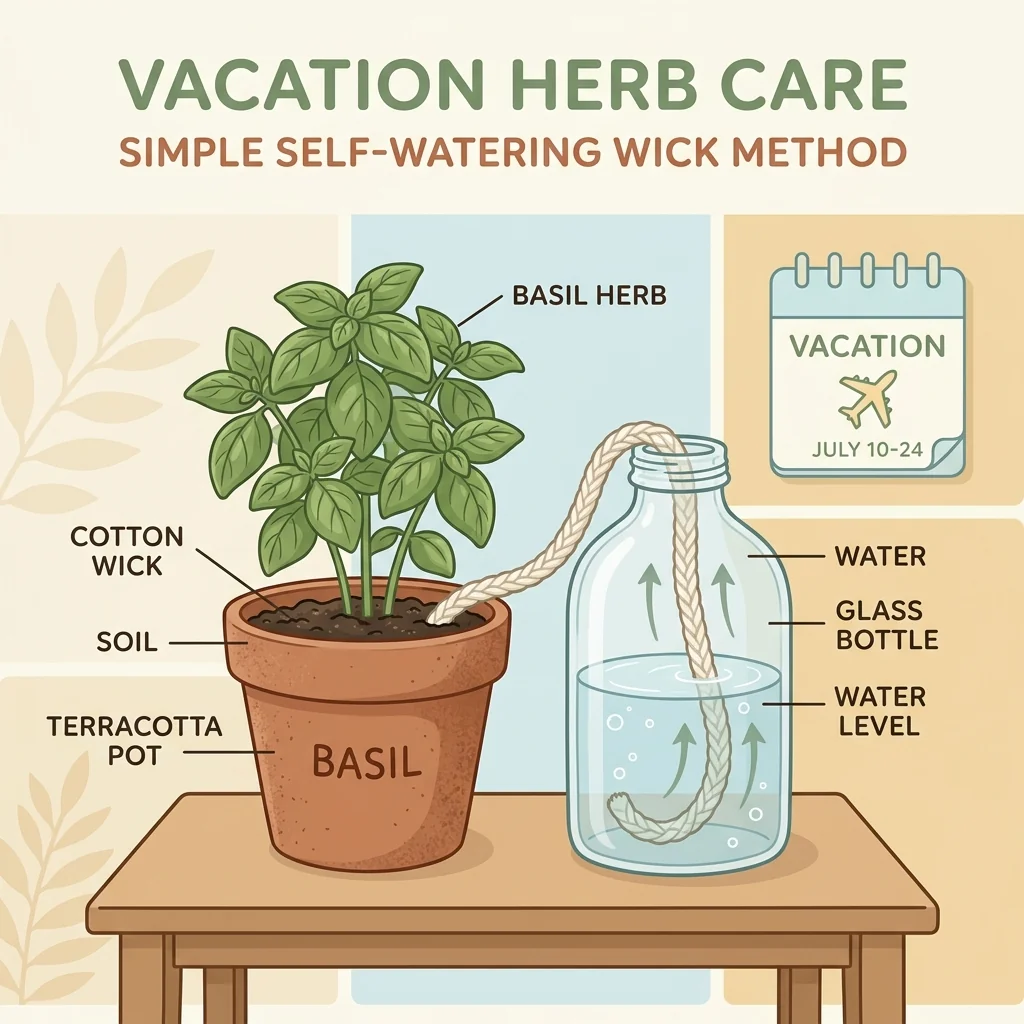
How to water potted herbs while on vacation: 5 foolproof methods
Potted herbs are notoriously sensitive to drying out. If you leave your apartment for a week without a plan, you will return to a graveyard of crispy, brown basil and dead mint. Here are five simple, passive self-watering systems you can build in minutes.