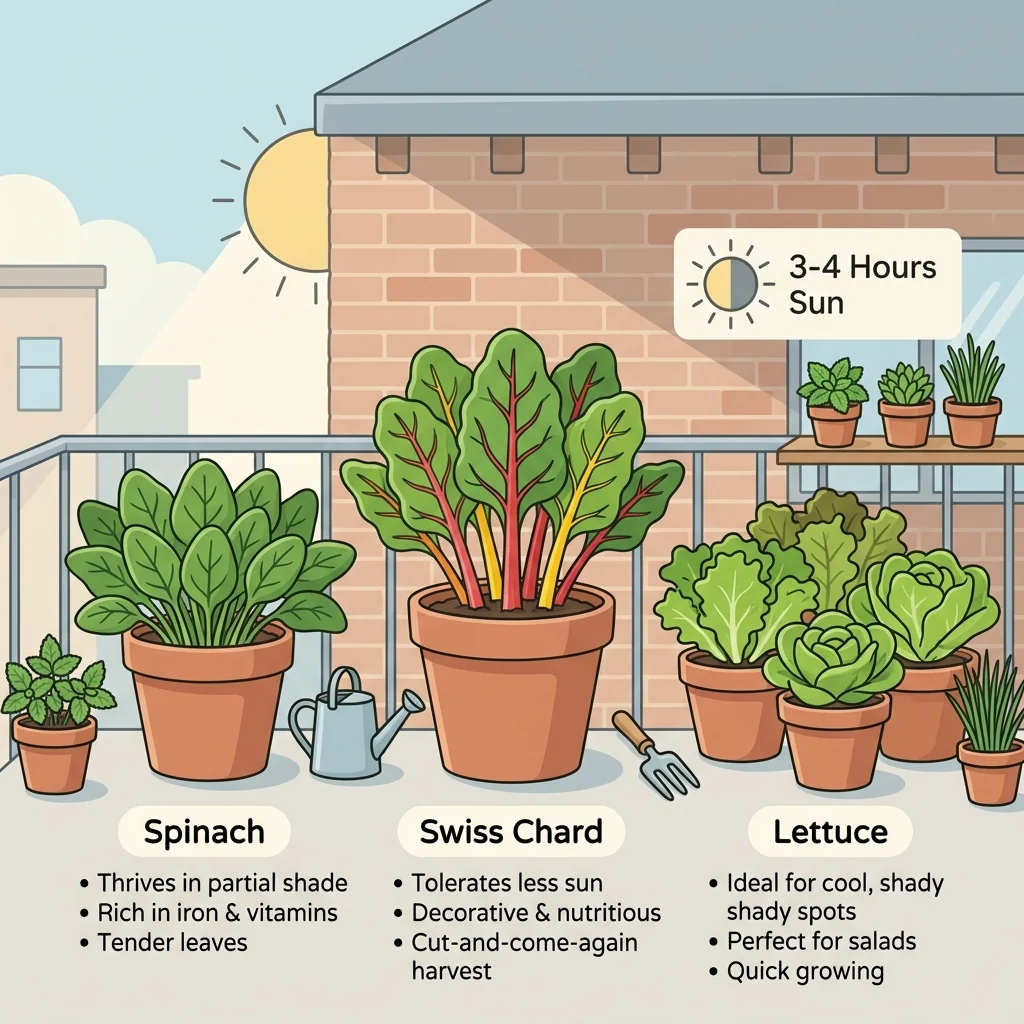
The Balcony Sun Requirement Zones
| Daily Sun Hours | Balcony Type | Ideal Vegetable Options | What to Avoid Completely |
|---|---|---|---|
| 6+ Hours (Full Sun) | South or West-facing, unobstructed. | Tomatoes, peppers, cucumbers, squash, eggplants. | Delicate cold-weather greens in mid-summer. |
| 4 to 5 Hours (Partial Sun) | East or West-facing, minor tree cover. | Radishes, carrots, beets, green onions, bush beans, kale. | Heavy vining squashes or beefsteak tomatoes. |
| 3 to 4 Hours (Dappled / Shade) | North-facing or heavily obstructed by buildings. | Spinach, Swiss chard, leaf lettuce, arugula, pak choi, mint. | All fruiting and heavy root vegetables. |
When city dwellers dream of starting a balcony garden, they immediately picture vines of heavy beefsteak tomatoes and overflowing baskets of hot peppers. But then they look at their space: a north-facing balcony, an alleyway overshadowed by a taller apartment complex, or a space shaded by mature street trees.
If your balcony only gets a few hours of sun per day, your first reaction might be disappointment. “I can’t grow anything here.”
Fortunately, this is a myth.
While you cannot grow sun-loving desert crops like peppers, a shady balcony is actually an asset for a different class of crops. Cool-season leafy greens and crisp root vegetables actively detest the baking, drying heat of full summer sun. On a hot, south-facing balcony, these plants wilt, dry out, and quickly Bolt and Turn Bitter. On a cool, shady balcony, they thrive, yielding sweet, tender harvests all season long.
Here is how to analyze your balcony’s shade profile and choose the perfect crops for your space.
The Direct Quick Answer
You can absolutely grow a productive vegetable garden on a shady balcony, provided you adjust your crop expectations.
If your balcony receives 3 to 4 hours of indirect or filtered light, focus entirely on leafy greens (leaf lettuce, spinach, Swiss chard, arugula, and kale) and moisture-loving herbs (mint, parsley, chives, and cilantro).
If you get 4 to 5 hours of partial light, you can add root crops (radishes, green onions, and baby carrots).
Avoid all flowering and fruiting vegetables (tomatoes, peppers, cucumbers), as they physically require 6+ hours of intense, direct solar energy to convert flowers into food.
Understanding Balcony Light Categories
Before buying seeds, you must track the sun across your balcony on a clear day. Categorize your space based on these three exposure types:
1. Light Shade (3–4 Hours of Direct Sun)
- The Profile: Often East-facing (morning sun only) or West-facing (hot afternoon sun only), with the rest of the day spent in bright, reflected light.
- The Crops: Leafy greens are the absolute kings of light shade. In fact, spinach and arugula grown in partial shade will have tender, sweeter leaves because they transpire slower.
2. Dappled Shade (Filtered Light)
- The Profile: The balcony sits behind deciduous trees. The sun is blocked by leaves, creating a moving mosaic of sun and shadow.
- The Crops: Herbs like mint, chives, and parsley thrive here. The light is soft enough to prevent leaf scorching, but consistent enough to fuel essential oil production.
3. Deep Shade (North-Facing, Zero Direct Sun)
- The Profile: A north-facing balcony surrounded by tall concrete structures. The sky is visible, but the sun never physically shines on the deck.
- The Crops: This is the most challenging zone. However, you can still harvest microgreens, sprouts, wild forest herbs (like wood sorrel), and certain varieties of leaf lettuce or spinach. Expect growth to be slower than normal, but the plants will remain healthy.
The Best Shade-Tolerant Balcony Crops
If you have a shady balcony, prioritize these high-yield, low-light specialists:
1. Swiss Chard (The Visual Queen)
Swiss chard is incredibly robust. Not only does it tolerate low-light conditions beautifully, but varieties like Bright Lights feature vibrant red, yellow, and orange stems that will brighten up a dark concrete balcony. Harvest the outer leaves continuously (the “cut-and-come-again” method) to keep new leaves growing from the center.
2. Spinach and Butterhead Lettuce
Because they are cold-hardy and moisture-loving, spinach and leaf lettuce perform exceptionally well in the shade. The lack of baking midday sun prevents the soil from heating up, which is the main trigger that causes these greens to bolt and turn bitter.
3. Radishes
Radishes are the fastest-growing crop in the garden, maturing in just 25 days from seed. They only require about 4 hours of light to grow crisp, peppery bulbs. Plant them in shallow, wide troughs for a continuous, easy harvest.
4. Pak Choi (Bok Choy) and Tatsoi
Asian brassicas are highly shade-tolerant. They form compact, beautiful rosettes with juicy stems and dark green leaves. They grow rapidly in cool, low-light spring and autumn setups.
Three Shady Balcony Rules for Success
Growing in the shade requires a few simple adjustments to your gardening habits:
1. Water Less Frequently
In the shade, there is no hot sun evaporating water from the soil surface, and the plants transpire much slower.
- The Danger: As detailed in our Potted Herb Watering Guide, watering on a rigid schedule will quickly lead to soggy soil, root suffocation, and root rot.
- The Rule: Always stick your finger 2 inches into the soil before watering. Only water when the soil feels dry to the touch.
2. Use Reflective Surfaces and White Pots
- The Rule: Avoid black plastic pots. They absorb heat without reflecting light. Instead, use white terracotta or light-colored ceramic pots.
- Reflections: Paint your balcony walls white, or hang light-colored fabrics. This reflects whatever ambient light enters the balcony back onto the undersides of the leaves, boosting photosynthesis.
3. Elevate Your Plants
- The Rule: Light levels are always highest at the railing edge of a balcony and plummets close to the floor. Use tiered plant stands or hanging railing planters to lift your crops up into the light stream.
By respecting the limitations of low light and focusing on fast-growing leafy greens, you can transform a dark, concrete urban balcony into a lush, sweet edible oasis.
Sources
Diagnosing water and container problems?
Low light environments change your watering habits and pot requirements. Read these guides to prevent waterlogged soil.
Common questions
Can I grow strawberries on a shady balcony?
Iowa State University Extension asks for at least 6 hours of direct sun for container strawberries, so a 4-to-5-hour balcony is below that. In deep shade, strawberry plants will grow lush runner leaves but will produce very few flowers and small, sour, tasteless berries. Alpine strawberries are slightly more shade-tolerant than standard varieties.
How do I maximize light on a dark, enclosed balcony?
Paint the walls white to reflect ambient light, use raised plant stands to elevate pots closer to the railing, and place mirrors strategically to bounce indirect light back onto the plants. Avoid using dark plastic pots, which absorb unnecessary heat without reflecting light.
Why are my shade-grown radishes growing huge leaves but no actual radishes?
This is a classic sign of too much shade or excessive Nitrogen fertilizer. In low light, the plant diverts its energy to growing larger leaves to catch what little light is available, rather than storing sugars in the root bulb.
Related guides
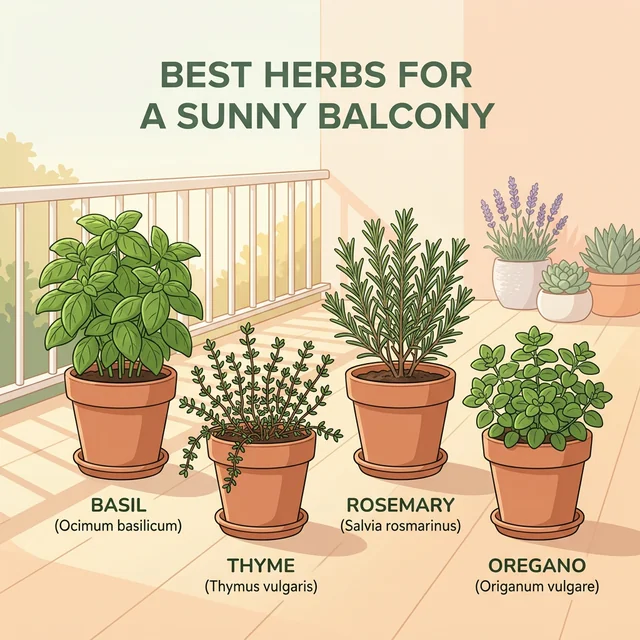
Best herbs for a sunny balcony: full-sun picks that handle heat and wind
A sunny balcony is perfect for herbs, but the intense heat and wind require the right crop choices. Start with basil, thyme, and rosemary for reliable harvests.
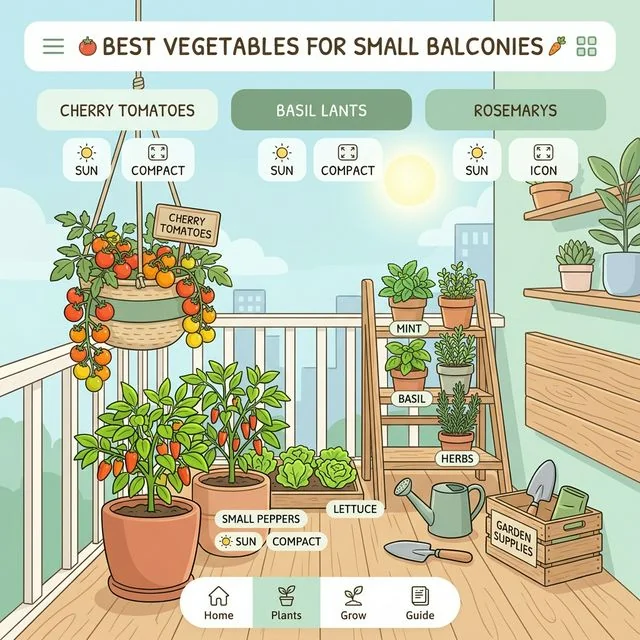
Best vegetables for small balconies: what produces well in tight spaces
Not every vegetable belongs on a balcony. These are the crops most likely to reward limited square footage without turning watering and support into a daily headache.
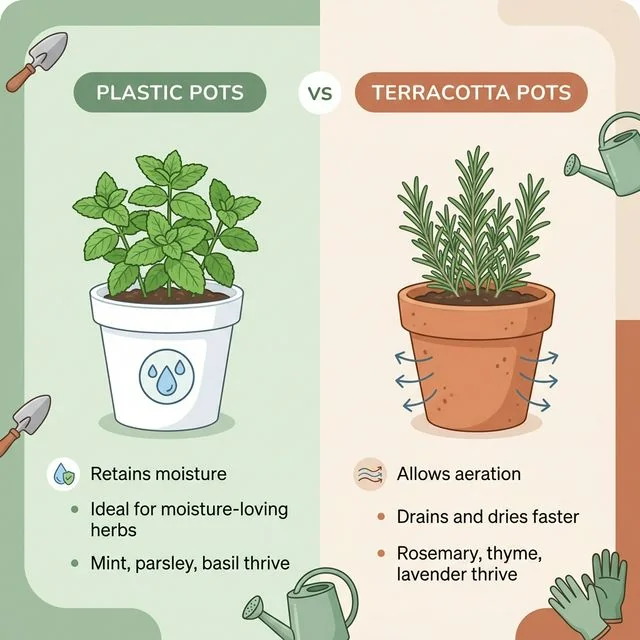
Plastic vs. terracotta pots for herbs: which makes care easier?
The material of your pot dictates how fast your soil dries out. If you put a thirsty mint plant in unglazed terracotta, you will be watering every single day. If you put rot-prone rosemary in a plastic pot, you must be extremely careful.