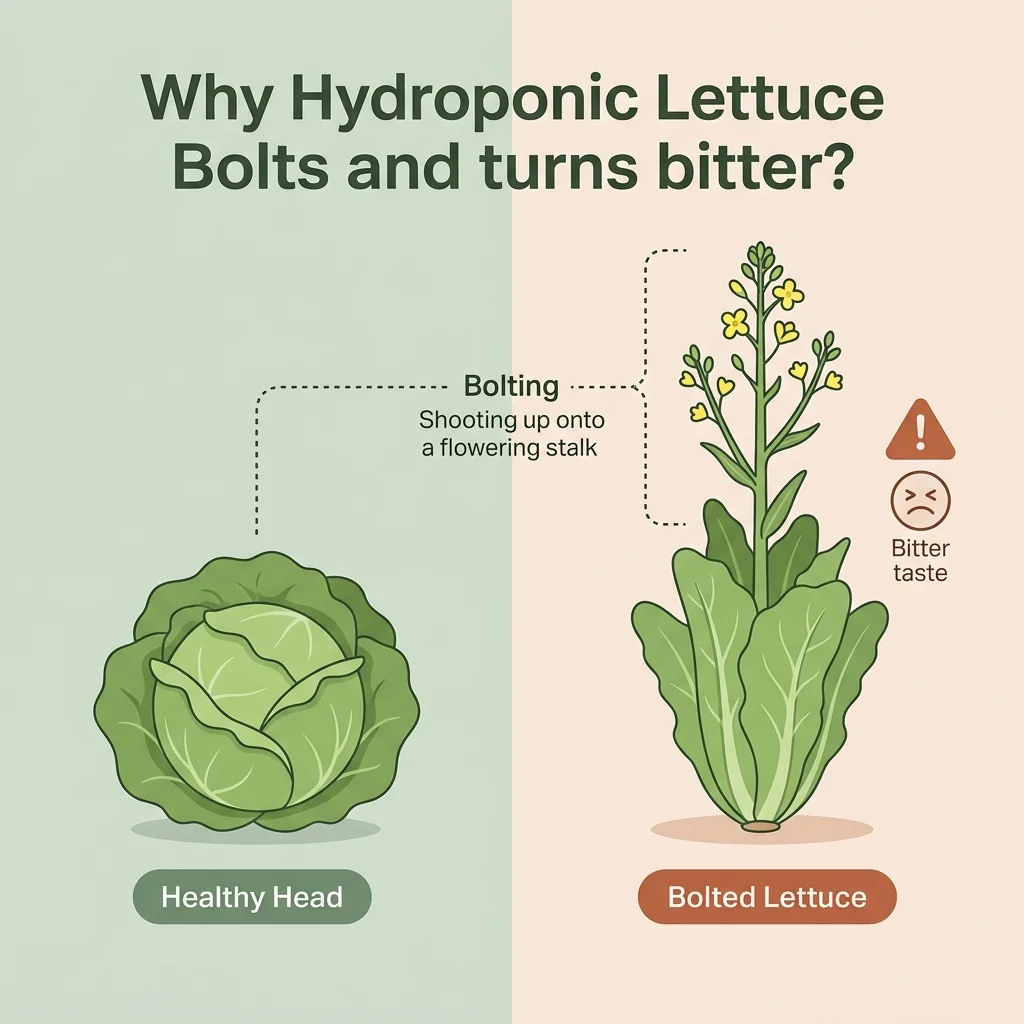
The Stages of Lettuce Bolting
| Stage | Visual Indicators | Flavor Profile | Recommended Action |
|---|---|---|---|
| Vegetative (Ideal) | Compact, low-growing rosette. Dense center core. | Sweet, crisp, and mild. | Continue growing or begin outer-leaf harvest. |
| Elongation (Early Bolting) | The center core stretches upward, creating a cone shape. | Slightly bitter or metallic aftertaste. | Harvest the entire head immediately before it degrades further. |
| Flowering (Fully Bolted) | A tall vertical stalk shoots up, developing small yellow flowers. | Extremely bitter, woody, and unpalatable. | Discard the plant. Clean the system and start a new seed batch. |
You have spent weeks carefully maintaining your indoor DWC or NFT system. Your lettuce has grown into a beautiful, lush head. But then, almost overnight, the plant starts changing shape. Instead of staying short and round, the center of the plant shoots upward like a miniature Christmas tree.
When you pluck a leaf and take a bite, you are met with an intensely bitter, unpleasant flavor.
Your lettuce has bolted.
Bolting is a natural evolutionary survival mechanism, but for a grower, it represents a total crop failure. Once lettuce bolts and turns bitter, there is no way to reverse the process. Understanding the biological triggers of bolting in a hydroponic environment—and how to manipulate them—is key to securing sweet, crispy salads year-round.
The Direct Quick Answer
Lettuce bolts when environmental stress tricks the plant into thinking it is about to die. In response, it rushes to reproduce by stretching its stem upward, producing flowers, and setting seeds.
The primary triggers in indoor hydroponics are high reservoir temperatures (above 72°F / 22°C), excessive daily light hours (18+ hours of light), and letting the crop grow past its natural maturity timeline (typically 45–50 days).
During this transition, the plant releases a milky latex sap rich in sesquiterpene lactones—chemical compounds that taste extremely bitter to deter pests from eating the developing seeds. Once bolting starts, the bitterness is permanent, and the crop must be replaced.
The Biology of Bitter Lettuce: Why It Happens
Lettuce (Lactuca sativa) is genetically programmed as a cool-weather, short-day annual crop. In the wild, it grows during the cool, damp spring, then flowers and dies as the hot, long days of summer arrive.
When you grow lettuce indoors in a hydroponic system, you are creating an artificial climate. If that climate mimics summer, the plant will immediately abort leaf production and enter its reproductive phase.
As the plant prepares to flower, its internal chemistry changes dramatically:
- Latex Production: The plant begins producing a milky white sap (from which the genus name Lactuca, meaning “milk,” is derived).
- Sesquiterpene Lactones: This latex is packed with bitter chemical compounds designed to protect the vulnerable flower head from insects.
- Stretching: The main stem elongates rapidly, spacing the leaves far apart along a tall, tough central stalk (a process called “etiolation” or “shooting”).
The 3 Main Hydroponic Bolting Triggers
While soil growers are at the mercy of the weather, hydroponic growers have full control over the factors that trigger bolting. Avoid these three common system mistakes:
1. Warm Nutrient Solution (The Root Trigger)
While the air temperature in your grow room is important, the water temperature in your reservoir is the primary signal your lettuce reads.
- The Stress Line: If your water temperature stays above 72°F (22°C) for more than a few days, the roots signal a heat-crisis to the rest of the plant. As discussed in our Hydroponic Water Temperature Guide, hot water also holds less oxygen, multiplying the stress.
- The Fix: Maintain your reservoir between 65°F and 68°F (18°C - 20°C). This cool root zone acts as a biological “pause button,” keeping the plant in vegetative mode even if your ambient room air gets slightly warm.
2. Excessive Light Exposure (The Photoperiod Trigger)
Indoor growers often assume that “more light equals faster growth.” While this is true for tomatoes, it is a disaster for lettuce.
- The Stress Line: Lettuce is a short-day plant. If you run your grow lights for 18 to 24 hours a day in an attempt to accelerate growth, the cumulative daily light integral (DLI) and the sheer duration of light signal to the plant that summer has arrived.
- The Fix: Set your grow light timer to a strict 14 to 16 hours on, and 8 to 10 hours of complete darkness. Plants need a dark rest period to process carbohydrates, and this shorter photoperiod prevents the reproductive trigger.
3. Missing the Harvest Window (The Age Trigger)
Every lettuce variety has a built-in biological clock.
- The Stress Line: As explained in How Long Hydroponic Lettuce Takes to Grow, standard butterhead and loose-leaf hydroponic varieties reach peak maturity between Days 40 and 45. If you leave a mature head in the system until Day 55 or 60 just because it looks beautiful, it will eventually bolt out of pure old age.
- The Fix: Harvest your crops on time. Do not try to make the head grow indefinitely. Squeeze the center of the head; once it feels firm and packed, harvest the entire plant, sanitize the net cup, and transplant a fresh seedling.
How to Prevent Bolting: A Checklist for Success
To ensure a continuous harvest of sweet, crisp hydroponic greens, implement this system routine:
- Choose Bolt-Resistant Varieties: When buying seeds, look for varieties labeled “Slow Bolt,” “Heat Tolerant,” or specifically bred for summer/indoor production (such as Muir, Rex Butterhead, or Salad Bowl).
- Monitor Reservoir Temp Daily: Keep water below 68°F (20°C). Use frozen water bottles to cool small DWC buckets in emergency heatwaves.
- Maintain Airflow: Point an oscillating fan directly at the lettuce canopy. This helps cool the leaves, preventing localized heat stress and protecting against Tip Burn.
- Thin Seedlings Early: Ensure proper spacing (8 inches center-to-center as detailed in our Transplanting Guide). Crowded plants shade each other, causing mechanical stress that triggers premature bolting.
- Harvest Outer Leaves Early: If you aren’t ready to harvest the whole head, use the “cut-and-come-again” method, removing the oldest outer leaves. This reduces stress on the core and extends the vegetative lifespan by a week or two.
If you manage your water temperatures, limit your photoperiod to 16 hours, and harvest when the head is firm, you will successfully outsmart the plant’s natural clock and enjoy sweet, bitter-free hydroponic lettuce every single time.
Diagnosing foliage and leaf issues?
Bolting stress often goes hand-in-hand with environmental leaf burn and discoloration. Check these guides.
Common questions
Can I cut the flowering stalk off to reverse the bitter taste?
No. Once the plant's hormonal pathway shifts to seed production, the bitter compounds (sesquiterpene lactones) are permanently distributed throughout the leaves. Cutting the stalk will not restore a sweet flavor.
Does Romaine lettuce bolt faster than Butterhead?
No, Romaine is generally more heat-tolerant than Butterhead. Loose-leaf varieties are the most heat-tolerant of all, whereas Butterhead and iceberg varieties are highly sensitive to bolting when temperatures spike.
How can I salvage slightly bitter lettuce?
If the lettuce is only mildly bitter, you can soak the harvested leaves in ice-cold water for 30 minutes before serving. The cold water washes away some surface latex and firms the cells, masking the bitterness.
Related guides
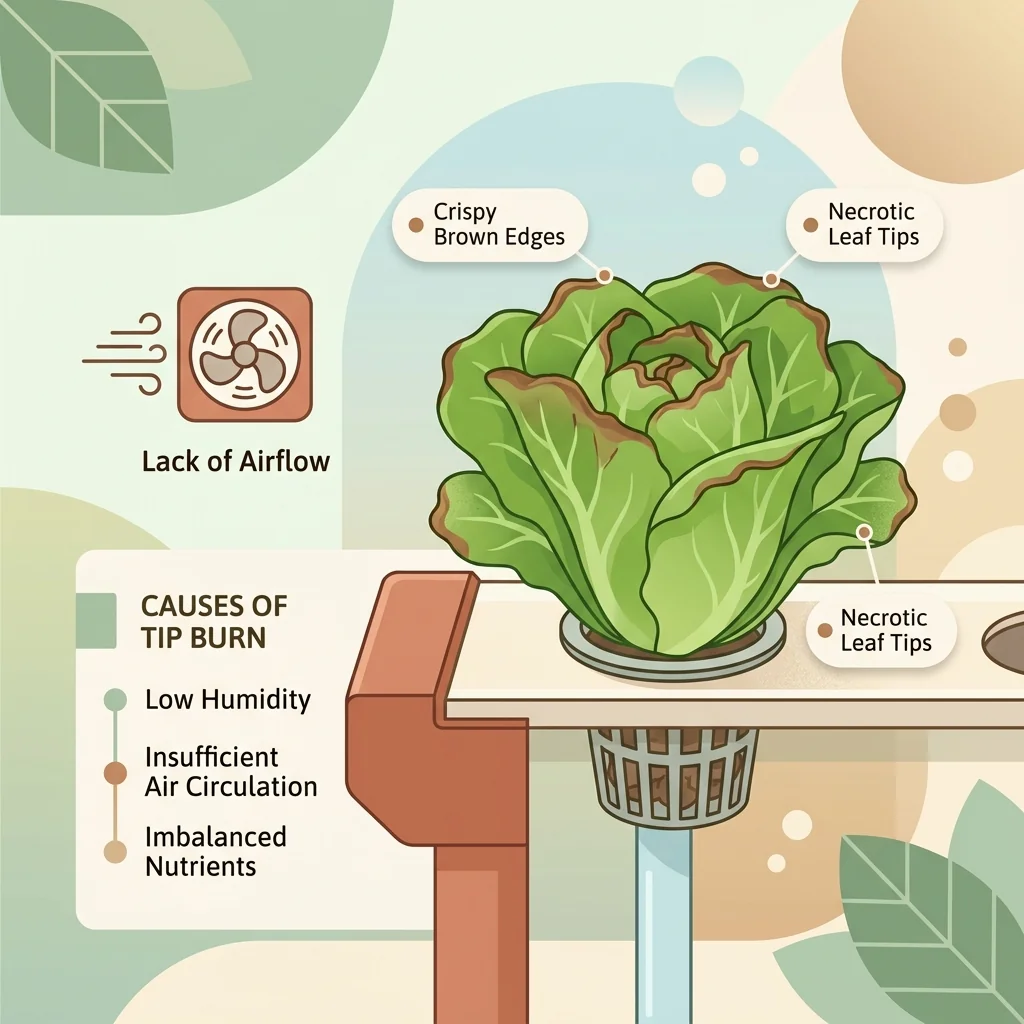
Hydroponic lettuce tip burn: causes, fixes, and what not to change
It is the most frustrating problem in indoor hydroponics: your lettuce looks perfect until the very edges of the youngest leaves turn brown and die. This is Tip Burn, and it is almost never caused by the nutrients in your reservoir.
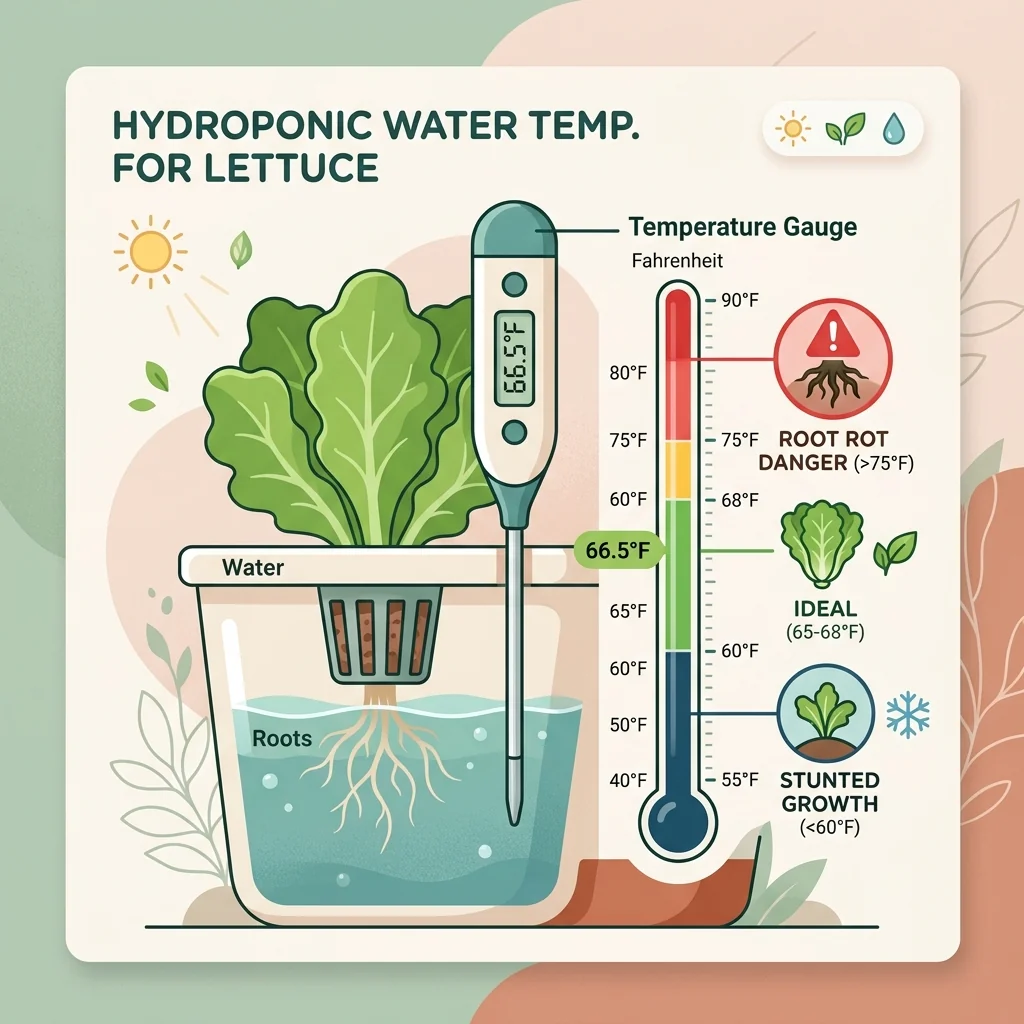
Hydroponic water temperature for lettuce: why 68°F is magic
You can have perfect pH, perfect nutrients, and a massive air pump. But if your hydroponic reservoir is sitting at 80°F, your lettuce is actively suffocating. Here is why water temperature dictates everything in hydroponics.
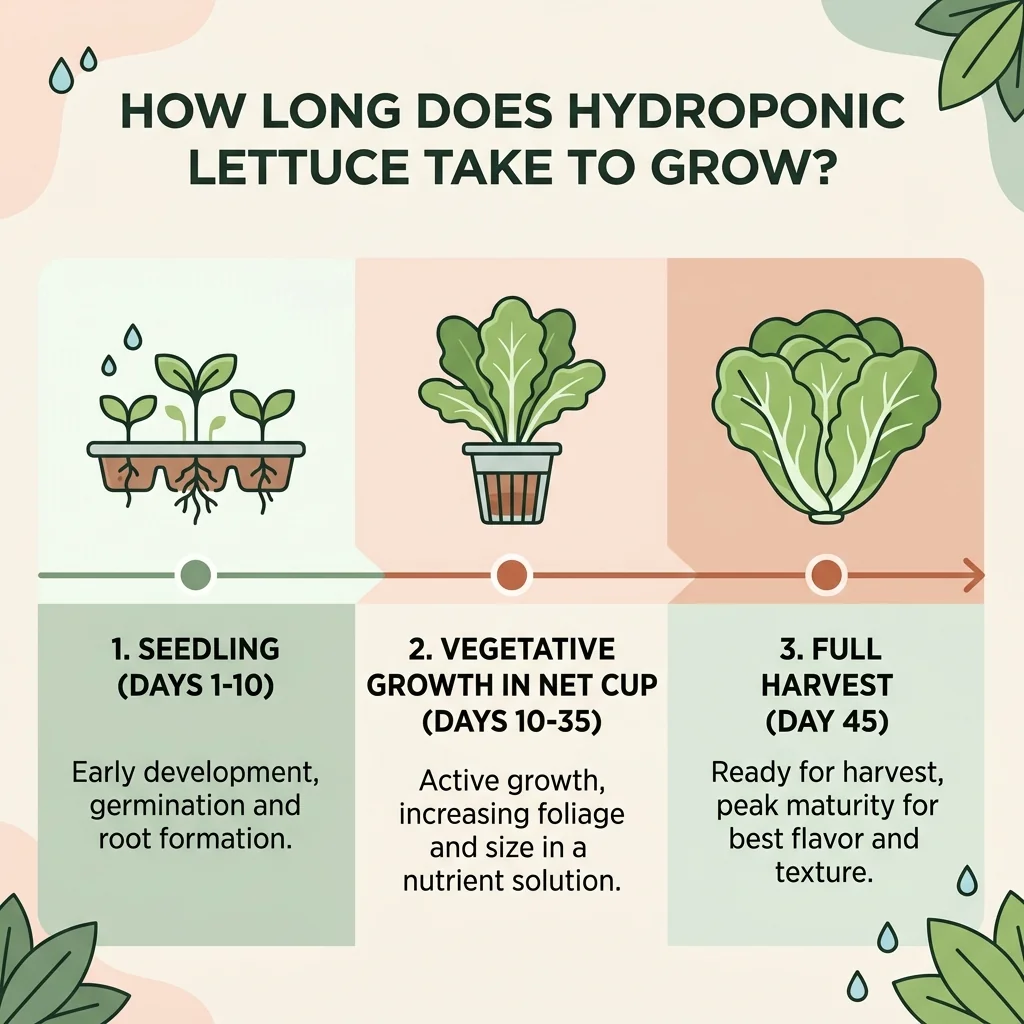
How long does hydroponic lettuce take? A 45–55 day timeline
Plan roughly 45 to 55 days from seed for a home hydroponic lettuce crop, then use roots, leaf count, head size, and variety to decide each transition.