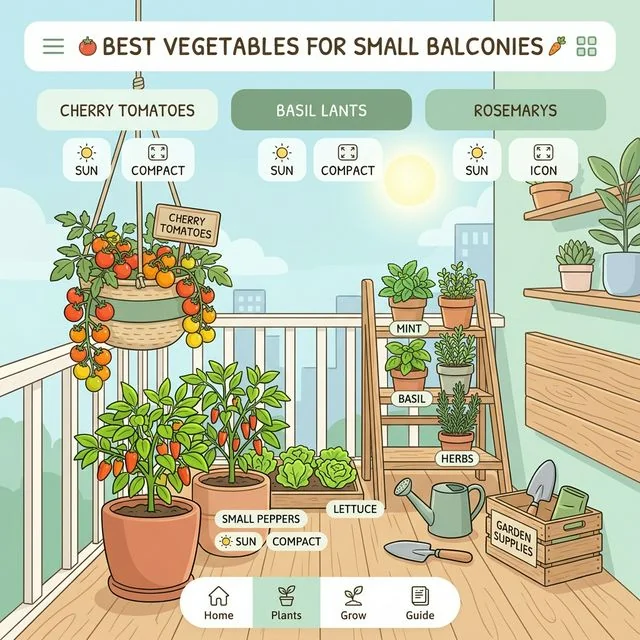
Balconies reward crops that stay proportional to the space. That means high-yielding, compact plants usually beat sprawling ones, even if the sprawling plants look more impressive in seed catalogs.
Best crop types for compact balconies
The strongest choices are usually:
- herbs
- salad greens
- arugula
- baby kale
- radishes
- bush beans
- compact peppers
- patio tomatoes
These crops either mature quickly, stay compact, or produce steadily from a manageable root system.
Match the crop to the light
If your balcony gets six or more hours of direct light, you can grow fruiting crops like peppers or compact tomatoes with a reasonable chance of success.
If the light is softer, focus on leafy crops and herbs instead. Growers often try to force tomatoes into low-light balconies and end up troubleshooting a light problem that no fertilizer can solve.
If you want to support a dimmer setup indoors for part of the year, review how many hours grow lights should run for herbs.
Keep vertical growing selective
Vertical growing can help, but only when the structure does not create airflow and shading issues. A single trellis for beans or cucumbers may be useful. A dense wall of planters can dry out unevenly and block light from the crops behind it.
Prioritize container depth for fruiting crops
Peppers and tomatoes are much more forgiving when roots have space. Shallow containers force stress cycles that show up as blossom drop, uneven moisture, and weak growth.
If you are deciding how large containers really need to be, read container depth for tomatoes, peppers, and herbs.
A good balcony planting plan
A balanced small balcony might use:
- one larger container for peppers or a compact tomato
- two medium planters for herbs
- one trough planter for salad greens
- one quick-turn container for radishes or baby greens
That mix gives you harvest variety without overwhelming the watering routine.
Audit the balcony before choosing crops
Log direct sun at plant height for at least three representative days; a railing, neighboring building, or upper balcony can shade containers even when the exposure sounds ideal. Also note the strongest wind, reflected heat, and how quickly a watered test pot dries. Recheck in another season because the sun path changes.
Confirm lease, building, and local rules before installing planters or supports. Do not hang containers outside a railing unless the system is explicitly permitted and securely rated. Wet soil is much heavier than dry mix, so verify the balcony and shelf load limits with the appropriate building professional rather than estimating them from container volume. Prevent runoff onto neighbors and keep exits clear.
Compare crops by output per constraint
For each crop, record container footprint, days in the space, watering frequency, and edible harvest weight. Baby greens may turn over quickly but need repeated sowing. A compact pepper occupies the space longer but can produce over an extended period when light and warmth are adequate. “High yield” therefore depends on whether your limiting resource is area, time, water, or attention.
Start with one fast crop and one longer crop. Expand only after both survive the balcony’s hottest and windiest ordinary conditions. Select varieties described by the seed supplier as compact, patio, bush, or determinate, then confirm the actual mature size; marketing words alone do not guarantee a small plant.
Manage wind, heat, and water together
Wind can tip plants and increase water loss, while dark containers against a hot wall can overheat roots. Use stable pots, approved supports, mulch where appropriate, and afternoon shade during damaging heat. Check moisture in the root zone rather than following a fixed calendar. Water thoroughly enough to wet the mix, allow drainage, and empty accessible saucers so roots do not remain submerged.
Do not automatically fertilize a heat- or wind-stressed plant. Stabilize moisture and exposure first, then follow the product label if feeding is needed. Keep a simple log so a failed crop produces a useful decision for the next planting.
Sources
- University of Georgia Extension: Container Gardening
- University of Georgia Extension: Container Gardening—Thinking Outside the Box
- University of Minnesota Extension: Fertilizing and Watering Container Plants
Related Guides
If this topic is relevant to you, also read:
Use these related guides to move into setup decisions, troubleshooting, or the next logical beginner step.
Common questions
Can tomatoes grow well on a small balcony?
Yes, but they need strong light, enough root volume, and regular feeding. Compact determinate or patio varieties are the safest starting point.
What balcony crops give the fastest return?
Salad greens, baby leaf mixes, radishes, herbs, and compact Asian greens usually provide the quickest harvests.