What to winter sow, and when, according to extension sources
| Group | Examples named by extension | When |
|---|---|---|
| Hardy annuals and perennials | Kale, spinach, broccoli, Brussels sprouts, petunias, coneflower, columbine, sweet pea, lavender, thyme, oregano, parsley | December to March (Penn State); January or February (Illinois) |
| Tender annuals and some vegetables | Cosmos, zinnia, marigold, beets, basil, cilantro, lettuce (Washington State) | March through April (Washington State) |
| Frost-sensitive vegetables | Tomatoes, peppers, eggplant, melons, squash, pumpkins (Washington State) | April (Washington State) |
Winter sowing means sowing seeds into a drained, translucent jug of seed-starting mix in winter and leaving it outdoors until the seedlings come up in spring. Penn State Extension explains why it works: cold, moist conditions break dormancy, and the seeds germinate when temperatures rise. You need no grow light and no indoor shelf, which is a real advantage if the only indoor space you have is a windowsill.
It is not a method for everything. Hardy crops and perennials do well; tender ones wait. If you want sowing dates counted back from your last frost for warm-season crops started indoors, the seed starting calculator does that. Protecting plants that are already growing is a different job, covered in extending the season on a balcony.
Which seeds to winter sow
Penn State Extension suggests reading the seed catalogue or packet for clues. Look for phrases such as “reseeds”, “self-sows”, “hardy seeds”, “seedlings can withstand frost”, “sow outdoors in late autumn or early winter”, “needs pre-chilling” or “requires stratification”.
For vegetables, Illinois Extension names kale, broccoli, spinach and Brussels sprouts as crops that withstand early-winter cold, along with petunias among flowers. Illinois also counts cosmos as frost-tolerant, while Washington State University Extension Master Gardeners keep cosmos and zinnias for March and April, so treat cosmos as a judgment call for your climate. Washington State University Extension Master Gardeners list coneflower, columbine, sweet pea, lupine, native grasses, lavender, hollyhock, spinach, kale, thyme, oregano and parsley as hardy annuals and perennials to start in winter.
Tender crops are a different story. Illinois Extension puts frost-sensitive zinnias, tomatoes and squash in March or April. The Washington State guide goes further: wait until April for tomatoes, peppers, eggplant, melons, squash and pumpkins. Penn State adds that tender plants do not need a cold period in order to germinate.
When to start
Penn State Extension gives December to March for perennials and hardy annuals, depending on the weather where you live. Illinois Extension is narrower and says to wait until January or February. Its reason: if a warm spell triggers germination, the seedlings may not be hardy enough to survive when temperatures fall again.
The Washington State guide starts around the winter solstice for its own zones, then moves tender annuals such as cosmos, zinnia, marigold, alyssum, beets, basil, cilantro and lettuce to March and April. Your own last frost date should anchor the later dates; first and last frost dates for a balcony shows how to find it.
Build the jug
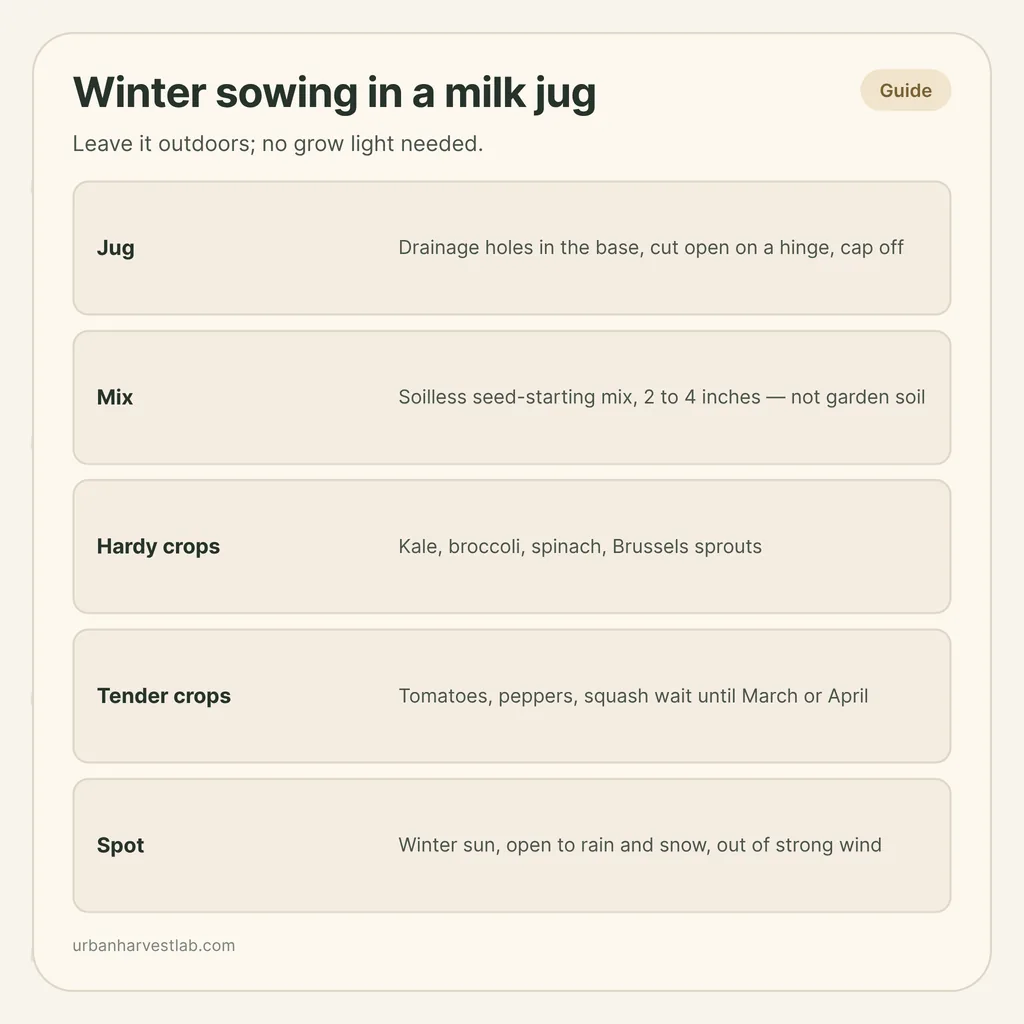
- Wash it. Penn State says to wash a milk jug in warm, soapy water and rinse. Washington State prefers clean, translucent jugs; Illinois adds that milk jugs that let light through work well.
- Drill drainage holes in the bottom. Penn State is blunt: without drainage holes, your seeds will drown. Illinois suggests three holes on each side of the jug to improve drainage as well as holes in the base.
- Cut it open on a hinge. Cut around the jug below the handle, leaving a strip intact so the top hinges open. Penn State leaves about 1.5 inches; Illinois leaves about half an inch. Washington State marks the cut 4 inches from the bottom.
- Discard the cap. Penn State says the opening lets rain and melting snow keep the soil moist.
- Fill with soilless seed-starting mix. Penn State specifies 2 to 4 inches and warns against garden soil, which may carry pathogens and weed seeds. Illinois gives three to four inches and a damp-sponge moisture level. Washington State recommends potting soil without moisture-control additives, after green algae grew on the surface in a wet winter.
- Sow. Penn State says to follow the seed packet, sowing on the surface and covering with a layer of mix patted down. Illinois leaves small seeds on top.
- Tape the seam. Penn State seals the cut edges with light-colored duct tape and leaves the top open.
- Label twice. Penn State recommends a laundry marker over a permanent one and a label inside the container. Washington State warns that household Sharpie-type markers fade after months outside.
More ideas for containers that are not jugs are in DIY seed-starting containers. Washington State says other clear containers work if you can cut vent holes in the lid and widen them as the plants grow.
Where to put it on a balcony
Penn State says to site the container where it gets winter sun, and not on a covered porch, because the seeds need rain and snow moisture. For a balcony, that rules out a spot under a deck above you or a deep overhang. Washington State prefers a south-east location with good drainage so the jugs are not sitting in water.
Wind is the other issue. Illinois says to keep jugs somewhere safe from strong winds, and Penn State suggests a milk crate when conditions are windy. On an exposed balcony, tuck crates against the railing or wall and keep light jugs from tipping.
Care through winter and spring
Washington State suggests peeking in at least once a week: damp soil or condensation on the inside of the jug means moisture is adequate, and its author watered only about once a month early on. If it is dry, squirt a little water on the soil.
When seedlings emerge and the weather warms, Illinois Extension says to open the container on sunny days and close it at dusk to protect the seedlings from cold nights. Washington State gives the same routine of open by day and closed at night. Penn State notes that containerized seedlings do not need to be hardened off before planting out.
Be patient. Washington State points out that columbine, milkweed and some other seeds can take months, so do not discard a jug just because nothing has come up by May.
Transplant when the seedlings have true leaves, after the cotyledons, and the weather has warmed. Illinois suggests cutting flaps in the side of the jug to slide the clump out, then dividing it and planting as you would a store-bought plant.
Sources
- Starting seeds in winter, Penn State Extension
- Winter seed sowing, University of Illinois Extension
- January and February are prime time for winter sowing, University of Illinois Extension
- Jump start your garden with winter sowing, Washington State University Extension, Skagit County Master Gardeners
Seed starting and seasonal timing
Dates for indoor starts, protection for grown plants, and other containers for seedlings.
Common questions
What can you winter sow in milk jugs?
Penn State Extension says winter sowing suits some annuals, perennials and wildflowers, and points to seed-catalogue notes such as hardy seeds, self-sows, needs pre-chilling or requires stratification. Illinois Extension names kale, broccoli, spinach and Brussels sprouts among the vegetables that withstand early-winter cold.
When should you start winter sowing?
Penn State Extension gives December to March for perennials and hardy annuals, depending on local weather. Illinois Extension advises waiting until January or February, because seeds that germinate in a warm spell may not be hardy enough to survive when temperatures fall.
Do you leave the lid on a milk jug when winter sowing?
No. Penn State Extension says to discard the top, because the opening lets rain and melting snow keep the soil moist. Tape the cut seam shut but leave the neck open.
Can you winter sow tomatoes and peppers?
Not in midwinter. Washington State University Extension Master Gardeners say to wait until April to start tomatoes, peppers, eggplant, melons, squash and pumpkins with this method, and Illinois Extension puts frost-sensitive tomatoes and squash in March or April.
Related guides
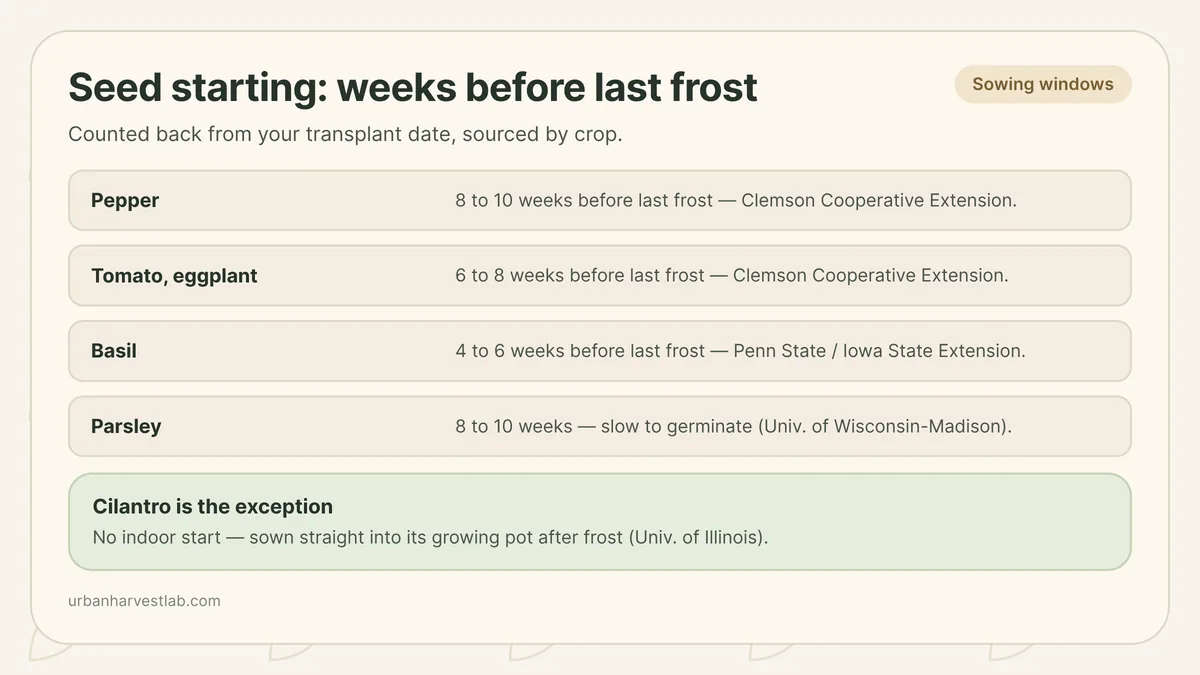
Seed starting calculator: sowing dates from your last frost date
A last frost date is only useful once you count backward from it. This works out that count crop by crop, instead of applying one week figure to everything in the seed drawer.

Extending the growing season on a balcony: row cover, cloche or cold frame
Covers add a few degrees on cold nights and far more heat on sunny days. Here is what each device buys you on a balcony, and how to pick one you can manage.
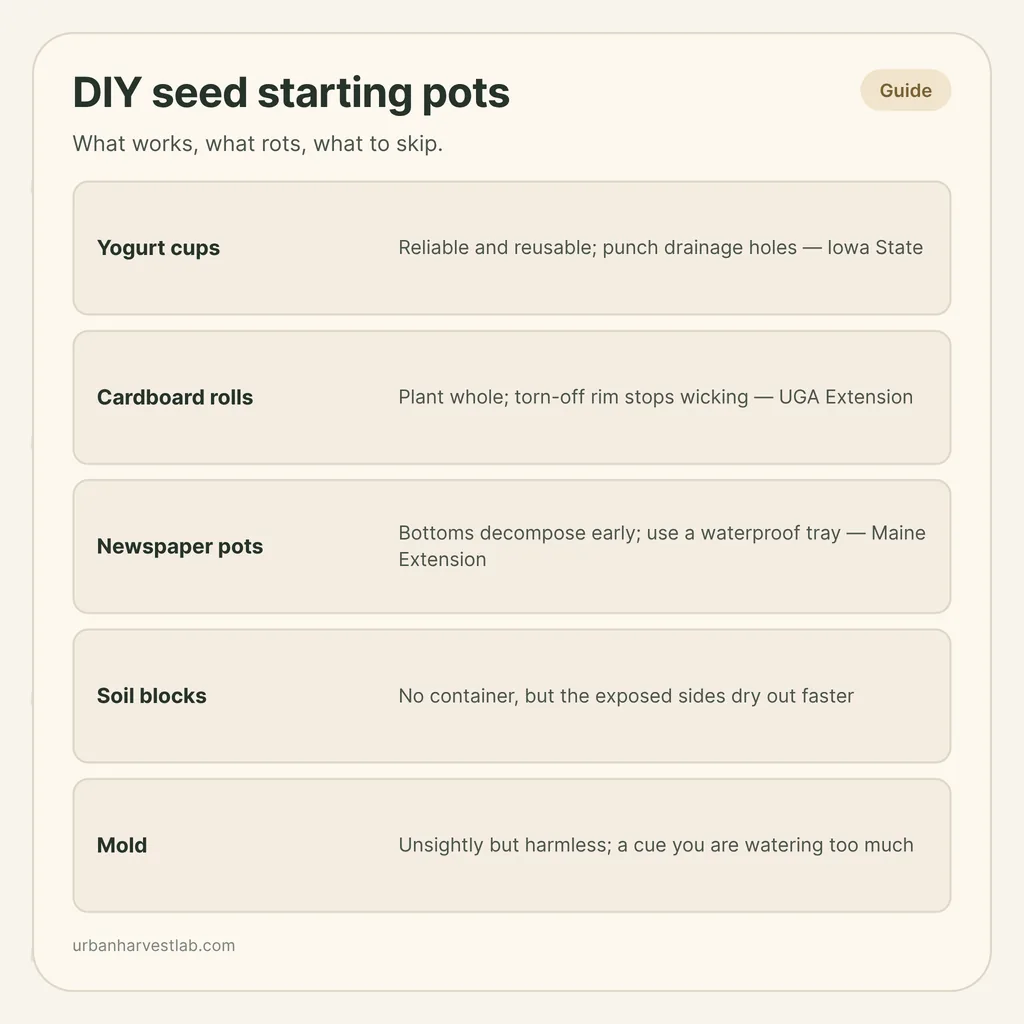
DIY seed starting pots: what works, what rots, what to skip
Almost any clean container with drainage can start seeds. The difference between the free options is how long they hold together, how they dry out, and whether they can go into the ground.