
Season-extension devices for an open balcony
| Device | Sourced gain | Main risk | Suits |
|---|---|---|---|
| Frost cloth (row cover) | 2 to 8°F by fabric weight (University of Maryland Extension) | Wind rubbing and tearing; insect-pollinated crops need it off at flowering | Leafy greens, herbs, a few pots |
| Low tunnel on hoops | 2 to 4°F (Utah State Extension) | Hoops need anchoring; sides need venting | A long planter or a row of pots |
| Cloche (bottle, jar or water-filled wall) | Inside runs 20 to 40°F above the air by day (Utah State Extension) | Overheats within hours of sun; covers one plant | One tender transplant in spring |
| Cold frame or mini greenhouse | Two to four weeks of extra season in spring and fall (Iowa State Extension) | Overheats fast; blows away if not secured | A set of pots of cool-season crops |
For a few degrees of cold protection on an open balcony, start with frost cloth: it is cheap, light, and survives a missed morning. Choose a cold frame or mini greenhouse only if you can open it each sunny day, because the heat that protects plants overnight can cook them by lunchtime.
Every device here works the same way. It traps sun-warmed air and blocks wind, then holds some of that heat after dark. How much it holds and how fast it overheats depend on how much air it encloses and how well it vents. Learn your dates first with first and last frost dates for a balcony, because a cover shifts your season by weeks, not months.
Start with frost cloth
Frost cloth is the same product as floating row cover: a pale, non-woven fabric that lets light, air and water through. The University of Maryland Extension grades it by weight. Lightweight fabric gives 2°F of frost protection, medium weight 4 to 6°F, and heavyweight up to 8°F. The trade is light. Lightweight lets through 90 to 95 percent, medium 70 to 85 percent, and heavyweight only 30 to 50 percent.
Utah State Extension reports that most row covers protect down to about 24 to 28°F. That is enough for the first light frosts of autumn and the late ones of spring. It is not enough for a hard freeze.
On a balcony, three details matter:
- Anchor it. Maryland suggests bricks, boards or sandbags. Wind is the main enemy, and windproofing a balcony garden covers anchoring in general.
- Hold it off the leaves. Maryland recommends a support for medium and heavy cloth, and warns that on windy days a draped cover can abrade stems and foliage. A few bent wires or canes inside the pot do the job.
- Do not leave flowering crops covered. Maryland says crops that do not need insect pollination, such as spring leafy greens and green beans, can stay covered until harvest. Tomatoes and peppers need it off on hot days.
Water passes through the fabric, but Maryland advises pulling it back when hand-watering, which also lets you check for trapped pests. Cloth is also the easiest option to remove on a mild afternoon. Hoops or canes only hold the fabric off the leaves; the protection still comes from the fabric weight, which is why a plastic low tunnel on hoops in the table gains less than cloth.
Cloches protect one plant, and overheat fastest
A cloche is a cover for a single plant: a cut-off bottle, a jar, a paper cone, or a water-filled plastic wall. Utah State Extension notes that cloches are labor-intensive to install and remove because each covers one plant. NC State Extension prefers a design you can close completely at night and open or remove by day, and says cloches should be anchored or heavy enough not to blow away.
The overheating is the real problem. Utah State Extension reports that daytime temperatures inside can be 20 to 40°F hotter than the air outside, especially on a sunny day. It advises removing them once daytime temperatures are consistently above 60°F. A cloche suits one tender transplant in a cold spring. For a whole container of greens, cloth or a frame is easier.
Cold frames and mini greenhouses: biggest gain, most attention
A cold frame is a bottomless box with a clear lid. Iowa State Extension says it protects plants from wind, rain, snow and cold, and extends the season by two to four weeks in both fall and spring. It names lettuce, spinach and radishes as ideal. Utah State Extension’s table puts cool-season crops at a 40°F air minimum with an ideal range of 50 to 80°F, so these are the plants a frame suits. Warm-season crops want at least 50°F.
On a balcony, a bottomless box does not work. Pots stand on a hard floor. What you can build or buy instead is a lidded crate or a small plastic-covered shelf. Treat it like a cold frame.
- Vent early. Iowa State says to raise the lid above 85°F and to close it before sunset. NC State says ventilation matters most on clear, sunny days in late winter, early spring and early fall, and recommends a thermometer to track the daily highs and lows.
- Check on cloudy days. Iowa State warns temperatures can still climb enough to kill plants, so a quick look matters even when the sky is grey.
- Secure it. Utah State Extension says lightweight portable frames are prone to blowing away and must be fixed in place. Before adding anything tall, read the balcony weight limit.
- Water less. NC State notes that a nearly airtight frame slows evaporation, so it is easy to overwater. Water early in the day.
Utah State Extension adds that even small structures build excessive heat on sunny days, so a mini greenhouse is not safer for being small. It heats faster.
Which one to buy
- Away all day, want something forgiving: frost cloth over hoops or canes.
- One precious transplant to protect in spring: a cloche you can lift off.
- Lettuce, spinach or radishes through autumn: a vented frame or lidded crate.
- An enclosed, glazed balcony: none of these. See growing on a glazed balcony.
Combining devices is possible, but each layer is more to manage. Start with cloth and add a rigid cover only when you find you want the extra weeks.
Use them for the right crops and the right nights
Covers extend cool-season crops best. Salad greens grown in containers in fall and kale in pots are the natural fit, because they tolerate cold and gain from a few extra degrees. NC State Extension says covers come off bee-pollinated crops around first flowering, while for tomatoes and peppers removal is set by temperature: daytime opening is needed if it is expected to exceed 90°F under the cover for several hours.
A cover also has limits. If a forecast falls far below the 24 to 28°F range for row cover, moving pots indoors beats any fabric, and protecting container plants during a cold snap lays out the steps. For a rough night, NC State suggests throwing burlap sacks filled with leaves, old blankets or tarps over a frame at night. Remove them in the morning.
Place the setup against a wall if you can. Utah State Extension notes that areas near buildings are often a few degrees warmer, as long as they do not trap cold air.
Sources
Dates, crops and cold nights
Find your frost dates, pick fall crops, and handle a single freezing night.
Common questions
What is the easiest way to extend the growing season on a balcony?
Frost cloth, also sold as floating row cover. The University of Maryland Extension lists 2°F of frost protection for lightweight fabric, 4 to 6°F for medium weight and up to 8°F for heavyweight. It needs no daily opening for leafy greens, and rain and watering-can water pass through it.
How much warmer is it under a cloche or cold frame?
Utah State Extension says air under row cover runs 2 to 10°F above the surroundings, while the daytime inside of a cloche can be 20 to 40°F hotter than the air outside. Iowa State Extension credits a cold frame with two to four weeks of extra season in both spring and fall. The same heat that protects plants overnight can damage them by midday.
When should I open a balcony cold frame or mini greenhouse?
Iowa State Extension says to raise the cover when the air inside passes 85°F and close it before sunset. Utah State Extension warns that even small structures build excessive heat on sunny days, and recommends an inexpensive thermometer inside. Check on cloudy days too, because temperatures can still climb.
Will a cover save my plants from a hard freeze?
Not reliably. Utah State Extension says most row covers give freeze protection down to roughly 24 to 28°F. For a forecast well below that, move the pots indoors or follow the emergency steps for a cold snap.
Related guides
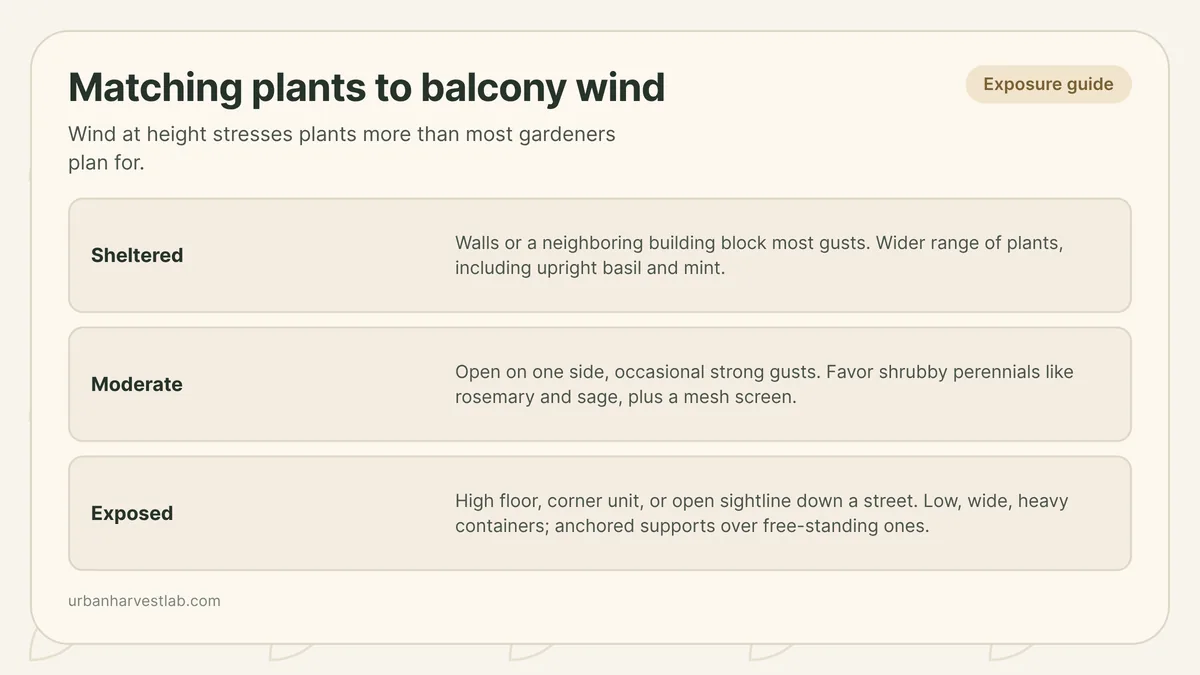
Windproof balcony garden: anchoring, plant choice, and windbreaks
A balcony catches wind differently than a yard does, and the fix is not one trick but three working together: heavier containers, plants suited to an upright or shrubby habit, and a windbreak that softens gusts instead of stopping them dead.

How to grow kale in pots: cold, caterpillars and picking by the leaf
Kale suits containers: it is shallow-rooted enough for a modest pot, shrugs off frost, and gives leaf after leaf if you pick from the bottom.
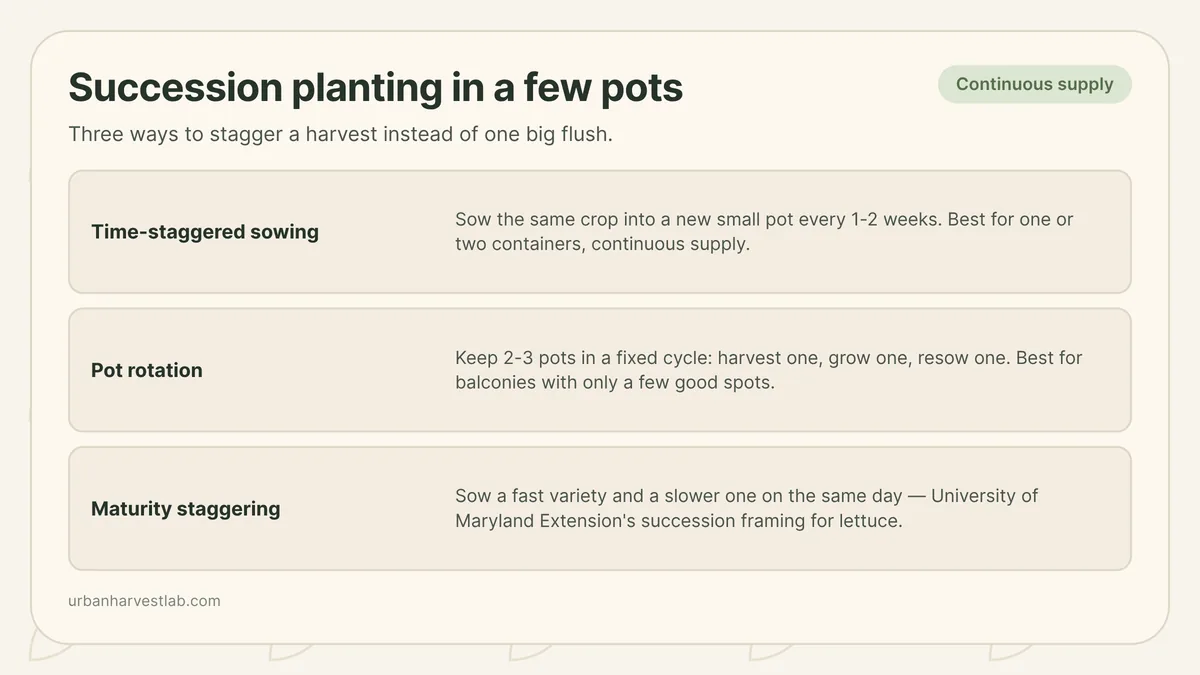
Succession planting in containers: how to stagger a harvest from a few pots
Succession planting in containers is a sowing rhythm: a few pots restarted on a schedule keep producing, where one large planting ripens together and then quits together.