Best small-space herb planters by spot
| Planter type | Best spot | Notes |
|---|---|---|
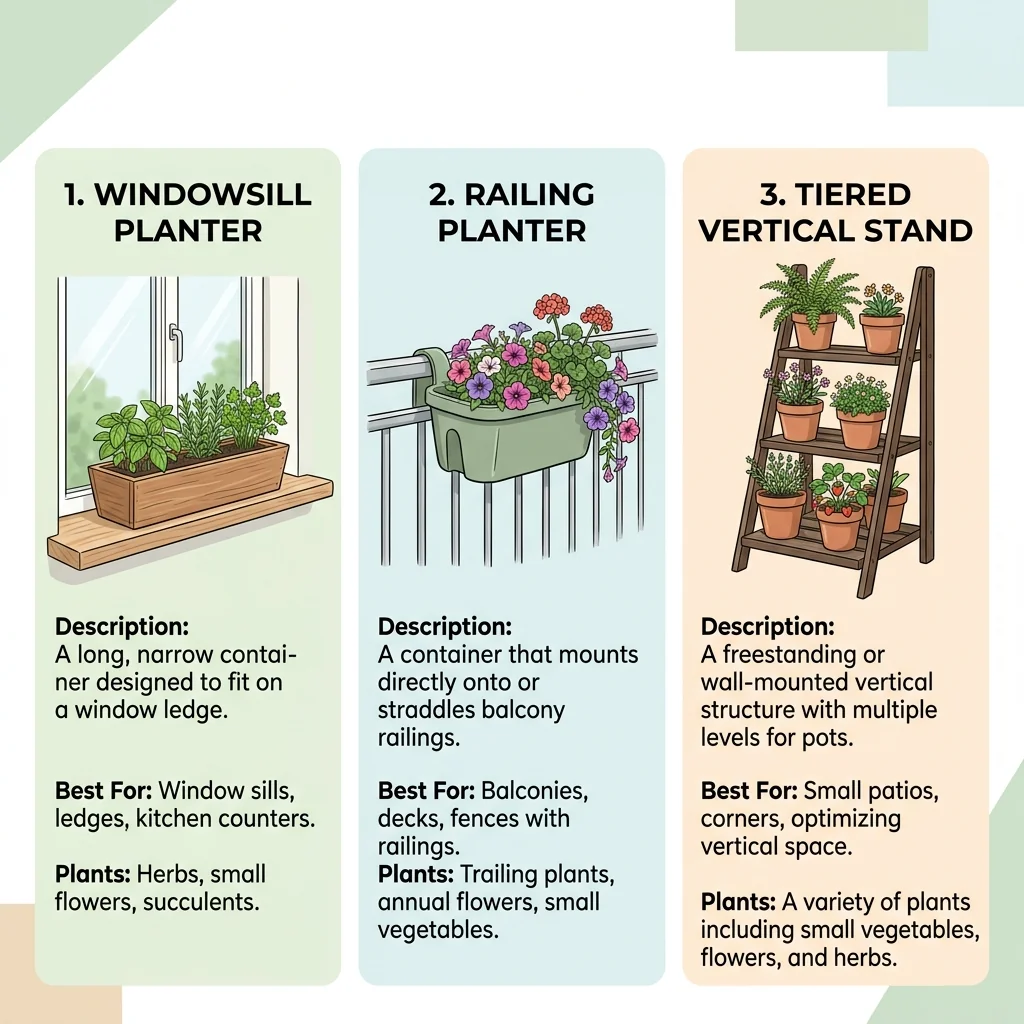
| Windowsill trough / window box | Sunny windowsill | Holds 2-4 herbs in a row |
| Railing planter | Balcony or deck rail | Uses rail space; check the fit |
| Vertical tiered stand | Floor by a window, balcony corner | Most herbs in the least floor space |
| Wall-mounted / hanging | Walls, fences | Frees up all surfaces |
Editorial note: Retailer links are untracked shopping references; Urban Harvest Lab does not currently receive a commission from them. Recommendations are based on stated features and suitability criteria, not on undocumented hands-on testing.
In a small space, the best herb planter is the one that uses room you are not already using, a sill, a rail, or vertical space. As a quick answer: windowsill troughs suit sills, railing planters use balcony rails, and tiered or wall planters use vertical space, all of them needing drainage and enough depth. Match the planter to your spot first, then to the herbs.
Match the planter to the spot
- Windowsill trough / window box — the classic small-space planter for a sunny sill; holds two to four herbs in a row.
- Railing planter — hooks over a balcony or deck rail, turning unused rail space into a herb garden. Check it fits your rail width.
- Vertical tiered stand — fits the most herbs into the least floor space, ideal by a bright window or in a balcony corner.
- Wall-mounted or hanging — frees up every surface by going up the wall.
Browse small-space herb planters on Amazon
Browse railing planters on Amazon
What to check before buying
- A draining inner container. Roots need an exit for surplus water. Drill a suitable planter or use a removable nursery pot inside a decorative cover-pot, then empty collected water.
- Usable soil volume. A very long but shallow trough may still dry rapidly. Match depth and volume to the mature herb using the herb pot size chart.
- Material. Plastic holds moisture and is light for rails; terracotta breathes and suits Mediterranean herbs. See best containers for herbs.
- Weight when wet. On a rail or shelf, planter, saturated mix, plants, and retained reservoir water all count. Use the building or railing manufacturer’s load guidance rather than guessing.
Measure the location before comparing products
Write down the maximum length, width, and height, then reserve room to lift the plant out and water it. For a windowsill, confirm that the pot cannot interfere with opening the window or sit over a heater. For a tiered stand, check that the upper tier does not shade the lower one and that every pot can drain without soaking the floor.
A railing planter needs more than the correct hook width. Check whether the rail is round or square, whether the bracket can resist outward rotation, and whether local building rules allow objects on the outside of a balcony. When in doubt, mount it inward and add a secondary restraint rated for the load. A light empty product photo says nothing about its safe installed weight.
When the railing is all the space you have
If every plant you grow hangs from the rail, the rail and its brackets carry the whole wet weight of the garden, with no floor pot to take part of the load. Choose brackets that grip at more than one point, or a bracket plus a strap or chain as a backup, the same rule that applies to exterior window box herbs. Work out each planter’s saturated weight with the balcony weight calculator, then compare it with the load the bracket’s maker states. If the numbers are close, several smaller planters spread along the rail ask less of each bracket than one long box.
Score a planter by the job it must do
Use this shortlist before price or appearance:
| Test | Pass condition | Warning sign |
|---|---|---|
| Drainage | Removable liner or accessible holes | Sealed base with no way to empty it |
| Root room | Volume matches the mature crop | Several vigorous herbs sharing a thin trough |
| Stability | Broad base or rated attachment | Tall, narrow planter in wind |
| Maintenance | You can reach, lift, and clean it | Reservoir or saucer cannot be inspected |
| Light access | Every canopy receives the planned light | Tiers shade one another |
Do not assume “vertical” automatically means efficient. Pocket planters hold little mix per plant and can develop a wet lower zone and a dry upper zone. They suit compact crops only when you can inspect each pocket. A simple shelf with individual pots often provides better root volume and lets you move one struggling herb without disturbing the rest.
Plan drainage without damaging the space
Outdoors, prevent drainage from falling onto neighbours or staining a facade. Indoors, use a waterproof tray but do not leave the liner standing in runoff. Water one planted container in its final location before filling the entire system; this reveals leaks, inaccessible saucers, and unstable brackets cheaply.
Recheck fasteners, rails, and wall anchors after the first thorough watering and after strong wind. The correct fixing depends on the wall or railing substrate, so a generic plastic anchor cannot be recommended safely for every installation.
Plan the herbs too
A planter is only as good as the herbs you match to it. Choose compact, suitable herbs from best herbs for small spaces, keep vigorous mint in its own pot, and plan watering with how often to water potted herbs.
Sources and further reading
Before you buy a planter, read these
These guides cover pot sizing by herb, container materials, and watering once planted.
Common questions
What is the best herb planter for a small space?
It depends on the spot. Windowsill troughs suit sills, railing planters hook onto balcony rails, and vertical tiered or wall planters use upward space. All work well if they have drainage and enough depth for the herbs.
What size planter do herbs need?
Container volume depends on the mature herb and how many plants share it. Annual herbs may start in one- or two-gallon containers, while large perennial herbs often need more room. Use depth and volume together rather than buying by length alone.
Do herb planters need drainage holes?
Yes. Without drainage the soil stays waterlogged and roots rot. If a decorative planter has no holes, drill some or use it as a cover-pot for a draining liner.
How many herbs fit in a trough planter?
As a rough guide, space herbs about 6 to 8 inches apart, so a standard window box holds two to four herbs depending on their size and vigour. Keep vigorous mint in its own pot.
Related guides
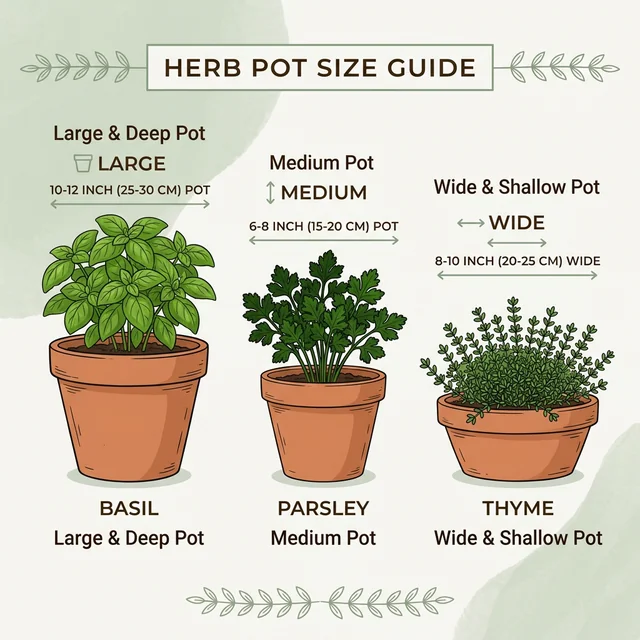
Herb pot size chart: basil, mint, parsley, thyme & chives
A practical herb pot size guide for the most common kitchen herbs, with simple size ranges that make container growing easier to read and maintain.
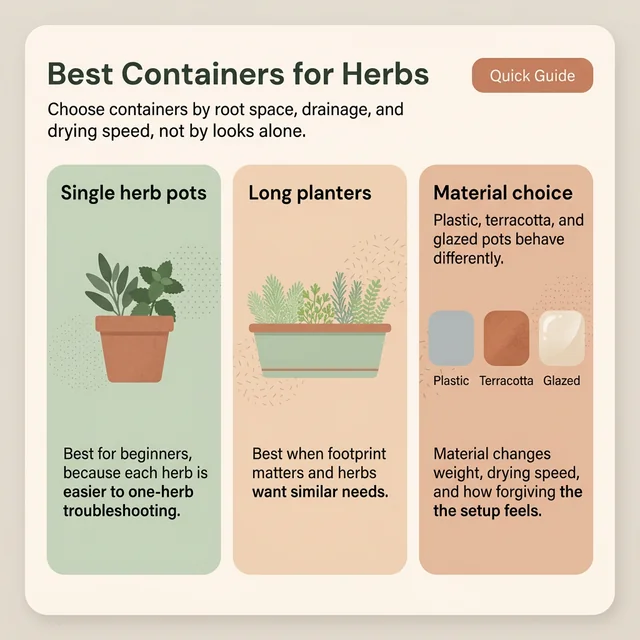
Best containers for herbs: drainage, pot size, and materials that work
A practical guide to herb containers that explains which pots work best, why drainage matters, and how material changes the way containers dry.
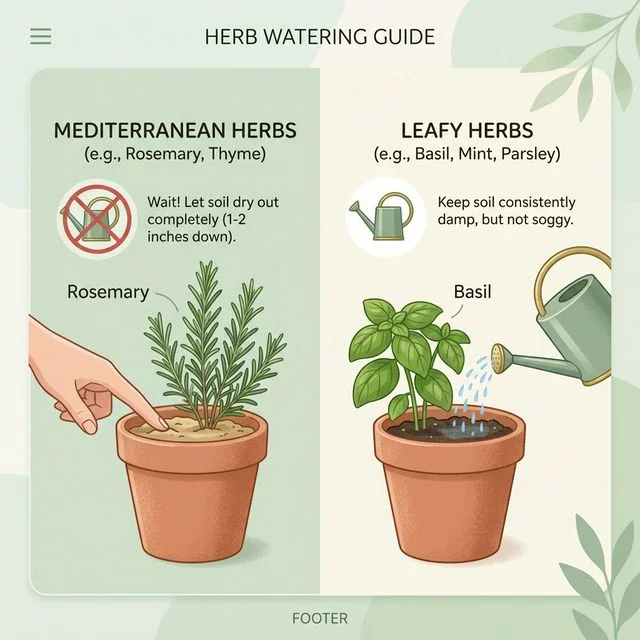
How often to water potted herbs: a by-herb chart
Most potted herbs should be checked often but watered only when the root zone is actually drying. Judge the pot instead of following a rigid calendar.