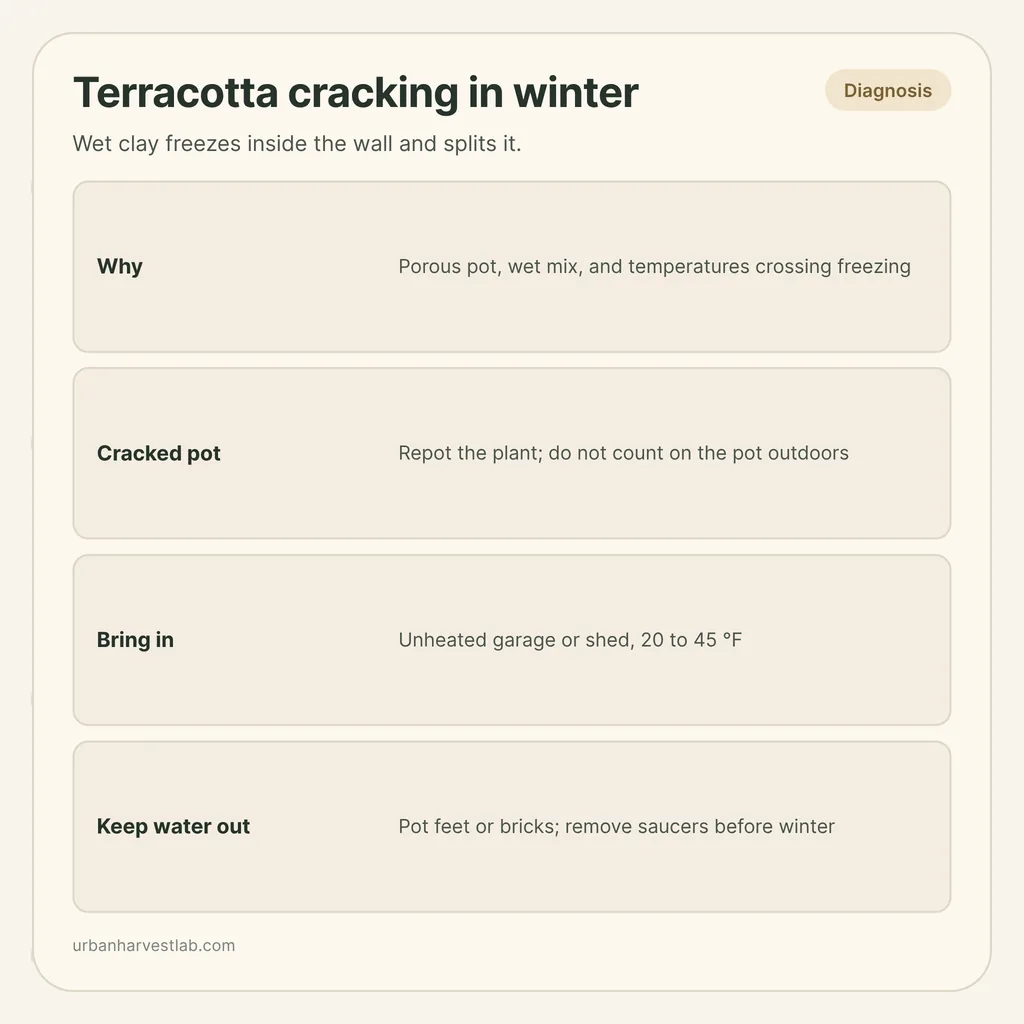
Troubleshoot the system before you change the inputs.
Symptoms
- A vertical split or a chunk missing from the wall after a cold spell, often found on the thaw
- Flaking or crumbling surface on the outside of an unglazed pot that has stayed outdoors for the winter
- A pot that was intact when filled in autumn and cracked while holding wet potting mix
Possible causes
- Water absorbed into the clay froze inside the wall, which NC State Extension gives as the reason unglazed ceramic pots should not stay outside over winter
- Moist potting mix froze and thawed repeatedly through the winter, which Colorado State Extension says cracks many containers, especially porous ones
- The pot sat in a saucer or on wet ground, so it stood in water that could freeze, which the RHS advises preventing with pot feet or bricks and by removing saucers
- The pot was frost-resistant rather than frost-proof, a distinction the RHS draws for terracotta
Quick fixes
- Repot the plant into a sound container, ideally plastic, fibreglass or wood, which the RHS lists as winter-safe choices
- Move intact terracotta somewhere that stays above freezing, or at least under cover, before the next hard freeze
- Lift remaining outdoor pots onto pot feet or bricks and remove saucers so water drains away
- Wrap pots that have to stay outside in bubble wrap or straw and group them together in a sheltered spot
Terracotta pots crack in winter because the clay soaks up water and that water freezes inside the wall. Repeated freezing and thawing of wet potting mix does the same job from the inside. The cure is to keep the pot dry, keep it off cold wet ground, or take it somewhere that stays above freezing.
NC State Extension puts it plainly: unglazed ceramic pots absorb water, “which will freeze and crack the pot”, so they should not be used for plants that remain outside through winter. If you are still choosing between materials, glazed vs. terracotta pots covers how they behave day to day. If the pot is already cracked, start below.
Confirm it is frost damage
Frost cracks tend to appear after a cold spell and often show up on the first thaw, as a split running up the wall or a piece that has come away. An unglazed pot that has spent the winter outside may also flake or crumble on the surface.
A crack from a knock or a fall looks different: it usually starts at a point of impact, and it happens in any season. If the pot split while you were carrying it in July, this is not the cause.
Why it happens
Terracotta is porous. That is the reason it dries quickly, and it is covered in plastic vs. terracotta for herbs. In winter the same porosity lets water sit in the wall. Colorado State Extension notes that porous containers can deteriorate quickly if consistently exposed to moisture and freezing temperatures, and that many containers, especially porous ones, will crack if the moist media freezes and thaws throughout the winter.
So the risk is highest when three things coincide: a porous pot, wet mix or standing water, and temperatures that swing across freezing. Remove any one and the odds improve.
Glazing is where the extension sources disagree. Penn State Extension advises against leaving clay, ceramic or glazed pottery exposed to the elements since they may crack. Colorado State Extension says the opposite about non-porous containers, including glazed pottery: they have a longer life span and “may be stored outdoors in the winter”. In practice, a glazed pot with a thin or chipped glaze, or one where water pools inside, is closer to the porous case, so check it before trusting it outside.
The RHS draws a further line inside terracotta itself. It says terracotta is prone to cracking in winter and advises choosing frost-proof pots rather than just frost-resistant ones. If a pot came without a label, assume it is neither.
What to do with the cracked pot and its plant
Repot the plant. A pot with a split wall is a poor bet for the next freeze, and the plant is easier to move now than in the middle of a cold night. The RHS lists plastic, fibreglass and wood as winter-safe alternatives to terracotta, along with frost-proof terracotta. A plastic liner pot inside the cracked one keeps the plant going for the rest of the season, but the cracked pot should not be counted on to stay outdoors through another winter.
If the plant itself suffered in the same freeze, the roots may be the problem rather than the pot. Emergency cold snap protection for balcony container plants covers triage for plants that were caught out.
Protect the pots that are still intact
Take the pot indoors or under cover. Colorado State Extension says porous containers should be brought inside to prevent cracking during the winter months. Penn State Extension suggests an unheated garage, shed, cold frame or basement. For plants staying in their pots, University of Illinois Extension suggests an unheated garage or shed kept between 20 and 45 °F. The aim is not warmth. It is stopping the wall from cycling through freezing. Empty pots going into storage belong here too: knock out the mix and keep them dry. For herbs that stay potted, see overwintering rosemary and thyme in pots.
Bury or mulch the pot. Colorado State and Illinois Extension both describe sinking the pot into the ground and covering it with 6 to 12 inches of mulch. The RHS offers a version of this too: plunge the pot with the rim just showing. Surrounding soil insulates far better than open air.
Cluster and wrap. The RHS suggests keeping containers in dry, sheltered areas, grouped together for mutual protection, and wrapping them with bubble polythene or straw. Colorado State’s PlantTalk programme recommends putting the largest pots on the outside and smaller ones in the middle, then mulching over the top. Penn State says that if clay pots must stay out, wrap them in bubble wrap or other insulating material and cover them with plastic.
Keep water out from underneath. The RHS says to raise containers on pot feet or bricks to aid drainage and help prevent the freezing conditions that cause pots to crack, and to remove trays or saucers before winter so pots are not left standing in water. Clear drainage holes matter here for the same reason; see do pots need drainage holes if a hole is blocked or missing.
Sources
- RHS: Growing plants in containers
- RHS: Containers, winter planting ideas
- RHS: Preventing winter damage
- Penn State Extension: Overwintering plants in containers
- Colorado State University Extension: Container gardens
- NC State Extension Gardener Handbook: Plants grown in containers
- Colorado State University Extension, PlantTalk: Overwintering container plants
- University of Illinois Extension: Overwintering potted plants
Choosing and protecting pots for winter
Material comparisons, cold-snap response, and overwintering notes for the pots that have to stay outdoors.
Common questions
Why do terracotta pots crack in winter?
Unglazed terracotta takes up water, and NC State Extension says that absorbed water freezes and cracks the pot. Colorado State Extension adds that many containers, especially porous ones, crack when moist potting mix freezes and thaws repeatedly through the winter.
Can I leave terracotta pots outside in winter?
Penn State Extension says it is best not to leave clay, ceramic or glazed pots exposed to the elements, because they may crack. If they have to stay out, it suggests wrapping them in bubble wrap or other insulation and covering them with plastic. The RHS advises frost-proof pots rather than merely frost-resistant ones.
Do glazed pots crack in winter too?
The two extension sources disagree. Penn State Extension lists glazed pottery alongside clay and ceramic as pots that may crack when left exposed. Colorado State Extension says non-porous containers, including glazed pottery, have a longer life span and "may be stored outdoors in the winter". A glazed pot with thin or chipped glaze, or one where water pools inside, is the riskier case.
How do I protect a pot that cannot be moved?
The RHS recommends raising containers on pot feet or bricks, removing saucers, grouping pots in a dry, sheltered spot, and wrapping them with bubble polythene or straw. Burying the pot with the rim showing is another RHS option.
Related guides
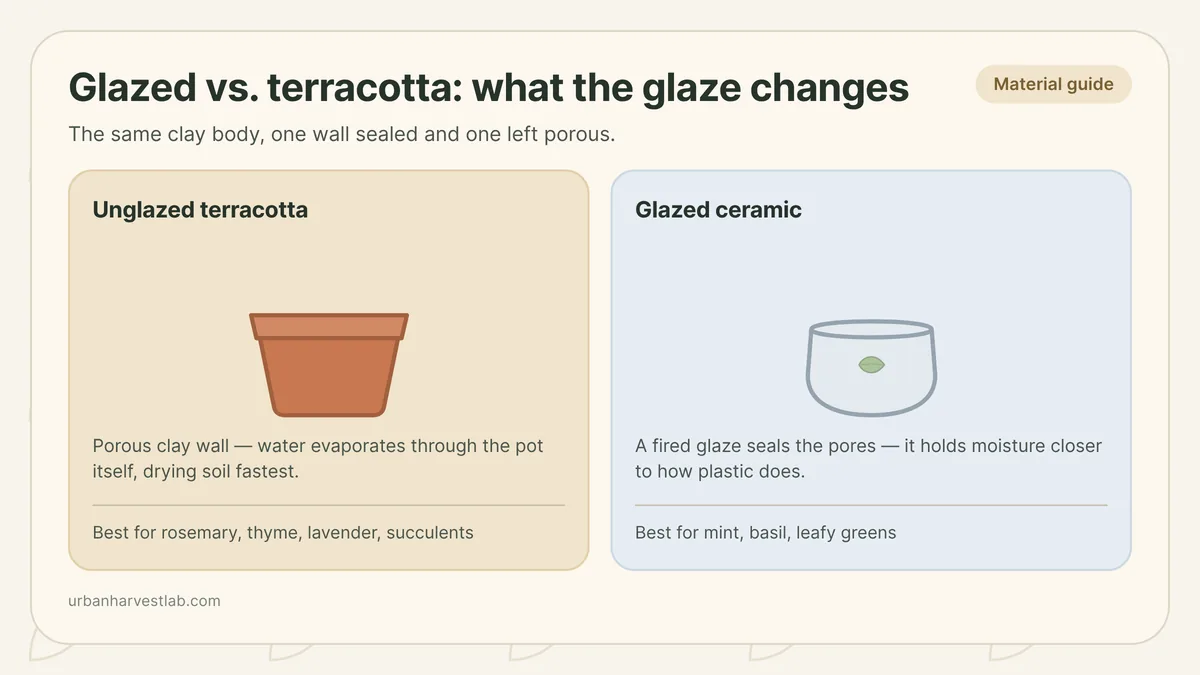
Glazed vs. terracotta pots: what the glaze actually changes
Two pots can look nearly identical and behave completely differently once you fill them with soil. The glaze on one of them is the whole difference, and it changes drying speed, weight, and winter risk all at once.
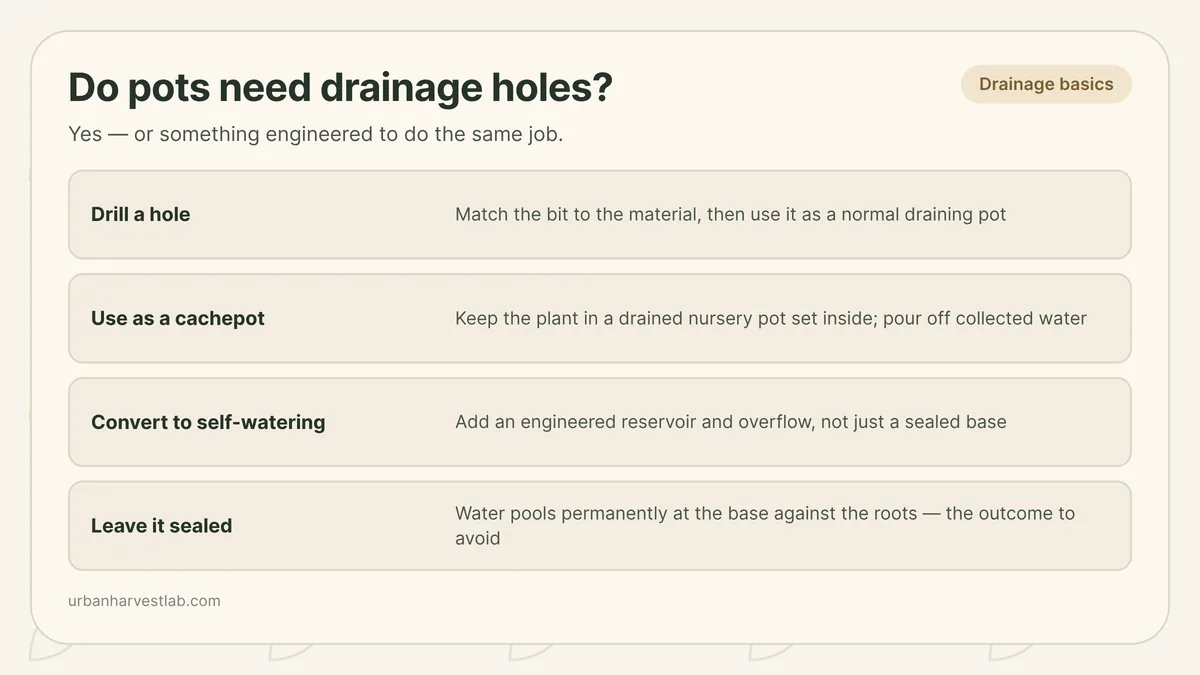
Do pots need drainage holes, and how to add one safely
A pot with no drainage hole is not a design quirk you can water around. Here is why that matters, how to drill one safely by material, and how to use a hole-less pot the right way instead.
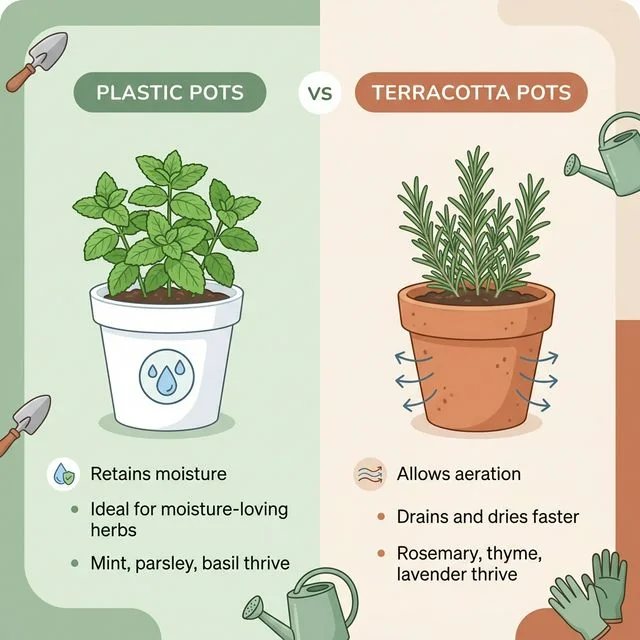
Plastic vs. terracotta pots for herbs: which makes care easier?
The material of your pot dictates how fast your soil dries out. If you put a thirsty mint plant in unglazed terracotta, you will be watering every single day. If you put rot-prone rosemary in a plastic pot, you must be extremely careful.