Two ways to get a potted rosemary or thyme through winter
| Approach | Where it works | What it needs |
|---|---|---|
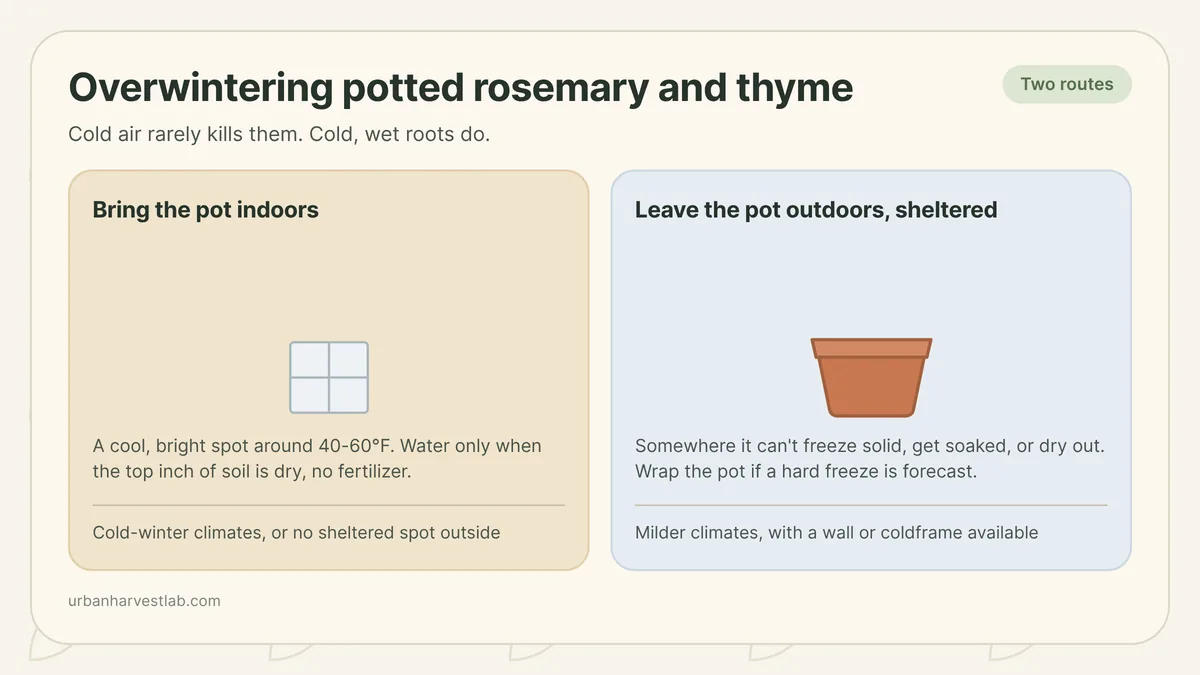
| Bring the pot indoors | Cold-winter climates, or when there is no sheltered outdoor spot | A cool, bright location (roughly 40-60°F), water only when the top inch of soil is dry, no fertilizer |
| Leave the pot outdoors, sheltered | Milder climates, or a wall, coldframe, or open-fronted shed available | A spot that cannot freeze solid, get soaked, or dry out; bubble wrap for the pot if a hard freeze is forecast |
Potted rosemary and thyme can make it through winter either indoors or outdoors, and the choice matters less than getting the details right once you have made it. Bring the pot to a cool, bright spot indoors and water only when the top inch of soil is dry, or leave it outdoors somewhere it cannot freeze solid, get waterlogged, or dry out completely, wrapping the pot if a hard freeze is forecast. Cold air is rarely what kills a container herb over winter; cold, wet roots are. For the small-space herb setup this fits into the rest of the year, see the small-space herb gardening guide.
Both rosemary and thyme are perennials that can, in principle, live for years in the same pot — Clemson Cooperative Extension classes rosemary as a perennial evergreen shrub and thyme as a herbaceous perennial, unlike an annual such as basil that finishes its life cycle in one season regardless of care. What ends that multi-year run in a container is almost always a winter that the roots did not survive, not old age.
Why a pot is riskier than a garden bed
A rosemary or thyme growing in open ground has soil insulating its roots on every side and drainage that a hard frost does not change overnight. A pot has neither. The root ball sits close to the air on at least one exposed face, so it swings with outdoor temperature far faster than garden soil does, and a saucer or a non-draining cachepot can turn a normal winter rain into standing water around the roots for days. That combination — cold plus wet, rather than cold on its own — is the failure mode both overwintering options below are built to avoid.
Option one: bring the pot indoors
University of Illinois Extension names rosemary, alongside sage and bay, as an herb commonly overwintered indoors as a tender perennial, and gives a specific sequence for doing it.
Bring the plant in before the first frost — first and last frost dates for a balcony covers how to find yours, since extension services publish tools and regional ranges rather than a date for a specific address. If you are lifting a rosemary or thyme out of garden soil to pot it up for the winter, Illinois Extension’s instruction is to cut back the plant so that roughly half of the original plant remains before potting. That cutback is for a plant coming out of the ground; a rosemary or thyme that has spent the growing season in its own container does not need that hard a cut, just its normal seasonal pruning.
Keep it cool and bright, not warm and dim. Illinois Extension’s working range for tender perennials overwintered indoors is 40-60°F with bright light. That figure is general rather than rosemary-specific or thyme-specific — Illinois Extension and the RHS both give overwintering placement advice without naming a minimum temperature for either herb individually — but it is still the closest thing to a working target: a heated living room in the 70s is usually too warm for a resting plant, and a spot with no direct light will not sustain either herb even at the right temperature.
Water by feel, not by the calendar. Water when the top inch of soil is dry, not on the schedule the plant kept during active summer growth. A dormant plant’s water use drops sharply, and soil that dried out in a few days over summer can easily stay damp for far longer indoors in winter.
Skip the fertilizer. Illinois Extension’s reasoning is straightforward: the plant is not actively growing over winter, so feeding it does nothing the plant can use and mostly just sits in the pot.
Move it back out gradually. Illinois Extension’s cue for returning a plant outdoors is once day temperatures are consistently over 60°F and frost risk has passed, rather than a fixed calendar date. The wider set of decisions around indoor light, humidity, and pest checks for a windowsill full of herbs over winter is covered in the guide to growing herbs indoors in winter.
Option two: leave the pot outdoors, sheltered
Moving a large rosemary indoors is not always practical, and the RHS describes an outdoor alternative for a container plant that stays outside all winter: place it somewhere it cannot be frozen solid, saturated by rain, or allowed to become too dry — the RHS gives the rain shadow of a wall, a coldframe, or even an open-fronted shed as examples. If a hard freeze is forecast, wrap the pot in bubble polythene for that stretch.
Drainage does more work here than most gardeners expect. A potting mix that holds water around the roots through a wet winter is worse for a rosemary or thyme than an equivalent spell of cold dry air. For herbs that need sharp drainage, the RHS figure for the container mix itself is up to 25 percent by volume of coarse grit or perlite added to a loam-based compost — worth checking before the pot goes into its winter spot, not after a soggy month has already done the damage.
If a pot does dry out completely over a stretch of cold, dry weather — winter wind pulls moisture out of exposed containers even when it is not warm — Iowa State University Extension’s fix for a fully dried-out container is to stand it in a tub of water for 20 to 30 minutes to remoisten the mix from the bottom up, rather than trying to wet it from the top alone.
Rosemary and thyme do not behave quite the same way
Clemson’s classification puts rosemary in with sage as a perennial evergreen shrub and thyme as a herbaceous perennial. In practice that means rosemary tends to hold its foliage through a mild winter, while thyme is more likely to look thin or partly dormant at the top even when the crown and roots are fine. Neither pattern is, by itself, a sign that the overwintering plan failed — a thyme plant that looks reduced in midwinter is usually just doing what a herbaceous perennial does, and it can be worth confirming the roots are firm before assuming the worst.
When it looks like it is not working
Rosemary in particular has a reputation for dying over winter, and the more common cause is watering, not cold. Soggy, waterlogged roots in a container that is too wet for too long produce symptoms — collapsing needles, a grey or blackened lower stem — that get blamed on the cold snap that happened around the same time. The full set of causes, and how to tell them apart, is covered in why rosemary is dying; if a plant looks unwell during its overwintering stretch, that is the more useful page to work through before assuming the cold itself was the problem.
Coming out of dormancy
Once the plant is back outdoors and growing again, normal-season pruning resumes: University of Illinois Extension and Iowa State Extension both put the perennial-herb limit at about one-third of the growth per cutting — a narrower rule than the 50-75 percent an annual like basil tolerates. Spring is also the easiest time to take cuttings from an overwintered plant if it has grown leggy indoors — a rosemary or thyme cutting roots over several weeks under bright indirect light, and the method is covered in how to regrow herbs from cuttings.
Choosing indoors or outdoors, and what to check first if it declines
Indoors makes sense in a cold-winter climate or when no sheltered outdoor spot exists; outdoors works wherever a wall, coldframe, or open-fronted shed can keep the pot from freezing solid or sitting waterlogged. Either way, if the plant starts to decline partway through winter, check the roots and the mix before assuming the cold got in — watering is the more common failure by a wide margin.
Sources
- University of Illinois Extension: Overwintering Tender Plants
- RHS: Growing Herbs in Containers
- Clemson HGIC: Herbs
- Iowa State University Extension: How to Care for Plants Growing in Containers
- Iowa State University Extension: Growing, Harvesting, and Drying Herbs
- University of Illinois Extension: Harvesting (Herbs)
Related winter herb care
Once your rosemary and thyme are settled for the season, these cover the watering figure, the wider indoor winter setup, and what to do if a plant is already struggling.
Common questions
Can rosemary and thyme survive winter in a pot?
Yes, in most climates, if you either bring the pot indoors to a cool, bright spot or leave it outdoors somewhere it cannot freeze solid, get soaked by winter rain, or dry out completely. Potted roots have far less insulation than roots in open ground, so a container needs more active protection than the same plant growing in a bed.
What temperature should rosemary and thyme be kept at over winter?
University of Illinois Extension gives a general tender-perennial range of 40-60°F with bright light for herbs overwintered indoors. That figure is not specific to rosemary or thyme individually; it is the working band extension sources publish for bringing woody perennials through winter indoors.
Should I cut back rosemary or thyme before overwintering?
Only if you are lifting the plant out of garden soil and into a pot for the winter; in that case, cut it back so roughly half of the original plant remains. A rosemary or thyme that has lived in its container all season does not need that hard cut, just its normal light pruning.
Why does my potted rosemary die over winter even though I bring it inside?
Overwatering during dormancy is the most common cause, not cold. A resting plant uses far less water, so soil that dried out quickly in summer can stay damp far longer indoors in winter, and constantly damp roots decline and rot. Check the top inch of soil before watering rather than watering on the old schedule.
Related guides
How to grow herbs indoors in winter
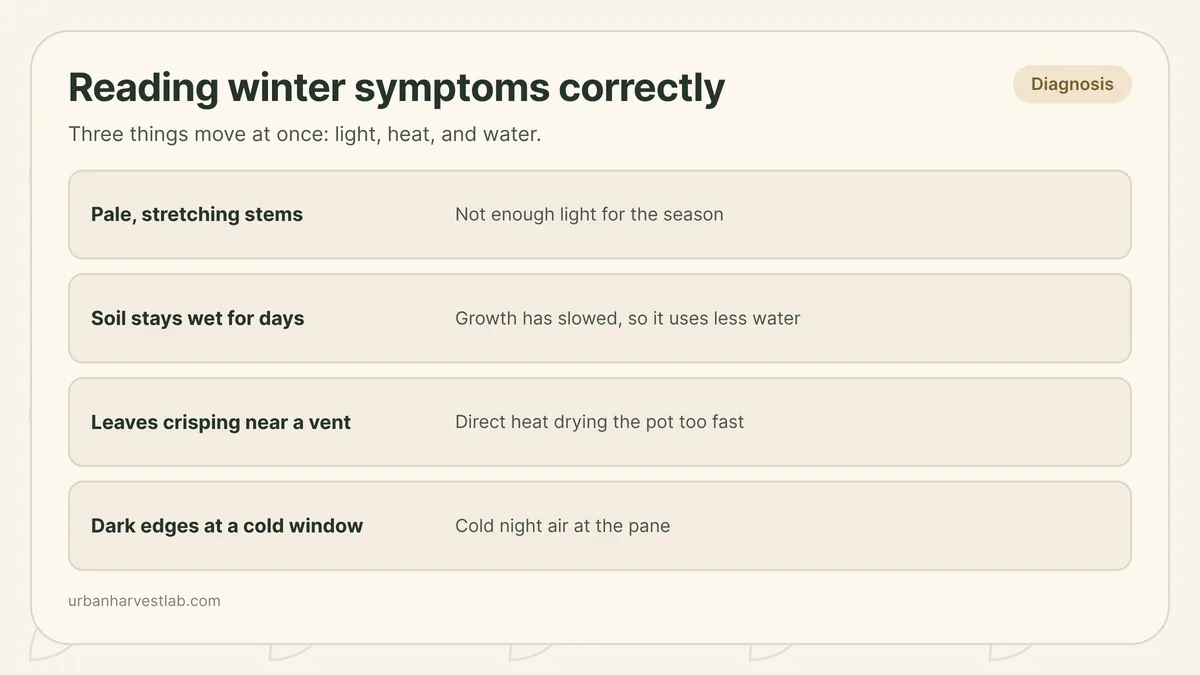
A kitchen windowsill that carried herbs all summer often starts failing in November, and it is rarely one single cause. Light, heated air, and watering all shift at the same time.
How often to water rosemary: every 1 to 2 weeks, not on a schedule
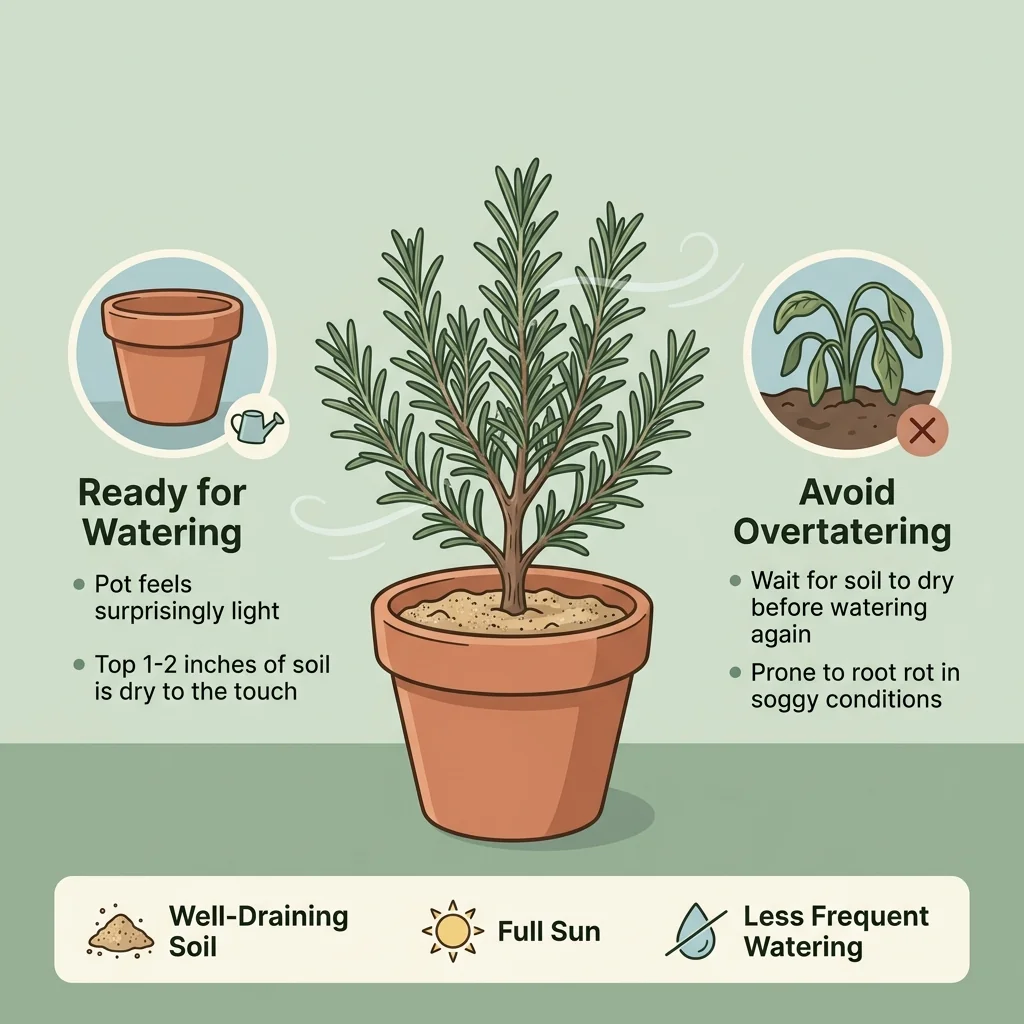
Rosemary kills more gardeners with kindness than neglect. Water it deeply but infrequently, only once the soil has dried, and it will thrive on the dry side.
How to regrow herbs from cuttings (basil, mint, rosemary)
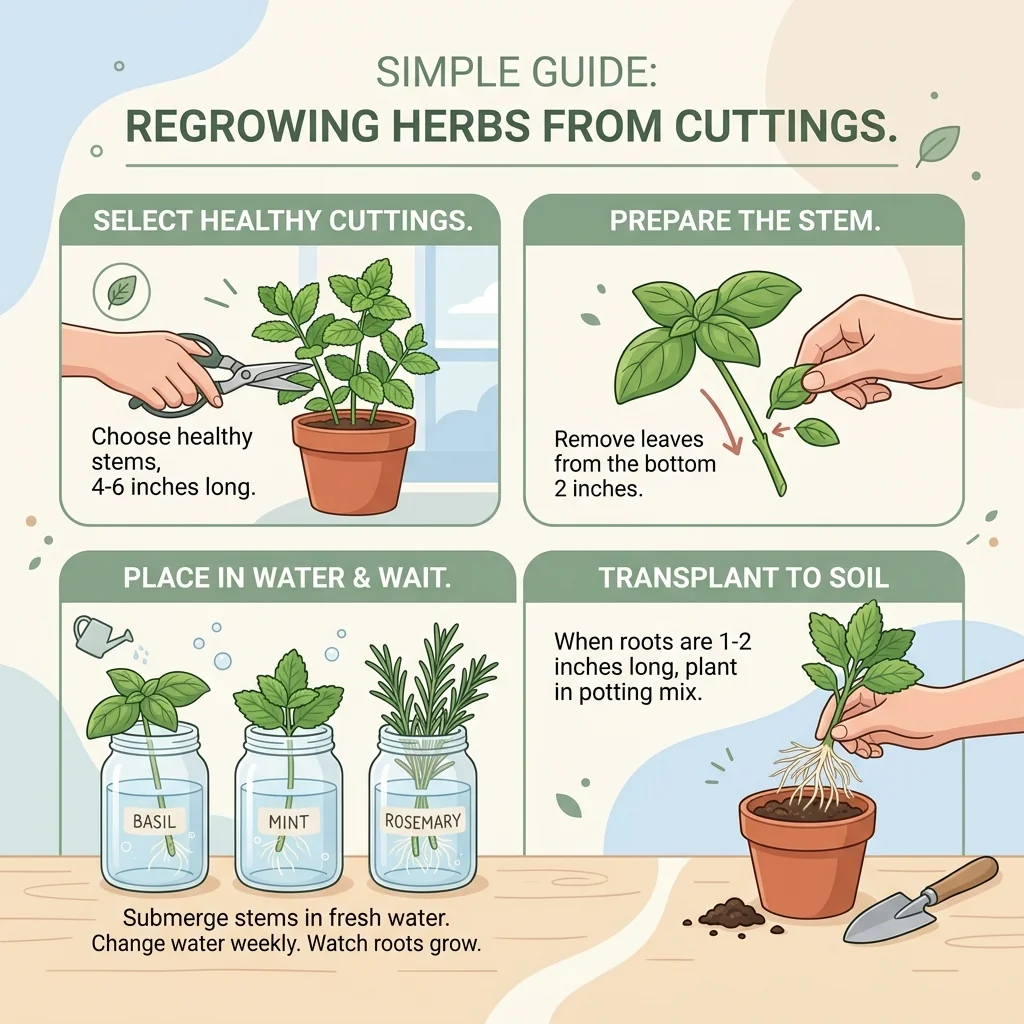
Many herbs root from a simple stem cutting in a glass of water. It is the cheapest way to turn one plant, or a supermarket bunch, into many.