
Spent hydroponic nutrient solution is dilute fertilizer, so the best place for it is a soil plant, not a drain. University of New Hampshire Extension says old solution should not go down the drain and should be used as fertilizer in gardens and on lawns. Keep it out of outdoor storm drains in every case.
The decision comes down to where the liquid ends up. Plants in soil can use the nitrogen and phosphorus. Waterways cannot, and that is the reason the extension service gives for keeping it out of the drain.
Why it should not go down the drain
University of New Hampshire Extension puts it plainly: “Old nutrient solution should not be poured down the drain as the nitrogen and phosphorus in it promote algal growth in streams, rivers and bays.” It is the same nitrogen and phosphorus that grow algae in your own reservoir, which is why algae in a hydroponic reservoir is such a persistent problem when light reaches the tank. The nutrients are the point of the solution, and they do not stop being nutrients when you throw them out.
Whether your household sink is acceptable depends on where your wastewater goes, and that varies by place. The University of New Hampshire page does not give a volume or a threshold. If your only option is the sink, ask your local water or sewer utility, or your county extension office, what it accepts.
Where to put it instead
University of New Hampshire Extension’s answer is to use it as fertilizer in gardens and on lawns. In a city flat that usually means one of these.
| Where it goes | Fit | Watch for |
|---|---|---|
| Outdoor garden bed or lawn | Best match for what the extension recommends | Spread it across the bed rather than soaking one spot |
| Potted soil plants and houseplants | Works, in place of a normal feeding | Salt build-up if you also keep fertilizing |
| Community garden or a neighbour’s beds | Good if you have no plants of your own | Ask first |
| Outdoor storm drain, gutter or street | Not suitable | Stormwater is not treated |
| Household drain | Not recommended by the extension | Ask your water utility if you have no alternative |
Treat it as a feeding, not an extra
You mixed that water for plants, so it is already at a working strength. The risk with pouring it on soil plants is stacking it on top of everything else they get. Washington State University’s HortSense notes that “High levels of salts in the soil will damage plant roots, resulting in reduced water uptake,” and that the salts can also build up in leaf tissue and cause browning at the tips and margins.
In practice that means:
- Swap, do not add. Water a houseplant with the old solution instead of its next fertilizer feeding, not alongside it.
- Rotate pots. Pouring the whole reservoir into one container concentrates salts in one place.
- Skip plants that are already stressed. Brown tips and wilting in a pot can be salt damage, and more fertilizer will not help. Washington State University says that in container plants some salts can be leached out by watering heavily and letting the wastewater drain away from the pot, and that this only works for quick-release or liquid fertilizers.
- Dilute further if you are unsure. Plain water cuts the strength. To work out a half-strength dose from a label rate, the fertilizer dilution calculator does the arithmetic.
If you have been growing in a non-recirculating setup with a potting medium, University of New Hampshire Extension’s advice is simply to use fresh nutrient solution each time you water, so there is no reservoir to dispose of at all.
Keep it away from storm drains
An outdoor storm drain is the worst choice. EPA explains that “there is no opportunity for soil and plants or a water treatment facility to filter out pollutants” when stormwater runs over hard surfaces into a water body or storm drain, and that stormwater can contain nitrogen and phosphorus from fertilizers. A reservoir poured into a gutter is exactly that kind of load.
What not to treat as fertilizer
Cleaning is a separate liquid. If you have run a sanitizer through the system, that rinse is not a feeding and does not go on plants. The procedures, doses and rinse steps are in sanitizing a hydroponic system between crops and how to clean a small hydroponic system.
Disposal is the end of the cycle
The sequence is: decide the solution is spent, drain it into something that can use it, scrub the container, and refill. When that decision comes is covered in when to change hydroponic nutrient solution, and the underlying chemistry of what is in the tank is in hydroponic nutrient basics.
Sources
Keep the reservoir clean
Timing, cleaning and algae control around the change itself.
Common questions
Can I pour used hydroponic nutrient solution down the drain?
University of New Hampshire Extension says old nutrient solution should not be poured down the drain, because the nitrogen and phosphorus in it promote algal growth in streams, rivers and bays. Water soil plants with it instead. If you have no plants to use it on, ask your local water utility what it accepts.
Can I water houseplants with old hydroponic nutrient solution?
Yes. University of New Hampshire Extension recommends using it as fertilizer in gardens and on lawns, and potted plants are the same idea on a smaller scale. Count it as a feeding and skip your normal fertilizer that time, because Washington State University notes that too much fertilizer salt damages roots.
Is it safe to dump old nutrient solution in a storm drain or outdoor gutter?
No. EPA explains that stormwater flows directly into a water body or storm drain with no chance for soil, plants or a treatment facility to filter out pollutants, and that it can carry nitrogen and phosphorus from fertilizers.
What do I do with the water from cleaning the reservoir?
Cleaning rinse water is a different liquid from spent nutrient solution. If you used bleach or another sanitizer, it is not a fertilizer, so do not put it on plants. Follow the sanitizing and cleaning guides for that step.
Related guides
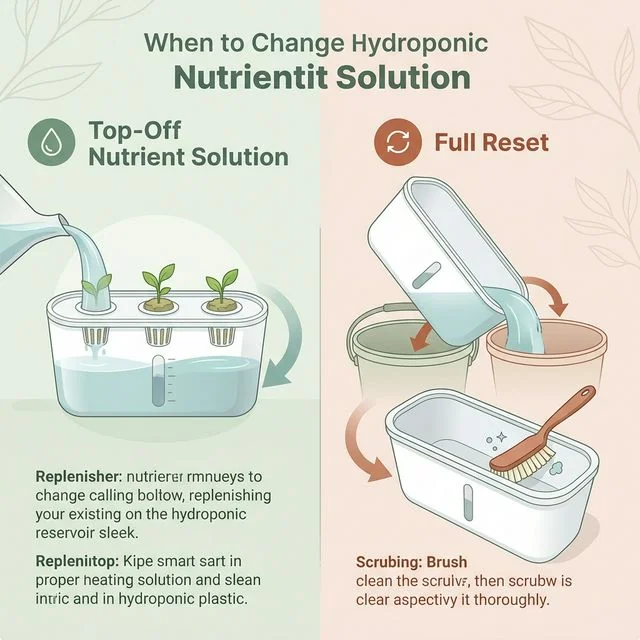
When to change hydroponic nutrient solution: top off vs full reset
A hydroponic reservoir should not be treated like a closed loop forever. This guide shows when a simple top off is enough and when a full reset is the safer move.
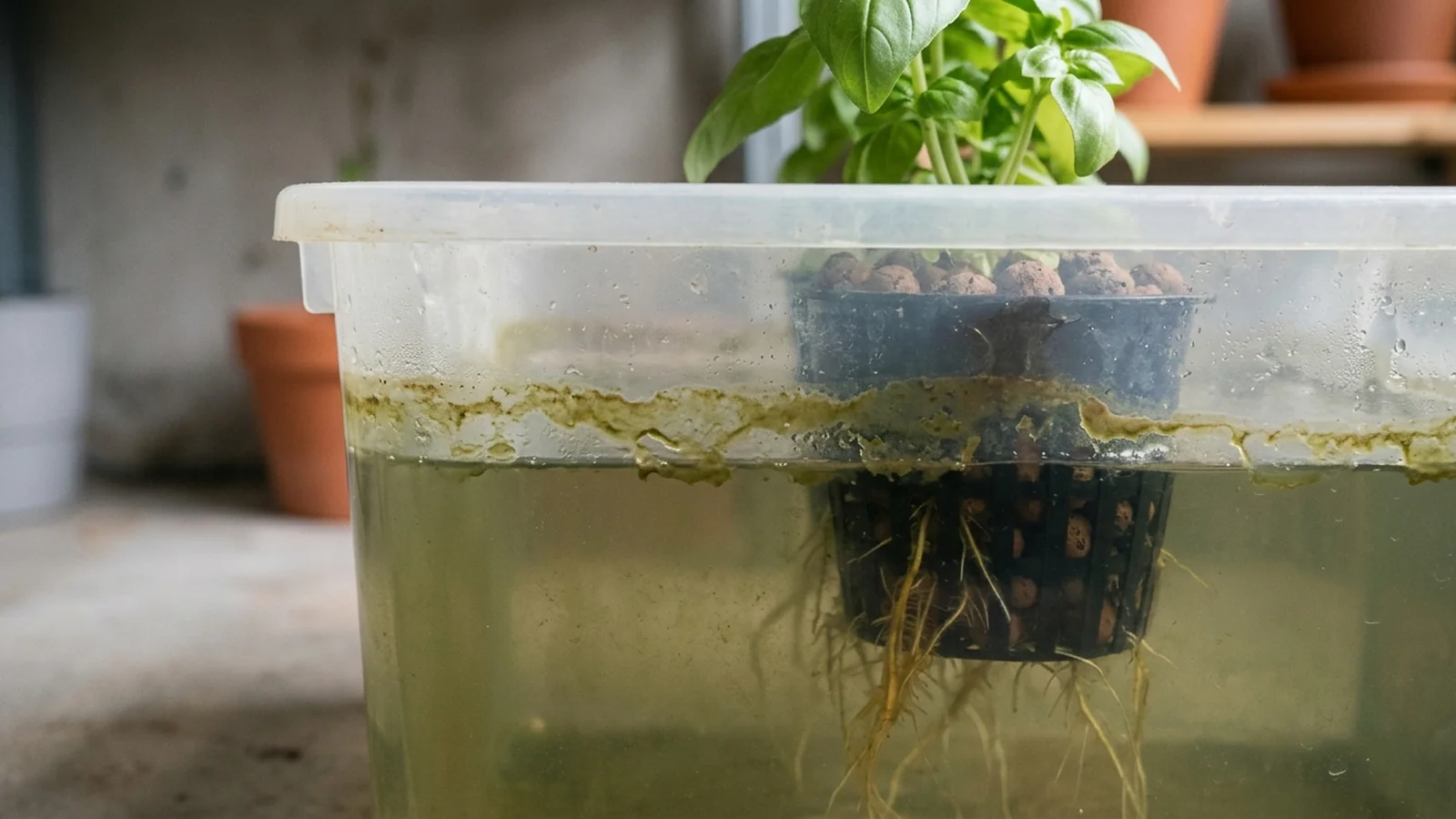
Algae in a hydroponic reservoir: why it grows and how to stop it
Algae needs light, water, and nutrients, and a hydroponic reservoir hands it all three. Block the light and the outbreak stops feeding itself.
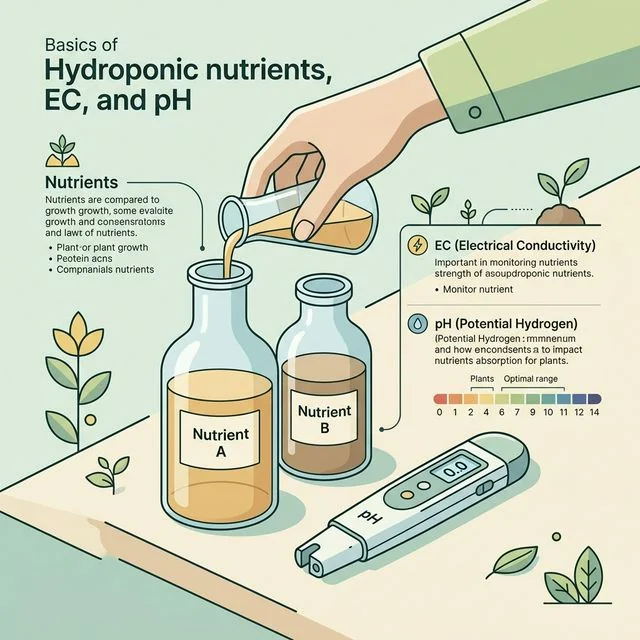
Hydroponic nutrient basics: EC, pH, dilution, and reservoir stability
Most hydroponic problems are not mysterious. They come from concentration drift, pH drift, heat, or neglected maintenance. This guide covers the basics clearly.