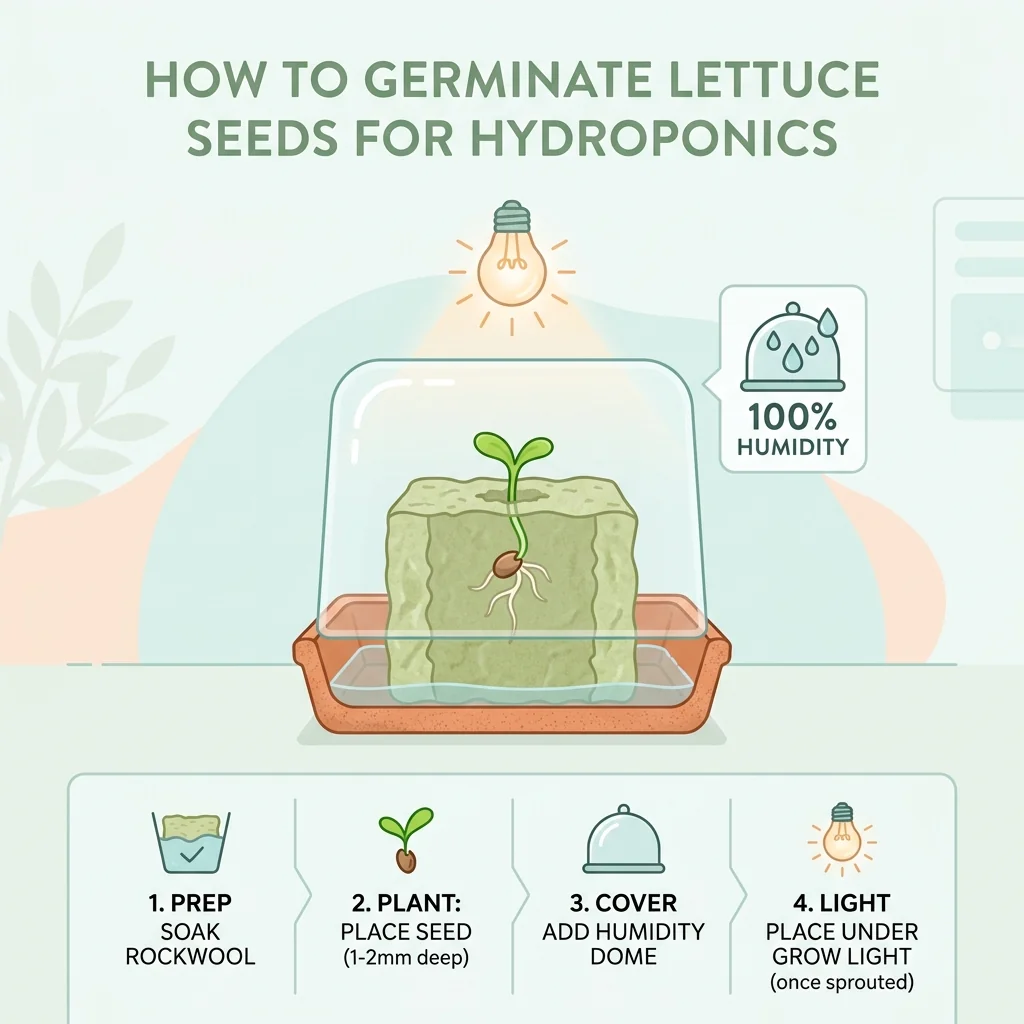
Choosing a Hydroponic Germination Medium
| Medium | Pros | Cons |
|---|---|---|
| Rockwool Cubes | Sterile, holds perfect water-to-air ratio, easy to transplant. | Must be soaked in pH 5.5 water first; environmental concerns regarding manufacturing. |
| Peat Sponges (Rapid Rooters) | Organic, retains moisture perfectly, naturally balanced pH. | Can sometimes stay *too* wet, leading to mold if airflow is poor. |
| Clay Pebbles (LECA) | Reusable forever, impossible to overwater, excellent aeration. | Requires constant top-watering or a flood system until roots reach the main reservoir. |
The golden rule of hydroponics is simple: Keep the dirt out.
If you start your lettuce seeds in a traditional plastic cell filled with indoor potting soil, and then try to wash that soil off to move the plant into a hydroponic bucket, you will trigger a disaster. Microscopic dirt particles will permanently clog your water pumps, and the organic compost from the dirt will introduce millions of bacteria into your sterile water, guaranteeing an instant case of Root Rot.
To grow in water, you must start the seed in a sterile, soil-free medium. This ensures a seamless, clean transition from the nursery tray directly into your hydroponic system.
Here is the foolproof method to germinate hydroponic lettuce seeds.
Step 1: Choose Your Medium
You need a medium that holds moisture like a sponge but contains absolutely zero organic fertilizer or dirt.
- Rockwool Cubes: The industry standard. Made from spun basalt rock, it holds a mathematically perfect ratio of water to air. (Note: Rockwool is naturally alkaline. You must soak it in pH 5.5 water for 30 minutes before using it).
- Peat Sponges (Rapid Rooters): A great organic alternative made from composted bark and peat. They come pre-moistened and pH balanced.
Step 2: The Shallow Plant
Lettuce seeds are unusual: they require light to germinate.
If you take a lettuce seed and bury it an inch deep inside a Rockwool cube, it will never sprout. It will sit in the dark, rot, and die.
Take a soaked Rockwool cube or a peat sponge. Look for the small, pre-drilled divot at the top. Drop exactly two lettuce seeds into that divot. Do not cover them. The seeds should be visibly exposed to the ambient light in the room.
Step 3: Heat and Humidity (The Dome)
For the hard outer shell of the seed to soften and crack open, it requires 100% humidity.
Place your seeded cubes into a plastic nursery tray and pour a quarter-inch of plain, unfertilized water into the bottom of the tray so the cubes can drink. Cover the tray with a clear plastic humidity dome (or a clear Tupperware container).
Temperature Warning: Do not put the tray on a heating mat. As discussed in Hydroponic Water Temperature for Lettuce, lettuce despises the heat. If the seeds get hotter than 75°F, they will refuse to sprout. Room temperature (65°F - 70°F) is perfect.
Step 4: The Light Switch
Check the tray every single morning. Within 48 to 72 hours, you will see a tiny white tail (the taproot) emerge, followed instantly by two tiny green leaves (the cotyledons).
The moment you see green, the clock starts.
Seedlings require intense light immediately. If you leave them in a dark room for even one extra day, they will stretch into long, weak, white threads that fall over and die (a condition very similar to Leggy Basil Indoors).
Turn your grow lights on immediately. Read Grow Light Distance for Seedlings to ensure the lights are close enough to keep the seedlings short and compact, but not so close they burn them.
Step 5: Preparing for Transplant
For the first 7 to 10 days, the seedling is eating the energy stored inside the physical seed. You do not need to add fertilizer to the tray water.
Around Day 10, two things will happen:
- The plant will push out its first set of “true leaves” (leaves that actually look like tiny lettuce leaves, rather than the initial round cotyledons).
- You will see stark white roots poking out of the bottom and sides of the Rockwool cube.
The plant has now exhausted its internal battery and is actively searching for external food. It is officially ready to be moved into your main, fertilized hydroponic system. For the exact steps on making that move safely, proceed to When to Transplant Hydroponic Lettuce and How Far Apart to Space It.
Are your seedlings failing?
If your seeds sprouted but are instantly stretching or turning yellow, you need to adjust your light and water immediately.
Common questions
Should I add fertilizer to the water when germinating the seeds?
No. A seed is essentially a biological battery packed with all the energy it needs to grow its first set of leaves. Adding chemical fertilizer to a newly sprouted taproot will instantly burn and kill it.
Do I need a heat mat to germinate lettuce seeds?
Lettuce is a cool-weather crop. It germinates best between 60°F and 68°F. If you put lettuce seeds on a heat mat at 80°F, they will likely enter 'thermal dormancy' and refuse to sprout.
Why are my newly sprouted seedlings incredibly tall and falling over?
They are light-starved (etiolation). The moment a seed cracks open, it needs intense, direct light. Move your grow light down to just a few inches above the humidity dome.
Related guides
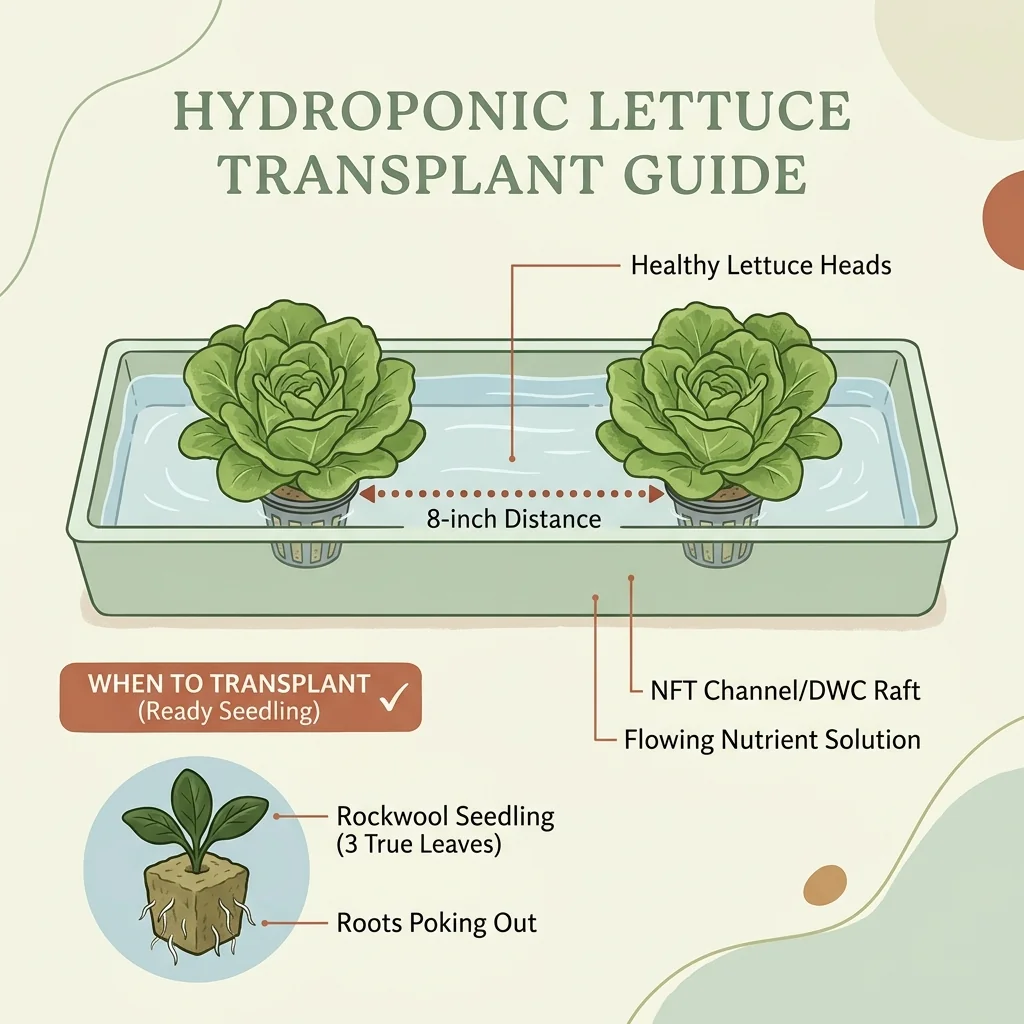
When to transplant hydroponic lettuce and how far apart to space it
Moving your fragile seedling from the nursery tray to the main hydroponic system is a high-risk maneuver. If you move it a day too early, it will drown. If you plant the heads too close together, they will choke each other out. Here are the exact metrics for a perfect transplant.
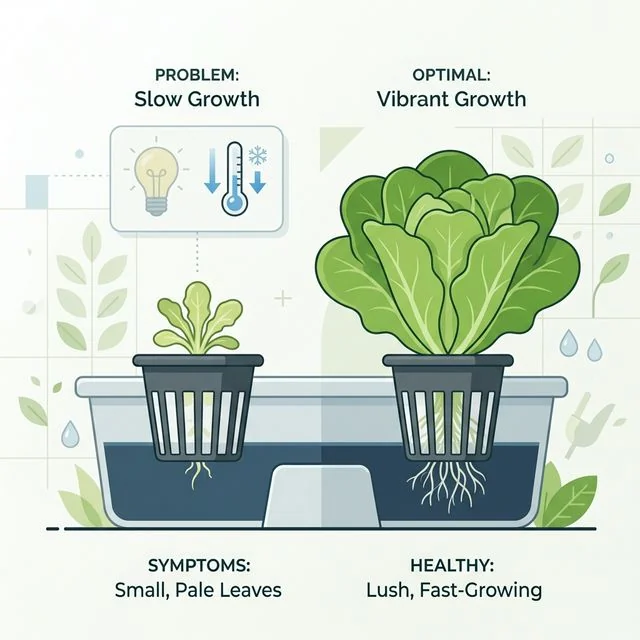
Hydroponic lettuce growing slowly? Check light, roots, and EC in order
Slow hydroponic lettuce is usually a systems problem, not a mystery deficiency. The goal is to find the bottleneck without overcorrecting five variables at once.
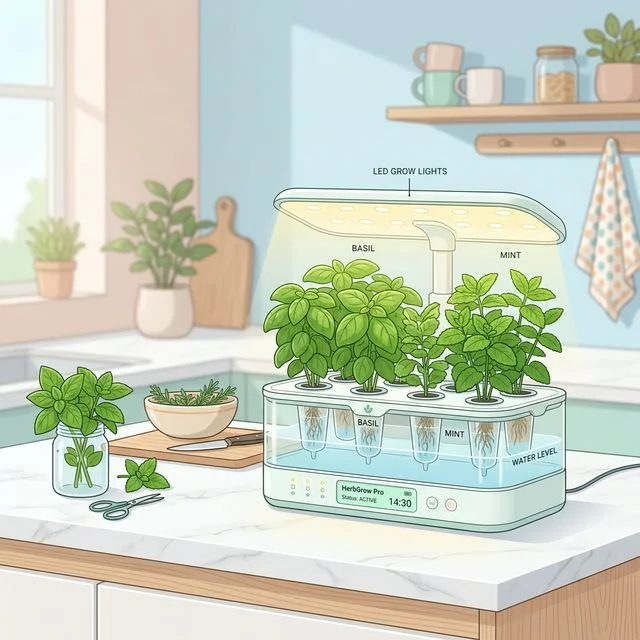
Countertop hydroponic herbs for beginners: what to buy and what to ignore
Countertop hydroponic systems can work very well for herbs, but only if you treat them as small growing systems rather than decorative appliances.