Hydroponic Spacing Guidelines
| Crop Type | Ideal Spacing (Center to Center) | Consequence of Crowding |
|---|---|---|
| Butterhead / Bibb Lettuce | 8 inches (20 cm) | Outer leaves are crushed; poor airflow causes powdery mildew and Tip Burn. |
| Romaine / Iceberg | 10 inches (25 cm) | Plants stretch vertically, failing to form a dense, heavy head. |
| Loose-Leaf (Cut-and-Come-Again) | 6 inches (15 cm) | Stems become long, weak, and leggy as they fight for overhead light. |
You have successfully followed our guide on How to Germinate Lettuce Seeds. You have a tray of healthy green sprouts. Now, they need to move into your main Deep Water Culture (DWC) bucket or NFT channel to begin their explosive vegetative growth phase.
This transition is known as “Transplanting,” and it is the point where most beginners accidentally kill their crop.
There are two massive risks during transplanting: moving the plant too early, and putting the plants too close together. Here is the exact formula for a perfect transition.
When is the Seedling “Ready”?
Do not look at the calendar to decide when to transplant. A seedling might be ready in 7 days, or it might take 14 days, depending on your room temperature. You must look at the biology.
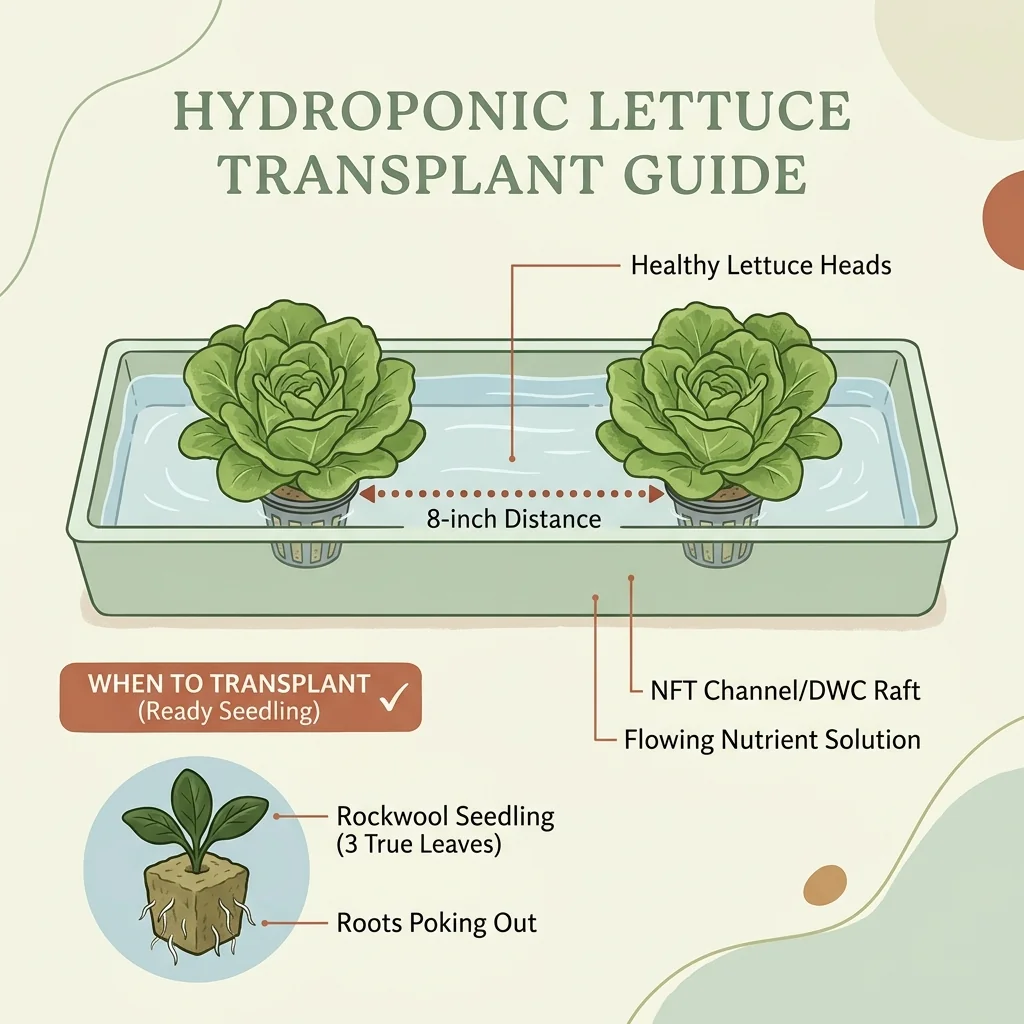
A lettuce seedling is ready to move when it meets two strict physical requirements:
- Three “True Leaves”: When the seed first cracks, it produces two round, smooth cotyledons. Those do not count. Wait until the plant pushes out at least three leaves that look textured, ruffled, and like actual adult lettuce.
- Roots Emerging from the Cube: Look at the bottom of your Rockwool cube or peat sponge. You must see distinct, white roots actively poking out of the bottom and sides of the medium.
The Danger of Transplanting Too Early
If you transplant a tiny seedling before the roots poke out of the bottom of the cube, the roots physically cannot reach the water in the reservoir.
To compensate, beginners will raise the water level so high that it completely submerges the bottom half of the Rockwool cube. Rockwool holds water incredibly well. If you submerge it in the reservoir, it becomes completely saturated, starving the fragile baby stem of oxygen. Within 48 hours, the stem will turn brown, rot, and the seedling will collapse and die (a condition called “Damping Off” or Stem Rot).
By waiting for the roots to poke out the bottom, you can keep the water level just slightly touching the bottom of the net cup. The roots dangle down into the water to drink, while the Rockwool cube remains relatively dry on top, protecting the stem.
How Far Apart to Space Hydroponic Lettuce
The second massive mistake beginners make is designing their system with holes drilled every 3 inches. When the plants are tiny, 3 inches looks like plenty of room. Four weeks later, it looks like a jungle warzone.
Hydroponic lettuce grows significantly larger and faster than soil lettuce. You must design your system for the mature size of the plant, not the seedling size.
- Standard Spacing: Drill the holes in your reservoir lid or PVC pipes exactly 8 inches apart (measured from the center of one hole to the center of the next).
This 8-inch rule applies perfectly to Butterhead, Bibb, and most loose-leaf varieties. It provides just enough room for the mature canopies to touch slightly, maximizing your yield per square foot without causing overcrowding.
The Consequence of Crowding
If you plant lettuce 4 inches apart, disaster awaits:
- Light Starvation: As the leaves expand and overlap, the plants will realize they are being shaded out by their neighbors. In a panic, they will stop growing wide and start growing tall, becoming long, weak, and leggy (similar to North-Facing Window Herbs).
- Bolting: The stress of intense competition will trick the plant into thinking it is dying. It will immediately bolt, shooting up a flower stalk and turning the leaves incredibly bitter and inedible.
- Tip Burn: Overlapping leaves destroy the ambient airflow around the canopy. As discussed in Hydroponic Lettuce Tip Burn, a lack of airflow stops transpiration, leading to localized Calcium deficiencies and dead, brown leaf edges.
Wait for the roots, respect the 8-inch rule, and your lettuce will transition perfectly into its final growth phase.
Did your transplant fail?
If your newly transplanted lettuce immediately wilted or stopped growing, you likely made an environmental error. Check these guides.
Common questions
Should I use clay pebbles to support the Rockwool cube in the net cup?
Yes. Place a shallow layer of clay pebbles at the bottom of the net cup, set the cube on top, and surround it with more pebbles. This blocks light from hitting the reservoir, preventing algae.
Can I plant three seeds in one net cup to save space?
No. The three plants will brutally compete for root space and light. None of them will form a proper head. Always thin your cubes down to one single, strong plant before transplanting.
How deep should the water level be when I transplant?
The water level should just barely touch the bottom of the net cup so the exposed roots can drink, and capillary action can pull moisture up the clay pebbles. Do not submerge the Rockwool.
Related guides
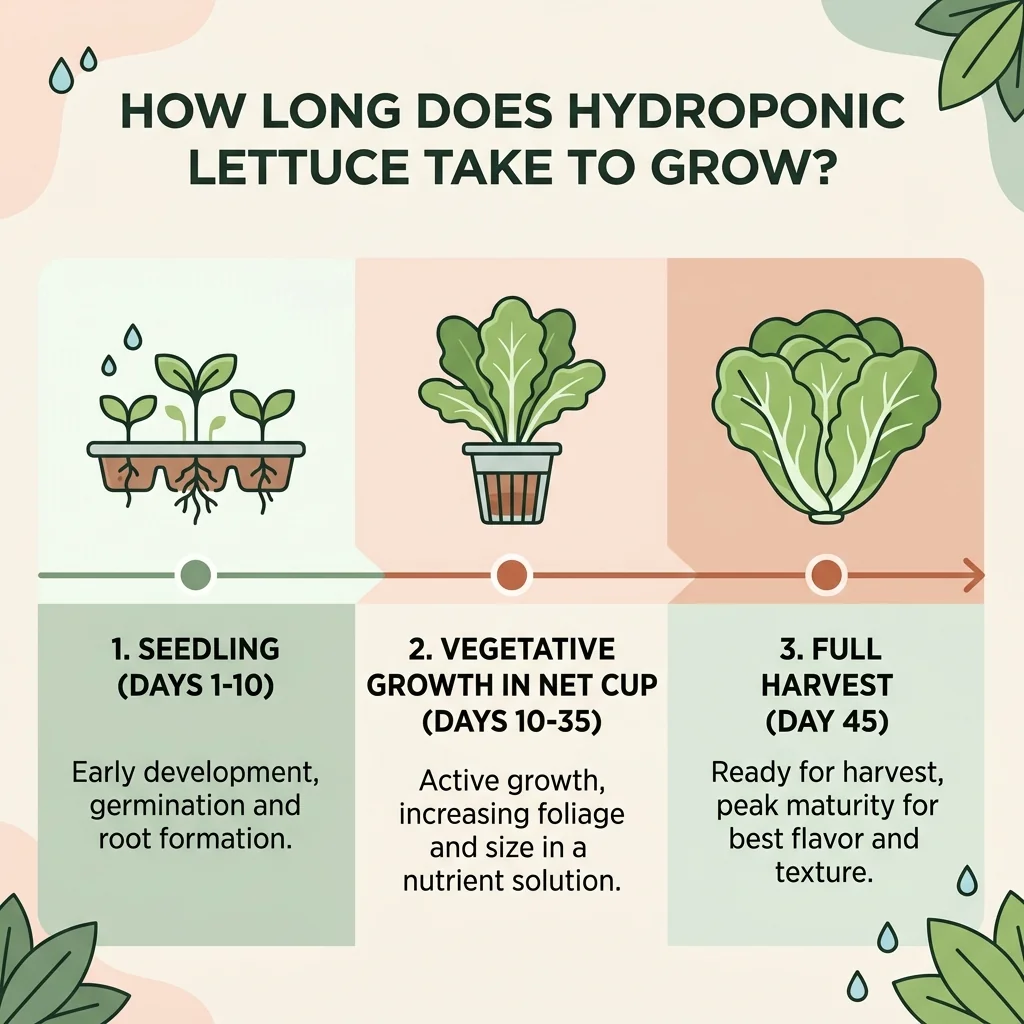
How long does hydroponic lettuce take? A 45–55 day timeline
Plan roughly 45 to 55 days from seed for a home hydroponic lettuce crop, then use roots, leaf count, head size, and variety to decide each transition.
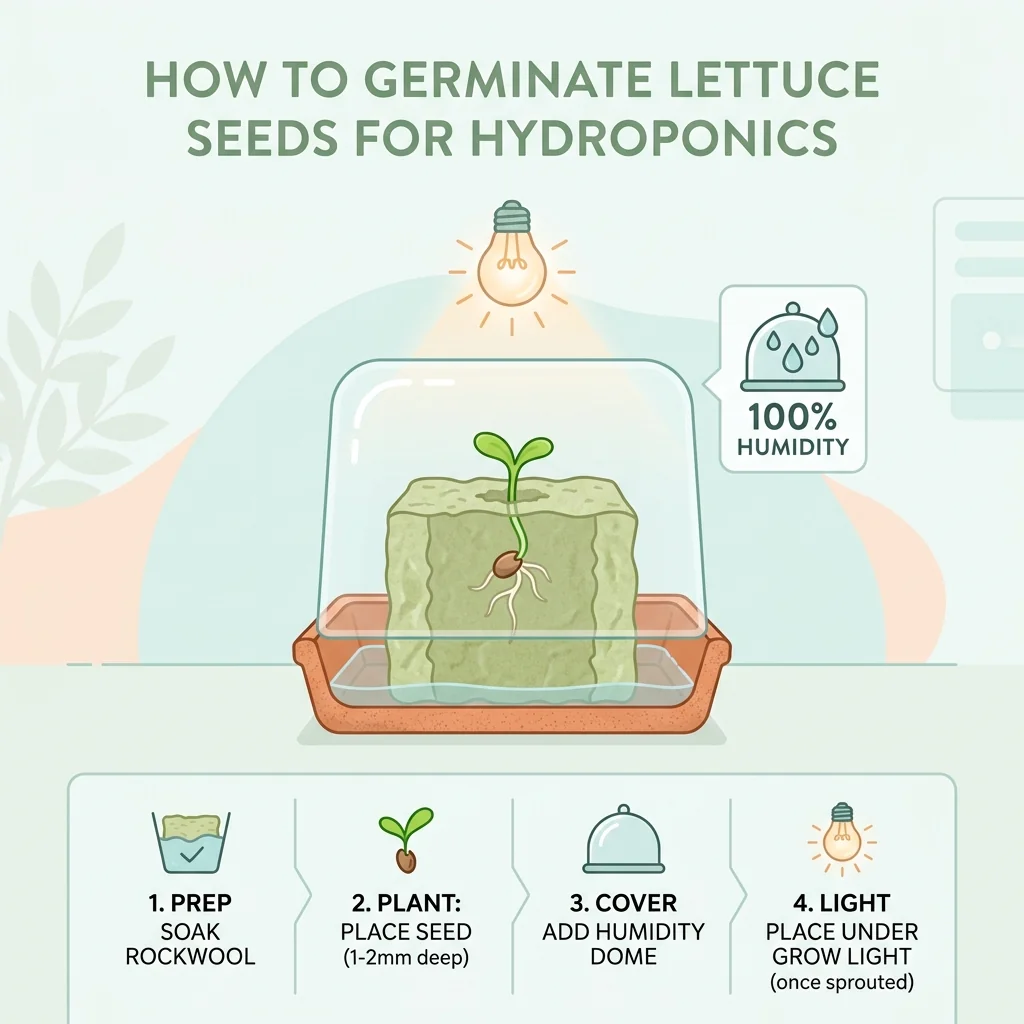
How to germinate lettuce seeds for hydroponics
You cannot start hydroponic seeds in potting soil. The dirt will wash off into your reservoir, clogging your pump and causing a massive bacterial bloom. Here is the sterile, foolproof method to start seeds for water-based growing.
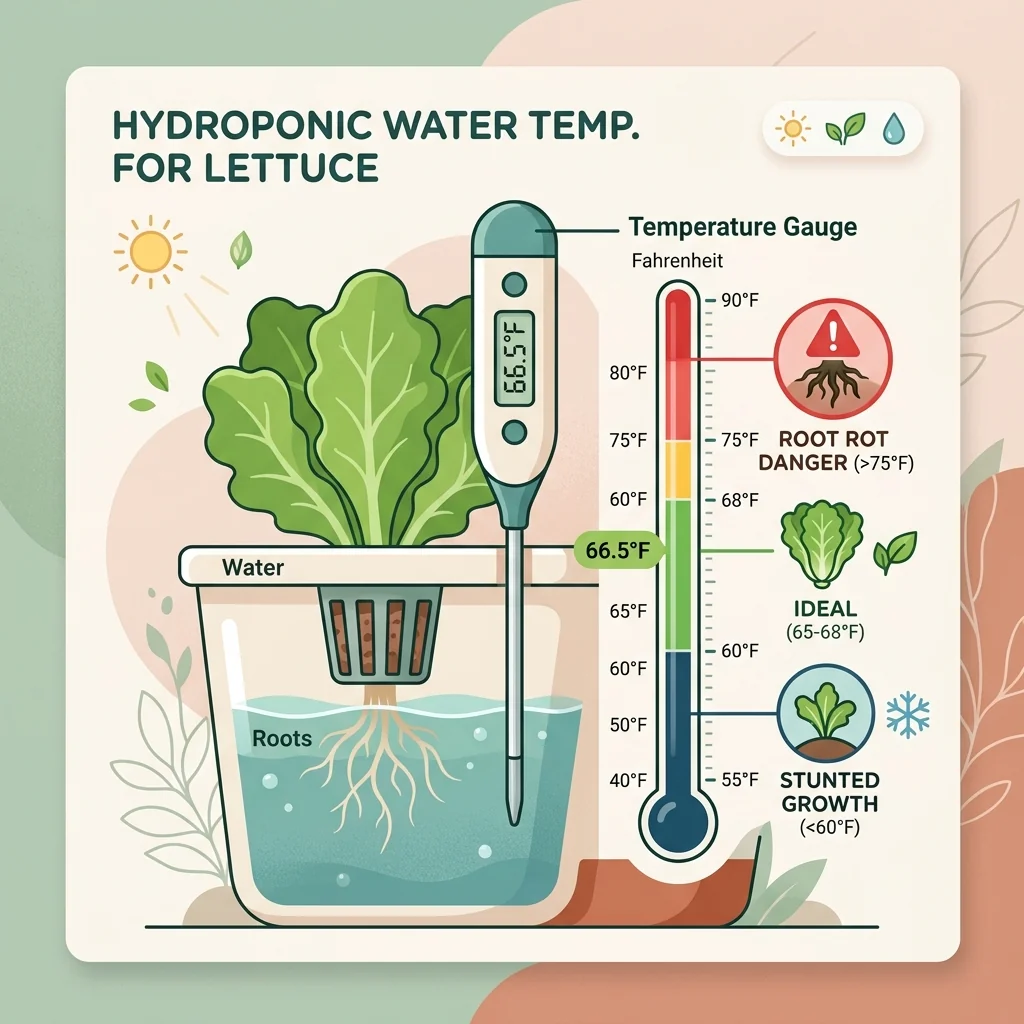
Hydroponic water temperature for lettuce: why 68°F is magic
You can have perfect pH, perfect nutrients, and a massive air pump. But if your hydroponic reservoir is sitting at 80°F, your lettuce is actively suffocating. Here is why water temperature dictates everything in hydroponics.