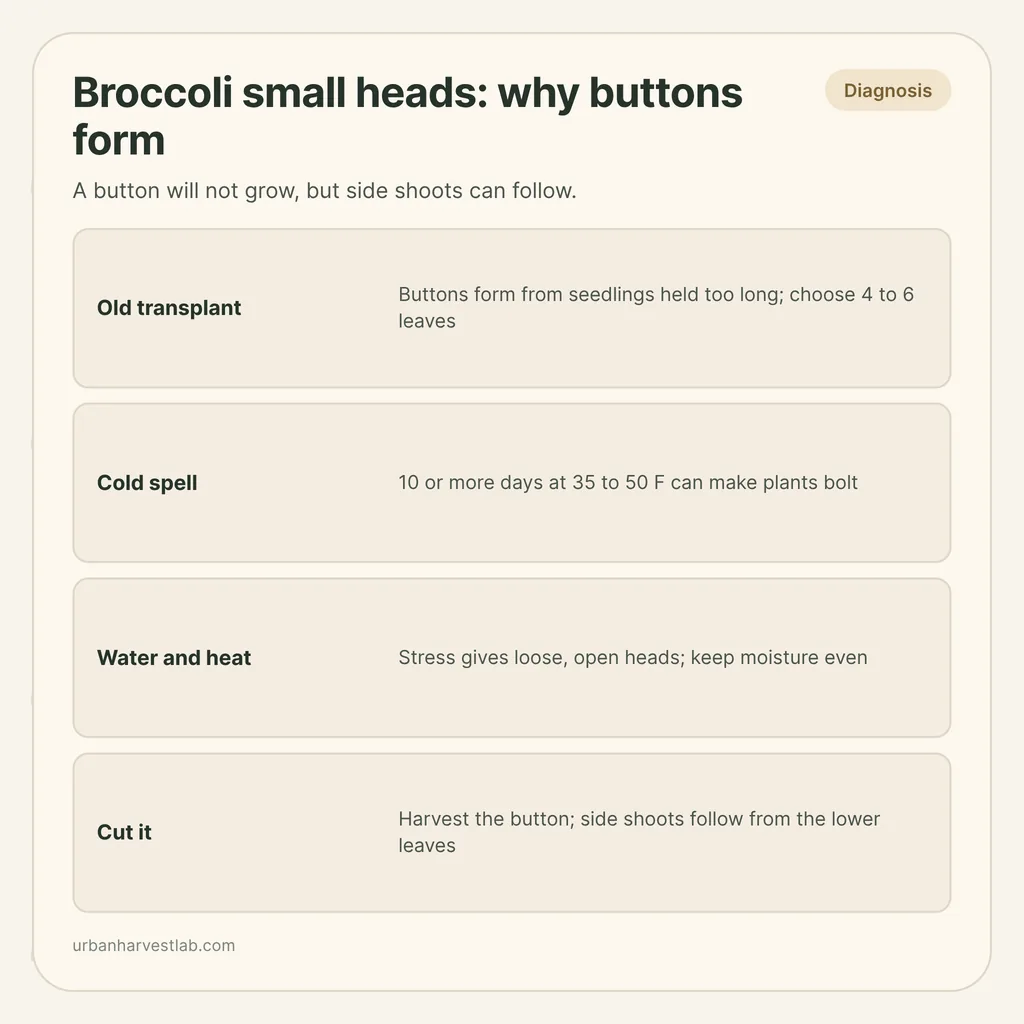
Troubleshoot the system before you change the inputs.
Symptoms
- A head the size of a coin or a small egg on a plant with only a few leaves, usually within weeks of planting out.
- A head that loosens and shows yellow flowers before it reaches full size.
- Loose, open heads on a larger plant during a hot spell.
Possible causes
- Transplant too old or root-bound, or held too long in a nursery pack: the classic button.
- A run of cold days after planting, or planting too early.
- Dry spells, or hunger, before or after planting.
- Heat during heading, or planting so late that heading lands in summer.
Quick fixes
- Cut the small head with some stem before the buds open, and keep watering and feeding so the plant can send up side shoots.
- Water the pot evenly through heading, and check it daily in hot weather.
- Next time, buy or grow transplants with 4 to 6 leaves and no flowers, and time planting so heads form in cool weather.
A tiny head on a small, young broccoli plant is a button, and the cause is usually set before or just after planting out: an overgrown transplant, a cold spell, or a plant short of water or nutrients. A button will not grow into a full head. Cut it and the plant can still give you side shoots.
If you are growing the crop from scratch, start with broccoli in containers; if the plant is already heading too small, read on.
Which problem do you have?
| What you see | Most likely | First thing to check |
|---|---|---|
| Coin-sized head on a plant with few leaves, soon after planting | Buttoning | Age and size of the transplant, cold since planting |
| Head loosens and shows yellow flowers before it reaches size | Premature flowering | Heat, drought, a long cold spell earlier |
| Loose, open heads on a larger plant in hot weather | Heat and water stress | Watering during heading |
| Normal central head, then small heads after cutting | Normal side shoots | Nothing is wrong |
Buttoning: an old transplant is the usual cause
University of Illinois Extension defines buttons as small heads that form soon after plants are set in the garden, and says they usually result from seedlings that were held too long or handled badly before sale or planting. The same page names plants left too long in seed flats, and plants held in a garden center until they are too old or too dry.
Utah State Extension makes the size point directly: larger, more mature transplants are more prone to button, so it asks for transplants with 4 to 6 mature leaves and a well-developed root system. Auburn and Alabama Extension add that you should choose stocky transplants with healthy color and avoid any that already carry flowers.
So if you bought a tall, flowering seedling in a six-pack, the head was probably decided before the plant reached your pot. If you grew it yourself, an overgrown seedling that waited weeks for the weather to warm up is the same situation. Hardening off seedlings helps the move go smoothly, but it will not rewind an over-age plant.
Cold can trigger early heads
Utah State Extension says plants that button have been exposed to cold weather, or stressed for water or nutrients, either before or after transplanting. Illinois Extension lists extended chilling of young plants and extremely early planting among the causes of premature flower development.
Clemson Extension puts numbers on it: broccoli will bolt, producing a flower stalk, after a prolonged cold period of 10 or more consecutive days at 35 to 50 F that follows a period of favorable growth. It adds that the larger the plants are when the cold arrives, the higher the incidence of bolting. That matches the transplant-size story: the bigger the plant, the more it reacts.
Utah State gives the tolerable range for the crop as not seriously damaged by temperatures down to 28 F, with the best yields when temperatures do not exceed 75 F.
If a cold spell hit right after planting, the plants that have already buttoned will not recover their heads, so the lesson is for the next batch: plant out once the weather has settled. Transplant shock is a separate problem, with wilting rather than tiny heads, and has its own rescue steps.
Water and nutrient stress
The same Utah State sentence names stress for water or nutrients before or after transplanting as a button trigger. Illinois Extension lists severe drought among the causes of premature flowering, and says a starter fertilizer at transplanting gets plants off to a good start but cannot correct all the difficulties it describes. Feeding does not repair an old transplant or a cold snap.
Auburn and Alabama Extension say to keep soil consistently moist but not saturated. How often that means watering a pot depends on its size and your weather; see how often to water container vegetables.
Heat and crowding give loose, small heads
Hot weather is a different pattern. Utah State says that in hot weather plants may not get enough water, which leads to poorer quality, more open heads, and that stressed plants often flower prematurely too. It advises keeping plants well watered through the heading period. Illinois Extension notes that yellow flowers may appear before heads are ready to harvest during periods of high temperatures.
Crowding also shrinks heads. Utah State says closer spacing of 1 by 1 foot can be used, but head size is reduced and side shoot development inhibited. One plant per generous pot avoids that trade-off; the container guide gives pot sizes.
What to do with a small head
Cut it. Illinois Extension says to cut the central head after it is fully developed but before it loosens and the individual flowers start to open and show bright yellow, leaving 5 to 6 inches of stem. For a button that will not get any bigger, harvest while the buds are still tight. Auburn and Alabama Extension say to leave as much central stem as possible, which stimulates smaller lateral heads.
Illinois explains that removing the central head stimulates side shoots from the axils of the lower leaves. It also sets expectations: central heads should reach 4 to 6 inches across or larger, and late side shoots may reach only 1 to 2 inches. Small side-shoot heads are therefore normal, not a fault. Utah State says some additional nitrogen after harvesting the main head will encourage side shoots; it does not give a rate for pots, so follow your fertilizer label.
If the plant was a button on a tiny seedling and shows no sign of side shoots, replacing it is reasonable. Utah State puts the best yields at temperatures that do not exceed 75 F, so time the replacement so heads form in mild weather.
Prevent it next time
- Buy or grow transplants with 4 to 6 leaves and no flowers.
- Set out young, healthy, unstressed plants. Clemson makes exactly this recommendation.
- Plant after the worst cold has passed, and avoid timing that puts heading in a heat wave.
- Keep moisture even through heading.
- Give each plant room, and consider a slow-bolting variety. Clemson names Green Magic as one.
Growing its cousin too? See cauliflower in containers.
Sources
Broccoli and cole crops in pots
Grow the crop, rescue a stressed transplant, or compare with its cousin.
Common questions
Why is my broccoli head so small?
On a young plant that headed soon after planting, the likely cause is buttoning. Utah State Extension says plants that button were exposed to cold weather or were stressed for water or nutrients before or after transplanting, and that larger transplants are more prone to it. On a full-size plant in hot weather, expect loose heads and yellow flowers instead.
Will a broccoli button grow bigger if I leave it?
The extension sources describe buttons as small, early heads that flower prematurely, not as heads that keep growing. Illinois Extension says to cut the central head before the flowers open and show yellow, and that cutting it stimulates side shoots.
Can I eat a small broccoli head?
Illinois Extension says the edible part is the cluster of unopened flower buds with the attached stem, so a small head with tight buds is harvested like a large one. Cut it before the buds loosen and show yellow.
What size should broccoli transplants be?
Utah State Extension asks for 4 to 6 mature leaves and a well-developed root system. Auburn and Alabama Extension say to choose stocky transplants with healthy color and to avoid plants that already have flowers.
Related guides

Transplant shock in seedlings: wilting after you plant them out
Wilting after transplanting is common and usually temporary. Prevention is mostly hardening off and watering; recovery is measured in days to a couple of weeks.
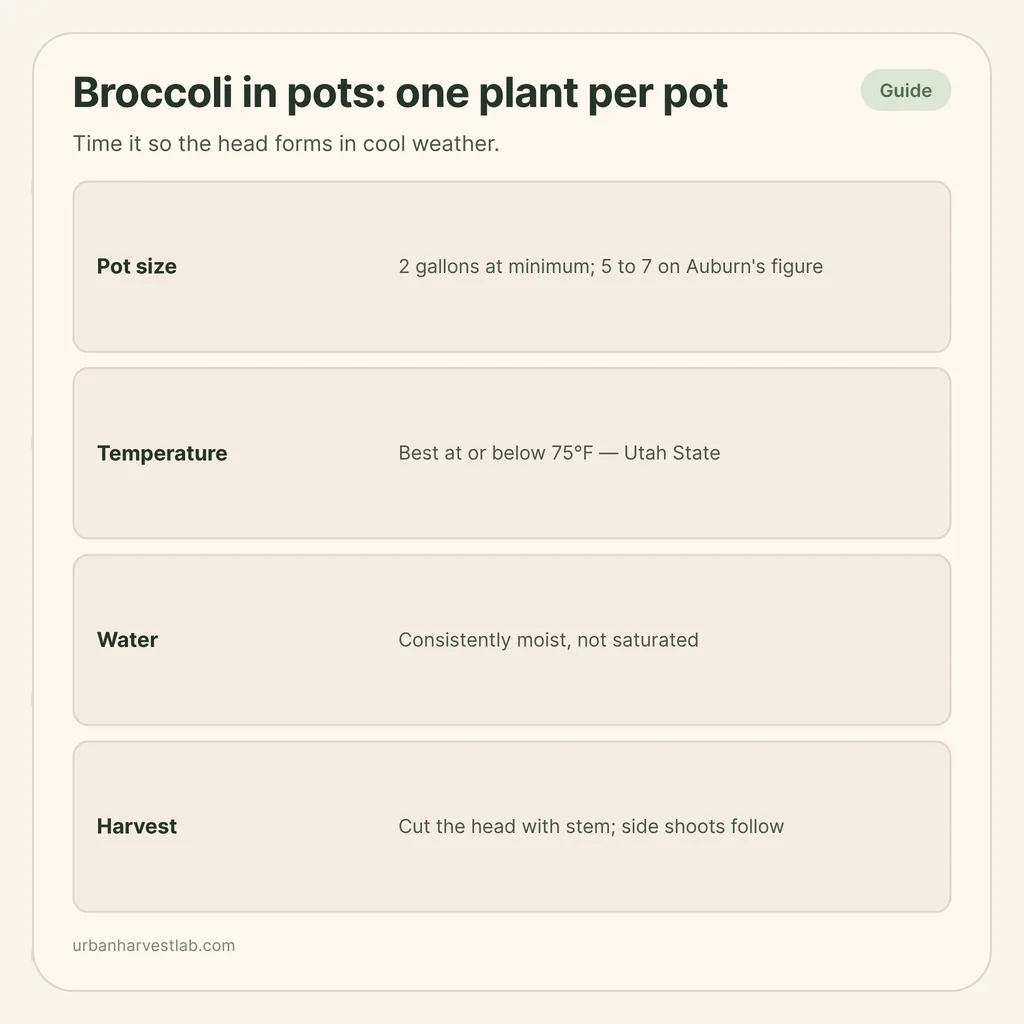
How to grow broccoli in pots: pot size, cool weather and side shoots
Broccoli works on a balcony if you give each plant its own pot, aim for cool weather, and cut the main head so the side shoots can follow.
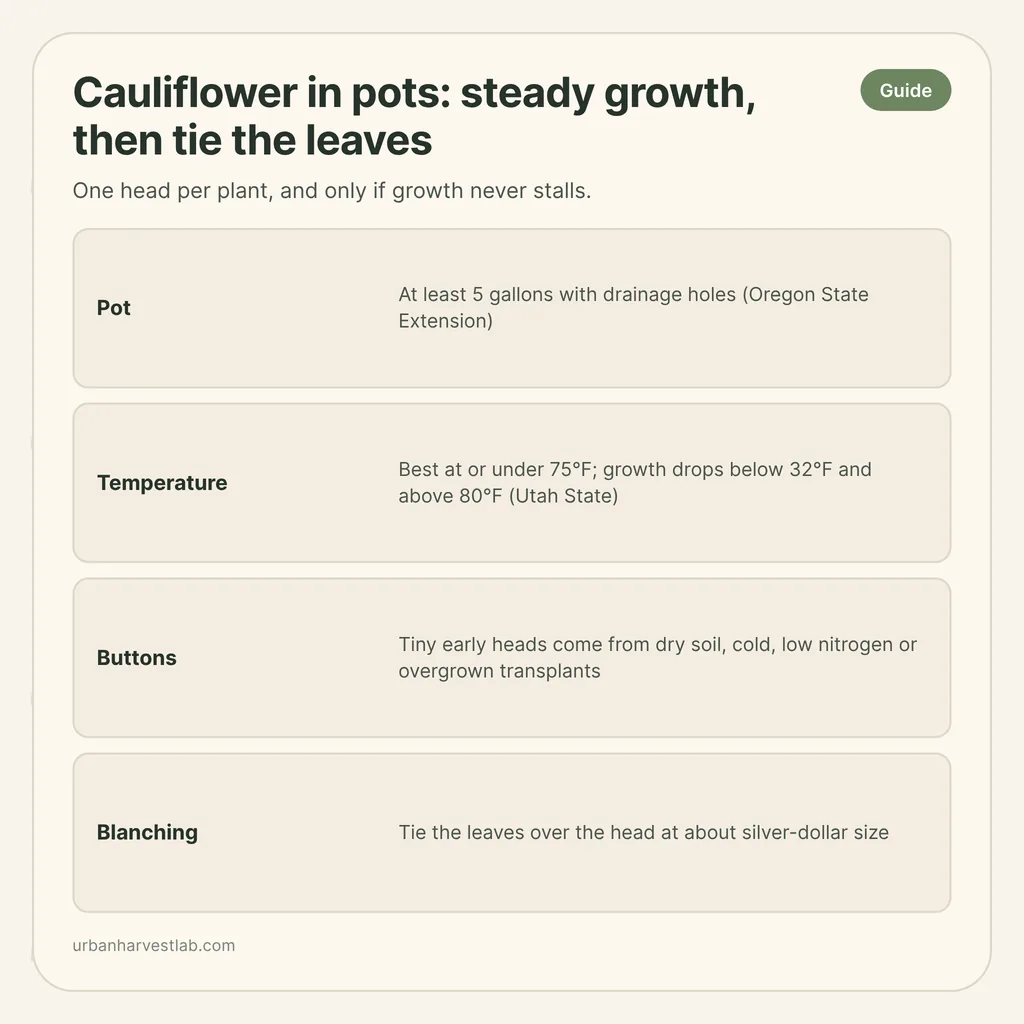
How to grow cauliflower in pots: cool weather, blanching and buttoning
Cauliflower is the fussiest of the cabbage family in a pot: it makes one head, wants steady cool weather, and needs its leaves tied over the curd.