
Troubleshoot the system before you change the inputs.
Symptoms
- Leaves and stems droop within hours or days of planting out, even though the soil is damp.
- Growth stops for several days after planting, with no new leaves.
- Lower leaves yellow or tips dry after the move, while the stem stays firm.
Possible causes
- The plant went straight from sheltered indoor conditions into full sun and wind without hardening off.
- The root ball dried out or was damaged or cramped when planted.
- The seedling was planted into hot, windy or cold weather, or was not watered in.
Quick fixes
- Shade and shelter the plant for a few days, and keep water at the base so the root ball does not dry out.
- Leave the roots and leaves alone: do not trim, re-pot or move the plant again unless the stem is rotting.
- If a plant does not survive, work out why and replace it within a week, as Purdue advises, and keep a few spares to fill gaps.
Seedling collapse after transplanting: what you are looking at
| What you see | Likely cause | What to do |
|---|---|---|
| Whole plant droops, stem firm, soil moist, first days outdoors | Transplant shock from sun, wind or disturbed roots | Shade and shelter for a few days, keep the root ball moist |
| Droops again each time the soil dries out | Root ball dried out before roots reached the new soil | Water around the base; do not wait for the plant to wilt |
| Stem pinched, dark and water-soaked at the soil line | Damping-off | Replace the plant; see the damping-off notes in the herb seedlings page |
| Stem cut through, base left standing, leaves missing | Chewing pest such as cutworm or earwig | Look in the soil near the plant at night |
| Leaves bleached or papery after a sunny day outside | Sun damage from skipped hardening off | Shade the plant and keep it watered |
Seedlings that droop, stall or yellow after you plant them out are usually reacting to a sudden change in light, wind and root moisture, and most pick up again within days to a couple of weeks. Keep the root ball moist, shade the plant from hard sun and wind, and leave it alone. If the stem itself is failing, start with why herb seedlings die.
Transplant shock is not a disease. It is the plant spending days or weeks rebuilding roots it lost or could not use, while its leaves keep losing water.
Why seedlings wilt after transplanting
Purdue’s Vegetable Crops Hotline puts the cause plainly: “Greenhouse growing conditions are very different from outdoor conditions.” A tray raised on a windowsill or under lights has not met direct midday sun, a gust, or a cold night. Nebraska Extension describes hardening off as an attempt to make plant cell walls thicken, and adds that strong spring wind can rip or tear leaves or snap stems.
Purdue notes that windy conditions make seedlings lose water more quickly, and a freshly planted seedling has the least capacity to replace it. The roots have been moved, and until they grow out into the new soil the plant is drinking from a small ball of mix.
That points to the usual culprits, in rough order:
- Planting out without hardening off.
- A root ball that dried out between watering and rooting in.
- Planting on a hot, windy or cold day.
- Roots that were cramped, torn or left in a thick circling mass.
University of Maryland Extension warns against a “thick mass of circling roots” in older transplants and says to dig a hole large enough to hold the root mass without cramping it.
What recovery looks like and how long it takes
Purdue says it may take a few days for transplants to start growing. The RHS tells growers to keep plants watered until the roots reach the surrounding soil, generally after 14 days. Between those two points, drooping at midday is normal, so check the soil with a finger rather than judging by the leaves. New growth at the centre of the plant is the sign it has settled.
A plant that is still flat at two weeks with a firm stem, moist soil and no new growth is stalled rather than dead. Check the soil is damp but not soggy and that the plant is getting enough light, and feed it: the RHS recommends fertiliser for a transplant that fails to grow, once water has been ruled out. If the leaves are bleached after a sunny day, that is sun damage rather than shock: see plants scorched after moving outside.
How to prevent it
Harden off first
The sources do not agree on the length. Purdue says to begin conditioning 4-8 days before setting plants out, starting in a shady spot when temperatures are at least 50°F. Nebraska Extension recommends 7-10 days, beginning with 2-3 hours in shade and wind shelter. The RHS transplanting page says two weeks for greenhouse-raised plants, and its hardening-off guidance gives 2 to 3 weeks. Purdue writes for commercial growers; at home a longer, gentler start costs little.
University of Maryland Extension sets two temperature limits: do not put tender seedlings out on windy days or below 45°F, and bring warm-season crops in at night if it will fall below 50°F. During hardening, ease off watering to slow growth, but do not let plants wilt, Maryland and Nebraska both say.
Pick the day and water twice
Maryland suggests planting on a cloudy, calm day, and Purdue prefers humid, overcast, calm weather where possible. Water the plants several hours before transplanting, says Maryland; the RHS says the day before, and also the planting site. Then water in each plant straight after, which Purdue puts at 8 fl. oz. per plant of plain water or starter solution, more if it is hot, windy and dry.
Handle the roots gently
The RHS says to avoid trimming roots or foliage as far as possible, because it reduces the plant’s capacity to recover. Dig the hole to fit the root ball, not the other way round. If you are planting into a pot or balcony container, the same rules apply, and the fuller routine for established plants is in repotting herbs without slowing growth.
Shade for the first few days
University of Maryland Extension says to protect tender plants from wind and direct sun for a few days after transplanting, so if the sun is strong or the forecast is windy, use a shade screen or move the pot out of the wind. The RHS suggests fleece for plants that are soft and fleshy and therefore vulnerable to weather stress, but keeps shading for the hottest weather only.
When they will not recover
Rule out the other ways a seedling goes down before you blame shock.
UC IPM says to find out whether damage came from chewing pests or from damping-off. A stem cut through with the base still standing is a pest. A stem that is pinched, dark and water-soaked but still attached is damping-off, which strikes seedlings growing slowly in cold, wet soil. Neither recovers. The wider list of causes is in why herb seedlings die. Tomatoes that droop with a different pattern are covered in tomato plant wilting.
Purdue’s advice is that if some plants do not survive you should try to work out why and replace them within a week to minimise crop delay. The RHS says the occasional loss is likely and suggests keeping a few spare plants to fill gaps that appear within a month of planting. If you are planning how many to start, the seed starting calculator works backwards from your last frost date.
Two look-alikes deserve a mention. Tall, pale seedlings that flopped before you moved them have a light problem, not a transplant one: leggy seedlings. Purple tinting is a different symptom again: seedlings turning purple.
Sources
- Purdue University Vegetable Crops Hotline, “Setting Your Transplants Up for Success”
- University of Maryland Extension, “Planting Vegetable Transplants”
- Nebraska Extension in Lancaster County, “Hardening Off Transplants”
- Royal Horticultural Society, “Vegetables: transplanting”
- Royal Horticultural Society, “When to Plant Out Tender Plants to Avoid Late Frosts”
- UC IPM, “Damping-Off Diseases in the Garden”
Related seedling problems
If shock does not explain what you are seeing, these pages cover the neighbouring causes.
Common questions
How long does transplant shock last in seedlings?
Purdue Extension says it may take a few days for transplants to start growing, and the RHS says plants need watering until roots reach the surrounding soil, generally after 14 days. Treat a few days of drooping as normal and the second week as the point to look harder.
Should I fertilize seedlings that are wilting after transplanting?
Purdue and University of Maryland Extension both describe a starter or weak liquid fertilizer in the water used to water the plant in. The RHS says starter fertiliser applied at transplanting can help recovery, and recommends fertiliser for a transplant that fails to grow once water has been ruled out. Fertiliser does not replace water or shade, so check those first.
Will wilted seedlings recover on their own?
Most do if the root ball stays moist and the plant is shaded from strong sun and wind for a few days. The RHS notes that the occasional loss is likely, and Purdue advises that if some plants do not survive you work out why and replace them within a week to minimise crop delay.
Is it transplant shock or damping-off?
Shock leaves a firm stem that droops. UC IPM describes damping-off as a pinched, dark, water-soaked stem at the soil line, and a stem that is cut through with the base intact points to a chewing pest.
Related guides

Plants scorched after moving outside? What to do
A houseplant or seedling that goes straight into outdoor sun can bleach within hours. The damaged leaves will not heal, but the plant usually does.
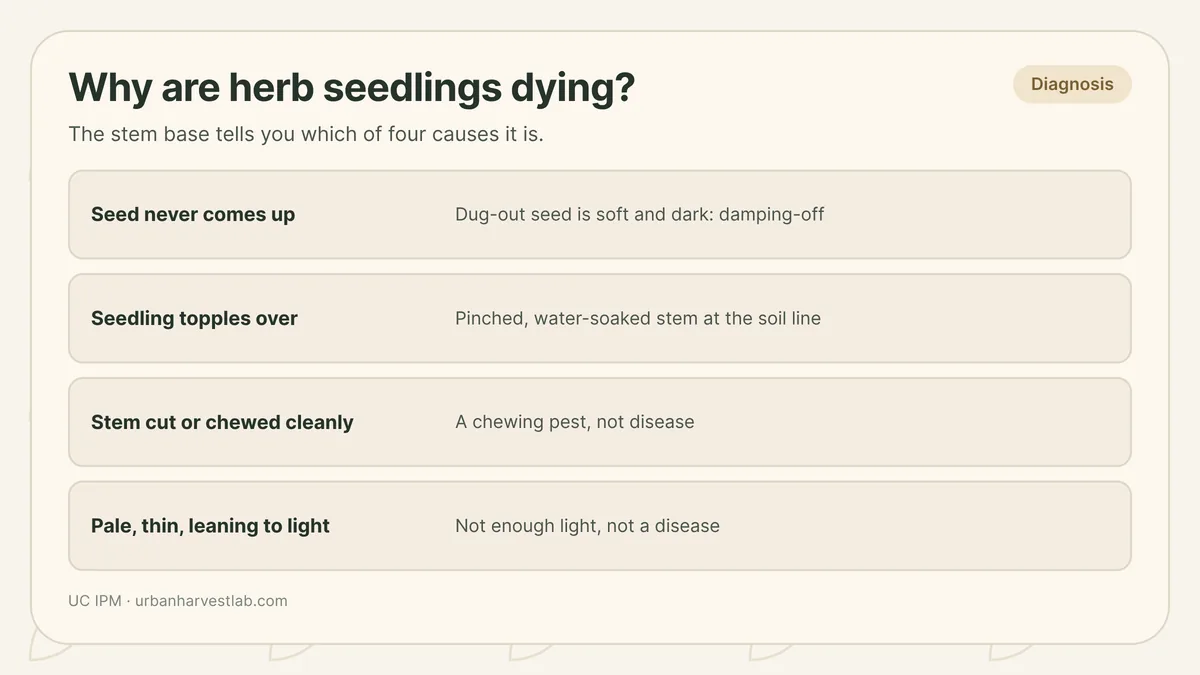
Why are my herb seedlings dying?
A tray of herb seedlings can fail three or four different ways, and they do not all look the same up close. The stem base and the seed itself tell you which one you have.
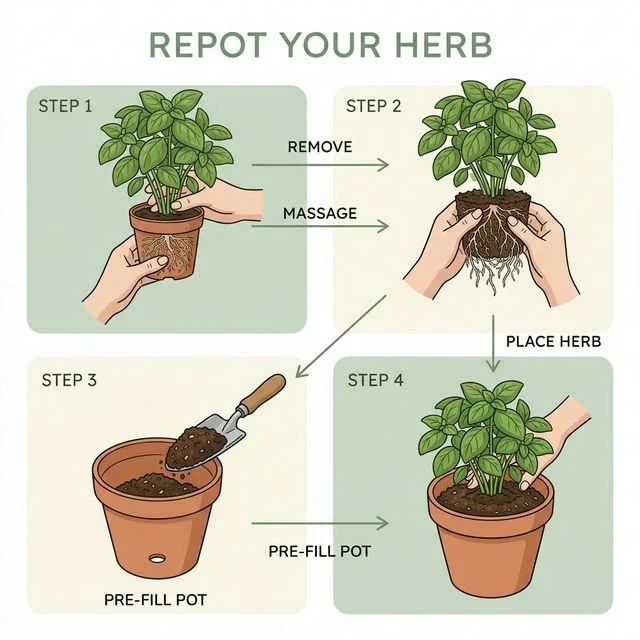
How to repot herbs without slowing growth
Moving an herb to a bigger pot should trigger a massive growth spurt. If your plants wilt and drop leaves after repotting, you are suffering from transplant shock. Here is how to upgrade your container without stressing the roots.