
Troubleshoot the system before you change the inputs.
Symptoms
- Full-size tomatoes stay green for weeks, or turn yellowish green to yellowish orange instead of red.
- Fruit stalls during a hot spell, or in cool autumn weather with nights in the 50s F.
- Many small green fruit are still on the plant when frost is in the forecast.
Possible causes
- Daytime temperatures above about 85 F, which shut down red pigment production.
- Cool weather: nights below 54 F slow ripening, and red color will not develop below 50 F.
- End of season: fruit set late is too small to mature in the weeks left.
Quick fixes
- In heat, shade the plant in the hottest part of the afternoon and wait for temperatures to drop.
- Before frost, pick full-size fruit and bring it indoors to ripen at 60-65 F.
- Prune off very small green fruit so the plant puts its energy into fruit that can still finish.
Tomatoes that sit full-size and green are usually waiting on temperature. Red pigment will not form when it is too hot or too cool, and late in the season the plant may simply be out of time. Work out which of the three you have, then either shade and wait, or pick the fruit and finish it indoors.
For how to read a tomato that is already coloring, see when container vegetables are ripe. What follows is for the fruit that does not get there.
Which problem do you have?
| What you see | Likely cause | What to do |
|---|---|---|
| Full-size green fruit, or yellowish green to yellowish orange fruit, during a hot spell | Heat above about 85 F | Shade the plant, wait for cooler days |
| Full-size green fruit in autumn, nights in the 50s F | Cool weather | Pick before frost and ripen indoors |
| Lots of small, hard green fruit near the end of the season | Not enough time left | Prune the smallest, ripen the largest indoors |
| Frost in the forecast | End of season | Harvest full-size fruit now |
Heat: the red pigment switches off
Purdue Extension explains that tomatoes do not produce lycopene and carotene, the pigments behind ripe color, when temperatures are above 85 F. The fruit that results often looks yellowish green to yellowish orange. Colorado State Extension gives the same 85 F figure. South Dakota State Extension says temperatures above 86 F significantly reduce the red and yellow pigments, and depending on the variety the fruit may turn yellow or stay partly green. Purdue gives 68-77 F as the best range for ripening.
The plant is not sick, so there is nothing to treat. Purdue’s advice is blunt: there is not much a gardener can do but wait out the weather. You can still take the edge off a pot on a balcony. A pot in full afternoon sun on a balcony carries extra heat. Shade the pot and the fruit through the worst hours; the heatwave guide for container plants covers how. Varieties differ too: South Dakota State points to cultivar differences in resistance to both heat and cold.
Cold: ripening slows, then stops
South Dakota State Extension says nights below 54 F slow ripening, and that red color will not develop below 50 F. Colorado State Extension adds that extended exposure to cool temperatures interferes with ripening and flavor development. A cool, bright September can leave a plant covered in fruit that stays green outdoors. Fruit that has already started to blush is the best candidate to hold on the plant under a cover; Colorado State says covering works well for nearly red tomatoes, but not as well for mature green ones. If a cold night is forecast, the cold snap guide lists what protects a pot, and your first frost date tells you how long you have.
End of season: too late to finish on the plant
Colorado State Extension points out that ripening a lot of fruit takes a great deal of energy from the leaves and tends to delay the whole crop. It recommends pruning off small, very green fruit that will not mature in the remaining season. That sends what the plant has left into the larger fruit.
If flowers are still dropping rather than setting, that is a separate problem: see tomato flowers falling off.
How to ripen green tomatoes indoors
Pick before frost. Colorado State Extension says to pick and bring fruit indoors before frost hits and the plants go down. Which fruit is worth picking? Purdue Extension says tomatoes that have reached at least the mature green stage, full size, can be ripened off the vine. Look for a color change to at least a lighter green; a little blush is even better. Colorado State says mature green fruit will develop good flavor, though South Dakota State notes it will not quite match fruit ripened outdoors. Iowa State Extension says to remove all mature, greenish white fruit just before the first frost.
Then:
- Wrap or space them. Iowa State wraps each tomato in newspaper. Purdue packs fruit in shallow layers in a well-aerated place. Colorado State uses open, well-ventilated cardboard boxes at room temperature.
- Keep them mild. Purdue gives 60-65 F for mature green to slightly blushed fruit, or warmer if you want faster ripening. Iowa State also uses 60 to 65 F in a dark place such as a basement. Colorado State gives 55 to 70 F for ripening tomatoes, and says mature green tomatoes will ripen in 14 days at 70 F.
- Skip the sunny window. South Dakota State Extension says light is not necessary for ripening and that a sunny window shortens shelf life.
- Do not use the refrigerator. Purdue says the typical home fridge is too chilly for tomatoes.
- Check often. Iowa State says to inspect frequently and discard damaged or decaying fruit; South Dakota State adds that rotting fruit contaminates the rest.
Iowa State also describes a second route: pull up the whole plant and hang it upside down in a cool, dark place.
Sources
- Purdue Extension: Tomatoes not ripening?
- Colorado State University Extension, PlantTalk Colorado: How to ripen green tomatoes
- Iowa State University Extension: Can I ripen green tomatoes indoors before frost?
- South Dakota State University Extension: How to handle those green tomatoes
- South Dakota State University Extension: Will heat make my tomatoes ripen faster?
Keep the harvest going
Reading ripeness, protecting plants from heat, and the end-of-season calendar.
Common questions
At what temperature do tomatoes stop turning red?
Purdue and Colorado State Extension both say the red pigments lycopene and carotene are not produced above 85 F; South Dakota State Extension says color is significantly reduced above 86 F. At the other end, South Dakota State says red color will not develop below 50 F. Purdue gives 68-77 F as the best range for ripening.
How long do green tomatoes take to ripen indoors?
Colorado State Extension says mature green tomatoes will ripen in 14 days at 70 F. Cooler storage at 60-65 F, as Purdue and Iowa State use, is slower.
Can green tomatoes ripen indoors?
Yes, if they have reached at least the mature green stage. Purdue Extension looks for a color change to at least a lighter green, and a little blush is better. Very small, deep green fruit will not mature.
Should I put green tomatoes on a sunny windowsill?
No. South Dakota State Extension says a sunny window shortens shelf life and that light is not necessary for ripening. Iowa State Extension stores wrapped fruit in a dark place at 60 to 65 F.
Should I refrigerate green tomatoes to slow them down?
No. Purdue Extension says a typical home refrigerator is too chilly for storing tomatoes, and Colorado State Extension notes that extended cool exposure interferes with ripening and flavor.
Related guides

Tomato flowers falling off: heat, cold nights, and stress
Flowers that yellow and fall without setting fruit are usually reacting to temperature or stress, not disease. Work out which, then change the one thing that applies.
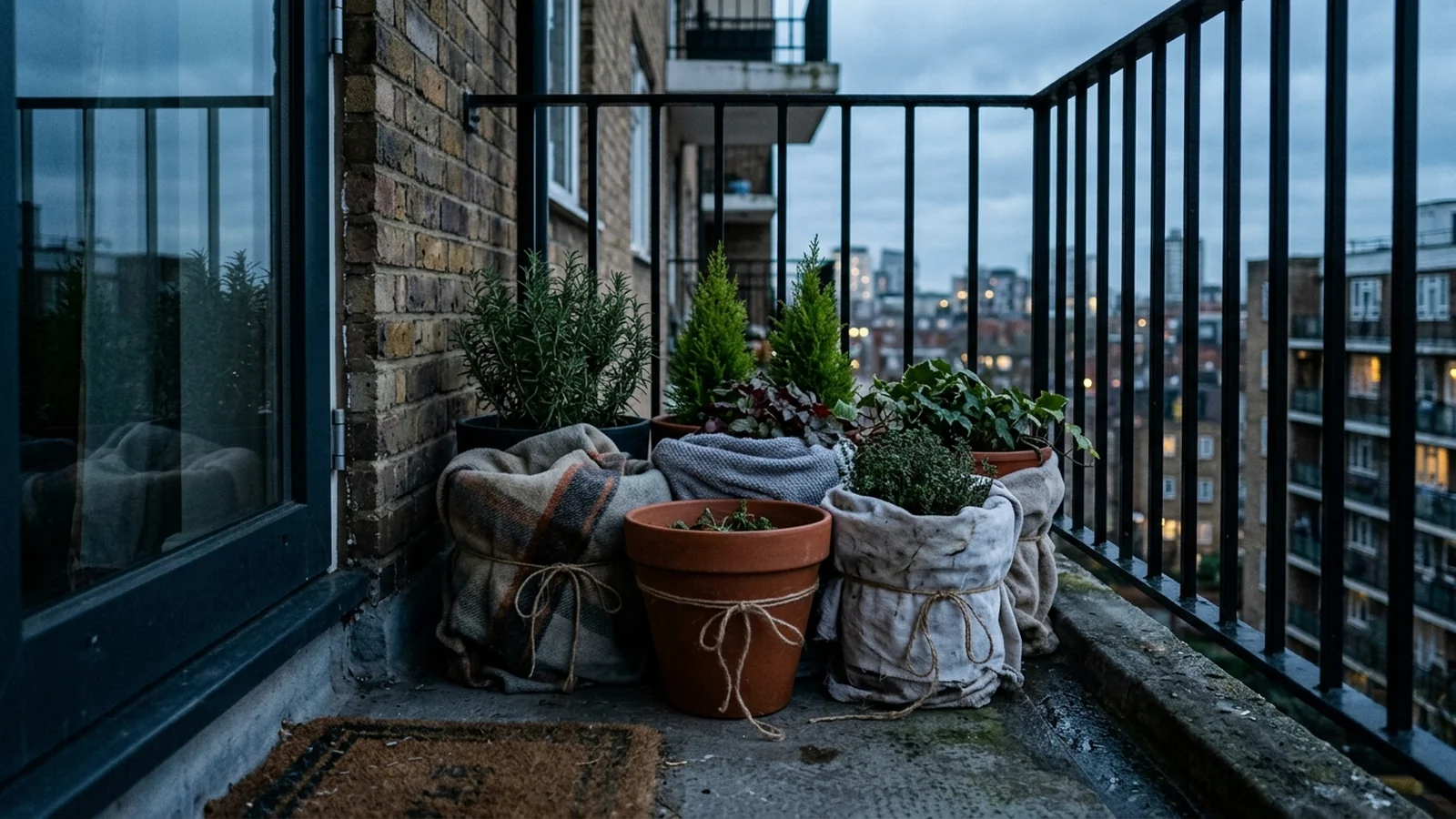
Emergency cold snap protection for balcony container plants
A frost or freeze warning lands differently when the only space you have is a balcony, a windowsill, and a flat with no garage to wheel anything into. Here is the version of this response that assumes that.
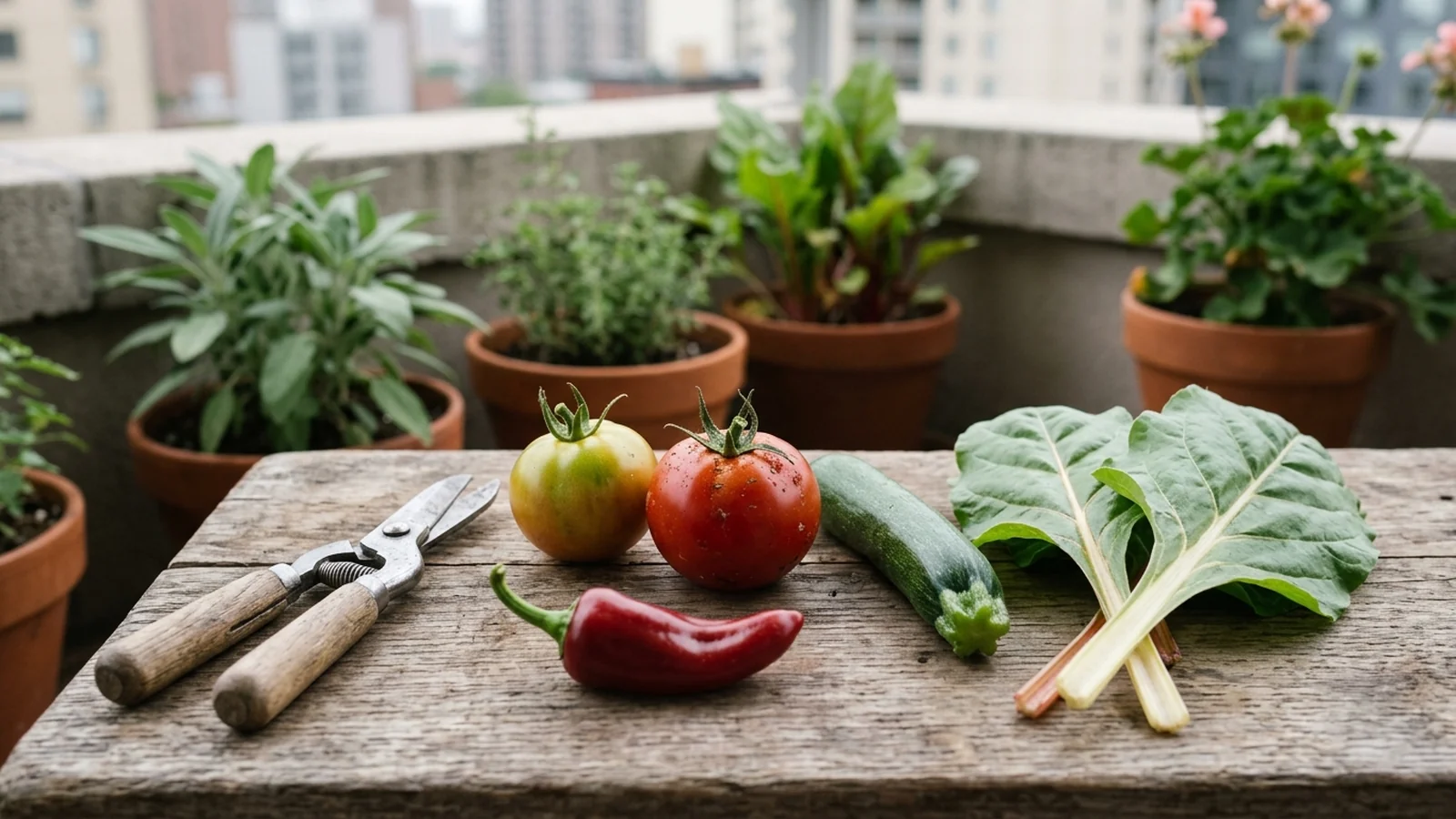
When container vegetables are ripe, crop by crop
A tomato tells you it's ready with color and give. A zucchini tells you with size and how easily it lets go. The signal is different for every crop, and waiting costs more when the plant only has a pot's worth of reserve behind it.