Troubleshoot the system before you change the inputs.
Symptoms
- Small green fruit up to about half an inch across falls in the weeks after the petals drop.
- Larger, nearly full-size fruit falls while the tree still has leaves.
- Fruit drops within days of moving the tree, a heat spell or a cold draught.
- Fallen fruit shows soft rot, grey mould or marks.
Possible causes
- The tree set more fruit than its leaves can feed and is thinning itself.
- Hot weather arrived suddenly at or just after fruit set.
- The mix dried out badly or stayed waterlogged.
- A sudden change in temperature or position.
- Heavy pruning removed foliage the fruit depended on.
- Inadequate nutrition, or pests feeding on the tree.
Quick fixes
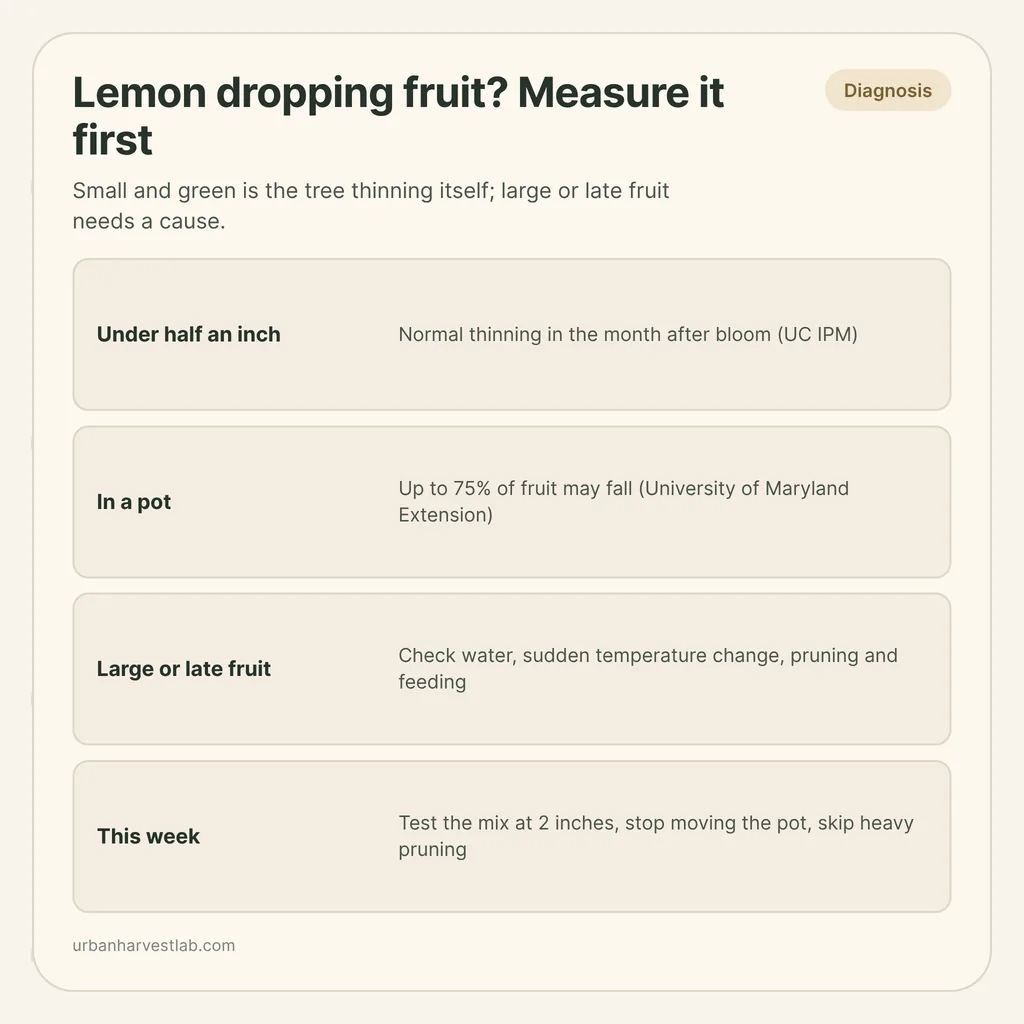
- Measure the fallen fruit first. Small fruit in the month after bloom is normal thinning.
- Press a finger 2 inches into the mix and water on that basis, emptying the saucer afterwards.
- Keep the tree in one spot and avoid sudden swings in temperature.
- Prune lightly, and preferably shortly before or after blossoming.
- Feed with a citrus fertilizer only while it is actively growing.
- Check leaf undersides for scale, mites and whiteflies.
If the fruit is small and green and it falls in the weeks after the blossoms, your lemon is thinning itself, which is normal. If it is large or nearly ripe, look at water, sudden temperature changes, pruning and feeding. Pick up a few fallen fruit and measure them before you change anything.
For the rest of the tree’s care, see growing dwarf citrus indoors.
Small fruit: the tree is editing itself
UC IPM says citrus “normally drops many small fruit beginning shortly after the blossoms fall and continuing for about 1 month.” Drop can continue until the fruit is half an inch across or a little more. The same page calls extensive drop of small fruit normal and generally unavoidable.
The reason is arithmetic. UC IPM explains that citrus adjusts its fruit load to its amount of foliage, because leaves make the carbohydrates the fruit needs. University of Florida’s extension guide describes the June drop, usually 8 to 10 weeks after bloom, as seeming to result from competition between fruitlets and young leaves for carbohydrates, water and other metabolites.
Pots make it more dramatic. University of Maryland Extension says potted plants typically set more fruit than they can support, and that the amount of drop may be alarming, with up to 75% of fruit falling. University of Wisconsin Extension agrees that potted trees often set much more than they can carry, so fruit drop is very common.
None of this calls for a fix. Keep the water steady and wait. A lemon that sets fruit in spring needs a long time to ripen it: Wisconsin puts lemons and limes at six to nine months from blossom to harvest.
Large or late fruit: look for a cause
Fruit that has grown past the fingertip stage and then falls is a different signal. UC IPM lists what can cause excessive drop of larger, older fruit: drought stress, freezing weather, inadequate nutrition, heavy or improper pruning, windy conditions, and high temperatures or sudden changes in temperature. It adds that this kind of drop is generally related to cultural practices, environmental conditions or pest problems, some of which can be modified.
University of Florida adds that a combination of factors, not a single one, may cause fruit drop, which makes an exact diagnosis difficult. Work through the list below from the cheapest check to the hardest.
Water
UC IPM says appropriate irrigation is especially important, and University of Florida says to minimize water stress. Indoors, University of Maryland Extension says to check the mix once or twice a week by pressing a finger 2 inches down, and to water when it feels dry, until water drains, then empty the saucer. Maryland also reads the tree’s own signals: leaf drop points to overwatering, and flower drop points to a mix that is too dry. The overwatered vs underwatered guide separates the two when the plant is less clear.
Sudden change
Both Maryland and Wisconsin name abrupt change as a trigger. Maryland says fruit drop also occurs as a response to a sudden change in temperature. Wisconsin says drastic environmental changes can cause leaves, flowers and young fruit to drop. In a flat that means a move to a new window, a spell by a radiator, a cold draught when you open the door, or the trip in from the balcony. UC IPM adds sudden heat at fruit set as a cause of excessive small-fruit drop. If the leaves are falling as well, the leaf drop after moving indoors guide covers the adjustment period.
Pruning
Foliage is the fruit’s supply line. UC IPM says to avoid excessive pruning because less foliage means less fruit the tree can support, and that shortly before or after blossoming is generally the best time to prune. So prune lightly, and preferably shortly before or after blossoming.
Feeding
UC IPM says to give trees proper nutrition, primarily adequate but not excessive nitrogen. University of Florida notes that low potassium can aggravate drop in heavy crop years. For a pot, Maryland recommends a 2-1-1 or 3-1-1 N-P-K fertilizer or a product labeled for citrus during the growing season, and says you do not need to fertilize in winter. If the leaves are pale as well, the citrus yellow leaves guide reads the pattern.
Pests and rot
Maryland lists scale insects, mites, mealybugs, whiteflies and aphids as the usual citrus pests, and UC IPM says certain pest problems may cause fruit drop. Turn a few leaves over, and look for sticky residue (see sticky leaves and honeydew). UC IPM notes that fruit lost to gray mould or brown rot may drop, but by then the decay is often obvious on the fruit. Soft or marked fruit on the floor is a rot problem, not a thinning one.
What to do this week
- Measure the fallen fruit. Under about half an inch, in the month after bloom, is normal thinning; only look further if it follows a heat spell or a move.
- Test the mix at 2 inches and fix the watering routine.
- Stop moving the pot. Keep it clear of heaters and draughts.
- Skip heavy pruning and heavy feeding while you sort out watering.
Sources
Citrus on a windowsill
Growing dwarf citrus indoors and reading its leaves.
Common questions
Why is my lemon tree dropping tiny fruit?
It is most likely thinning itself. UC IPM says citrus normally drops many small fruit beginning shortly after the blossoms fall and continuing for about a month. University of Maryland Extension says potted citrus sets more fruit than it can support and that as much as 75% may fall.
When is fruit drop on a lemon tree a problem?
When large or nearly full-size fruit falls, or when the fruit that drops is rotting or marked. UC IPM ties drop of larger, older fruit to drought stress, freezing weather, inadequate nutrition, heavy pruning, wind and sudden temperature changes.
How many lemons should a potted tree keep?
The sources give no target number. UC IPM says the tree adjusts its fruit load to its amount of foliage, so a healthy, leafy tree holds more than a thin one.
Should I stop the drop with fertilizer?
Not as a first move. UC IPM advises adequate but not excessive nitrogen, and University of Maryland Extension says you do not need to fertilize citrus in winter. Check watering and recent changes in temperature or position first.
Related guides

Citrus leaves turning yellow indoors: iron, nitrogen, water or winter light
Where the yellow starts and whether the veins stay green separate nitrogen, iron, magnesium and wet roots on a potted lemon, lime or orange.

Plants dropping leaves after moving indoors: light, dry air, and what to do
A plant that sheds leaves in the weeks after moving inside is mostly adjusting to much weaker light. Dry winter air, drafts and carried-over watering habits add to it.
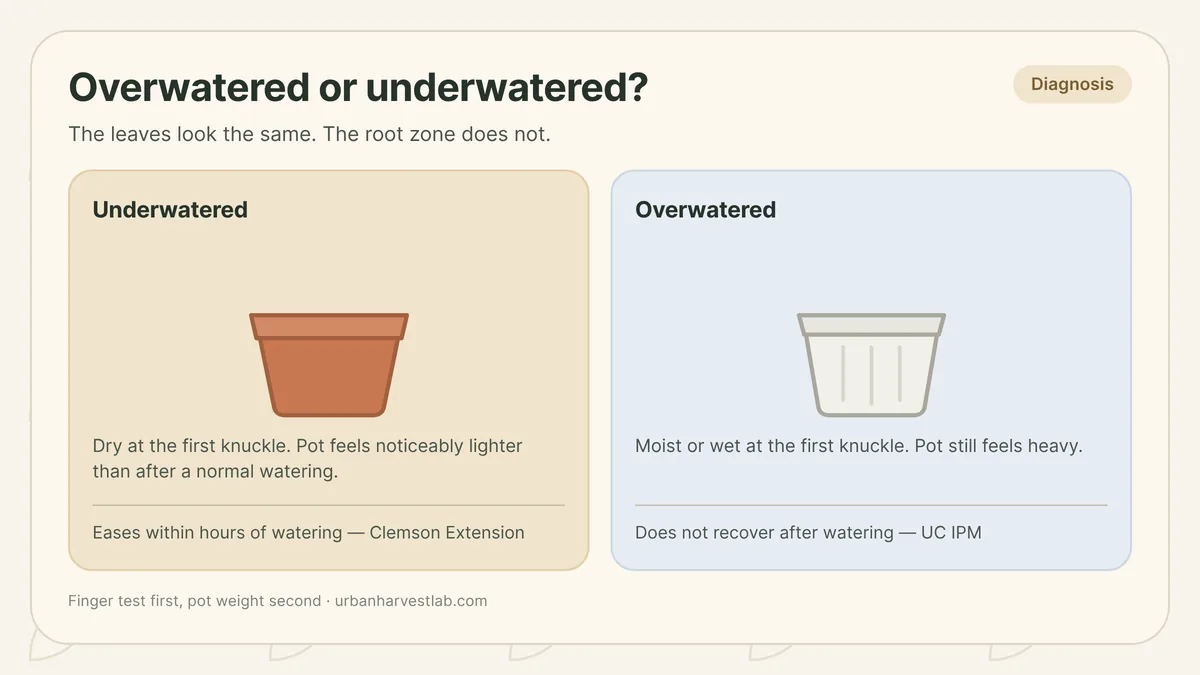
Overwatered vs underwatered: how to tell which one you have
Reading the root zone directly, with a finger test, pot weight, and how the plant responds to being watered, settles what the leaves alone cannot.