Troubleshoot the system before you change the inputs.
Symptoms
- Leaves, stems or the surface below the plant feel tacky and look glossier than normal.
- A black, soot-like film on leaves or on the pot rim, saucer or shelf.
- Ants walking up the stem or around the pot.
Possible causes
- Aphids clustered on new growth, buds or leaf undersides.
- Soft scale: waxy or rounded bumps on stems and leaf veins with covers that do not lift off.
- Mealybugs: small, cottony, wax-covered insects in the crown, stem junctions or between touching leaves.
- Whiteflies: tiny winged insects with whitish wings on the leaves, with nymphs on leaf undersides.
- Honeydew dripping from an infested plant growing above or beside the sticky one.
Quick fixes
- Trace the stickiness upward and sideways to the highest sticky spot, then inspect stems, growing tips and leaf undersides with a hand lens.
- Once you know the insect, follow the page for that insect rather than treating the residue.
- Wash honeydew and sooty mold off with a strong stream of water, or soap and water, after the insects are dealt with.
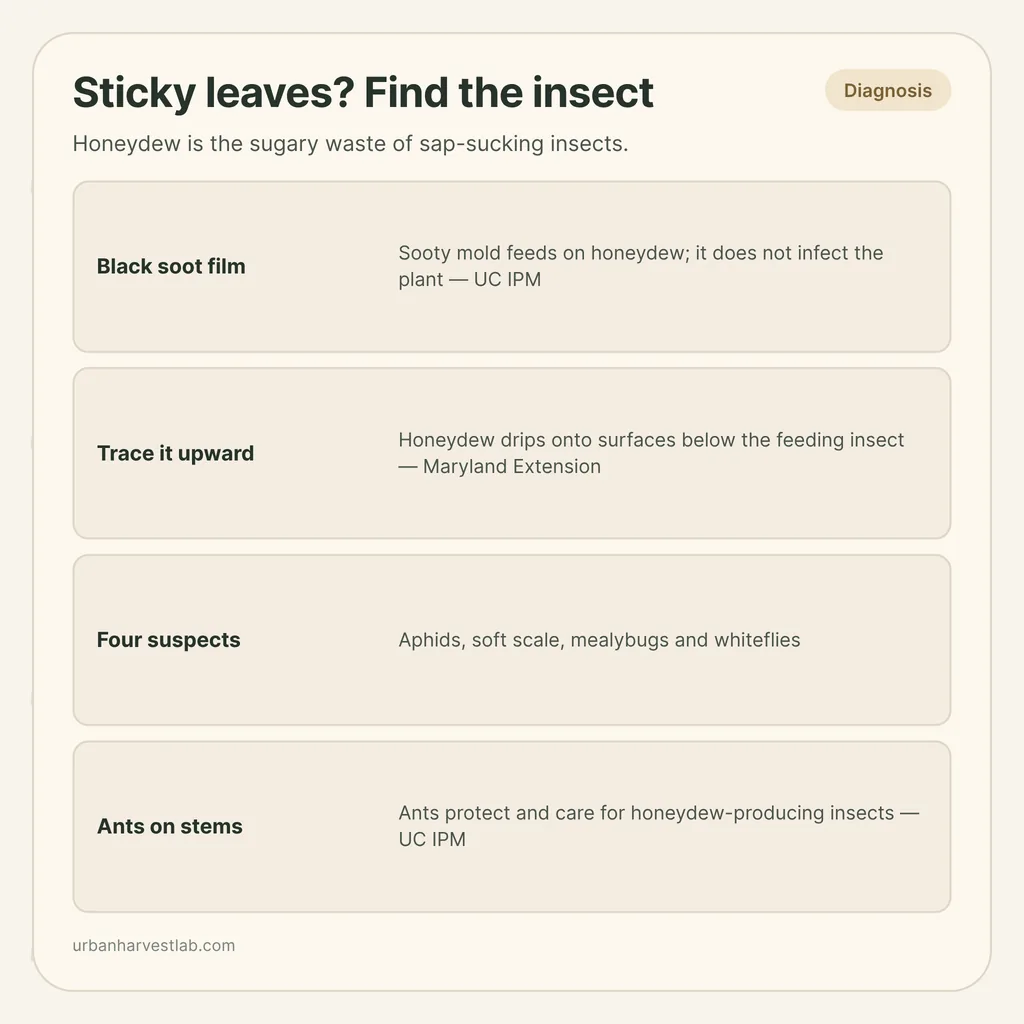
Sticky leaves are almost always honeydew: the sugary waste of sap-sucking insects. Find the insect and the stickiness goes with it. The usual suspects are aphids, soft scale, mealybugs and whiteflies, and the herb pest identification chart puts all of them side by side if you want a quick comparison first.
Is it really honeydew?
University of Maryland Extension describes honeydew as a clear, sticky liquid left over when an insect takes in far more sap than it can use. Leaves coated in it look glossier than normal and feel sticky to the touch. The same page notes it can appear on any plant with sap-sucking insects, outdoors or indoors.
A black, soot-like film on top is sooty mold, a fungus that feeds on the honeydew. UC IPM is clear that it does not infect the plant, and that finding it means a sucking insect population is present, or has been. The film is a signpost. Treat it as the second symptom and keep looking for the first.
The sticky leaf is not always the infested one
Honeydew falls. Maryland Extension says it drips or is squirted onto surfaces near or below the feeding insect, and Colorado State University Extension notes it can land on furniture under an infested houseplant. On a balcony or a crowded shelf, that means a clean plant can be sticky because a neighbour above it is not.
So trace the stickiness upward. Find the highest sticky spot, then check the plant, or the stem, directly over it. Maryland Extension adds that these insects need to stay fairly sedentary while feeding, so the producer is usually close to the residue.
Which insect is it?
Work from growing tips down, then leaf undersides, stem junctions and the crown. A hand lens helps, because crawlers and young insects are very small.
| What you see | Likely producer | What settles it |
|---|---|---|
| Small soft-bodied insects clustered on new shoots and buds | Aphids | UC IPM: a pair of tubelike cornicles projecting backward from the hind end, which no other insect has |
| Immobile bumps on stems or along veins | Soft scale | UC IPM: soft scales are larger, rounded and convex, and their covers do not lift off |
| Small, cottony or waxy tufts in the crown, stem joints or between touching leaves | Mealybugs | UC IPM: wingless females with oval, segmented bodies covered in wax |
| Tiny winged insects with whitish wings, with nymphs under the leaves | Whiteflies | UC IPM: adults have yellowish bodies and four whitish wings |
Do not expect a photo match every time. UC IPM warns that mealybugs can be confused with cottony cushion scale, woolly aphids, soft scales and whiteflies, which also produce wax and honeydew. Narrowing it to this group is enough to choose the right page, and each of them has its own: aphids, scale on woody herbs, mealybugs and whiteflies.
One useful elimination: UC IPM says armored scales, the flat type with covers that usually lift off, do not secrete honeydew. If the leaves are sticky, the bumps you found are either soft scale or something else is making the honeydew.
What the ants are telling you
Ants walking a stem are a second pointer. UC IPM says ants protect and care for honeydew-producing insects such as aphids, soft scales, whiteflies and mealybugs, which can increase the damage from those pests. Maryland Extension notes that a large number of ants travelling along plant stems often suggests a pest population is present. If ants and stickiness show up together, the ants in potted plants page covers baits and why treating ants alone does not work.
When you find nothing
Look again before concluding there is no insect. Colonies hide in the crown, under touching leaves and at stem joints, and the youngest insects are hard to see. Check the plants around and above the sticky one, as described above, and look again over the following few days. New honeydew on a leaf you have already wiped clean means the producer is still feeding somewhere nearby.
Dealing with it once you know the insect
Go after the insect. UC IPM says control of sooty mold begins with managing the insect creating the honeydew, and that as honeydew production lessens the mold gradually decreases. Maryland Extension says both residues wear off over time once the pest populations are under control.
On sturdy plants, UC IPM says a strong stream of water knocks aphids off; most cannot climb back, and their honeydew washes off with them. For the leftover residue and the mold, UC IPM says it can be washed off plants and surfaces with a strong stream of water or soap and water.
Anything beyond that depends on the insect and on whether the plant is one you will eat. The insect-specific pages cover the options, and the pest treatment guide for edible plants covers the label rules that apply to herbs and vegetables. Preventing pests on indoor herbs is easier than clearing an established colony.
Is the sooty mold itself a problem?
UC IPM says a coat thick enough to keep sunlight off the leaf reduces photosynthesis, which can stunt growth and age leaves early, and leaves may drop. UC IPM also says fruit or vegetables covered in sooty mold are still edible once the mold is washed off with mild soap and warm water. The insects feeding on the plant are the part to act on.
Sources
- UC IPM, Sooty Mold (Pest Notes 74108)
- University of Maryland Extension, Honeydew and Sooty Mold
- UC IPM, Aphids (Pest Notes 7404)
- UC IPM, Scales (Pest Notes 7408)
- UC IPM, Mealybugs (Pest Notes 74174)
- UC IPM, Whiteflies (Pest Notes 7401)
- UC IPM, Ants (Pest Notes 7411)
- Colorado State University, Houseplant pests
Name the insect making the honeydew
Each of these insects produces honeydew. These pages cover identifying and controlling each one.
Common questions
What are sticky leaves on a plant a sign of?
Most often honeydew, the sugary liquid that sap-sucking insects excrete while they feed. University of Maryland Extension names aphids, whiteflies, mealybugs and soft scale among the producers, and notes that honeydew can appear on any plant with these insects, indoors or out. Leaves coated with it look glossier than normal and feel sticky.
Is the black stuff on sticky leaves harmful?
It is sooty mold, a fungus that grows on honeydew rather than on the plant. UC IPM says it does not infect plants, but a coat thick enough to block sunlight can reduce photosynthesis and stunt growth. It decreases once the insects producing honeydew are brought down, and it can be washed off.
Which insects do not make sticky honeydew?
UC IPM says armored scales do not secrete honeydew; their covers usually lift off the body. Soft scales do, and their covers do not lift off. So if the leaves are sticky, look for aphids, soft scale, mealybugs or whiteflies instead of armored scale.
Can I eat herbs or vegetables that have sooty mold on them?
UC IPM states that fruit or vegetables covered with sooty mold are still edible and that the mold can be washed off with mild soap and warm water. That covers the mold only. Sticky leaves mean an insect is feeding on the plant, and any spray you use on an edible crop must be labeled for that crop.
Related guides
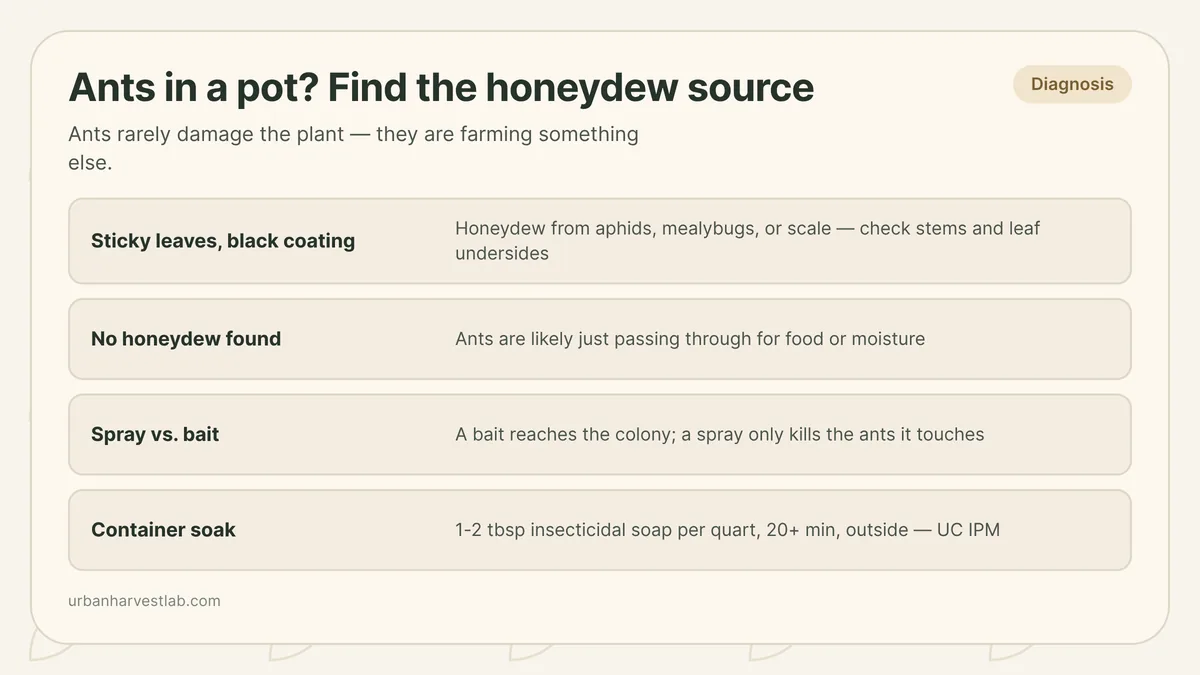
Ants in potted plants: what they mean and how to stop them
A trail of ants on a potted plant is almost always chasing honeydew from another pest, not damaging the plant itself, so the fix starts with finding that pest.
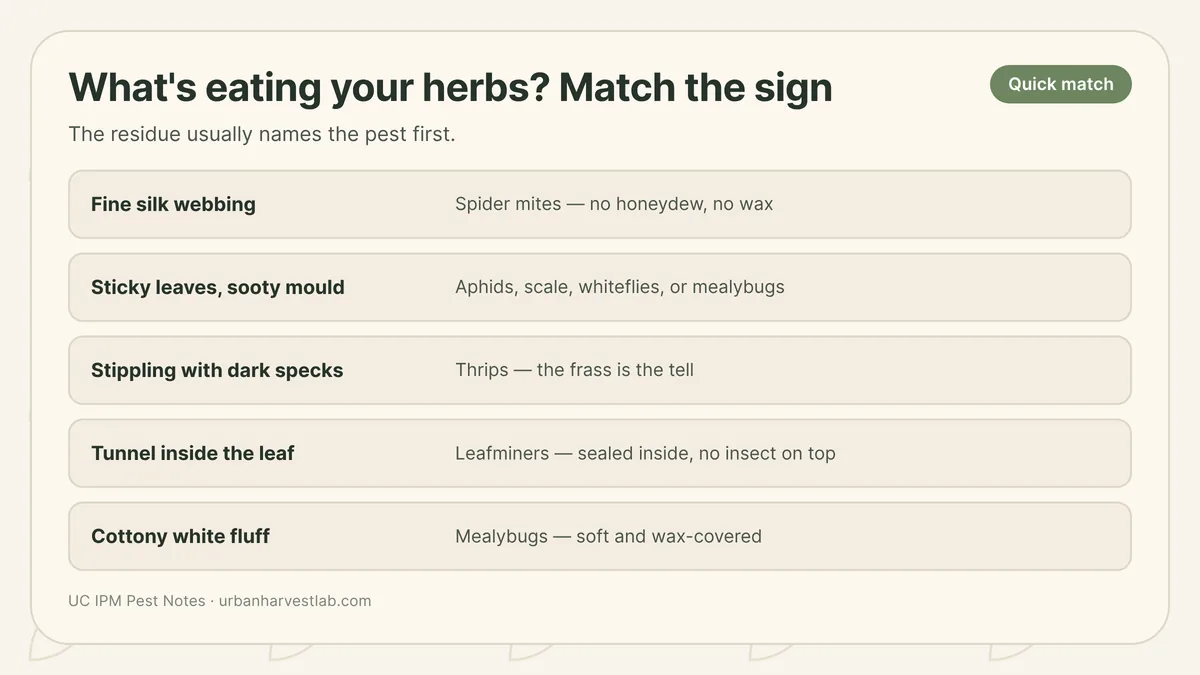
What's eating your herbs? Match the signs to the pest
Every common herb pest leaves its own tell before you ever spot the insect itself. Pick out what you are actually seeing, then go straight to the page that treats it.
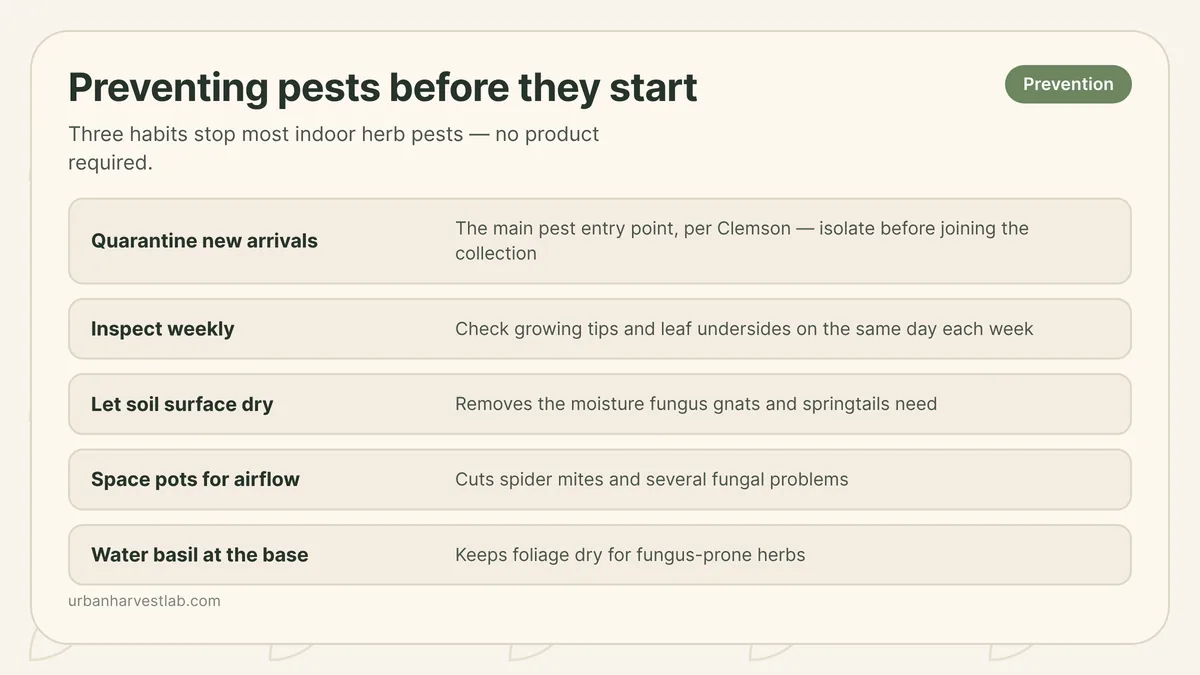
Preventing pests on indoor herbs before they start
Most indoor herb pests arrive on a new plant or one that spent summer outdoors, and most of them are stopped by isolating that plant, checking it on a schedule, and keeping the soil and air from favoring the pest in the first place.