Troubleshoot the system before you change the inputs.
Symptoms
- Leaves and stems wilt, and the plant stays wilted after watering.
- Roots lifted out of the pot are brown to black and may be soft.
- Stems may carry a ring of brown or black tissue at or near soil level.
- The mix stays wet or the pot stays heavy long after the last watering.
Possible causes
- Soil that stays saturated: In garden soil, UC IPM says Phytophthora diseases can develop in as little as 4 to 8 hours of saturation.
- No drainage hole, a blocked one, or a saucer that holds water around the pot.
- Too much water too often: Clemson says too much water increases the occurrence of root rot.
- Old, unsterilized soil or a reused pot that carries the fungi into the next plant.
Quick fixes
- Stop watering and lift the plant out to look at the roots.
- Cut out the brown, soft roots and repot in sterile mix in a clean pot with drainage.
- Water the new mix once, let it drain, then let the mix dry at fingertip depth before watering again.
- If most of the root system is rotted, replace the plant instead of nursing it.
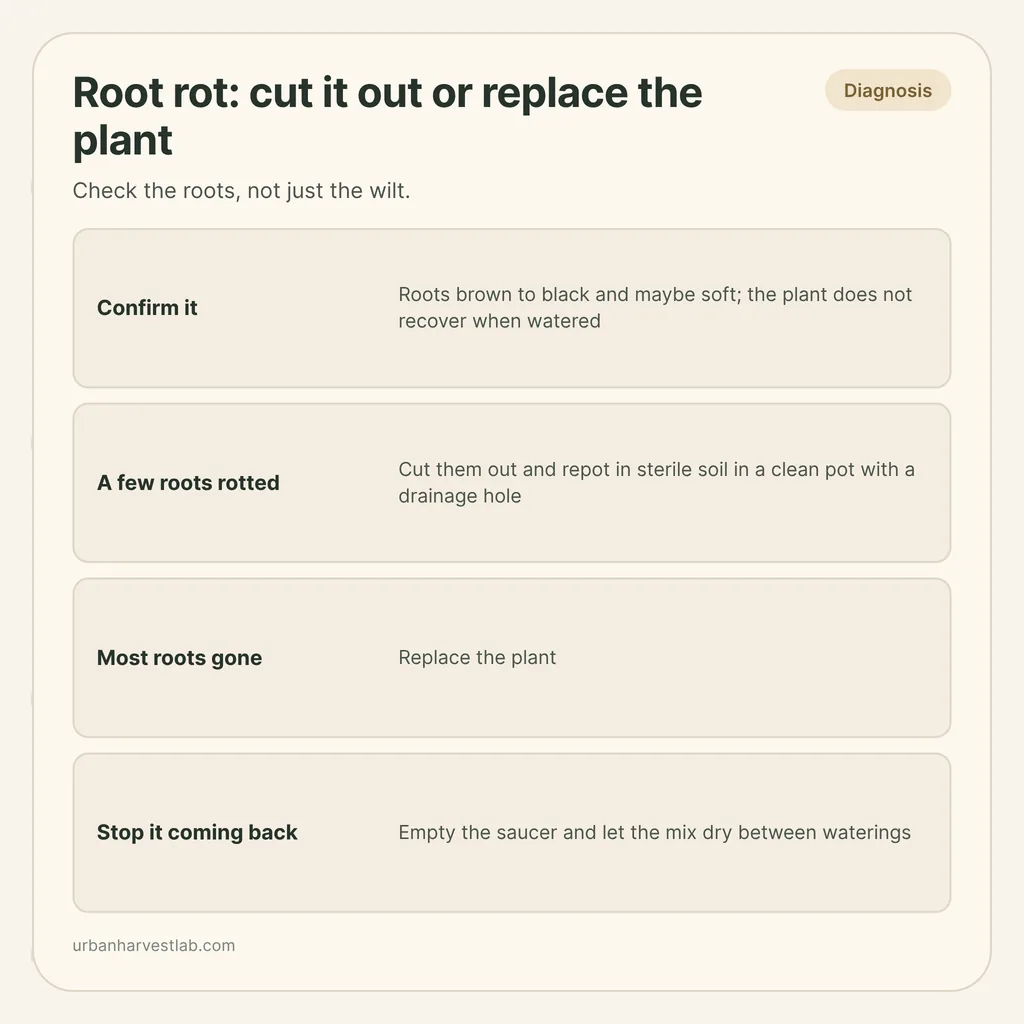
A plant with root rot has soft brown or black roots and stays wilted after you water it. If only some of the roots are affected, lift it out, cut the rotted roots away, and repot it in clean, sterile mix in a clean pot with a drainage hole; if most of the roots are gone, replace the plant. Not sure whether the plant is drowning or thirsty? Overwatered vs underwatered sorts that out before you unpot anything.
Confirm it is root rot
Two signs matter: the roots, and how the plant answers to water.
Clemson Cooperative Extension says that with root or stem rot, leaves and stems show noticeable wilt, stems may be girdled at or near soil level by a ring of brown or black tissue, and infected roots are brown to black and may be soft. Slide the plant out and look before you decide.
The second sign is how the plant answers to water. UC IPM says that unlike plants suffering from water stress, plants with Phytophthora root rot do not recover when irrigated. A plant that was simply dry perks up; a plant that sits limp in damp mix has roots that cannot move the water.
Clemson lists several causes of wilting: a lack of water, excess water, root rot, too much fertilizer, or salt build-up. So a wilted plant on its own proves nothing, and the roots are the test.
The rescue, in order
Clemson’s repotting factsheet says not to repot ailing plants, but its houseplant disease factsheet makes root rot the exception: if only a few roots are infected, cut them out and repot in sterile soil. The rotted roots and the wet mix around them are the problem, so leaving the plant in place does not help.
1. Stop watering and unpot
Tip the pot and slide the whole root ball out. Shake or tease off as much old mix as you can, so you can see every root.
2. Cut out the rot
Cut away the roots that are brown to black or soft, back to firm root. Use clean scissors or secateurs, and wipe the blades afterwards so you do not carry the fungi to the next plant.
3. Prepare a clean pot and fresh mix
Clemson says to use sterilized soil and pots. In practice that means fresh bagged potting mix, not the mix you just took off the roots, and a pot that has been washed. If the pot is the old one, scrub it clean first. Whatever pot you use needs a drainage hole; Clemson suggests covering the hole with a piece of broken clay pot so the mix does not wash out, and says not to add a layer of clay pieces or rocks, because that slows water movement through the pot. The drainage hole guide covers pots you cannot drill.
4. Repot at the right size
Clemson’s rule for repotting is a pot 1 or 2 inches larger in diameter than the current one. After trimming, the plant has fewer roots drinking from the mix, so stay at the low end of that, or keep the same pot. A big pot of damp mix around a few roots is how rot starts again. Fill around the roots and press the mix gently with your fingers; Clemson says not to pack wet media. The full routine is in repotting herbs without shock.
5. Water once, then let it dry
Water the new mix so the excess drains out, then empty the saucer. Clemson says overwatering kills roots through lack of oxygen and advises providing drainage and reducing watering. UC IPM’s garden advice is to let the top few inches dry thoroughly between waterings; in a small pot, check at fingertip depth instead, as overwatered vs underwatered explains. Check with a finger rather than by the calendar.
What about fungicide and peroxide?
Clemson notes that fungicides are available, but says most indoor gardeners will find these chemicals probably cost more than a new plant. Neither Clemson nor UC IPM gives a home dose for a fungicide or a hydrogen peroxide soak. For a plant you plan to eat, choosing a pest treatment for edible plants explains why the label decides what you can use.
When to stop and replace it
If the roots are mostly brown and soft, there is little to rescue. UC IPM says a plant with a substantial Phytophthora infection rarely recovers. That statement is about Phytophthora in the garden rather than a pot of basil, but the reasoning carries over: once most of the roots are gone, the plant cannot take up the water it needs. Cheap, short-lived plants such as annual herbs are usually better replaced with fresh seedlings in fresh mix. Keep the rescue for a plant that has value to you and that still has a decent share of firm, pale roots.
Stop it coming back
In garden soil, UC IPM says Phytophthora can develop in as little as 4 to 8 hours of saturation. A pot standing in a full saucer or over a blocked hole stays saturated far longer than that. Keep to a short list:
- Use a pot with a working drainage hole.
- Empty the saucer after watering.
- Let the top of the mix dry before the next watering. How often to water potted herbs turns that into a routine by plant.
- Use fresh sterile mix and a clean pot for every new plant.
If the roots are in water rather than mix, the causes are different. Hydroponic root rot covers that case.
Sources
Before and after the rescue
Confirm the cause first, then handle the repot and the watering routine that stops it coming back.
Common questions
Can a plant recover from root rot?
Sometimes. Clemson Cooperative Extension says that if only a few roots are infected, you can cut them out and repot the plant in sterile soil. UC IPM's garden pest note on Phytophthora says a plant with a substantial infection rarely recovers, so the odds depend on how much firm root remains.
How do I know it is root rot and not a dry plant?
Check the roots and the response to water. Clemson describes infected roots as brown to black and possibly soft. UC IPM says that unlike plants suffering from water stress, plants with this rot do not recover when irrigated.
Should I use fungicide or hydrogen peroxide on the roots?
Clemson and UC IPM give no home dose for either. Clemson says fungicides exist but that most indoor gardeners will find they probably cost more than a new plant. Cutting out the rot and using sterile soil and pots is the step Clemson actually names.
Can I put the plant back in the same soil?
Clemson says to use sterilized soil and pots and to repot in sterile soil, so the old mix is the thing to throw out. Wash the pot before reusing it.
Related guides
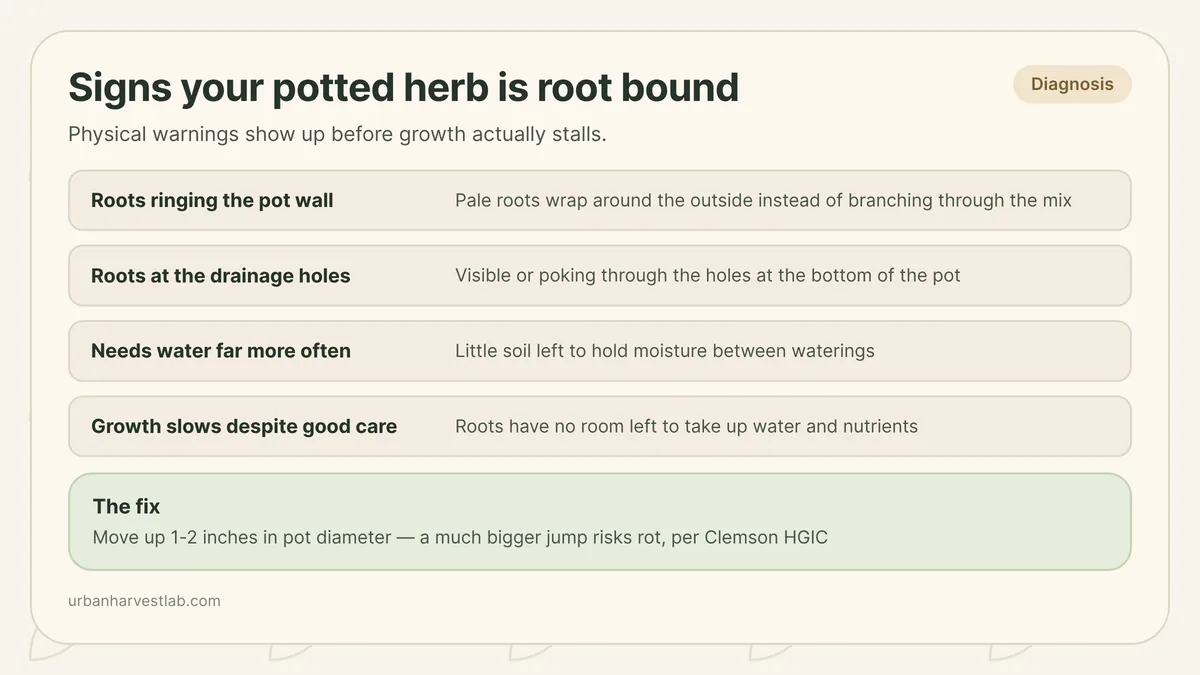
Signs your potted herb is root bound
A root bound herb gives off physical warnings before growth actually stalls. Here is what to look for, why the signs show up together, and how to repot without shocking the plant.
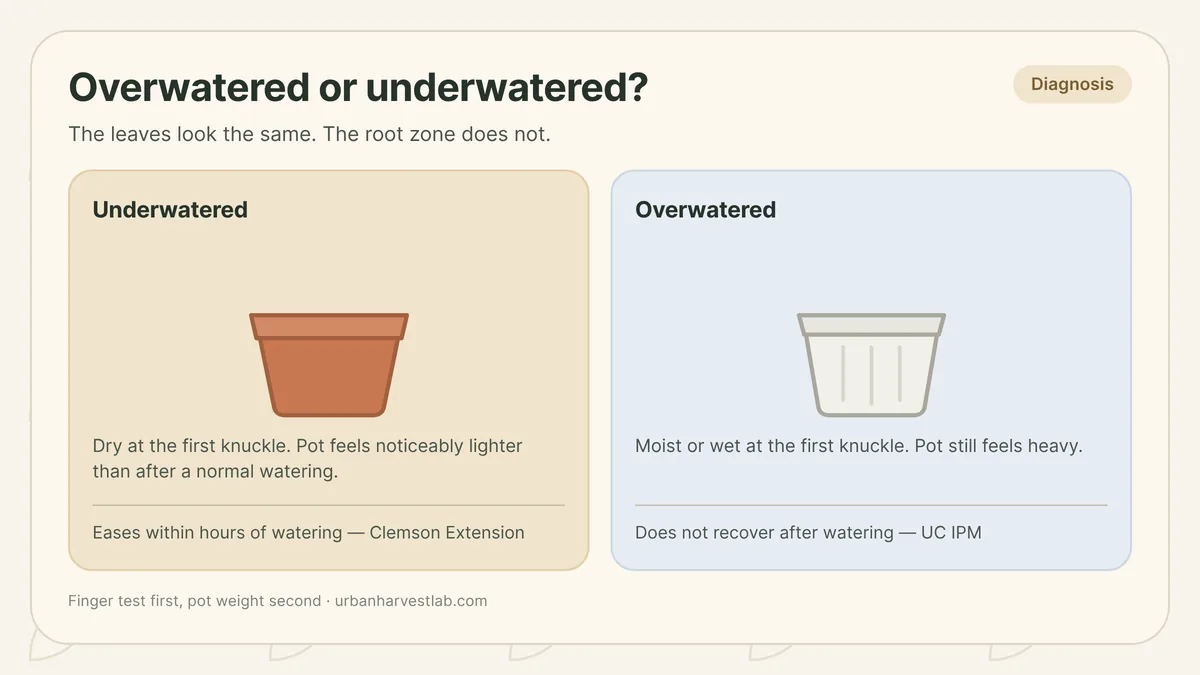
Overwatered vs underwatered: how to tell which one you have
Reading the root zone directly, with a finger test, pot weight, and how the plant responds to being watered, settles what the leaves alone cannot.
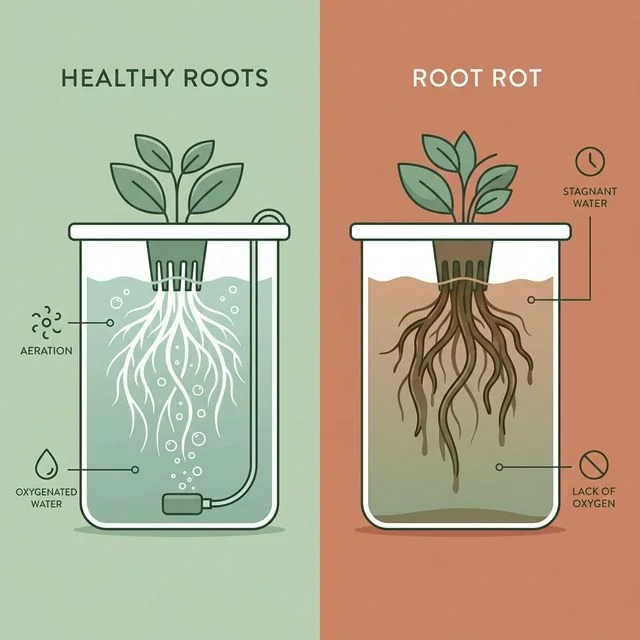
Hydroponic root rot: how to spot it early and stop it
Brown, slimy or swampy-smelling roots mean root rot. Catch it early and fix the conditions behind it — warm water, low oxygen and stagnant flow.