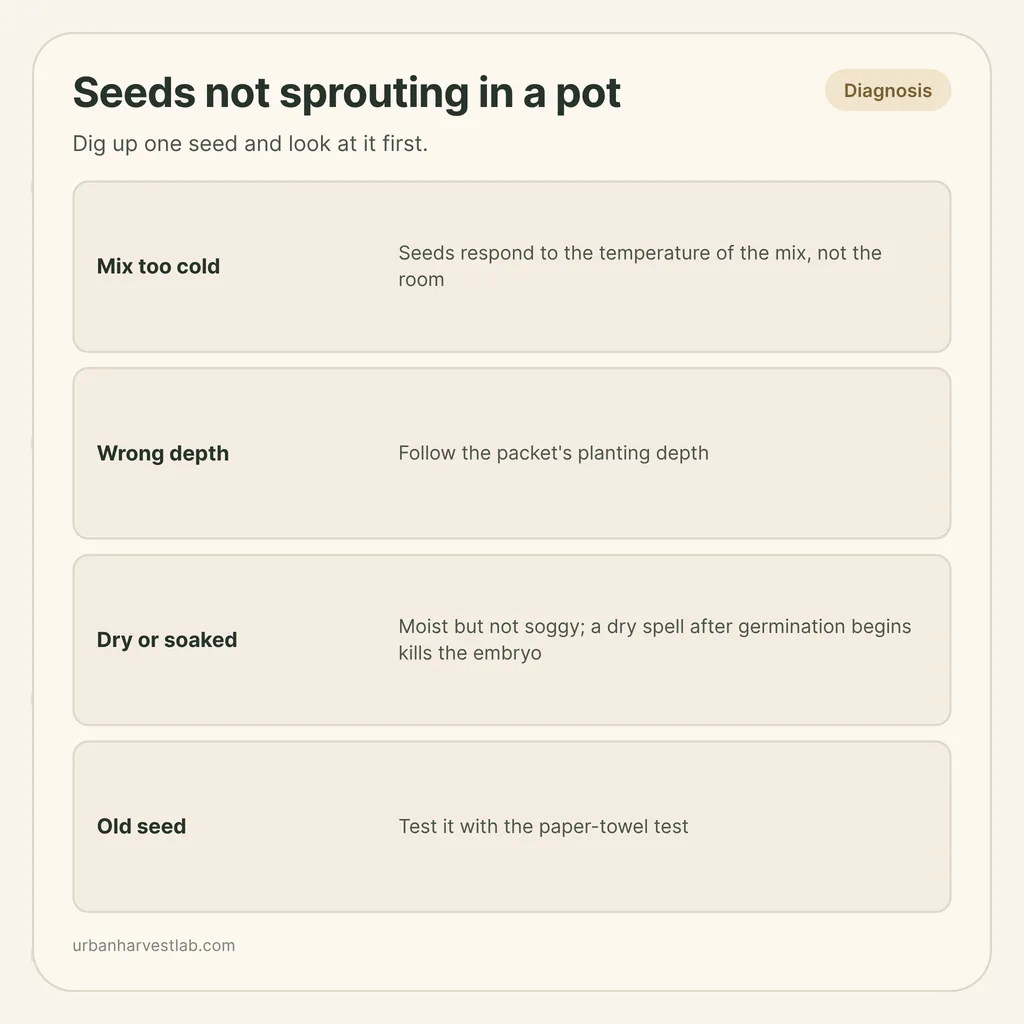
Troubleshoot the system before you change the inputs.
Symptoms
- Nothing has appeared in the pot well past the days-to-germination on the packet.
- Only a few seeds in the pot came up, and the gaps are random.
- Seeds you dig up are soft, dark and mushy, or have not changed at all.
- The surface was bone dry or sat in standing water at some point after sowing.
Possible causes
- Mix temperature outside the seed's range. University of Maryland Extension gives 65 to 75 °F for most vegetable seed; Iowa State Extension gives 68 to 86 °F for the soil.
- Seed buried far deeper than about twice its diameter, or sown on the surface when it needed cover.
- A dry spell after the seed had started to take up water, or a mix that stayed waterlogged and let the seed rot.
- Old or badly stored seed that no longer germinates.
Quick fixes
- Put a thermometer in the mix, not the air, and warm or cool the pot to the crop's range.
- Dig up one or two seeds to see whether they are rotting, dry or untouched.
- Resow at the packet depth in evenly moist mix, and cover the pot to hold moisture until sprouts show.
- Test 10 seeds from the packet on a damp paper towel before sowing the whole pot again.
Seeds that will not sprout in a pot are likely sitting in mix that is too cold, buried at the wrong depth, or let dry out or drown after sowing; old seed is the fourth suspect. Work through them in that order, because the first three cost nothing to check. And you do not have to guess: dig up one seed and look at it.
Dig up a seed first
Scrape back the mix where you sowed and pick out one or two seeds.
- Soft, dark brown, mushy: the seed rotted. UC IPM describes seeds attacked before they germinate as becoming soft and mushy, turning dark brown and decaying, sometimes with soil clinging to them. That points to cold, wet mix.
- Dry and hard, unchanged: it did not get enough water, or the mix was too cold for it to start. If the mix has been warm and moist, the seed may be dead; test the packet (see the seed section below).
- Split, with a tiny white root: it has germinated. If the root is firm and white and the mix stayed moist, it may just need more time. If the mix dried out completely after the root showed, University of Maryland Extension says a dry period once germination has begun kills the embryo, so resow.
Is the mix too cold?
A windowsill or balcony in spring can leave the mix well below the room’s air temperature. Seeds respond to the temperature of the mix, not the room. University of Maryland Extension says a potting-mix temperature of 65 to 75 °F is good for germinating most vegetable seed. Iowa State Extension gives a wider soil band of 68 to 86 °F, and notes that the closer the temperature is to a seed’s own optimum, the quicker it germinates. UC IPM gives 65 to 70 °F for most seeds and says to use heat mats under flats or pots if the home is cool.
Cold costs you twice. Germination slows, and UC IPM says seedlings are more likely to become infected when they grow slowly in cold, wet soil. Push a thermometer into the mix to read it, and move the pot somewhere warmer if it is below those figures.
Crops differ. Warm-season seed such as tomato, pepper and cucumber wants more heat than lettuce or peas; the table of minimum and best soil temperatures, and when a heat mat earns its place, is on the seedling heat mat page. Basil sits near the warm end: Penn State Extension gives germination at around 70 °F.
Is the seed too deep, or too shallow?
Follow the packet. Iowa State Extension says to follow the packet’s planting depth, and explains why: seed planted too deep may not get light if it is a kind that needs it, will not have enough stored energy to reach the surface, and may die trying.
As a rule of thumb, University of Maryland Extension puts a suitable depth at about twice the seed’s diameter, so a seed 1/8 inch wide goes about 1/4 inch down. Iowa State covers most seed with one to two times its diameter. Iowa State sows fine seed and seed that needs light on the surface, pressed in lightly, and Maryland leaves lettuce uncovered or barely covered.
A common slip in a pot is pushing every seed in with a finger. A finger push can put tiny seed many times deeper than the one to two diameters Iowa State gives, and it may not reach the surface.
Did the pot dry out or stay soaked?
Moisture is the next thing to check, and a pot makes it easy to get wrong. Small volumes of mix swing between dry and sodden fast.
Iowa State Extension asks for mix that is moist but not soggy. Too wet, and it says seeds, which need oxygen, may rot. Too dry, and the seed loses the water it has absorbed and dies. University of Maryland Extension says the same of a dry spell once germination has begun: it kills the embryo. That is why a pot that was fine on Monday and bone dry on Wednesday can lose the whole sowing.
What to do:
- Wet the mix before you fill the pot. Maryland warns that dry peat moss repels water, so water sprinkled on top can bead up and run off. Aim for as moist as a wrung-out sponge, not sopping wet.
- After sowing, cover the pot with a clear lid or bag to hold moisture. Maryland says the cover should not touch the mix, and should come off as soon as sprouts appear.
- Check daily and mist when the surface starts to dry.
- Make sure the pot drains. Maryland notes that roots stop growing and die from lack of oxygen when mix is saturated.
A pot that was often soaked and then sat cold is the classic rot setup. The seed-starting mix versus potting mix page explains why a fine, light mix holds this balance better than heavy potting soil.
Is the seed itself the problem?
If temperature, depth and water are right, test the seed. Seed loses viability with age, and onion and parsley are among the shortest-lived crops in the extension tables. The seed shelf-life page has the figures by crop and the paper-towel test: 10 seeds in a damp towel, kept warm, counted after the packet’s germination days. If most sprout there but not in the pot, the problem is the pot.
Maybe it is only slow
Some seed takes weeks. Clemson Cooperative Extension says parsley seed is slow to germinate, and a cool mix stretches any crop’s timetable. If the seeds you dug up are firm and the mix has been moist, give them the packet’s full count, then a little longer if the pot has been cool, before resowing.
What the other pages cover
Seedlings that appeared and then collapsed are a different problem, covered in why herb seedlings die. Dense trays of microgreens have their own checklist in microgreens not germinating.
Sources
- Iowa State University Extension, “How to Successfully Start Seed Indoors”
- University of Maryland Extension, “Starting Seeds Indoors”
- UC IPM, “Damping-Off Diseases in the Garden” (Pest Notes 74132)
- Penn State Extension, “Basil, A Summer Favorite”
- Clemson Cooperative Extension, HGIC, “Herbs”
- University of Illinois Extension, “Will my seeds still grow?”
More on starting seeds well
Heat, seed age and the next stage after sprouting each have their own page.
Common questions
Why are my seeds not germinating in pots?
The usual causes are mix that is too cold, seed buried too deep or left on the surface when it needed covering, a mix that dried out or stayed waterlogged, and old seed. University of Maryland Extension gives 65 to 75 °F as a good potting-mix temperature for most vegetable seed, and about twice the seed's diameter as a planting depth.
How long should I wait before giving up on seeds in a pot?
Wait for the number of days printed on the packet, and longer if the mix has been cool, because Iowa State Extension says germination is quicker the closer the temperature is to the seed's optimum. Parsley is a slow starter: Clemson Cooperative Extension says its seed is slow to germinate.
Can seeds that dried out once still come up?
Often not. University of Maryland Extension says a dry period will cause the death of the embryo once germination has begun. If the mix dried completely after the seed had started to take up water, resow rather than waiting.
How do I know whether the seed was bad or my conditions were?
Run a paper-towel test on 10 seeds from the same packet. If most sprout there, the seed is fine and the pot is the problem. Illinois Extension suggests sowing thicker if 7 to 9 of 10 sprout and buying new seed at 6 or fewer.
Related guides
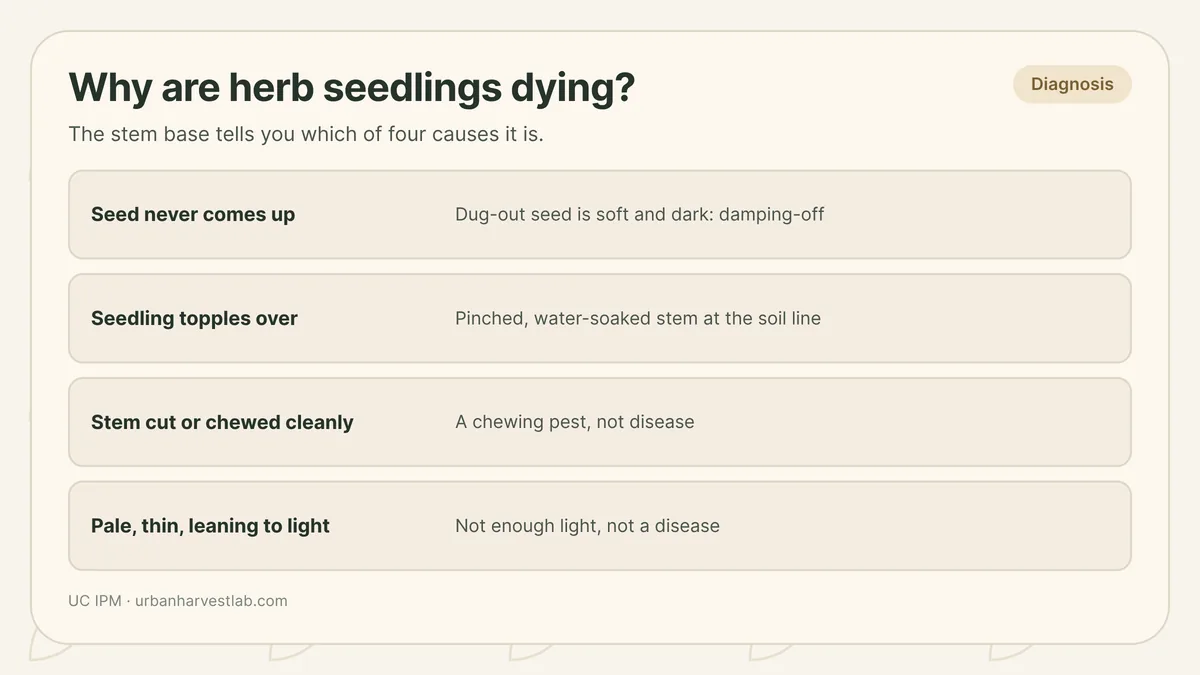
Why are my herb seedlings dying?
A tray of herb seedlings can fail three or four different ways, and they do not all look the same up close. The stem base and the seed itself tell you which one you have.

How long do seeds last? Shelf life by crop and a paper-towel test
Leftover seed is usually still good, but how long depends on the crop and where it sat. Here are the sourced ranges, how to store packets, and a test that runs for the germination time on the packet.
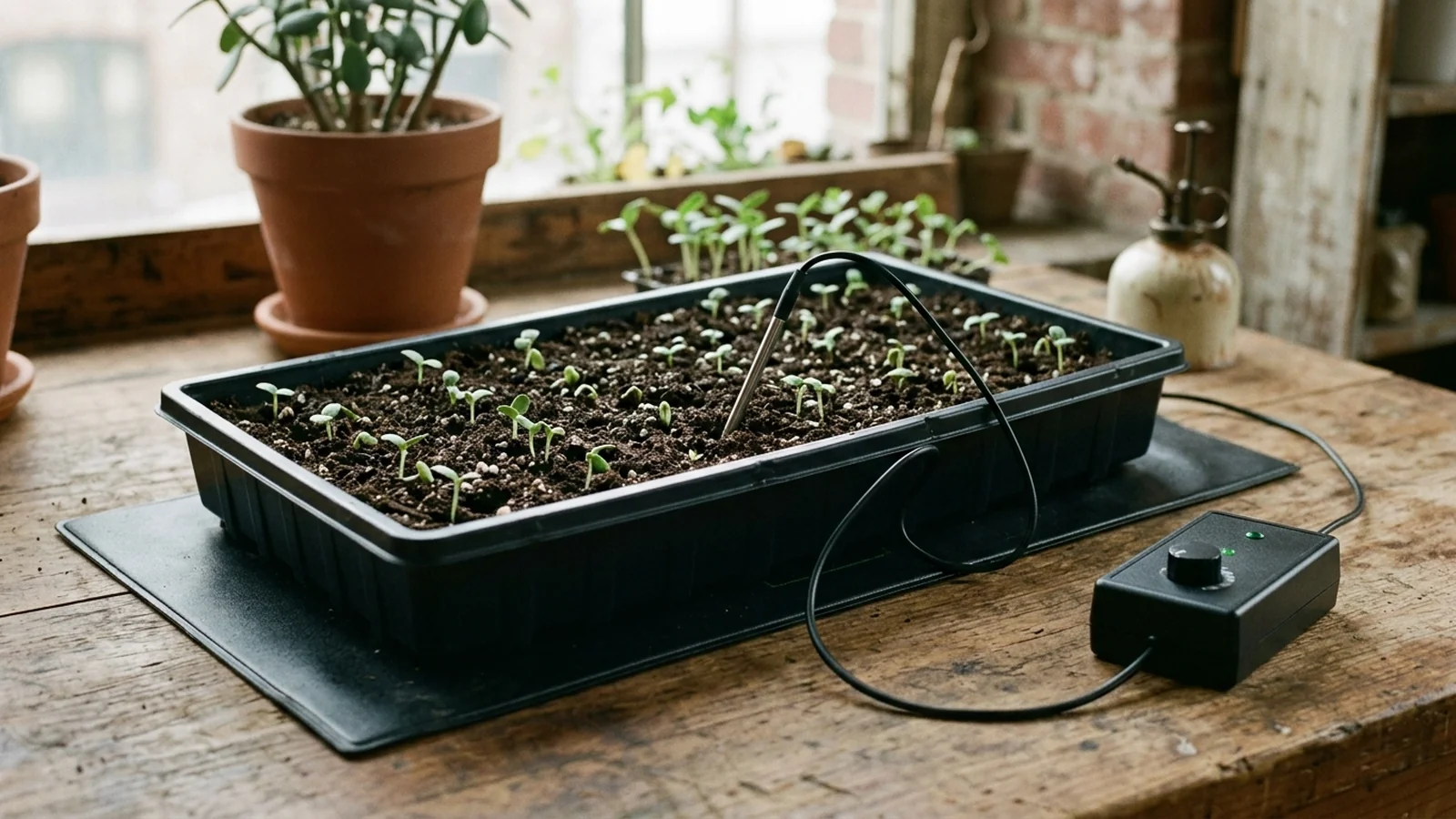
Seedling heat mats: what the thermostat is actually for, and when to skip one
A heat mat's whole case rests on one fact: germination responds to the temperature of the mix, not the air around it. Without a thermostat that fact works against you as easily as for you.