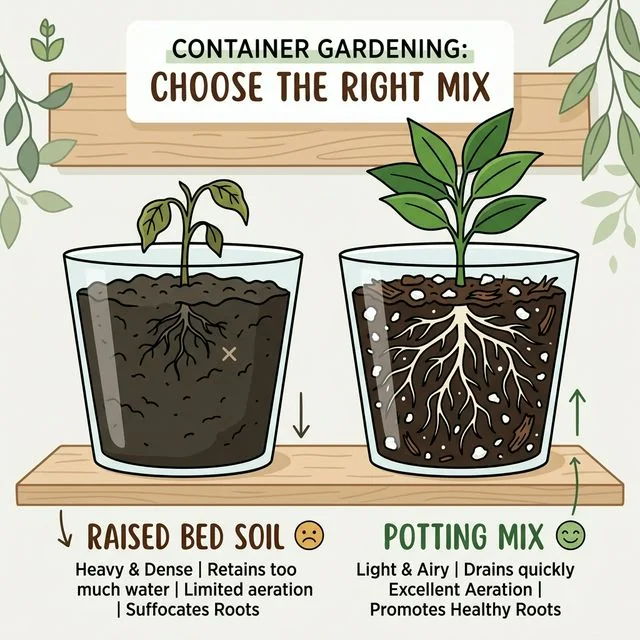
Potting mix is usually the right choice for containers, while raised bed soil is usually the right choice for deep beds. If you put dense raised bed soil into a standard pot, roots often stay wetter, heavier, and less oxygenated than people expect.
That is why container plants can turn yellow, stall out, or stay soggy even when the watering schedule seems reasonable. Before you blame fertilizer, start with the growing medium. If you are still choosing pots, check Best Containers for Herbs: Pot Size, Drainage, and Material Guide. If you are troubleshooting crop depth or root volume, Container Depth for Tomatoes, Peppers, and Herbs fills in that part of the system.
In this practical decision-making guide, you will learn:
- The exact structural differences between potting mix and raised bed soil.
- How to instantly diagnose visual symptoms of soil compaction in your pots.
- A quick decision framework to know exactly which bag to buy for your containers.
If you are just starting your urban garden, review our guide on Balcony Herb Garden for Beginners to see how container size affects your soil choice. Otherwise, keep reading to understand why proper potting mix is non-negotiable for container success.
The Container Soil Cheat Sheet
Use the following quick reference chart to identify which medium belongs in which type of garden.
| Soil Type | Best Used For | Physical Structure | Drainage Speed |
|---|---|---|---|
| Potting Mix | All pots, buckets, and hanging baskets | Light, fluffy, contains perlite/pumice | Very Fast |
| Raised Bed Soil | Deep wooden planters and raised beds | Dense, heavy, contains compost/topsoil | Moderate |
| Topsoil / Garden Dirt | In-ground planting only | Very dense, heavy clay or sand content | Slow |
Practical Tip: When standing in the garden center, physically lift the bags. A bag of high-quality potting mix should feel surprisingly light for its size. If it feels like lifting a bag of wet concrete, it is too dense for your containers and will crush your plant’s roots.
How to know if you used the wrong soil (visual symptoms)
Before you start pouring more fertilizer into a struggling pot, your plants will often tell you if their roots are suffocating. Here is how to diagnose poor soil structure visually:
- Water pools on the surface: If you water your plant and the water sits on top of the soil for more than 10 seconds before sinking in, your soil is compacted. It lacks the pore space necessary for drainage.
- Lower leaves turning pale yellow: If the oldest leaves on your plant are uniformly yellow and dropping off, and the soil feels heavy and wet, you are experiencing root suffocation. If this sounds familiar, read Why Are My Basil Leaves Turning Yellow Indoors? for a deep dive. Dense raised bed soil traps water, drowning the roots.
- The soil pulls away from the pot edges: If the soil block has shrunk, leaving a visible gap between the dirt and the plastic container, the mix contains too much field soil or cheap peat that has dried into a hydrophobic brick.
Potting mix is about structure first
A good potting mix is not simply “better soil.” In fact, many soilless potting mixes don’t contain actual “dirt” at all. It is a highly engineered container medium designed to hold moisture while still leaving microscopic pore space for oxygen.
That balance matters because roots in containers cannot stretch outward when the medium becomes compacted. They are trapped by the plastic walls. If the soil compresses, the oxygen is pushed out, and the roots die.
Why raised bed soil struggles in pots
Raised bed soil is usually heavier, dense, and more mineral-rich by design. That bulk can be useful in a large, waist-high wooden bed where gravity has 24 inches to pull excess water downward.
Inside a standard 10-inch plastic pot, that same density leads to poor drainage, rapid compaction, and a root zone that stays wet in the wrong way. When gravity cannot pull the water out of the bottom, the dense soil acts like a sponge sitting in a puddle.
If you are confused about how deep your soil needs to be, cross-reference your crop with our Container Depth for Tomatoes, Peppers, and Herbs guide to ensure proper volume. If the container itself may also be working against you, Best Containers for Herbs: Pot Size, Drainage, and Material Guide will help you separate a soil problem from a pot problem.
Fertility can be adjusted later
Growers sometimes choose a dense, heavy raised bed mix for their pots because it sounds richer, often boasting “added compost and manure.” This is the wrong priority.
Nutrition can easily be corrected over the summer with a measured liquid or granular feeding plan. Bad physical structure is much harder to fix once a container is planted, often requiring you to rip the stressed plant out of the dirt entirely. Structure matters before fertility.
Common soil mistakes in container gardening
Avoid these frequent pitfalls to keep your container roots healthy through the entire growing season:
- Buying “Garden Soil” for pots: This is the most catastrophic mistake beginners make. Garden soil is heavy and will turn into concrete when trapped inside a plastic or terracotta pot.
- Thinking heavier soil holds more water: While true in the ground, in a pot, heavy soil holds only water and no oxygen. Roots need both to survive.
- Ignoring perlite: If your bagged potting mix doesn’t have little white specks (perlite or pumice) mixed in, it will likely compact halfway through the summer.
- Reusing old, compacted soil without amending: Potting mix structure breaks down over a season. Reusing last year’s dust without aggressive aeration invites drainage issues.
Quick decision guide
When you are filling new containers or troubleshooting old ones, use these short, actionable bullet points:
- Water sits on the surface → Repot immediately with a lighter mix containing more perlite.
- Pots feel incredibly heavy even when dry → You used raised bed or garden soil. Start over.
- Leaves are pale but soil is wet → Stop watering, elevate the pot on bricks to improve drainage, and let it dry out.
- Planting a deep wooden box (over 18 inches) → You can safely use raised bed soil here.
- Planting a standard 5-gallon pot or smaller → You must use lightweight potting mix.
If the crop lives in a pot, start with a true potting mix. Then adapt your feeding to the crop and growth stage. That sequence reduces more beginner problems than any branded fertilizer upgrade ever could.
Related Guides
If you're working on container growing fundamentals, also read
These pieces connect potting mix choices with crop fit, root volume, and the most common container stress signals.
- Best containers for herbs: drainage, pot size, and materials that work
- Container depth for tomatoes, peppers, and herbs: how much root space matters
- Balcony herb garden for beginners: easy step-by-step
- Best vegetables for small balconies: what produces well in tight spaces
- Why are basil leaves turning yellow indoors?
- How to make potting mix for container vegetables
- How much compost should you add to potting mix?
Common questions
Can raised bed soil be used in containers?
It is usually too heavy and compacting for containers unless it is heavily modified, and even then a proper potting mix is normally the better starting point.
What is the main difference between potting mix and raised bed soil?
Potting mix is built to stay lighter and more aerated in a confined container, while raised bed soil usually contains more mineral soil and compost that make sense in deeper beds but often feel too dense in pots.
Why does container structure matter so much?
Because roots in containers depend on a narrow balance of air and moisture. Dense mixes collapse that balance quickly.
Why are my potted plants yellowing even though I fertilize them?
Yellowing in wet, heavy containers is often a root-oxygen problem rather than a feeding problem. If the mix stays dense and soggy, fertilizer will not fix the underlying stress.
Related guides
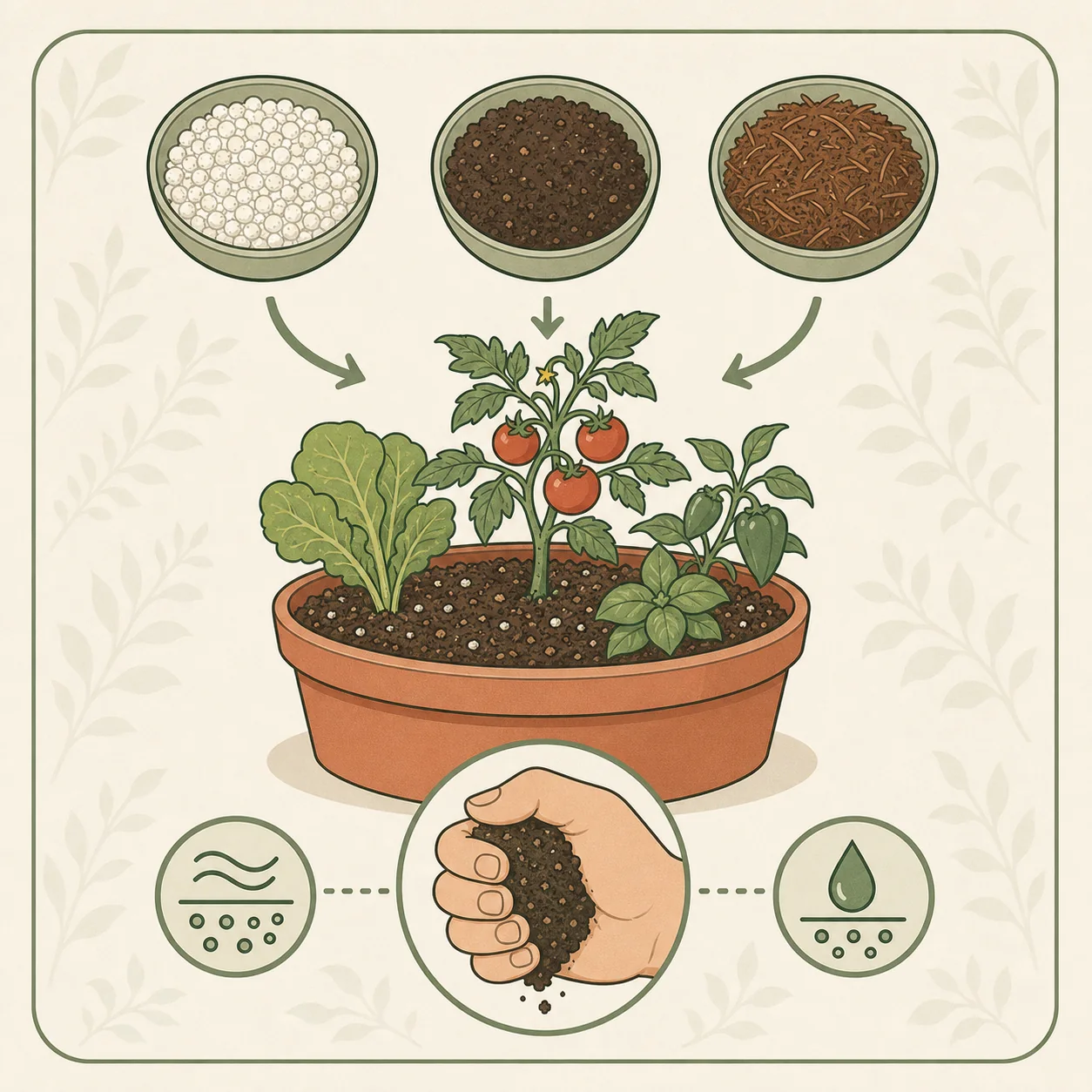
How to make potting mix for container vegetables
A useful potting mix recipe describes the job of each ingredient and gives you a way to correct the result. The goal is stable air and moisture, not a magic ratio.
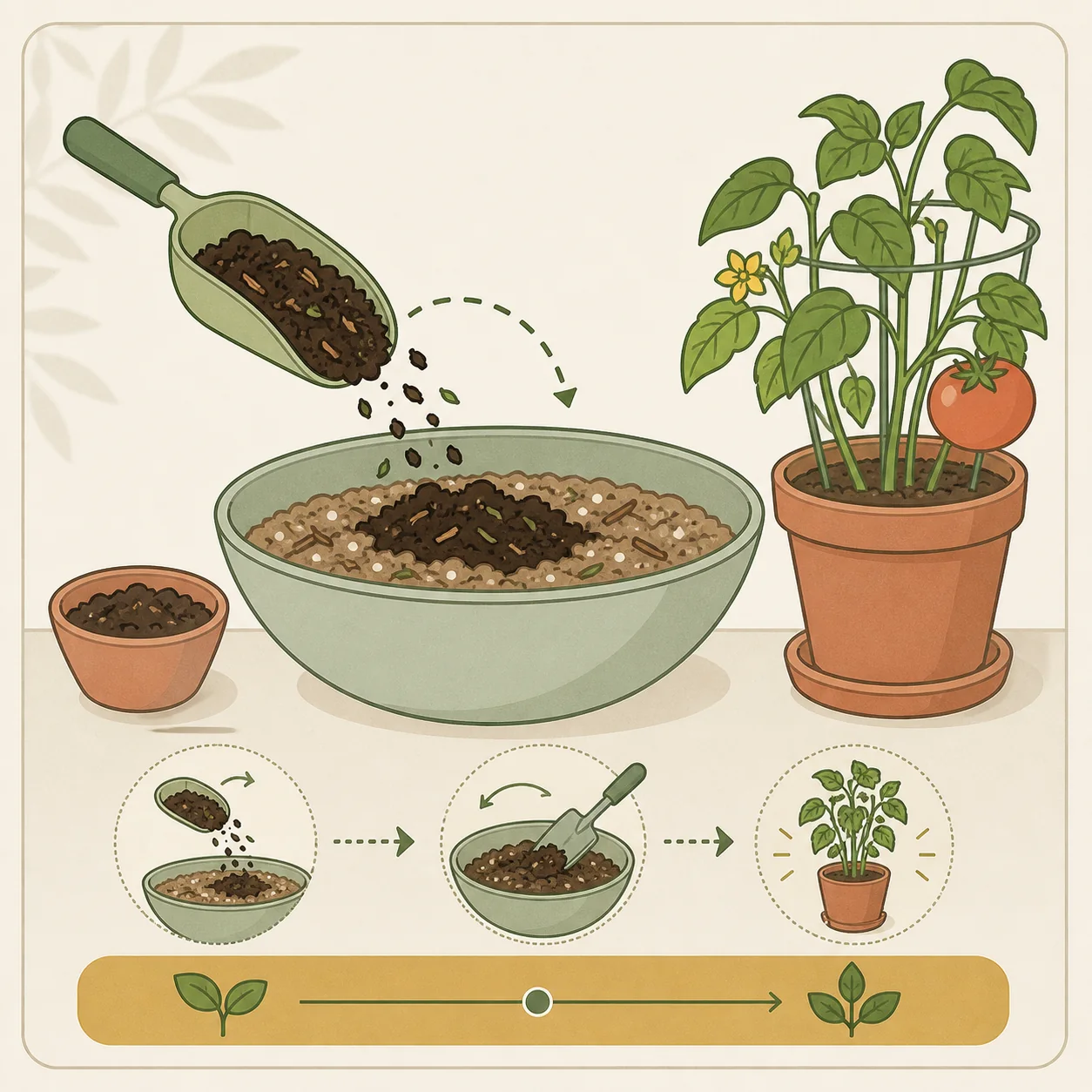
How much compost should you add to potting mix?
More compost is not automatically better. In a container, compost must share limited space with the coarse particles that preserve air around roots.
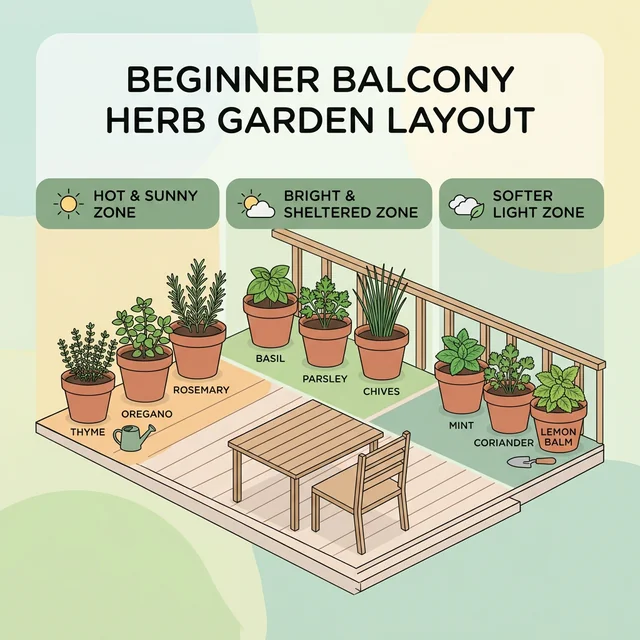
Balcony herb garden for beginners: easy step-by-step
A practical beginner guide to starting a balcony herb garden that stays simple to water, easy to read, and realistic to maintain.