How different ways of using coffee grounds compare
| Method | Nitrogen availability | Main risk | Better fit for |
|---|---|---|---|
| Fresh grounds worked directly into potting mix | Locked up temporarily while microbes multiply to consume the grounds | Nitrogen tie-up in the weeks that follow | Not a container herb that needs feeding soon |
| Fresh grounds as a thin surface top-dressing | Releases slowly as the grounds break down on top of the mix | A caked, water-repellent crust if applied too thick | A light, occasional supplement on an established plant |
| Composted grounds mixed into finished compost | Already broken down by the time it reaches the pot | Low, once the compost itself is fully finished | Any container mix or bed |
| Grounds added to an active compost pile | Feeds the pile's microbial activity rather than the plant directly | None specific to grounds, as long as they aren't the bulk of the pile | Building compost rather than feeding a plant today |
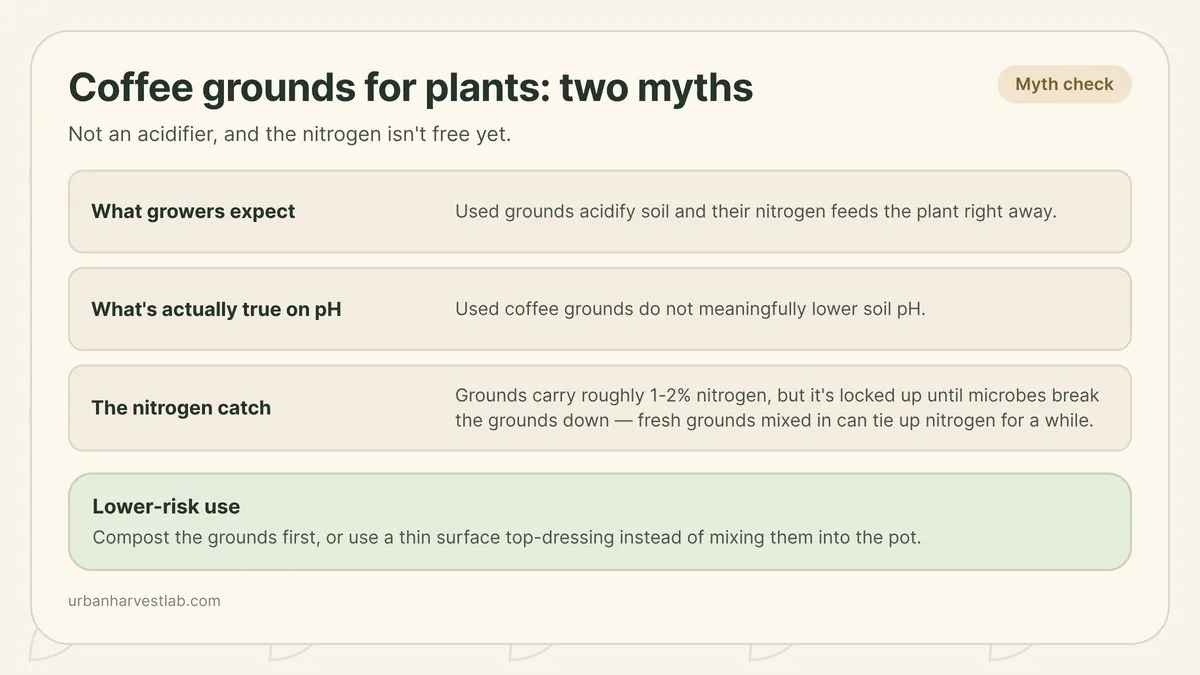
Used coffee grounds do not meaningfully acidify soil, and the nitrogen they contain is not available to a plant’s roots until soil microbes finish breaking the grounds down. Both halves of the popular claim run backwards from what the grounds actually do: spreading them is not a reliable way to move soil pH, and their nitrogen is a slow, microbe-dependent release rather than an instant feed.
That gap between what the grounds contain and what a plant can use right away is also why fresh grounds worked into potting soil can leave a herb worse fed, not better, at least for a while. It is the same logic behind choosing compost that’s safe for edible containers: a raw organic input and a finished one are not interchangeable just because they come from the same source material.
Where the acidifying claim comes from
The idea that coffee grounds acidify soil traces back to the plant itself: brewed coffee is acidic, so it seems reasonable that whatever is left in the filter would carry the same acidity into the ground. Brewed coffee does taste acidic, which is where the intuition comes from, but spreading used grounds is not a reliable way to move a soil’s pH.
That distinction matters because the claim usually gets applied to exactly the wrong material. Gardeners scatter used grounds — the kind that come out of a filter or a French press after brewing — around blueberries, azaleas, or other acid-preferring plants expecting a pH shift. Used grounds are the material least likely to deliver one. A soil test remains the only reliable way to know where a container’s pH actually sits, and if it genuinely needs to move, a measured, sourced amendment does the job far more predictably than a coffee habit’s leftovers.
The nitrogen figure, and the catch in it
Coffee grounds carry roughly 1-2% nitrogen by weight. Utah State University Extension’s organic-fertilizer table puts blood meal near 12% nitrogen and fish meal at 6-12%, with compost at roughly 1-3% — so 1-2% places coffee grounds with compost, a slow soil input, not with the concentrated feeds that number might suggest.
The catch is availability, not quantity. That nitrogen is bound up in organic compounds inside the grounds, not in a soluble, root-ready form the way it is in a bag of liquid or granular fertilizer. Soil microbes have to consume and break down the grounds before any of that nitrogen becomes something a root can absorb. How much of that 1-2% reaches a root, and how long it takes, depends on how fast the grounds decompose — the percentage describes the grounds, not the delivery.
Why fresh grounds can tie up nitrogen instead of supplying it
This is the part of the myth that causes real harm rather than just disappointment. When uncomposted coffee grounds are mixed directly into soil, they hand the resident microbial population a large, sudden meal of carbon-rich organic material. Those microbes respond by multiplying, and a larger microbial population needs nitrogen of its own to build new cells, the same way any growing population needs the nutrient.
For a period after the grounds go in, the microbes competing to break them down can draw more nitrogen out of the soil than the decomposing grounds are releasing back into it. Agronomists call this nitrogen immobilization, and it is the same mechanism behind the general warning against digging fresh, uncomposted organic material straight into a bed: the material’s own decomposition temporarily outcompetes the plant for the nutrient everyone assumes it’s adding. A container herb, with a small volume of mix and a smaller nitrogen reserve to begin with, feels that squeeze faster and more visibly than a plant growing in open ground.
The tie-up is not permanent. Once the microbes finish consuming the grounds and their population levels off, the nitrogen locked in those extra cells cycles back into the soil as they die off. But that is a slower, less predictable payoff than a grower reaching for coffee grounds as an alternative to fertilizer usually expects.
Lower-risk ways to actually use the grounds
None of this means coffee grounds have no place in a garden. It means the safer uses route around the tie-up problem rather than ignoring it.
- Compost the grounds before using them. Once fully decomposed, the nitrogen tie-up has already happened and resolved inside the compost pile rather than inside a plant’s root zone. Finished compost added at a normal dose behaves like any other compost input, at the rate covered in how much compost to add to potting mix.
- Add grounds to an active compost pile as a nitrogen-rich input, rather than straight to a plant. A compost pile already has the biomass turnover the grounds would otherwise force onto container soil, so the tie-up becomes part of the composting process instead of a setback for a growing herb.
- Use a thin top-dressing rather than working grounds into the mix. A light scattering on the surface decomposes more slowly and in contact with less of the root zone than the same volume worked in throughout the pot. A thick, packed layer of grounds on the surface can also crust over and repel water, so keep it thin and occasional rather than a routine top-up.
- Do not treat grounds as a substitute for a measured fertilizer schedule. They behave like an unpredictable, slow-release organic input, not a dosed feed, so a container herb on an active feeding routine still needs its regular fertilizer.
- Watch the physical texture, not just the chemistry. Coffee grounds are fine and dense compared with the aeration components that make up a good potting mix. Worked in heavily or packed down, they can fill the same pore space that perlite or bark are there to protect, which works against drainage in a pot rather than the nitrogen supply.
What this means for a potted herb specifically
If a container herb’s soil pH genuinely needs adjusting, container soil pH covers the sourced targets and the amendments that actually move it, rather than relying on coffee grounds to do a job they are not suited for. A pale, slow-growing herb from a real nitrogen tie-up looks different from one that is simply underfed from the start: the tie-up follows within a week or two of working fresh grounds into the mix, and the plant’s older leaves usually stay a normal green while new growth comes in small and pale, rather than the whole plant fading evenly the way a long-standing deficiency does.
Coffee grounds sit alongside a small cluster of kitchen-scrap folk remedies that outperform their actual chemistry in garden lore. Epsom salt for plants gets credited with fixing a calcium problem it cannot touch, and eggshells for plants carry real calcium that arrives too slowly to matter for the deficiency growers use them for. What separates coffee grounds from the other two is that fresh, uncomposted grounds can actively cost a plant nitrogen for a while, not merely fail to supply it, which makes timing and preparation matter more here than for either of the other two.
Sources
If you're deciding whether to use coffee grounds
These cover the compost, pH, and dosage questions that follow right after this one.
Common questions
Do coffee grounds acidify soil?
Not meaningfully. Used coffee grounds do not meaningfully lower soil pH, so spreading them is not a reliable way to acidify soil for acid-loving plants like blueberries or azaleas. A soil test and elemental sulfur, applied at the rate on the bag, is the more direct route if pH actually needs to move.
How much nitrogen is in coffee grounds?
Roughly 1-2% nitrogen by weight, which sounds substantial next to a bag of fertilizer, but the figure only describes what the grounds contain, not what a plant can immediately use. That nitrogen has to pass through microbial decomposition before roots can take it up.
Can I put coffee grounds directly on my potted herbs?
A thin top-dressing on the soil surface is lower risk than working fresh grounds into the mix itself. Mixing raw grounds directly into potting soil hands a fresh food source to decomposer microbes, and while they multiply to consume it, they draw down some of the nitrogen already in the mix, which can leave a container herb short right when it needs feeding.
Are coffee grounds a good substitute for fertilizer on container herbs?
No, not on their own. The nitrogen in coffee grounds releases slowly and unevenly, closer to a compost input than a measured feed. Composting the grounds first, then using that finished compost at a normal dose in the potting mix, is a steadier way to get any benefit from them than adding raw grounds straight to the pot.
Related guides
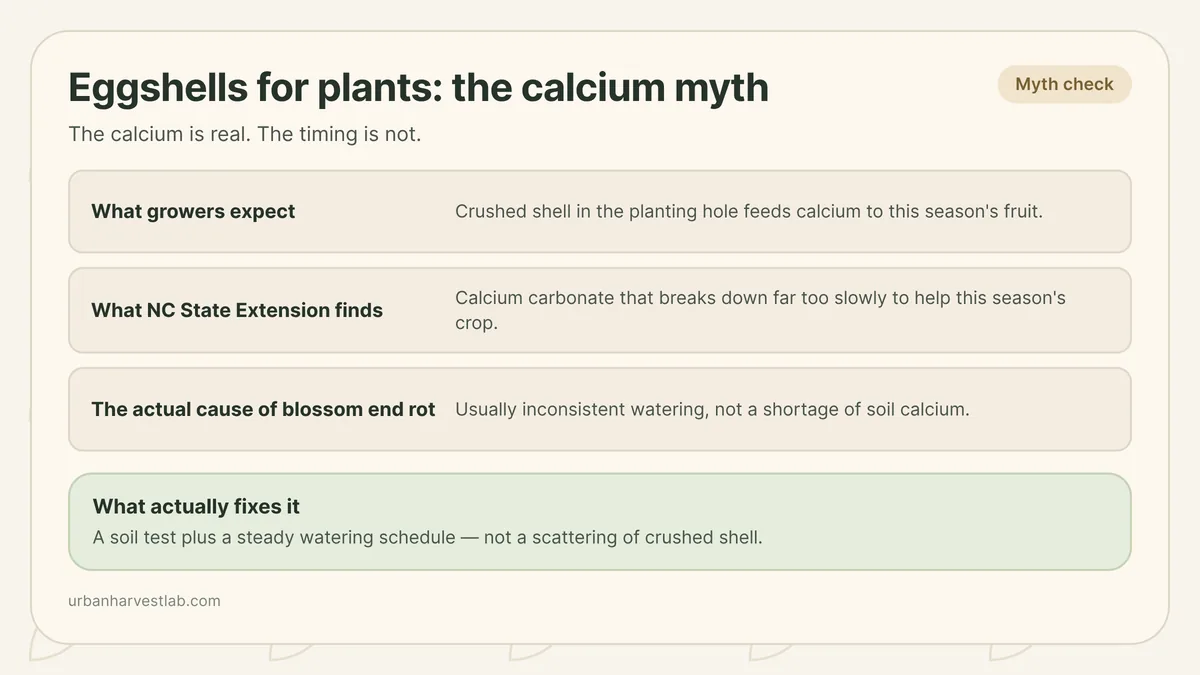
Eggshells for plants: what the calcium myth gets wrong
Crushed eggshells in the potting mix feel like free calcium, but the shell breaks down far slower than a growing tomato needs it to.
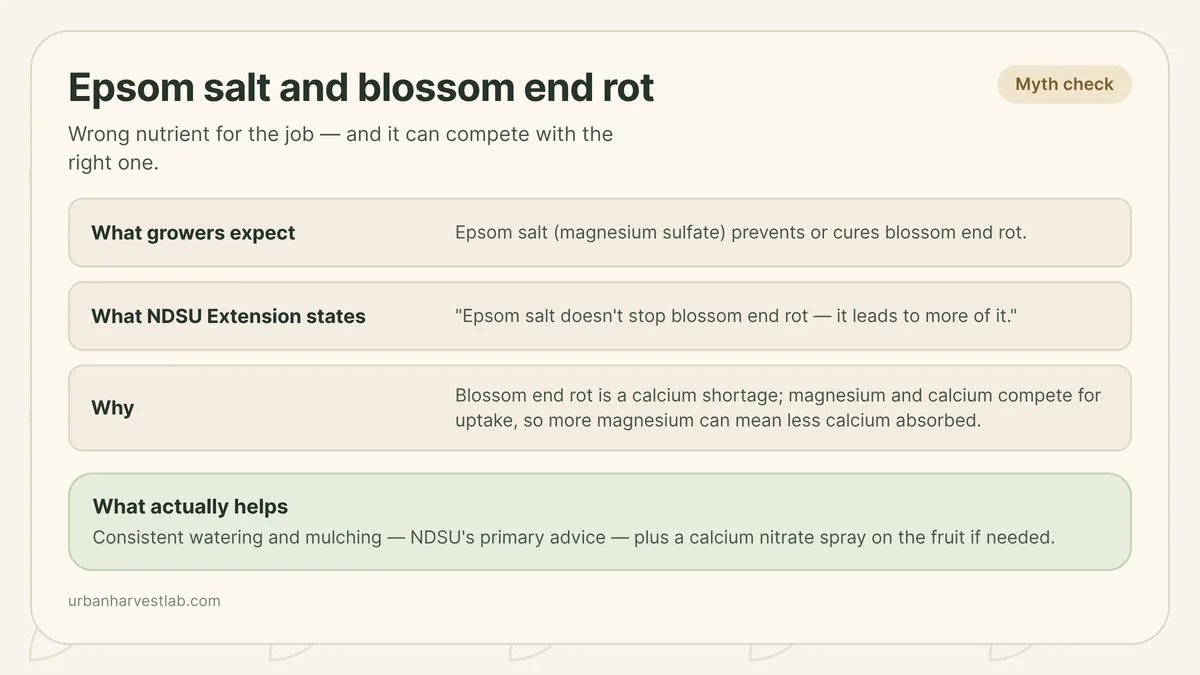
Epsom salt for plants: what the evidence actually shows
Epsom salt is one of the most repeated garden fixes there is, and North Dakota State University Extension says the opposite of what the jar's reputation claims.
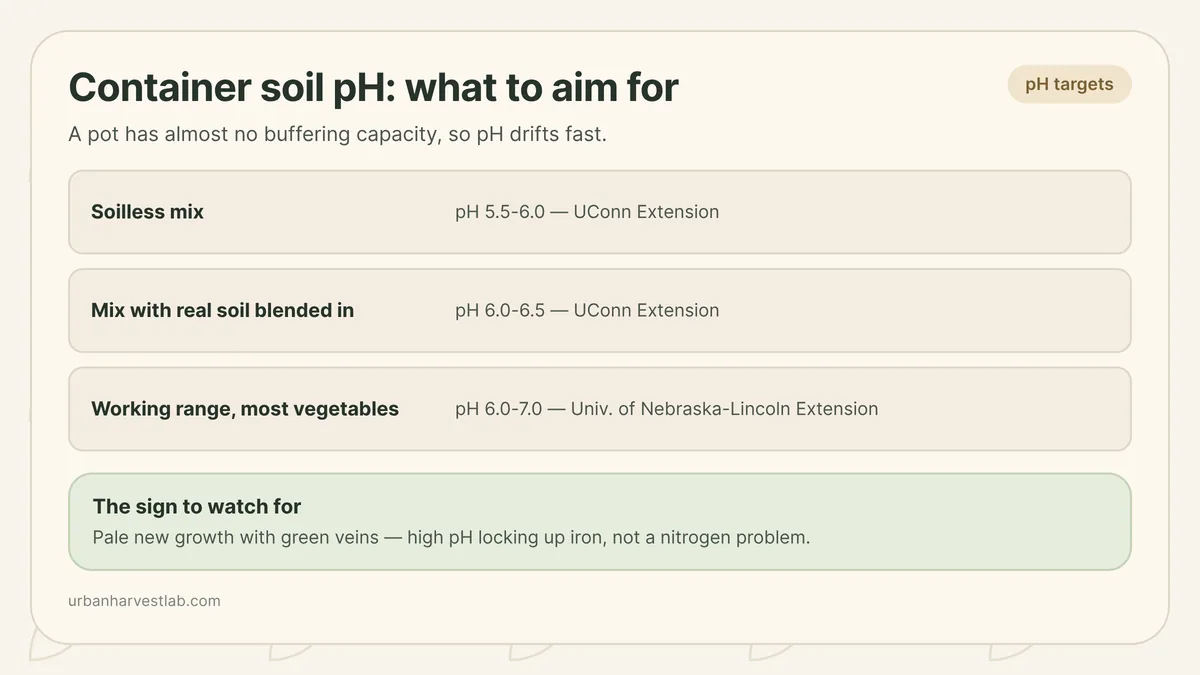
Container soil pH: when it matters and how to fix it
A container's small volume has almost none of the buffering capacity open ground has, so pH drifts faster and matters sooner. Here is when to test, what to aim for, and how to move it.