One of the most common beginner mistakes is filling containers with whatever bagged soil seems close enough. In practice, container plants need a different physical structure than a raised bed or in-ground planting area.
Potting mix is about structure first
A good potting mix is not simply “better soil.” It is a container medium designed to hold moisture while still leaving pore space for oxygen. That balance matters because roots in containers cannot search outward when the medium becomes compacted.
Why raised bed soil struggles in pots
Raised bed soil is usually heavier and more mineral-rich by design. That can be useful in a larger bed. Inside a pot, the same density often leads to poor drainage, compaction, and a root zone that stays wet in the wrong way.
Fertility can be adjusted later
Growers sometimes choose a dense mix because it sounds richer. That is the wrong priority. Nutrition can be corrected with a measured feeding plan. Bad physical structure is much harder to fix once a container is planted.
A useful rule of thumb
If the crop lives in a pot, start with a true potting mix. Then adapt feeding to the crop and growth stage. That sequence reduces more problems than almost any branded fertilizer upgrade.
If you're working on container growing fundamentals, also read
These pieces connect potting mix choices with crop fit, root volume, and the most common container stress signals.
- Container Depth for Tomatoes, Peppers, and Herbs: How Much Root Space Matters
- Balcony Herb Garden for Beginners: A Simple Setup That Actually Works
- Best Vegetables for Small Balconies: What Produces Well in Tight Spaces
- Why Are Basil Leaves Turning Yellow Indoors?
- Hydroponic Nutrients for Beginners: EC and pH Without the Confusion
Common questions
Can raised bed soil be used in containers?
It is usually too heavy and compacting for containers unless it is heavily modified, and even then a proper potting mix is normally the better starting point.
Why does container structure matter so much?
Because roots in containers depend on a narrow balance of air and moisture. Dense mixes collapse that balance quickly.
Related guides
Balcony Herb Garden for Beginners: A Simple Setup That Actually Works
A practical starter plan for growing basil, parsley, mint, chives, and other herbs on a balcony without turning the setup into a maintenance burden.
Container Depth for Tomatoes, Peppers, and Herbs: How Much Root Space Matters
Container size is one of the highest-leverage decisions in small-space gardening. When root volume is too small, every other care task becomes harder.
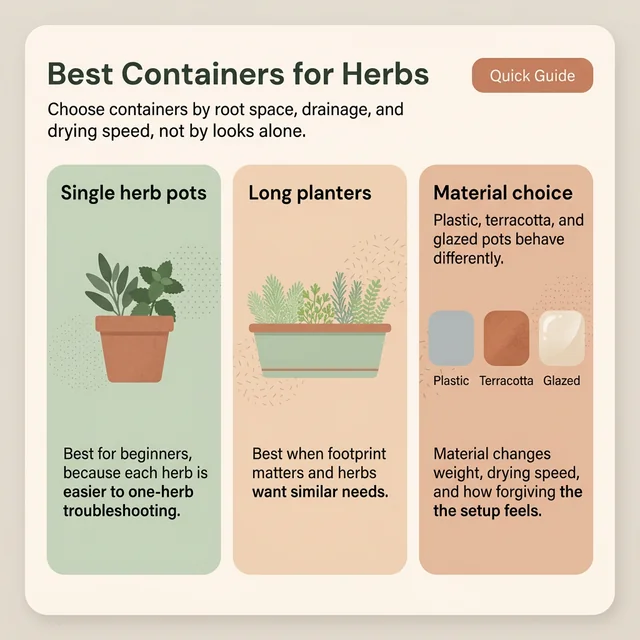
Best Containers for Herbs: Pot Size, Drainage, and Material Guide
A practical guide to selecting herb containers that make watering easier, reduce root problems, and actually suit apartments, balconies, and windowsills.