
What a struggling potted bay is usually telling you
| What you see | Likely cause | What to do |
|---|---|---|
| Curled, thickened, yellow leaf edges from May to October | Bay sucker feeding on young leaves | Tolerate it; the RHS says control is not necessary |
| Sticky leaves, small bumps on stems or leaves | Scale insects | Check stems, then treat as for other woody herbs |
| Spotted or yellowing leaves, soggy mix | Roots too damp, or the plant needs repotting | Let the mix drain, check drainage, repot if roots fill the pot |
| Scorched or dead top growth after winter | Frost or cold wind damage | Cut out damaged shoots in spring |
To grow bay leaf in a pot, use a large container of free-draining, loam-based compost, put it in a warm, sheltered spot in sun or light shade, and keep the mix lightly moist but not soggy. Expect slow growth. It is the reason bay copes so well with life in a container, and it also means a few new shoots a year is normal. For where bay fits among the other herbs on a balcony or windowsill, start with the small-space herb garden setup guide.
Pot, mix and light
University of Wisconsin-Madison Extension notes that bay is relatively slow-growing, so it does well in containers. It also calls it a long-lived houseplant or outdoor container plant in cold climates, with outdoor ground culture suited to zones 7a to 10b.
Start big. University of Maryland Extension puts bay leaf among the larger herbs that need a 5-gallon pot or bigger. A bay bought in a small nursery pot will not stay there long: the RHS says to pot on young plants every couple of years, each time into a container only slightly larger than the last.
For the mix, the RHS recommends a good quality loam-based compost such as John Innes No 2 or No 3, ideally with horticultural grit added for drainage and stability. A loam-based mix holds its structure longer than a light, peaty one, and a pot that drains freely guards against root rot, which the RHS warns waterlogged compost can cause, especially in winter.
Light is forgiving. The RHS says bay does well in sun or light shade in a warm, sheltered position out of strong wind. University of Wisconsin-Madison Extension adds that in the Midwest container bays thrive in full sun once acclimated from a dim indoor spot, while in warmer climates they may do better with some shade. If the plant has spent winter indoors, acclimate it gradually, as University of Wisconsin-Madison Extension advises, before leaving it in full sun. Sunny-balcony herbs sit well together; the best herbs for a sunny balcony lists the neighbours that share bay’s tastes.
Watering and feeding
Bay wants even moisture. University of Wisconsin-Madison Extension says it prefers well-drained soil and regular moisture and must not be allowed to dry out completely. The RHS asks you to check a container bay regularly in summer and warns against waterlogged compost, especially in winter, because the roots may rot.
In practice that means pushing a finger into the mix, watering thoroughly when the top has begun to dry, and emptying the saucer. In winter, water much less. The wider logic of checking before you water is in the potted herb care guide.
For feeding, the RHS recommends an organic-based, general purpose liquid fertiliser every two or three weeks from mid-spring to late summer for container plants. Stop in autumn; a resting plant has no use for it.
Pruning, repotting and harvesting
The RHS says bay generally responds well to hard pruning, best done in mid- to late spring, and that long shoots can be trimmed back in summer to keep the shape. Cut out frost-damaged shoots in spring. University of Wisconsin-Madison Extension notes growth is maximized by pruning when the tree is not actively growing, and suggests harvesting leaves in mid summer for the best flavor.
Prune with secateurs rather than shears if you can. The RHS points out that shears cut across leaves and leave unsightly edges. On a standard (lollipop-shaped) bay, the RHS says to pull out any shoots that sprout from the roots as soon as you see them.
Repot a container bay every two or three years, according to the RHS, using a slightly larger pot and fresh compost. When a bigger pot is not practical, it says you can prune the roots, refresh the compost and put the plant back in the same pot. University of Wisconsin-Madison Extension goes a step further and prunes the roots at least every two years, even if the plant stays in its pot. The method for doing it safely is in root pruning potted herbs.
Because bay is evergreen, the RHS says leaves can be picked whenever you need them. Fresh leaves taste stronger and slightly more bitter than dried ones. To dry them, spread sprigs in a warm room, then store in an airtight jar and use within a few months, as the RHS advises; other drying methods are covered in how to dry herbs at home.
Scale, bay sucker and yellow leaves
University of Wisconsin-Madison Extension says bay has few pests, but scale can be a problem, particularly indoors. The bump-like insects settle on both leaves and woody stems. If leaves feel sticky or you find immobile bumps on stems, work through the scale insect guide for rosemary and other woody herbs, which covers identification and treatment timing.
Bay sucker looks alarming and is mostly cosmetic. The RHS describes thickened, pale yellow leaf margins that curl, often affecting only half of a leaf. The damage is most active from May to October, with two or three overlapping generations between May and September. The RHS says it does not usually reduce vigor, so control is not necessary. Because the RHS says control is not necessary, there is no need to strip affected leaves.
Spotted or yellowing leaves with no curling are a different story. The RHS says they may mean the roots are too damp, or that the plant needs repotting. Check drainage first.
Winter
Winter is where a pot differs most from the ground. The RHS says bay is hardy, but harsh frosts and cold winds can damage foliage, kill some or all of the top growth and, in extreme cases, the whole plant. Cold, damp soil can rot the roots. Clemson Cooperative Extension lists bay laurel as hardy to around 0°F, but a pot offers far less root protection than open ground.
Two routes work. Outdoors, the RHS suggests grouping pots together, wrapping the pot in old blankets or bubble wrap, or moving it to a greenhouse, porch or the lee of a wall; cover smaller plants with fleece, hessian or an old bedsheet overnight when a harsh frost is forecast. Indoors, University of Wisconsin-Madison Extension says a cool room at 35 to 60°F keeps the tree dormant, needing little light and just enough water to keep the soil barely moist. University of Illinois Extension names bay among the herbs commonly overwintered indoors, and gives a general tender-perennial range of 40 to 60°F with bright light. In a warmer room, give it as much sun as you can and water regularly.
University of Wisconsin-Madison Extension moves bay back out once temperatures are consistently above freezing; University of Illinois Extension’s general cue for tender plants is day temperatures over 60°F. The step-by-step version, written for rosemary and thyme but equally useful for bay, is in how to overwinter rosemary and thyme in pots.
Starting a new plant
Propagation is slow. University of Wisconsin-Madison Extension calls bay difficult to propagate, listing fresh seed, half-ripe summer cuttings that may take several months, and air-layering. The RHS names semi-ripe cuttings in late summer or softwood cuttings in early summer as the simplest and fastest route, layering as usually successful but up to a year, and seed as slow and tricky. For most balcony growers, buying a young plant is the practical way to start.
Sources
Keep woody herbs healthy
Bay shares its needs with rosemary and sage. These cover winter, pests, root care and the wider herb setup.
Common questions
How do I grow a bay leaf plant in a pot?
Use a large pot with drainage holes and a loam-based compost with some grit, such as the RHS suggests. Put it somewhere warm and sheltered in full sun or light shade, water when the top of the mix starts to dry, feed every two or three weeks from mid-spring to late summer, and move it out of hard frost and cold wind in winter.
Why is my potted bay tree not growing?
Bay is slow-growing by nature, according to University of Wisconsin-Madison Extension, so a small amount of new growth each year is normal. If it has stopped altogether, check for roots filling the pot (the RHS repots container bays every two or three years), cold or waterlogged compost in winter, and scale insects on the stems.
When should I prune a bay tree in a pot?
The RHS puts hard pruning in mid- to late spring and light trimming of long shoots in summer. Cut out any frost-damaged shoots in spring. University of Wisconsin-Madison Extension suggests picking leaves for cooking in mid summer, when flavor is best.
What are the curled yellow edges on my bay leaves?
That is the usual look of bay sucker damage. The RHS describes thickened, curled, pale yellow leaf margins from May to October and says control is not necessary because the insect does not usually reduce the plant's vigor. Sticky leaves with small bumps on the stems suggest scale instead.
Related guides
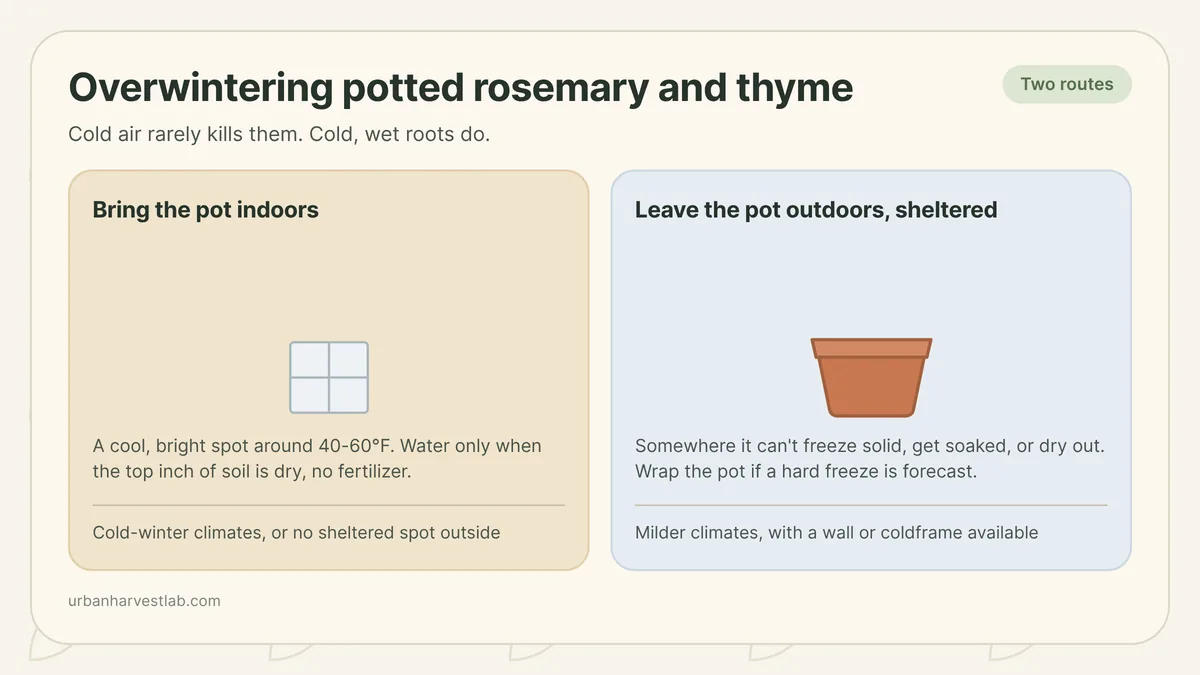
How to overwinter rosemary and thyme in pots
Winter kills more potted rosemary and thyme through mistimed watering and cold-wet roots than through cold air alone. Here is what to do indoors and out.
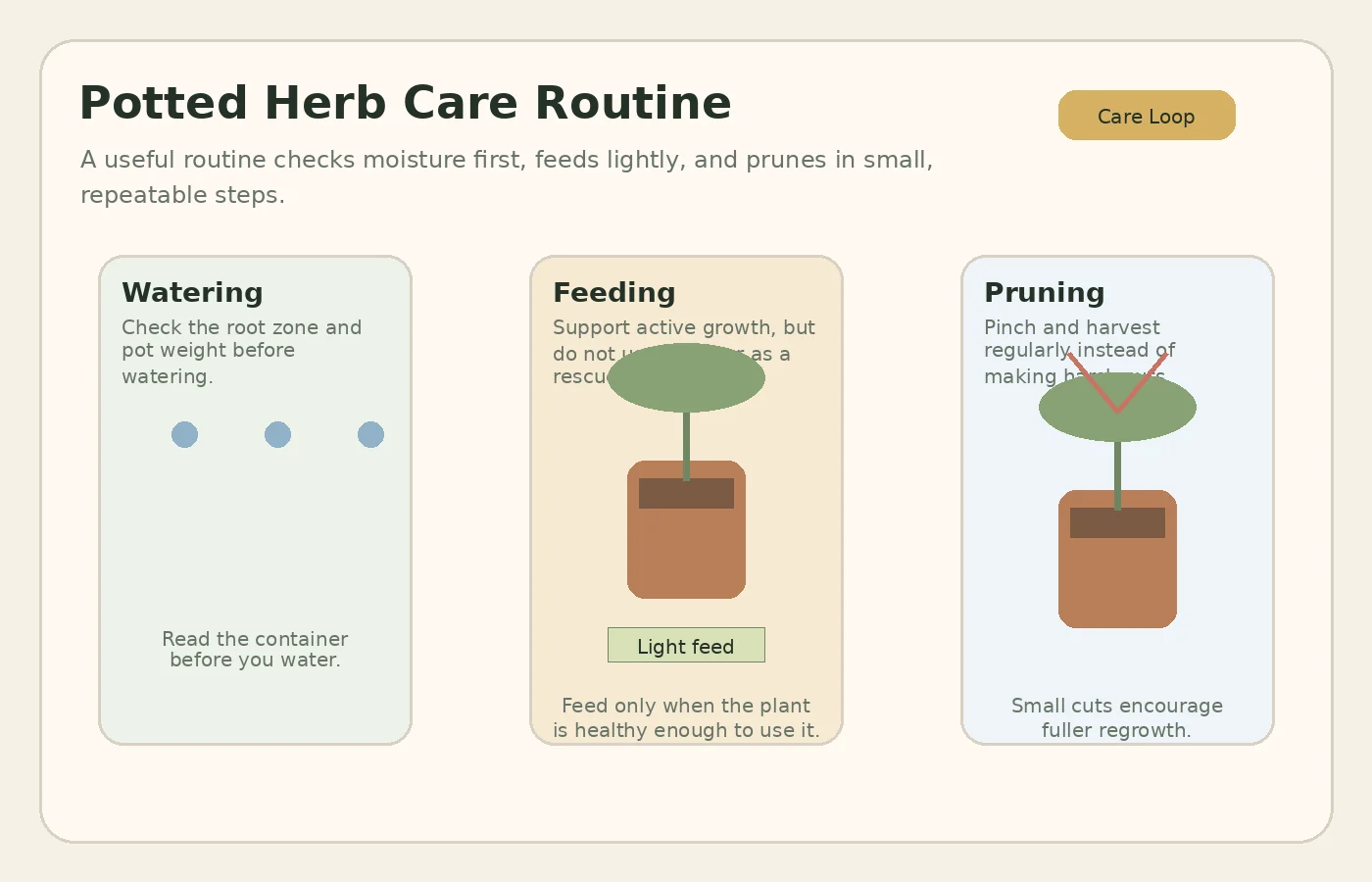
Potted herb care: watering, feeding, and pruning without guesswork
A practical guide to keeping basil, parsley, mint, thyme, and chives healthy by matching watering, feeding, and pruning to the setup.
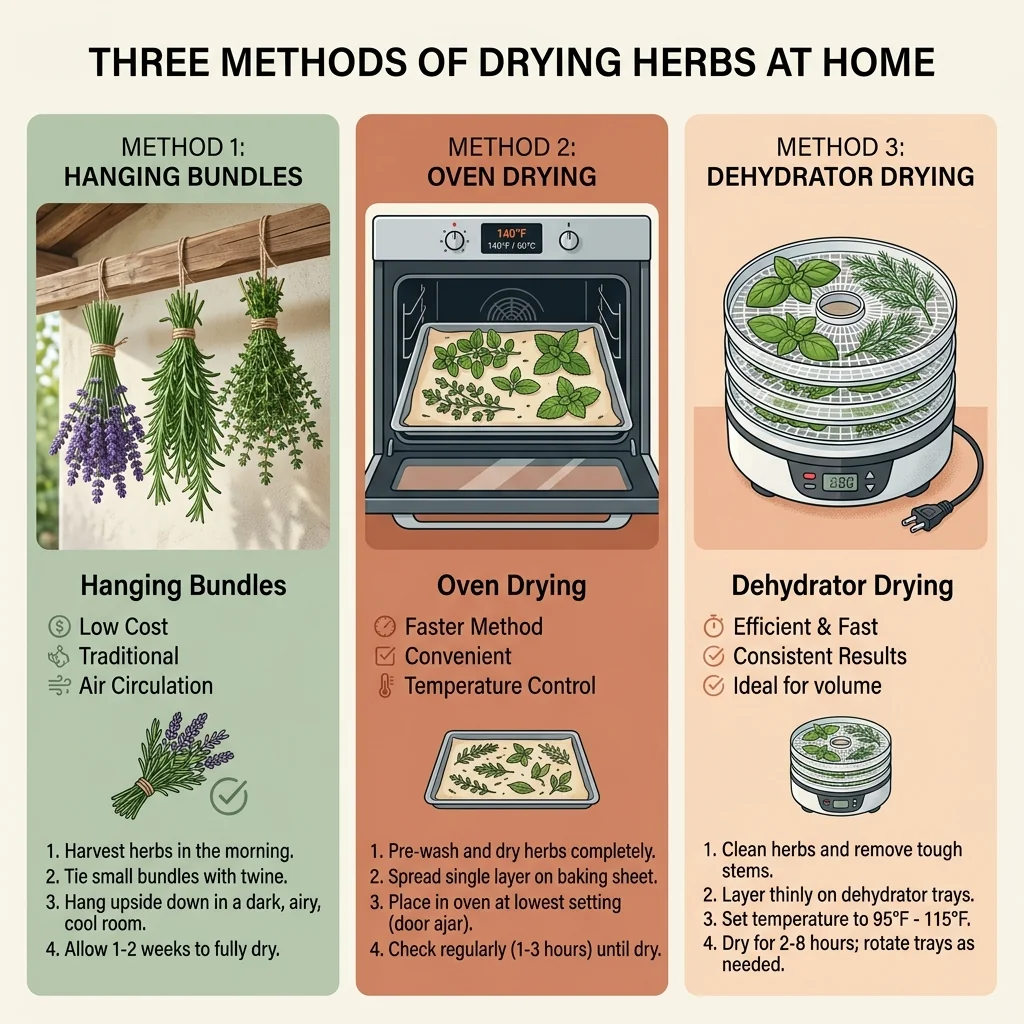
How to dry herbs at home (air, oven, dehydrator)
Drying is the best way to preserve woody herbs like rosemary, thyme, and oregano. Here are three methods, the temperatures to use, and which herbs to skip.