
German and Roman chamomile for a pot
| Question | German chamomile | Roman (common) chamomile |
|---|---|---|
| Latin name | Matricaria chamomilla | Chamaemelum nobile |
| Life cycle (RHS) | Hardy annual | Hardy perennial |
| Height (RHS) | Up to 40 cm (16 in) | Up to 30 cm (12 in) |
| Tea (Wisconsin Extension) | The usual choice | More bitter, used less often |
| Each spring | Sow again, or let it self-seed | Keep the plant; divide to renew |
Grow German chamomile in a pot of damp, free-draining mix, scatter the seed on the surface without covering it, and pick the flowers as they open. The RHS says plants can start flowering in as little as ten weeks from sowing. Keep the mix moist but not waterlogged, and put the pot in full sun.
Most people who search this want tea, and that settles which chamomile to buy. Two plants share the name. The seed packet should carry the Latin name, because the RHS notes that both types are sold simply as “chamomile”.
German or Roman: pick before you sow
German chamomile (Matricaria chamomilla) is a hardy annual up to 40 cm (16 in) tall, according to the RHS. Roman or common chamomile (Chamaemelum nobile) is a hardy perennial up to 30 cm (12 in), with scented, feathery leaves. Wisconsin Extension describes Roman chamomile as spreading by creeping, rooting stems, and says it is used less in tea because it tastes more bitter than German.
For a pot, that gives you a simple rule:
- Tea from the flowers: German chamomile. It is an annual, so you sow it again each spring, or let some flowers drop seed.
- A low, scented plant that stays year to year: Roman chamomile. The RHS says dwarf varieties of common chamomile also suit containers.
Both are small, so neither needs a deep pot. Use a container with drainage holes and a loose mix. NC State Extension says German chamomile does best in well-drained soil and advises avoiding rich, heavy or wet soils. If you are weighing seed against a nursery plant, the seed or buy-a-plant guide sets out the trade-offs, and German chamomile is one of the cheap, quick ones from seed.
Sowing: surface only
The seed is tiny and needs light. The RHS says to scatter it thinly on the surface of damp seed compost, and Wisconsin Extension says to surface-sow and press it into the soil. Under warm conditions germination generally occurs within a week (Wisconsin Extension).
One source differs. A UC Master Gardeners fact sheet says to sow 1/8 inch deep. The RHS and Wisconsin both keep the seed uncovered or only pressed in, so start there and bury it only if you follow the UC depth.
Timing depends on where you live:
- Indoors first: Wisconsin Extension suggests starting seed 6 to 8 weeks before your average last frost date, then moving plants out after it. Find yours with the frost date guide.
- Direct in the pot: the RHS says to sow into warm soil from mid-spring. Wisconsin gives the window as shortly before the last frost, or in fall.
Chamomile does not like being moved when large. Wisconsin Extension says larger plants do not transplant well, so grow individually in containers or transplant when small, and NC State Extension says the same. Sow straight into the pot you intend to keep, or into small individual pots first.
Thin once seedlings are big enough to handle. The RHS says 15 cm (6 in) apart, which for a wide pot means a handful of plants rather than a crowd. UC Master Gardeners give 4 inches, when seedlings are 2 to 2.5 inches tall. Go closer for a dense mass of flowers, wider for sturdier plants.
Light, water and feeding
Give it full sun. NC State Extension says German chamomile thrives in full sun. For hours by herb, see the sunlight chart. UC Master Gardeners call it a cool-season, drought-tolerant annual that can still thrive in summer weather under 100°F.
Water is where a pot differs from a bed. The RHS says plants in containers dry out more quickly than those in the ground, so check daily and water as needed to keep the mix evenly moist, while taking care not to overwater, as chamomile dislikes very wet conditions. Wisconsin Extension adds that the roots are shallow, so the upper layer should stay moist but not wet. In practice that means a finger test each morning, and emptying any saucer. The RHS warns that waterlogging, especially in winter, can cause plants to rot.
Skip the fertiliser. The RHS says chamomile should grow and flower well without feeding, even in poor soil, and Wisconsin Extension says it does not need much fertilizer. Aphids are the pest to watch for, according to Wisconsin and NC State Extension. For general potted-herb routines, see potted herb care.
Harvesting the flowers
Pick newly opened flowers throughout the summer (RHS). UC Master Gardeners say to harvest just as the flowers are fully open but before the petals dry up. Wisconsin Extension says to harvest near full bloom for best quality, snipping only the flower head from the stem.
Picking is also how you keep the pot going. The RHS says the more flowers you harvest, the more it will produce. Wisconsin notes that plants readily self-seed unless all flower heads are removed, so leave a few on if you want volunteers next spring and pick them all if you do not.
If a Roman chamomile turns leggy, the RHS says to clip it back several times through the growing season to keep it compact.
Drying and storing
Fresh flowers make tea, and so do dried ones. For drying, the RHS says to spread them in a single layer on a tray somewhere warm and dry, out of direct sunlight, for a week or two. Once fully dry, store them in an airtight jar in a cool, dark place. The RHS says dried flowers can be stored for up to a year. Other methods and temperature limits are in the drying herbs guide.
A caution for allergy sufferers
NC State Extension says allergic skin reactions or oral swelling can occur in people with ragweed allergies. If you react to daisy-family plants, handle it with care, and think before drinking the tea.
Sources
Herbs for tea and pots
Start from seed, dry what you pick, and place the pot where it gets sun.
Common questions
How do you grow chamomile in pots?
Scatter seed thinly on the surface of damp mix without covering it, because the seed needs light to germinate (RHS). Germination generally takes about a week in warm conditions (Wisconsin Extension). Thin to 6 inches apart (RHS), keep the mix evenly moist, and give it full sun. Check daily, because pots dry out faster than ground.
Is German or Roman chamomile better in a pot?
German chamomile is an annual up to 16 inches tall (RHS) that is used for tea, so it suits a pot you replant each spring. Roman chamomile is a perennial to about 12 inches (RHS) and is more bitter in tea (Wisconsin Extension). The RHS says dwarf varieties of common chamomile suit containers.
When do you pick chamomile flowers?
Pick newly opened flowers through the summer (RHS). UC Master Gardeners say to harvest as the flowers are fully open but before the petals dry up. Wisconsin Extension says to snip just the flower head from the stem.
How long does chamomile take to flower from seed?
The RHS says both common and German chamomile should start flowering in as little as ten weeks from sowing. Wisconsin Extension suggests starting indoors 6 to 8 weeks before your average last frost date.
Related guides
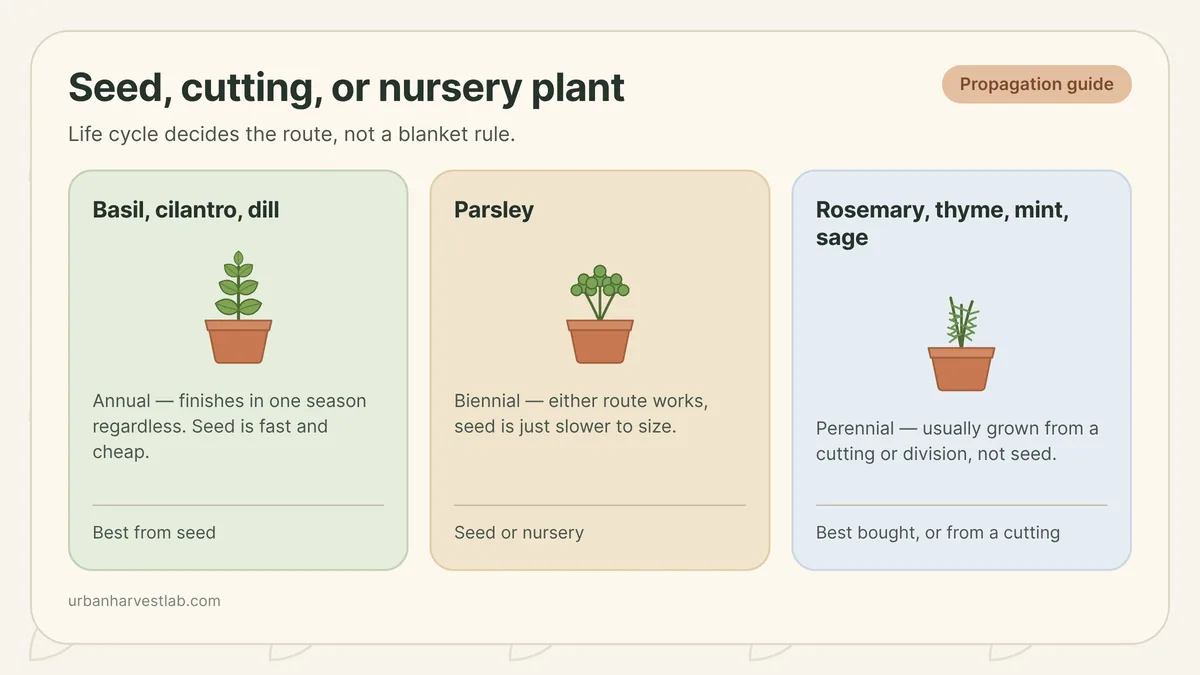
Herbs from seed or buying plants: how to decide
Some herbs finish a whole life cycle from seed in a matter of weeks; others are slow, woody, or simply propagated a different way. The life cycle of the herb, not a blanket rule, is what actually decides which route makes sense.
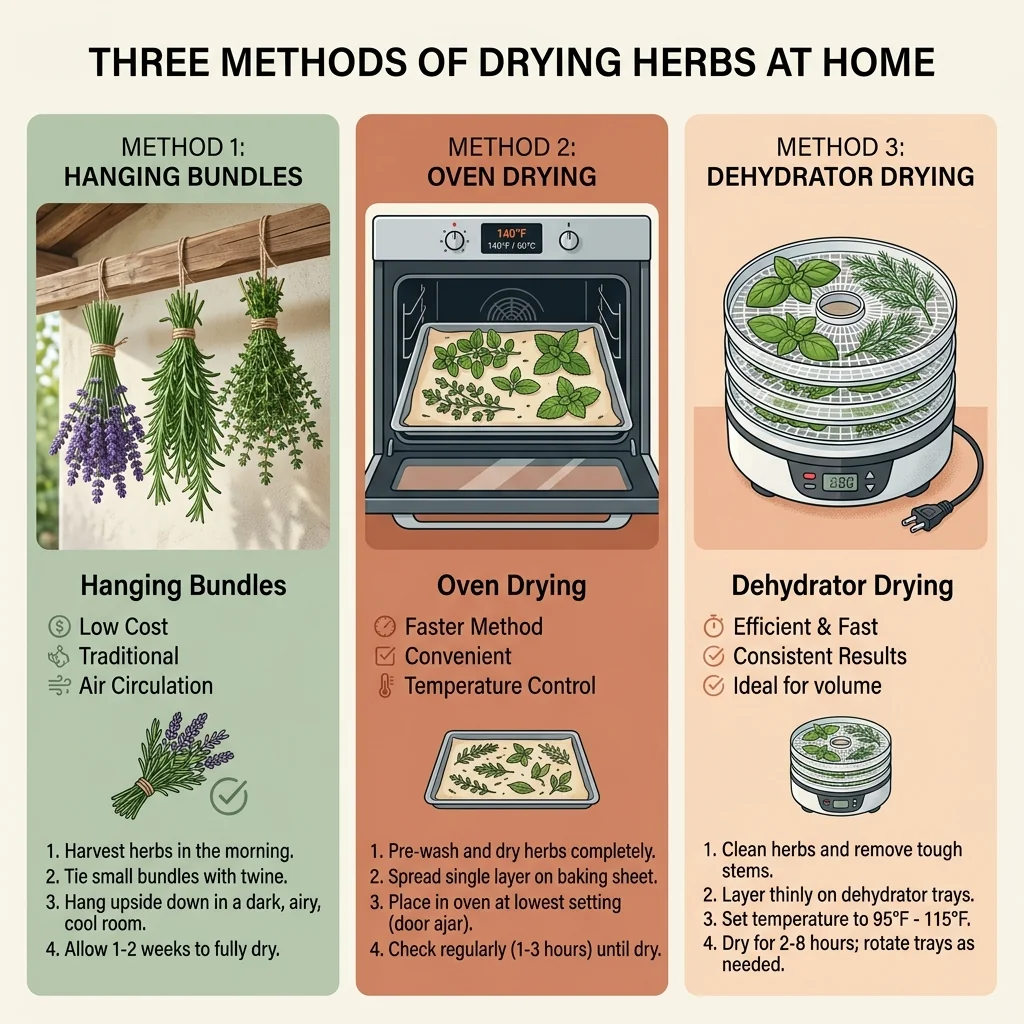
How to dry herbs at home (air, oven, dehydrator)
Drying is the best way to preserve woody herbs like rosemary, thyme, and oregano. Here are three methods, the temperatures to use, and which herbs to skip.
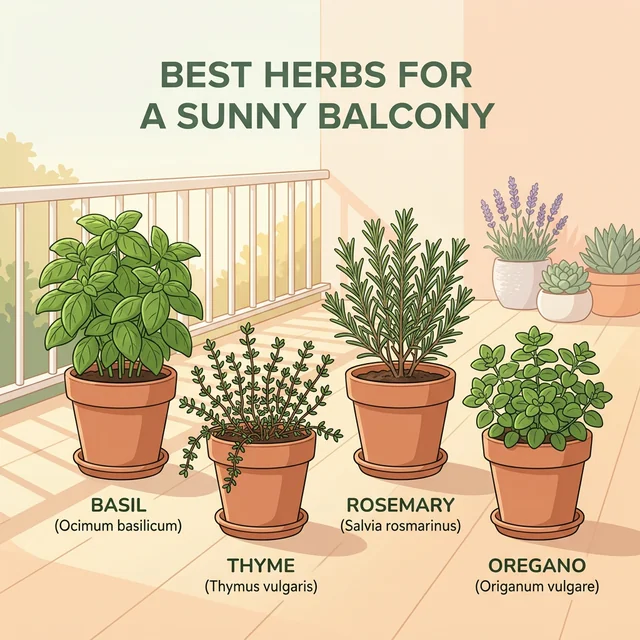
Best herbs for a sunny balcony: full-sun picks that handle heat and wind
A sunny balcony is perfect for herbs, but the intense heat and wind require the right crop choices. Start with basil, thyme, and rosemary for reliable harvests.