
Ginger and turmeric in a pot, by source
| Question | Ginger | Turmeric |
|---|---|---|
| Months to mature harvest | 8-10 (NC State, Illinois, Penn State) | 8-11 (UF/IFAS); foliage fades at 8-10 (UVM) |
| Height | 2-3 feet (UVM) | 3-4 feet (UVM) |
| Temperature floor | Above 50°F air (NC State) | Below 50°F is too cold (UVM); very cold sensitive (UF/IFAS) |
| Light | 2-5 hours direct sun (NC State); part shade to full sun (Illinois) | Full sun or part shade (NC State); partial to full shade (UF/IFAS) |
| Early harvest | Baby ginger after about 4 months (Illinois) | No early harvest given by the sources; dig when dormant (UF/IFAS) |
Plant a plump, budded piece of ginger or turmeric rhizome just under the surface of a pot at least 12 inches wide, keep it at 70 to 80°F until it sprouts, and plan on 8 to 10 months to a mature harvest. Virginia Tech and UVM Extension give the 12-inch minimum, UVM the warm spot, and NC State the timeline. Both are tropical plants, so what decides success in a pot is warmth at the start and a protected place for the cold months. If you only have a short outdoor summer, you can still dig young “baby” ginger partway through.
The slow part is the beginning. Sprouting takes weeks, and in that stretch the rhizome needs warmth more than light. Illinois Extension suggests starting ginger indoors in February or March to lengthen the season, and the same indoor routine in growing herbs indoors in winter applies once green shoots appear.
Choose a rhizome that can sprout
Illinois Extension says ginger sold in grocery stores is treated to stop sprouting and is not certified disease free. Virginia Tech Extension adds that treated rhizomes may not sprout, and suggests organic ginger or pieces that already show swollen buds. Virginia Tech says somewhat shrunken pieces are fine if the buds are swelling. Penn State’s York County Master Gardeners also recommend organic, and ask for a firm, plump piece with visible eye buds.
Turmeric follows the same logic. UF/IFAS says a firm, fresh piece from the produce aisle can work for planting.
Cut, heal and plant
The sources differ on piece size, so pick by buds, not inches. Virginia Tech cuts 1 to 1.5 inch pieces with at least two eyes; UVM Extension cuts 2 to 3 inch pieces with 2 to 3 buds; UF/IFAS cuts turmeric into 1 to 1.5 inch pieces with at least one eye. After cutting, leave the pieces a few days so the cut ends heal. Virginia Tech says that callus stops the piece taking on too much moisture and rotting while it sprouts.
For the pot, Virginia Tech and UVM both say at least 12 inches for a single piece. Illinois Extension says at least 15 inches in diameter, and Penn State’s Master Gardeners say 12 inches deep and 18 across, adding that width matters more than depth. Choose a wide pot over a tall one, with holes for drainage (see the drainage holes guide). Penn State gives a pH of 5.5 to 6.5 for a loamy, organic-rich mix.
Lay the piece flat with the buds facing up. UVM Extension covers it with about 2 inches of mix; Illinois Extension says the top should barely be covered to avoid rot, and to leave room at the rim to add soil as the rhizome pushes up.
Warmth: the step that decides the timeline
Virginia Tech Extension says ginger sprouts between 60 and 86°F, best at 70 to 78°F, and that it can take up to fifty or more days. UVM Extension puts a warm spot at 70 to 80°F and says 3 to 8 weeks, ginger earlier and turmeric later. NC State’s soil target for ginger is 77°F.
A normal living room often sits below that, especially at floor level. UVM says a seed-starting heat mat can warm the soil in a cool room, and to take the pot off once sprouts show. The heat mat and thermostat guide covers why a probe in the mix matters, because a mat without a thermostat cannot hold a target.
Water sparingly until shoots appear (UVM Extension). Virginia Tech notes the rhizome does not need water or light to sprout, so there is no reason to keep the mix wet while you wait. Virginia Tech names root rot from overwatering or poor drainage as the main problem it sees.
Summer: light, water and feeding
Once shoots are up, give the pot a bright place. UVM says to supplement with a grow light if needed; the winter grow light guide covers the setup. Outdoors, Virginia Tech recommends partial sun and avoiding late afternoon direct sun, while NC State gives ginger 2 to 5 hours of direct sun. Illinois Extension reads brown leaf tips as either too little water or too much sun.
Move the pot out only when it is warm. UVM Extension wants daytime temperatures of at least 68°F and nights not below 50°F; Illinois Extension says consistently 70 to 80°F. UVM also says to introduce sunlight over several days to avoid burning the foliage.
Keep the mix evenly moist. Penn State says moist but not soggy, and Illinois says ginger tolerates neither waterlogging nor drying out completely. Virginia Tech says to apply liquid fertilizer every few weeks in containers, and to reduce watering as the weather cools while still not letting the pot dry out completely. For a way to check the mix rather than follow a calendar, see how often to water container vegetables.
Virginia Tech also says rhizomes grow upward, so add mix around the base one to three times a season whenever rhizomes show at the surface.
Turmeric in the same pot size
Turmeric grows taller than ginger: UVM gives 3 to 4 feet against 2 to 3. UF/IFAS says its smaller rhizome suits containers and that the pot can be moved to shelter in winter. NC State warns that rhizomes may grow thick enough to split the container and that the plant needs a lot of water in a pot, so use sturdy pots and check moisture often. Light advice varies: NC State lists full sun or partial shade, and UF/IFAS partial to full shade. UF/IFAS also warns that fresh turmeric stains hands and surfaces yellow.
Harvest
Illinois Extension says baby ginger can be dug after four months. Young pieces are tender and thin-skinned; NC State adds that they are less shelf-stable than mature ginger. Virginia Tech suggests taking some rhizomes from the outer edge in autumn and leaving the rest of the pot to go dormant.
For the full crop, wait for the foliage. NC State and Illinois Extension say mature ginger is ready once leaves turn brown and dry, around November in Illinois. UVM says foliage fades after 8 to 10 months, and UF/IFAS says turmeric is ready when the plant goes dormant. Tip out the pot, shake off the mix and cut the stems off. Virginia Tech then air-dries the rhizomes for one to two weeks so cuts callus.
Storage differs by source. Virginia Tech keeps unpeeled ginger in the fridge for up to three weeks, UVM up to three months whole; both allow up to six months in the freezer. Keep a piece or two to replant, as UVM suggests. Virginia Tech stores those in a paper bag at 55 to 60°F; Penn State says not to refrigerate rhizomes meant for replanting.
Winter
The plants die back. Illinois Extension says to bring the pot inside before freezing and that it will go dormant, losing all its foliage until spring. Virginia Tech says to keep the container above 55°F while it rests, and NC State says ginger regrows if kept warm and bright. Virginia Tech says to start watering again once the rhizomes sprout in spring.
Sources
- Illinois Extension: How to grow tropical ginger for at-home spice
- Virginia Cooperative Extension: Growing ginger at home
- UVM Extension: Growing ginger and turmeric indoors
- NC State Extension Plant Toolbox: Zingiber
- NC State Extension Plant Toolbox: Curcuma longa
- Penn State Extension, York County Master Gardeners: Ginger, 2023 Herb of the Year
- UF/IFAS Gardening Solutions: Turmeric
- UF/IFAS Extension Osceola County: Gingers for your Central Florida garden
Warmth, light and winter
Ginger and turmeric depend on heat and a protected winter. These cover the setup around them.
Common questions
How long does ginger take to sprout in a pot?
Virginia Tech Extension says ginger can take up to fifty or more days to sprout, and gives 70-78°F as the best range, with sprouting possible from 60 to 86°F. UVM Extension says 3 to 8 weeks for ginger and turmeric, with ginger usually sooner. A cool room is the usual reason for a slow start.
Can I grow ginger from a grocery store root?
Sometimes. Illinois Extension says grocery ginger is treated to stop sprouting, and Virginia Tech says treated rhizomes may not sprout. Virginia Tech suggests organic ginger or pieces that already show swollen buds, and Penn State Master Gardeners also recommend organic.
How long until I can harvest ginger and turmeric?
NC State, Illinois and Penn State Extension give 8 to 10 months for mature ginger. Illinois Extension says small baby ginger sections can be harvested after four months. UF/IFAS gives 8 to 11 months for turmeric. Harvest when the leaves turn brown and dry.
Can ginger and turmeric stay outside in winter?
Not in a cold climate. Illinois Extension says ginger will not survive outdoors below 30°F, and UF/IFAS calls turmeric very cold sensitive. UVM Extension says to bring both inside when temperatures drop below 50°F.
Related guides
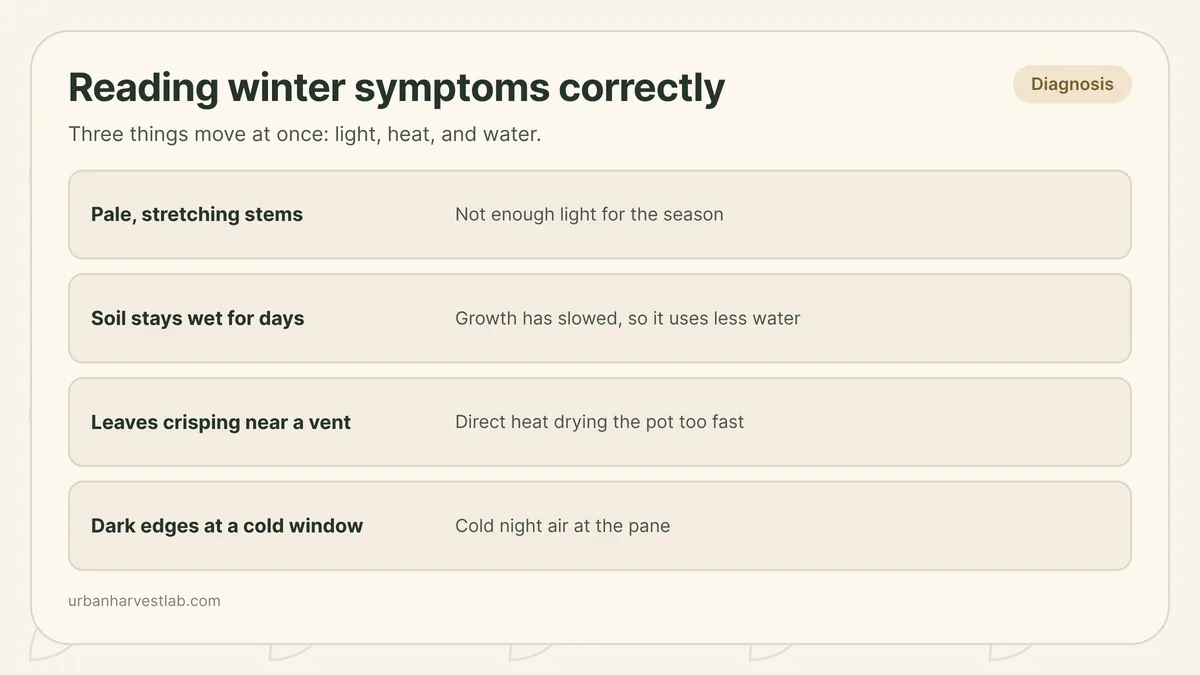
How to grow herbs indoors in winter
A kitchen windowsill that carried herbs all summer often starts failing in November, and it is rarely one single cause. Light, heated air, and watering all shift at the same time.
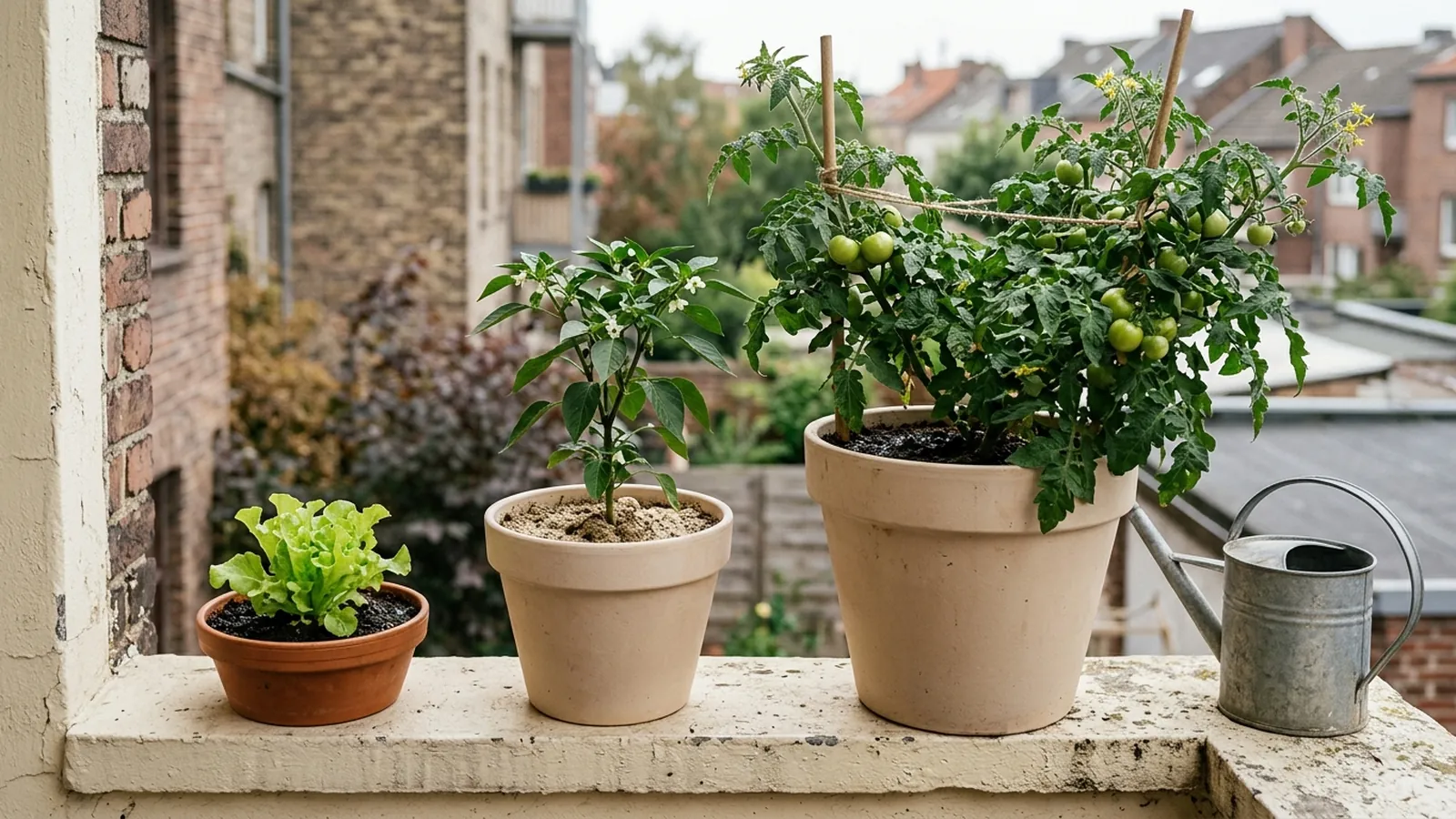
How often to water container vegetables: volume and crop stage set the interval
A pepper in a 2-gallon pot in May and the same pepper in the same pot in August are two different watering problems. Once you can see why, the question stops being how often and becomes how much mix you gave the plant, and what it is carrying right now.
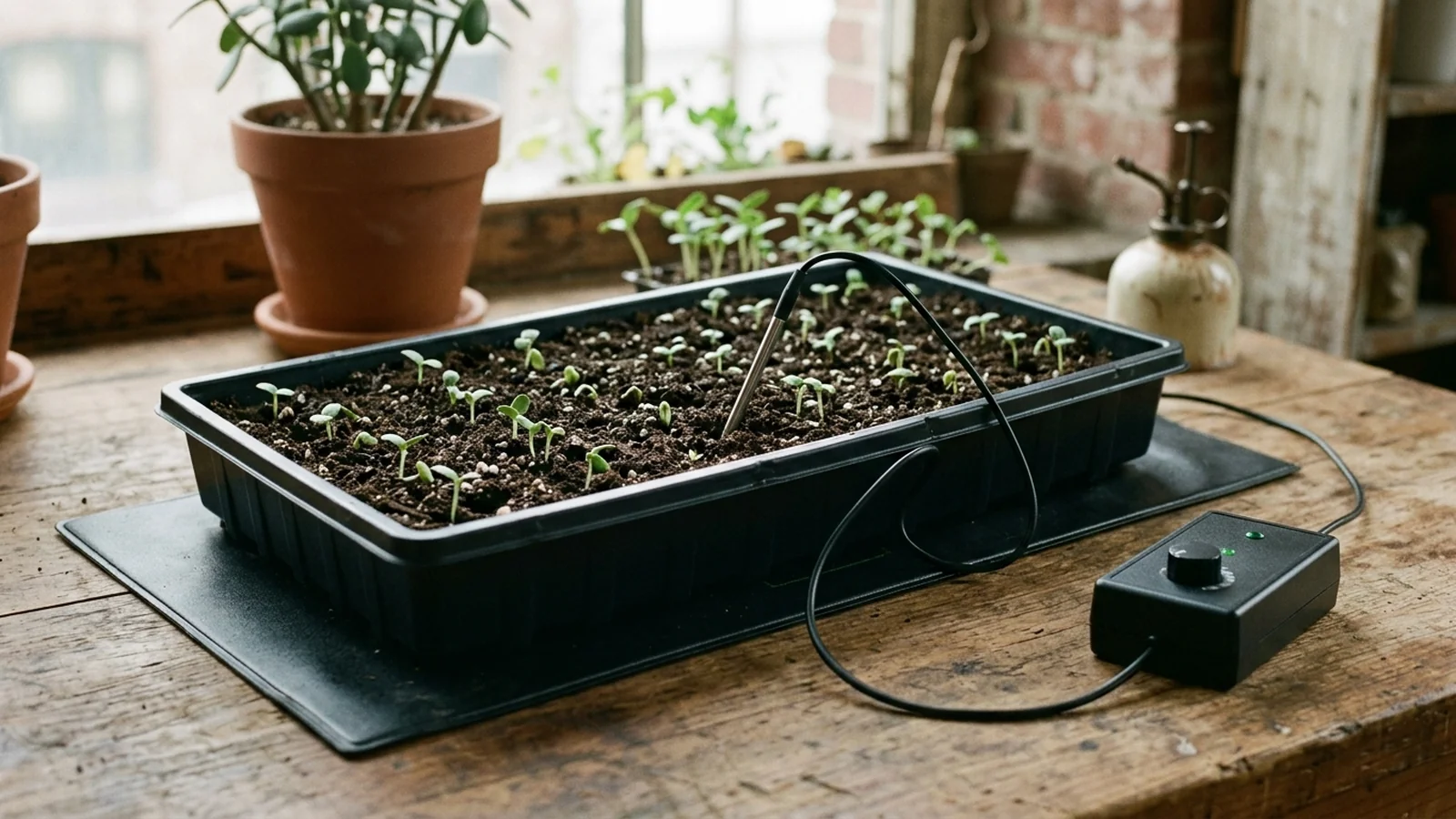
Seedling heat mats: what the thermostat is actually for, and when to skip one
A heat mat's whole case rests on one fact: germination responds to the temperature of the mix, not the air around it. Without a thermostat that fact works against you as easily as for you.