
Summer watering chart by herb
| Herb | Normal rhythm | Hot-weather rhythm |
|---|---|---|
| Basil | Every 1-3 days | Daily; small pots twice a day |
| Mint | Every 1-3 days | Daily |
| Cilantro | Every 2-4 days | Every 1-2 days; bolts if drier |
| Parsley | Every 2-4 days | Every 1-2 days |
| Chives | Every 3-5 days | Every 2-3 days |
| Thyme / oregano | Every 7-10 days | Every 4-7 days, once dry |
| Rosemary / sage | Every 1-2 weeks | Every 3-7 days, once dry |
Summer changes the watering decision: heat, sun, wind, container size, material, root mass, and humidity can accelerate water loss. Check more often, but water from evidence in the root zone rather than a fixed daily schedule. The chart above is a reminder to inspect, not a prescription. The base method lives in how often to water potted herbs.
Why pots suffer more than gardens in heat
A container holds a small volume of soil that heats through completely — roots in a dark plastic pot on a sunny balcony can sit far above air temperature. Hot soil dries faster, and stressed roots take up water less efficiently. That is why summer wilting is often a heat problem wearing a watering costume: the fix is water plus heat management, not water alone.
The summer routine
- Check every morning. Feel the top inch and lift the pot. In a heat wave, check small pots again in the late afternoon.
- Water in the morning, deeply. The plant faces the hottest hours fully stocked, and the surface dries during the day. Water until it runs from the drainage holes.
- Do not switch rosemary to a basil schedule. Mediterranean herbs still want to dry out first — in summer the cycle just runs faster. See how often to water rosemary; the same logic covers thyme, oregano, and sage.
- Diagnose a midday wilt before watering automatically. If the root zone is dry, irrigate promptly. If it is already wet, shade and root stress may be the issue; adding more water can make it worse. See how often to water basil for the normal checks.
Beat the heat, not just the dryness
The cheapest summer wins are not about water at all — cutting the heat load with shade, grouping, elevation off hot surfaces, and mulch is covered in full in this site’s guide to protecting container plants during a heatwave.
Going away during the heat?
Summer trips are the highest-risk moment of the year for potted herbs. Set up self-watering before you leave using the methods in how to water potted herbs while on vacation — in hot weather, even a weekend away can be too long for a small basil pot without one.
Build a heat-response log
For each pot, record morning pot weight or subsurface moisture, afternoon wilt, weather, and the amount of water applied. A wooden skewer, finger check, or moisture probe can add evidence, but learn its limits in your particular mix. Check at several points in a large container because the surface and root zone can dry differently.
After watering, confirm that the mix actually accepts water. A severely dry peat-based mix can shed water down the gap beside the pot while the center remains dry. Apply slowly in passes, allow drainage, and recheck the root zone. Never leave an ordinary herb pot standing indefinitely in runoff.
Separate temporary heat wilt from root-zone drought
Leaves may droop during the hottest hours even while the root zone contains moisture. If the pot is still heavy and damp, move or shade it safely and reassess as temperature falls. Persistent wilt in wet mix calls for a drainage and root-health check, not another drink. Wilt with a light pot and dry root zone calls for prompt watering.
Remove only clearly dead tissue during severe heat; major pruning, repotting, and strong fertilizer can stack extra stress. After the event, evaluate new growth rather than expecting scorched leaves to recover.
Reduce risk before the next hot spell
Use a container large enough for the mature plant, keep drainage open, and protect the pot itself from extreme reflected heat. Pale outer sleeves, an air gap, stable wind protection, or permitted afternoon shade can reduce root-zone extremes. Grouping pots may create shade but can also reduce airflow and spread pests, so leave inspection access.
Test vacation-watering equipment for several normal days before relying on it. Size the reservoir from measured consumption plus a safety margin, without creating a permanently saturated mix. Electrical pumps and timers must be rated for the location and kept safely separated from water connections.
Sources
If you are watering in a heat wave, also read
These guides cover the base watering method, the by-herb chart, and what to do when you leave town in summer.
Common questions
How often should you water herbs in summer?
Check containers at least daily during unusual heat, and again later if a small pot is exposed to strong sun or wind. Water when subsurface moisture and pot weight show that the root zone needs it; species alone cannot determine a safe calendar.
How often should you water rosemary in summer?
Check rosemary more often in heat, but water only after the root zone has dried appropriately for the plant and mix. A universal 3-to-7-day interval is unreliable because pot volume, wind, sun, root mass, and drainage differ.
Is it better to water herbs in the morning or evening in summer?
Morning. The plant enters the hottest hours stocked with water, and leaves and soil surfaces dry during the day, which reduces fungus problems. Evening watering is second best; midday watering is fine in an emergency wilt.
Should I water potted herbs more during a heat wave?
Yes — check at least twice a day and water from what the root zone actually shows rather than a fixed time. Small pots in direct sun need the extra checks most; cutting the heat load itself with shade, grouping, and mulch is its own separate response, covered in this site's full heatwave container-plant guide.
Related guides
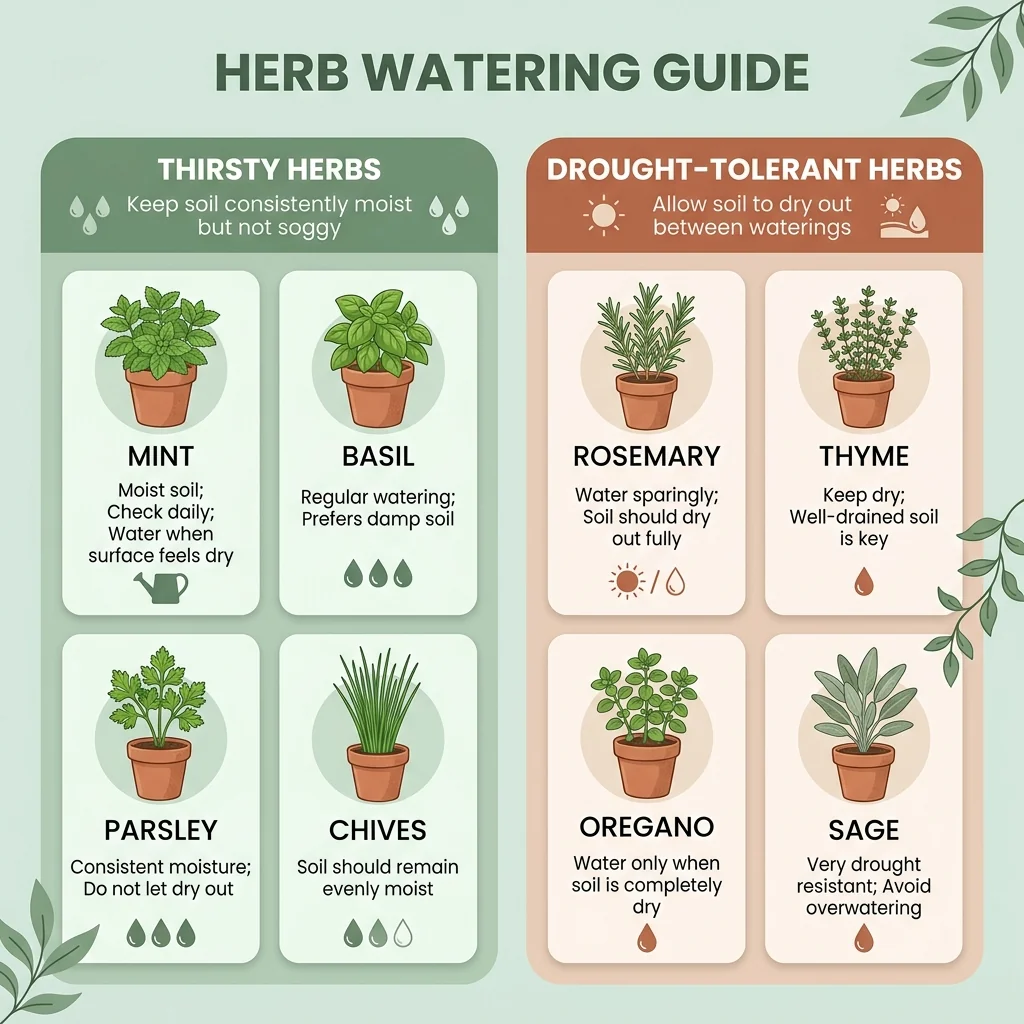
Herb watering chart: how often to water each herb
One simple chart for how often to water the most common herbs, split into thirsty herbs and drought-tolerant herbs, with links to a full guide for each.
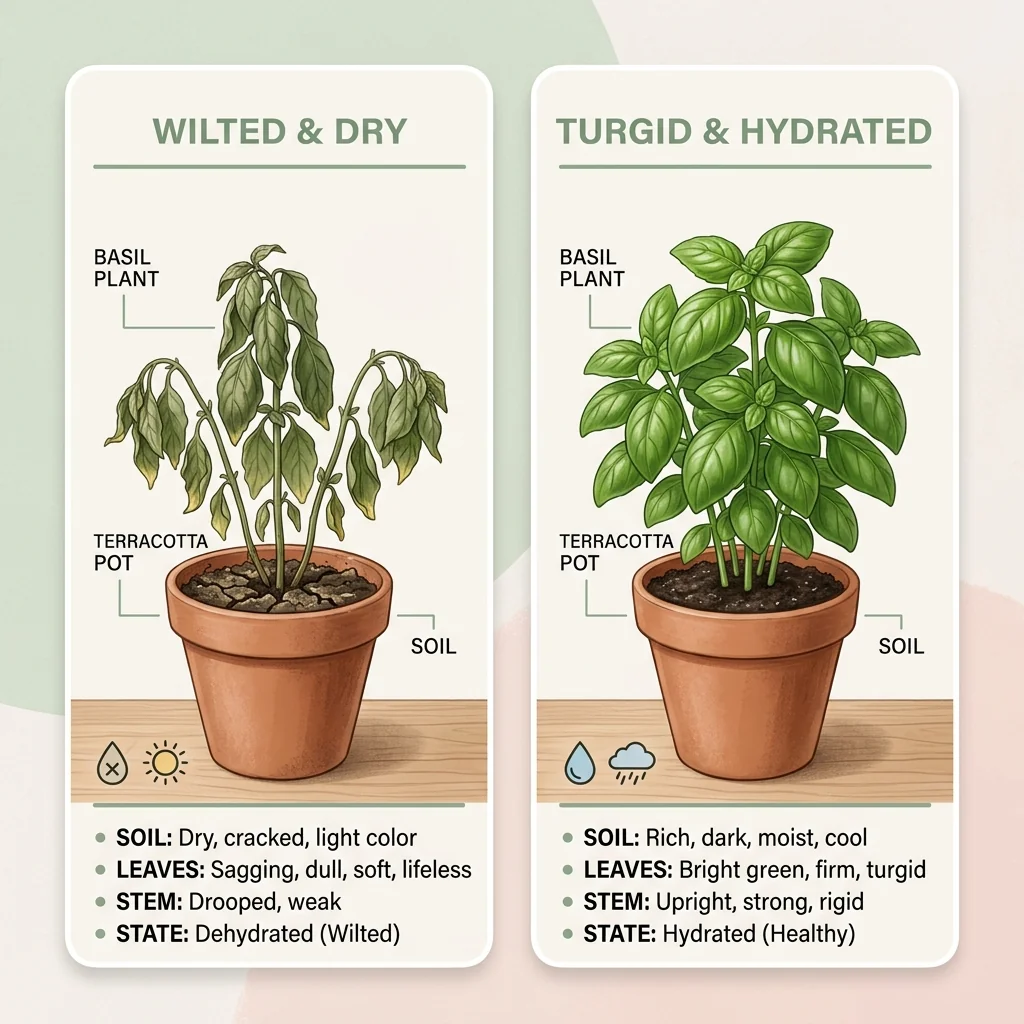
How often to water basil in pots: a 1–3 day check
Potted basil often needs water every one to three days, but the reliable trigger is a drying upper root zone plus a lighter pot—not a repeating alarm.
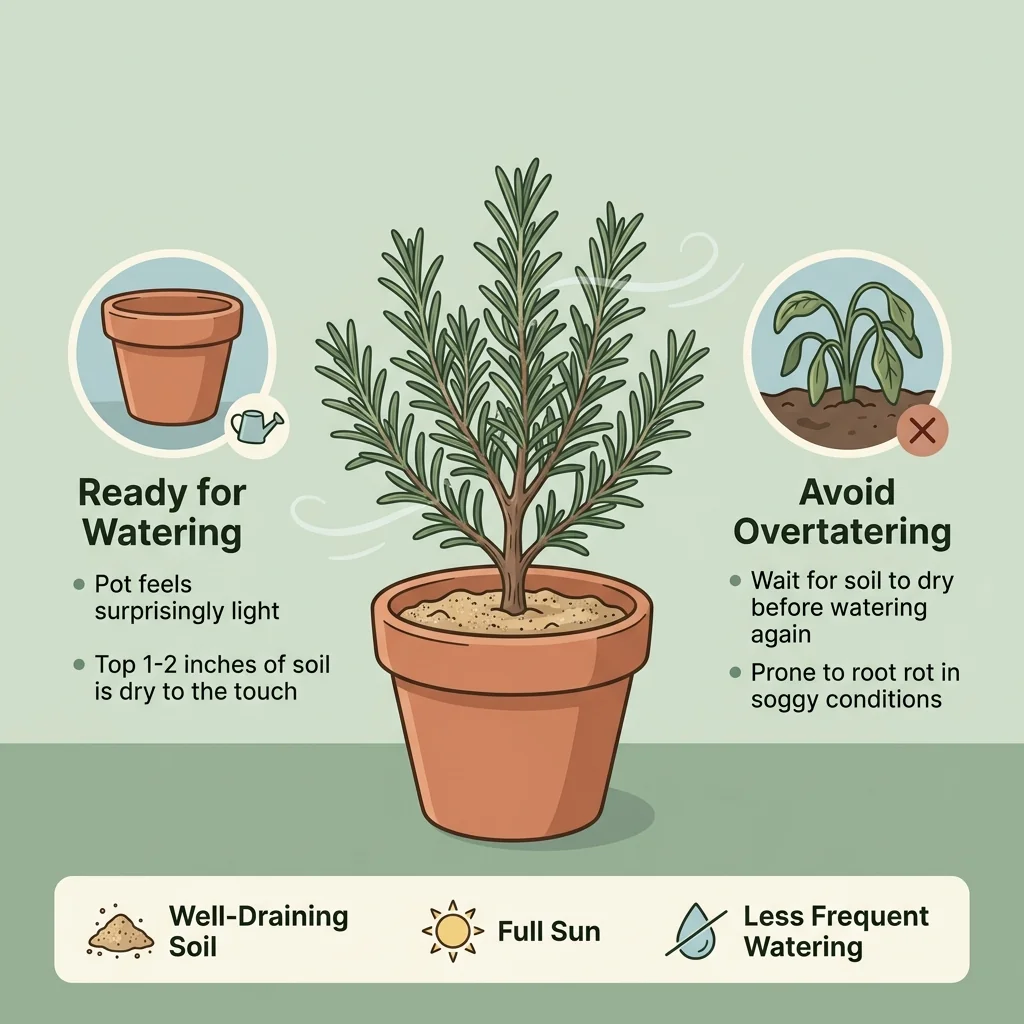
How often to water rosemary: every 1 to 2 weeks, not on a schedule
Rosemary kills more gardeners with kindness than neglect. Water it deeply but infrequently, only once the soil has dried, and it will thrive on the dry side.