
Four ways to use a mason jar for herbs
| Setup | How it works | Risk | Best herbs |
|---|---|---|---|
| Drilled jar | A hole in the base lets excess water out, so the jar behaves like an ordinary pot | Cracking the glass while drilling; needs a saucer | Any herb, if the jar is deep enough |
| Jar as sleeve | Soil sits in a small drained pot or cup with holes, set inside the jar | Water pooling around the inner pot if you do not empty the jar | Basil, chives, parsley, mint |
| Water or Kratky jar | Roots sit in water or nutrient solution, with no soil to stay soggy | Algae, and limited lifespan for a woody herb | Basil and mint cuttings, leafy herbs |
| Sealed jar, soil planted in it | Water has nowhere to go, so you control every drop by hand | Root rot, sour smell, collapse | Short-term only: chives or basil |
You can grow herbs in a mason jar, but not by filling a sealed jar with soil and hoping. University of Illinois Extension says a hole at the bottom of a container is critical, because wet soil leaves little space for air to reach the roots and plants rarely recover from root rot. The jar has to drain, be a sleeve around something that drains, or hold water instead of soil.
A jar is just a pot made of glass with the hole left out. Everything that goes wrong in jars comes from that missing hole. Do pots need drainage holes covers why in general. Here the question is narrower: which jar setup is worth building, and which herbs belong in it.
Why a sealed jar of soil fails
Water that goes into soil has to come out somewhere. In a pot with a hole, gravity pulls the excess out the bottom. In a sealed jar, it collects at the base and stays. Illinois Extension puts it plainly: wet soils favor root rot because they leave little room for air around the roots.
Glass has one advantage: you can see standing water at the base, so you will catch a waterlogged jar sooner than an opaque pot.
It also changes the usual watering rule. Iowa State University Extension says to keep applying water until it flows from the drainage holes. That instruction cannot be followed in a jar, which is why jars go wrong even for people who watered “correctly.”
Do not add gravel
The standard fix on every jar tutorial is a layer of pebbles in the bottom. It does not do what people think. Illinois Extension calls it a myth that a gravel layer inside a pot improves drainage: the water gathers in the soil just above the gravel until the air space is full. The gravel-in-the-pot myth explains the mechanism. In a sealed jar it is worse, since the pebbles have no exit to carry water to and simply use up depth the roots need.
RHS advice is to choose containers that give herbs a deep root run. A stone layer in a small jar takes that depth away.
Option 1: drill the jar
If the jar is going to be a permanent planter, make a hole in it. Illinois Extension’s advice for a pot without one is to figure out a way to make a hole, and drilling is the first method it names. The drilling guide covers the bit and technique for glazed and brittle materials, which is the category glass falls into, and what goes wrong. Use a saucer under it, and empty the saucer after watering.
Drilling also gives you a normal pot, which means normal watering. The finger test works: Iowa State says to water when the mix is dry 1 to 2 inches down.
Option 2: use the jar as a sleeve
This is the least risky way to keep the look. Illinois Extension calls it double potting: slipping a container inside a slightly larger one. Plant the herb in a small plastic pot or cup with holes in the bottom, and set it inside the jar. Water it at the sink, let it drain, then put it back.
If water collects in the bottom of the jar, Illinois says to lift the inside pot out and pour the water from the outer one. It also says gravel in the bottom of the outer pot is acceptable if the decorative pot is deep enough, because a little water can collect among the stones without the roots standing in it. That is the one place a pebble layer makes sense: under the pot, not around the roots.
The limit is size. A jar that takes a small inner pot holds a small plant. Basil outgrows it quickly; see the herb pot size guide before you commit a vigorous herb to a narrow container.
Option 3: skip the soil
If you want a jar on a windowsill and no maintenance of drainage, grow in water. Mint and basil root from stem cuttings in a glass of water, as regrowing herbs from cuttings shows, and can stay there for a while before they need potting up. For leafy herbs grown for a harvest rather than a keepsake, a net-pot jar with nutrient solution is the proper version; the Kratky method covers how that jar is set up and why the container should be opaque. A clear mason jar needs to be wrapped or sleeved so light does not reach the water, or algae will take over.
Rosemary, sage and other woody herbs do not suit this. They are meant for soil with sharp drainage.
If you already planted in a sealed jar
You do not have to start over. Illinois Extension’s rescue for a planted container with no drainage is to take it to a sink, water it, wait a few minutes, then turn it on its side for a minute or two so the excess runs out. In a jar, hold a hand over the soil and keep the plant supported while you tip.
After that, water in small amounts and test with a finger before you add more. The RHS wants herb compost kept moist but not soggy, and warns that herbs can easily rot off if overpotted. The same logic applies more strongly to a jar, where wet compost has no way out.
Clemson Extension lists noticeable wilting, stems girdled by brown or black tissue at soil level, and roots that are brown to black and soft as the signs of root rot. If you see them, repot into a drained container rather than waiting.
Which herbs belong in a jar
Match the herb to how forgiving the setup is. Basil, mint, chives and parsley tolerate steady moisture and are easy to start from a cutting or a nursery pot, so they suit the sleeve and water methods. Rosemary, thyme, oregano and sage want a gritty, fast-draining mix, and the RHS recommends up to 25 percent by volume of coarse grit or perlite in the compost for herbs in containers. A glass jar cannot give them that.
For a jar that sits in a bright window, the windowsill herb guide covers which herbs cope with indoor light.
Sources
Pick the right container
Drainage, pot size and light decide whether a small herb container thrives or rots.
Common questions
Can you grow herbs in a mason jar without drainage holes?
Only with care. University of Illinois Extension says a hole at the bottom of a container is critical and that plants rarely recover from root rot. A jar with no hole works if the soil is in a separate drained pot inside it, or if you grow in water, as in a Kratky jar wrapped or sleeved so light does not reach the water. Soil planted directly into a sealed jar is the riskiest choice.
Do rocks at the bottom of a mason jar help with drainage?
No. University of Illinois Extension calls it a myth that a gravel layer inside a pot improves drainage, because water gathers in the soil just above the gravel. Rocks do not remove water from a sealed jar. They only take up room that roots could use.
What do you do if you already planted herbs in a jar with no hole?
University of Illinois Extension suggests watering at a sink, waiting a few minutes, then turning the container on its side for a minute or two so excess water drains out. In a jar, hold the soil in place with your hand and keep the plant supported while you tip it.
Which herbs are least likely to rot in a jar?
Basil, mint, chives and parsley are the better fit; basil and mint also root readily from cuttings in water, while chives and parsley start from seed or a nursery pot. Rosemary, thyme, oregano and sage want sharper drainage than a sealed jar can give. The RHS suggests up to 25 percent coarse grit or perlite by volume in the mix for herbs in containers.
Related guides
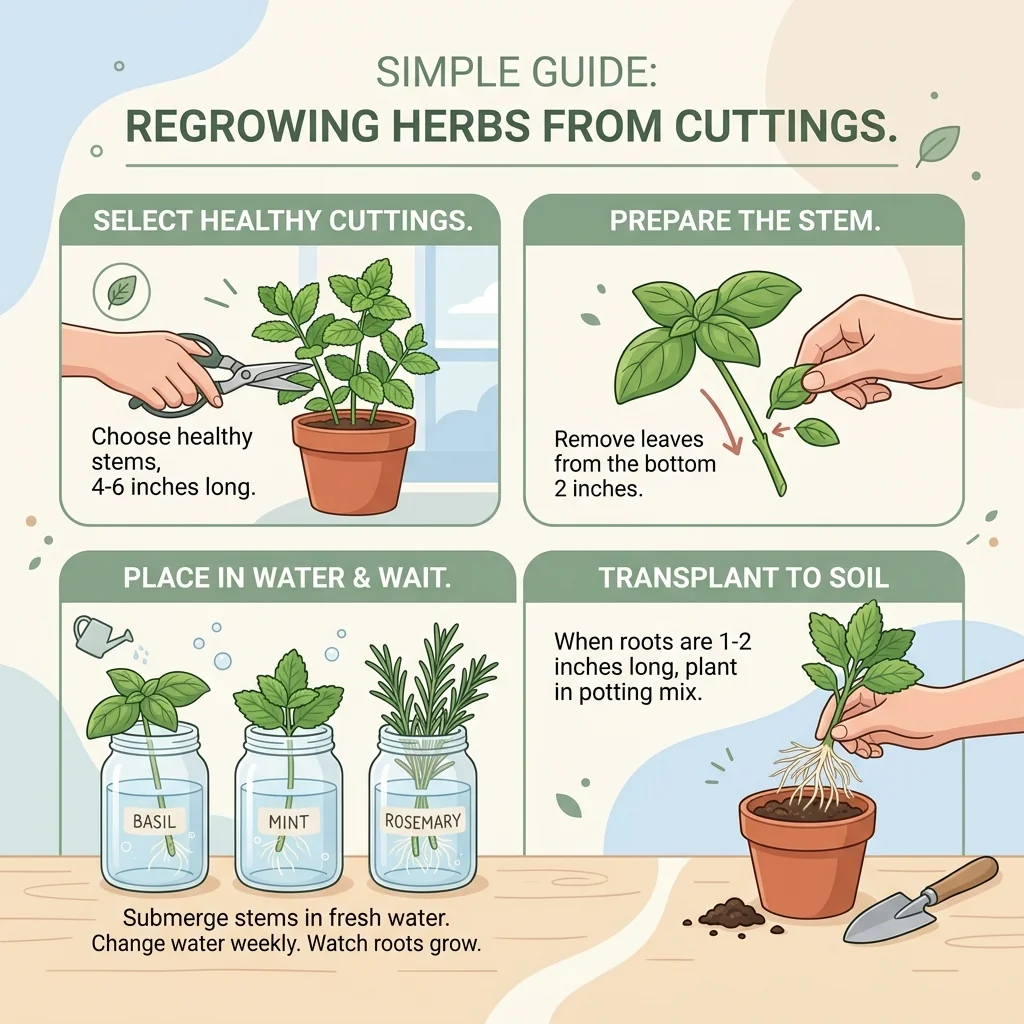
How to regrow herbs from cuttings (basil, mint, rosemary)
Many herbs root from a simple stem cutting in a glass of water. It is the cheapest way to turn one plant, or a supermarket bunch, into many.
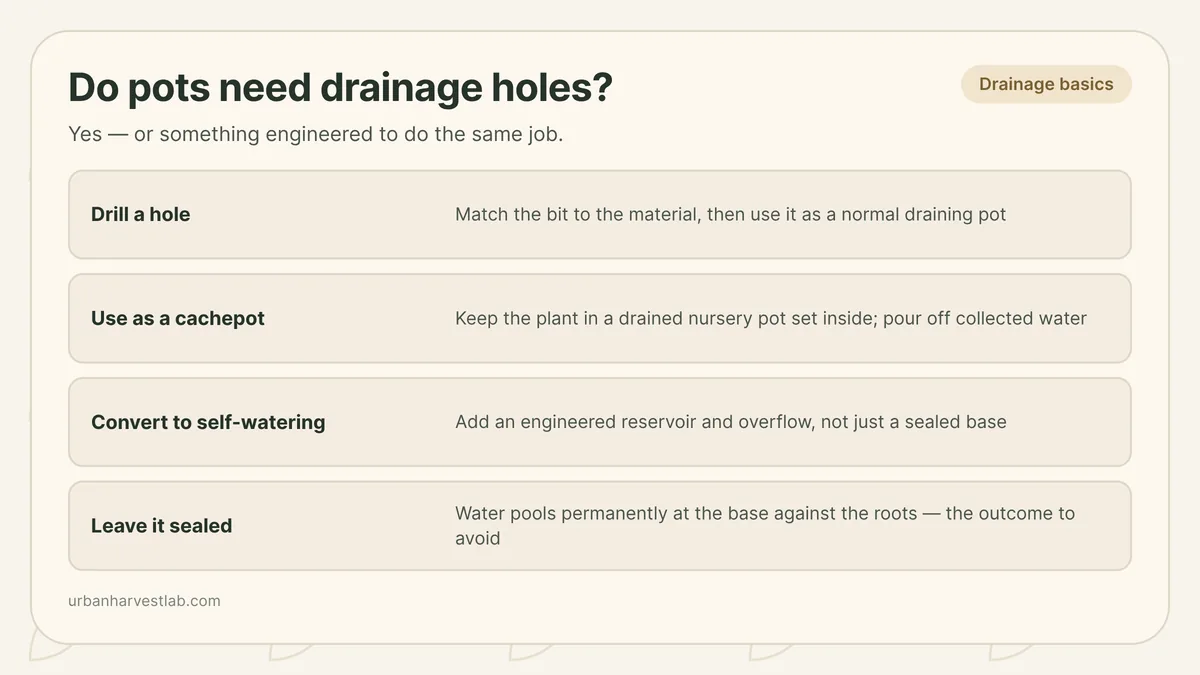
Do pots need drainage holes, and how to add one safely
A pot with no drainage hole is not a design quirk you can water around. Here is why that matters, how to drill one safely by material, and how to use a hole-less pot the right way instead.
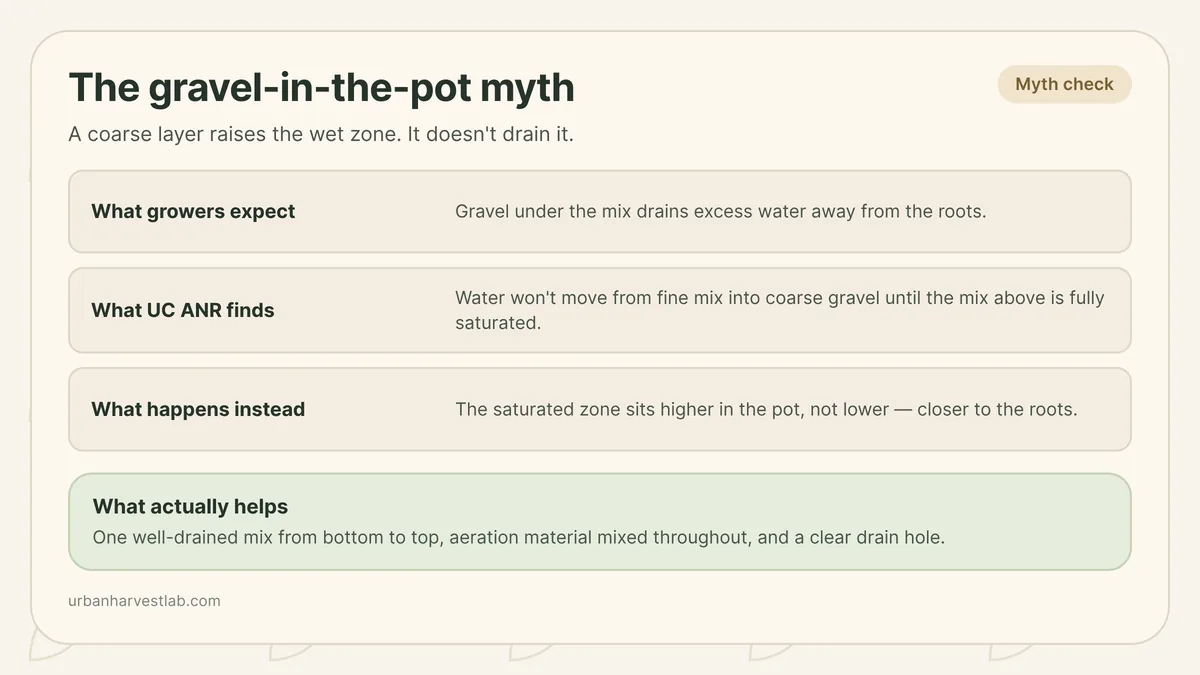
The gravel-in-the-pot myth: why it doesn't improve drainage
Putting gravel or rocks under potting mix feels like it should help drainage, but it creates a wetter zone right where roots grow, not a drier one.